
We are reader supported. When you purchase through links on our site, we may earn an affiliate commission. Also, as an Amazon affiliate, we earn from qualifying purchases.
Can you wash a blanket in a 6 kg washing machine. Yes, sometimes. The real answer depends on the blanket material, size, thickness, and how much free space remains in the drum. This guide shows how to check fit safely, choose the right settings, avoid damage, and get a clean, fluffy result without stressing your machine.
What a 6 kg Capacity Really Means
A 6 kg rating is based on the dry weight of standard cotton laundry. It does not mean any item up to 6 kg will wash well. Bulky textiles like blankets trap air and water, expand in the drum, and can overload the motor or suspension even if the dry weight is below 6 kg.
Dry Weight vs Wet Bulk
Dry weight is what you can measure with a scale. Wet bulk is how the item behaves in the drum with water and movement. A light but puffy blanket can still overload a small drum because it fills the space and blocks rotation. Always consider both weight and volume.
Blanket Types and Typical Weights
Fleece and microfiber are usually the lightest and most suitable for small washers. Lightweight cotton throws can also work. Heavy wool, thick cotton woven blankets, and weighted blankets are often too heavy or bulky. Duvets and comforters with fill are better suited to larger capacity washers because trapped air prevents effective turnover and rinsing in small drums.
Quick Tests to See If Your Blanket Fits
The Scale Method
Weigh yourself, then weigh yourself holding the blanket, and subtract the numbers. If the dry weight approaches 4 to 5 kg, it is a risky match for a 6 kg washer because water absorption and bulk raise the effective load during the wash. If the weight is 3 kg or less and the blanket is not very thick, you are more likely to be safe.
The Drum Space Rule
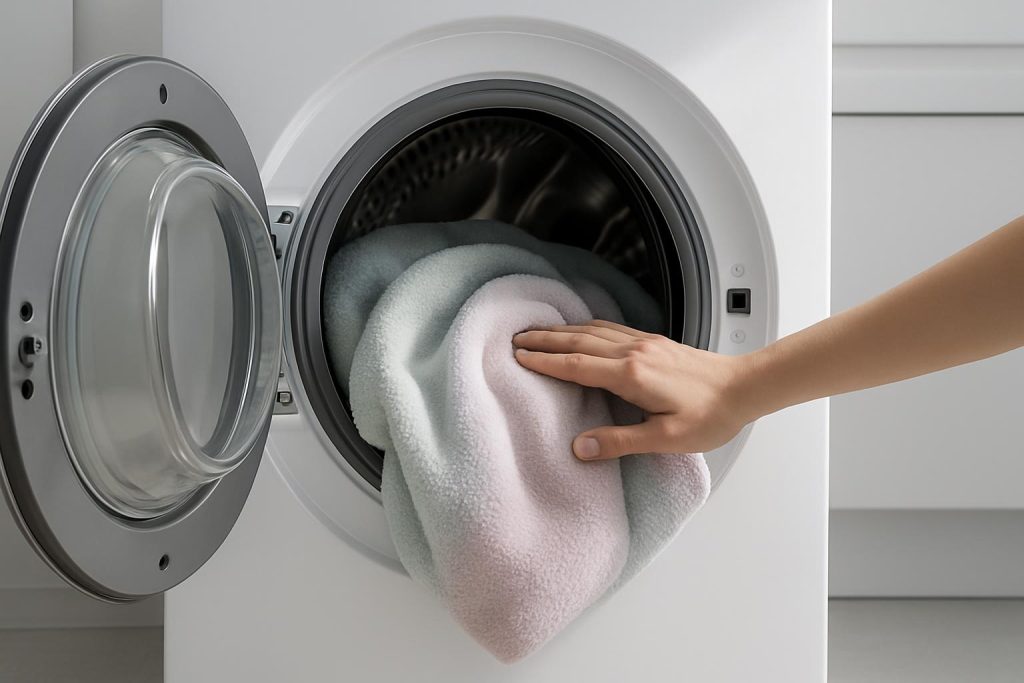
Place the dry blanket in the empty drum. Push it down evenly. There should be clear free space at the top and sides, and you should be able to slide a hand along the drum wall. Aim for no more than three quarters full with the blanket fluffed. If the drum looks packed, do not proceed.
Signs to Stop and Switch to Plan B
If the door seal bulges, the blanket cannot tumble, or the machine strains to turn during the first minutes, stop the cycle. If you hear repeated thumping from imbalance or the blanket stays stuck in one place, stop. Choose handwashing or a larger machine.
When a 6 kg Washer Is Suitable
Blankets That Usually Work
Thin fleece throws and lightweight microfiber blankets often fit. Many single size and some small double size blankets made from thin materials are manageable. A compact cotton or cotton blend throw can also be fine.
Blankets That Usually Do Not Work
Weighted blankets are not suitable because their dry weight plus water makes them exceed the true handling limit of a 6 kg machine. Thick wool or heavyweight woven cotton blankets are also poor matches. Large queen and king blankets are usually too bulky even when light.
Preparation Before Washing
Read the Care Label
Check for machine wash or hand wash only. Note the temperature, cycle, and drying instructions. If the label says dry clean only, do not use a home washer.
Pre Treat Stains and Lint Check
Treat spots with a small amount of enzyme detergent or a gentle stain remover. Dab and rinse cold before loading. Remove hair and lint with a lint roller or brush so the filter does not clog and residue does not redeposit.
Secure Edges and Zips
Close zippers and inspect stitching. Tie any loose cords. Damaged seams can worsen under rotation. If the blanket is delicate, a large mesh laundry bag can reduce friction, but only use it if the blanket still moves freely inside the drum.
Best Cycle, Temperature, and Detergent
Cycle and Spin Speed
Use gentle, delicate, or wool cycle for soft fibers. Use normal or mixed fabrics only for sturdy cotton throws. Keep spin speed low to medium. High spin can stretch stitching, distort shape, and trigger imbalance in a small drum.
Water Temperature by Fabric
Fleece and microfiber prefer cold. Heat can cause pilling and flatten the pile. Wool needs cold with a wool or delicate program. Cotton throws can take warm if the label allows, but cold still reduces shrink risk and saves energy.
Detergent Dosing
Use a mild liquid detergent. Avoid heavy suds. For a single blanket load, use the amount recommended for a small to medium load, adjusting down if you see excess foam in your machine. Skip fabric softener for fleece, microfiber, and wool to preserve loft and absorbency.
Loading and Balance Tips
How to Place the Blanket
Spread the blanket evenly around the drum rather than balling it up. Tuck in corners to prevent them from whipping. Leave visible free space so water can circulate. Do not add clothing on top; it causes tangling and poor rinsing.
Balancing Without Overloading
If the blanket is very light and the drum thumps from imbalance, you can add one small towel to stabilize. Ensure the total dry weight remains well under the machine rating. Do not add multiple heavy towels because they can push the load past a safe level.
Washing Steps That Work
Step one, confirm fit using the drum space rule with the dry blanket. Step two, select the right cycle, temperature, and spin as listed above. Step three, add detergent to the drawer, not directly on fleece or wool. Step four, start the cycle and watch the first five minutes. Confirm the blanket tumbles and water flows through it. Step five, pause and reorder the blanket if it bunches. Resume and complete the wash and rinse.
Drying Methods for Small Washers
Air Drying Safely
Lay the blanket flat on a drying rack or clean surface to prevent stretching. Reshape gently by hand. Flip periodically for even drying. Keep it away from direct high heat to reduce shrink and fiber damage. If space allows, hang it over multiple rungs so air moves through the layers.
Tumble Drying With Care
If the label allows machine drying, use low heat. Add dryer balls to improve airflow and reduce drying time. Remove the blanket while slightly damp and finish flat to protect edges. Avoid high heat on fleece, microfiber, and wool.
Speed Up Drying
Press out extra water by rolling the blanket in a dry towel before hanging. Increase air movement with a fan or dehumidifier. Spread the fabric to avoid thick folds. Check for damp areas in corners and rotate those outward.
Post Wash Machine Care
Prevent Odor and Residue
Run a short rinse and spin cycle empty to clear lint and suds. Wipe the door seal and drum. Clean the pump filter if your model has an access panel. Leave the door open to dry. This prevents musty smells and protects the next load.
Alternatives if It Does Not Fit
Bathtub or Shower Handwash
Use cool water and a small amount of gentle detergent. Submerge, agitate by hand, and soak briefly. Drain, refill with clean water, and rinse until water runs clear. Press water out without wringing hard. Move the blanket to a drying rack and reshape.
Laundromat Large Capacity
Choose an 8 to 10 kg or larger front loader for bulky blankets, duvets, and weighted blankets. Larger drums let water circulate and reduce stress on the fabric and machine. Use similar gentle settings and low heat for drying.
How Often to Wash Blankets
Frequency Guidelines
Wash blankets in regular use every one to two months. Wash more often if used by pets, during allergies, or if you sleep with the blanket directly against skin. Air out between washes to extend time and keep freshness.
Troubleshooting Common Issues
Excess Suds
If you see too much foam or residue after the cycle, run an extra rinse. Use less detergent next time. High suds trap dirt and make rinsing harder in small drums.
Persistent Odor
Rewash in cold with an extra rinse. Do not mask with softener. Make sure the blanket is completely dry before storage. Clean the washer gasket and filter to remove trapped lint and moisture.
Flattened Fleece or Pilling
Switch to cold water, gentle cycle, low heat or air dry, and avoid softener. Use dryer balls if you must tumble dry. Brush the nap lightly with a soft garment brush once dry.
Safety and Machine Care Warnings
Watch the First Minutes
Observe the initial tumbling. The blanket should lift and drop smoothly. If it clings to the drum or the motor clicks as it tries to turn, stop and unload to prevent damage.
Respect Weight and Volume
Do not rely on the number on the label alone. Prioritize space in the drum and how the blanket turns in water. Small washers are more sensitive to imbalance and overfill.
Avoid Hard Spinners for Delicates
If you have a top loader with an agitator, choose the gentlest option. Aggressive agitation can stretch and twist blankets. Front loaders are generally gentler for bulky items because they tumble rather than agitate.
Conclusion
A 6 kg washing machine can handle some blankets, mainly thin fleece, microfiber, and small cotton throws. Success depends on true dry weight, bulk in the drum, and correct settings. Use the scale method and drum space rule before washing. Choose gentle cycles, cold or warm water by fabric, and mild detergent. Load the blanket evenly, keep spin modest, and dry with low heat or air. If the blanket is thick, heavy, queen or larger, or weighted, use a larger machine or handwash. This approach protects the blanket, the washer, and your time.
FAQ
Q: Can I wash a queen blanket in a 6 kg washing machine
A: Usually no. Queen blankets are often too bulky for a small drum even if they are not very heavy. Use a larger capacity washer unless the blanket is thin, fits under the drum space rule, and tumbles freely.
Q: What cycle and temperature should I use for a fleece blanket in a 6 kg washer
A: Use a gentle or delicate cycle with cold water and a mild liquid detergent. Avoid high spin and skip fabric softener to protect the fleece.
Q: Should I add towels to balance the blanket
A: Only if the blanket is very light and the machine thumps. Add one small towel for balance and keep the total dry weight well under the machine rating. Do not add multiple heavy towels.
Q: How do I know if the blanket is too big for my 6 kg washer
A: If the dry blanket fills more than three quarters of the drum, if you cannot slide a hand along the drum wall, or if the blanket cannot tumble freely in the first minutes, it is too big.
Q: Can I dry a blanket in a small dryer after washing
A: If the label allows, tumble dry on low heat with dryer balls and remove slightly damp to finish flat. If not allowed or if the dryer is very small, air dry flat and reshape.