
We are reader supported. When you purchase through links on our site, we may earn an affiliate commission. Also, as an Amazon affiliate, we earn from qualifying purchases.
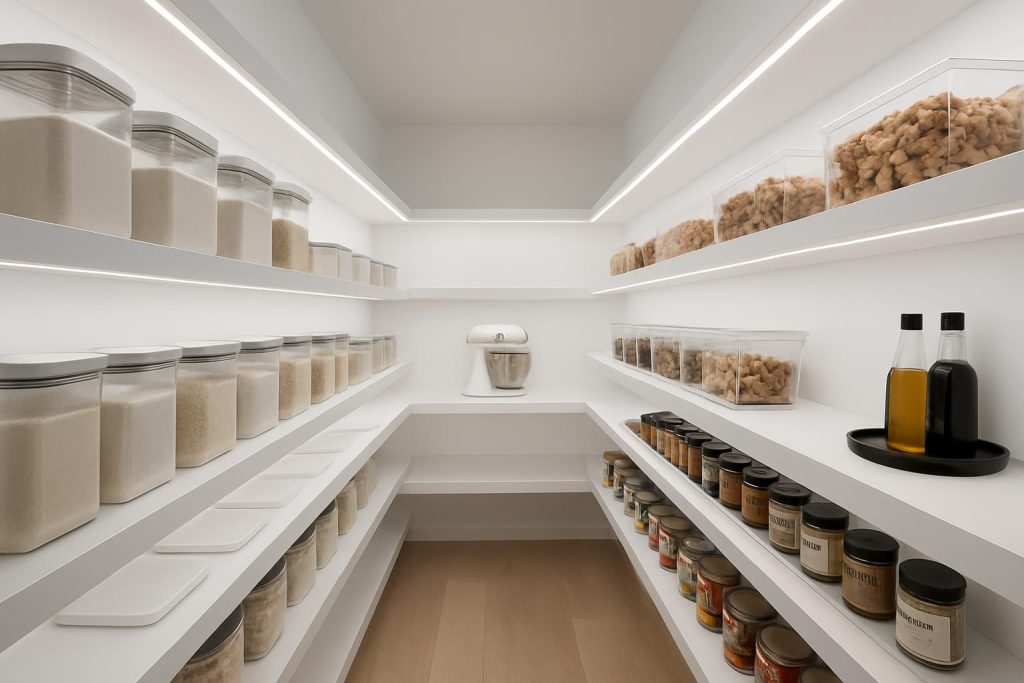
A walk in pantry is more than storage. It shapes how you cook, shop, clean, and eat. With a clear plan, even a small footprint can feel generous, fast to use, and easy to maintain. This guide shows you what to build, what to buy, and how to keep it working week after week.
Introduction
Start with function. Know what you store, how you cook, and who uses the space. Build around that. Keep shelves shallow enough to see everything. Set zones so items live where you reach for them. Add lighting that kills shadows. Choose containers that earn their space. Finish with a simple maintenance rhythm so your pantry stays tidy with little effort.
Plan the Space
Measure and map
Measure length, width, and height. Note door swing, window, and any obstacles. Aim for a 36 in clear walkway so two people can pass. If space is tight, 32 in can work for one person, but plan for one side shelving only.
Pick the layout
Common layouts are single wall, L shape, and U shape. Use single wall in narrow spaces. Use L shape to keep an open center. Use U shape only if width allows a 36 in walkway. Avoid corners that trap deep dead zones unless you add a lazy susan or diagonal shelf.
Define who uses it
Place kids snacks lower. Put daily cooking items at eye to chest height for the main cook. Heavy appliances should be waist to knee height to avoid lifting overhead.
Size and Layout Details
Shelf depth
Use 12 to 14 in deep shelves for most food. This prevents hidden items and expired waste. Use 16 to 20 in deep shelves only for appliances, paper goods, or bins that you can pull out as one piece. Avoid shelves deeper than 20 in.
Shelf spacing
Space shelves to fit what you own. Cans need 6 to 7 in of vertical space. Oil bottles and condiments need 10 to 12 in. Cereal boxes need 14 to 18 in. Small appliances need 16 to 20 in. Leave at least 2 in of clearance above the tallest item for easy access.
Heights that work
Keep the most used items between 24 and 60 in from the floor. Use the top shelf for light backstock only. Use the bottom shelf for heavy or bulky items. Leave a 4 to 6 in toe kick or a short baseboard to protect the lowest shelf from kicks, spills, and mops.
Shelving That Works
Materials
Melamine is smooth, wipeable, and budget friendly. Plywood with a sealed edge is strong and warm looking. Wire is airy and budget friendly but needs liners to prevent tipping and crumbs. If moisture is possible, seal wood and caulk joints.
Hardware
Wall cleats and fixed shelves feel solid and clean. Adjustable shelf standards let you change heights as your needs shift. For heavy loads, use studs or heavy duty wall anchors rated for the load. Add center supports on spans over 36 in.
Useful add ons
Install pull out drawers for packets and snacks. Add a shallow spice rack 3 to 4 in deep near prep items. Use a step riser for cans so you can see labels. Add one or two lazy susans for oils, sauces, and vinegars to prevent sticky rings.
Smart Zones
Daily use zone
Place breakfast items, coffee, tea, bread, spreads, and cereal at eye level. Keep this area tight so mornings run fast.
Cooking staples zone
Group oils, vinegars, broths, tomatoes, grains, and pasta near the door or near the path to the stove. Use lazy susans and risers for visibility.
Baking zone
Store flour, sugar, oats, chocolate, baking powder, and extracts together. Keep measuring cups and an extra bowl here if space allows. Use airtight containers in sizes that match your batch sizes.
Snacks and kids zone
Place bins of snacks at lower shelves. Pick clear bins so you can see when to restock. Label by category, not by brand.
Backstock and bulk zone
Keep extras up high or low, not in the prime middle shelf. Use a first in first out rule. Place the newest items behind the older ones.
Appliance and utility zone
Reserve a shelf or counter for the mixer, blender, or air fryer. Provide one or two outlets. Keep paper towels, wraps, and bags nearby for fast cleanup.
Containers and Decanting
Choose the right containers
Use airtight containers for flour, sugar, oats, rice, and snacks. Rectangular, stackable containers save space. Glass or BPA free plastic both work. For most baking staples, 2 to 3 quart containers fit well on 12 to 14 in shelves.
When to decant
Decant items you use often and in variable amounts such as flour or rice. Keep the rest in original packaging placed inside bins. Do not decant items with short seasonal use if they would sit too long.
Support tools
Use can risers for visibility. Use one or two lazy susans for oils and sauces. Use deep bins for snacks or packet categories so you can pull the bin out like a drawer.
Labeling That Guides Action
Simple categories
Label by category such as Baking, Breakfast, Snacks, Pasta, Rice, Canned Veg, Canned Beans, Oils, Vinegars, Broth. Keep wording short. Use large text you can read from the doorway.
Dates and rotation
When opening or decanting, add a small date label on the container front or lid. Place newer units behind older units. Set a monthly check to rotate and remove anything close to expiring to a front and center Use First spot.
Lighting and Power
Brightness and color
Aim for 40 to 70 lumens per square foot. A small pantry often needs one ceiling fixture plus LED strip lights under shelves. Choose 3000 to 4000 K color for clear labels and natural food colors.
Switching and sensors
A door jamb sensor or motion sensor switch saves time and keeps hands free. Add night light mode if the pantry is used at odd hours.
Outlets
Add at least one outlet at counter height if you plan to run small appliances. If close to a sink, use a GFCI protected circuit. Keep cords off walking paths.
Doors and Access
Door type
An outswing door keeps the interior clear. A pocket door saves space in tight halls. A barn door can work if the wall has room to slide. If the door swings in, trim deeper shelves near the hinge side to avoid collision.
Visibility
A glass insert or a louvered door improves light and air flow. If you prefer a solid door, boost interior lighting and consider an automatic switch.
Ventilation and Pest Control
Air flow
Stale air breeds odors. Add a small return vent or use a louvered door. In humid climates, add a compact dehumidifier or moisture absorbers. Keep food off the floor.
Pest prevention
Inspect grains and flours before storing. For extra assurance, freeze new grains for 48 to 72 hours before decanting. Use airtight containers for all grains, flours, nuts, and pet food. Wipe spills right away. Empty recycling and trash often.
Workflow and Daily Use
Shortest path wins
Place everyday items in the straight path from the kitchen to the pantry. Keep the door area clear. Avoid stacking items on the floor.
One touch rule
Set up bins so you can put items away in one motion. Do not require removing another item to store something. Leave a small open surface for set down and sorting.
Inventory and Shopping
Set par levels
Choose a minimum and maximum for staples. For example, pasta two to four units, black beans three to six cans, rice one to two containers. When you hit minimum, add to your list. Store extras only in the backstock zone.
List system
Keep a dry erase board or a paper list on the inside of the door. Add items as you use the last unit. Review weekly before shopping.
Small Walk In Pantry Strategies
Shallow shelves win
Use 10 to 12 in shelves on both sides with a 32 to 36 in walkway. Skip a back wall shelf if it narrows the aisle too much. Use vertical space with more shelf levels instead of deeper shelves.
Door and corners
Use a pocket door to gain aisle space. In corners, use diagonal shelves or a corner lazy susan to avoid black holes.
Multi use solutions
Add hooks for aprons and reusable bags. Add a slim rolling cart for oil and vinegar between side shelves if you have a gap. Use stackable bins to build height where shelf adjustment is limited.
Budget and DIY Build Steps
Plan and prep
Sketch the layout with shelf depths and heights. List zones. Decide which shelves need to be adjustable. Mark studs and plan hardware. Choose melamine or plywood based on budget and tools.
Cut and finish
Cut shelves to depth and width. Seal plywood edges or apply edge banding. Pre drill for supports. Paint or seal walls and cleats before mounting shelves.
Install
Install wall cleats level on studs or mount adjustable standards. Start with the middle shelves at eye level. Test fit common items. Add upper and lower shelves last to fine tune spacing.
Power and light
Add lighting before filling shelves. Install a motion sensor switch. Add outlet boxes if needed, using a licensed electrician when required.
Organize
Load by zone. Place containers and bins. Label categories. Step back and confirm everything can be reached without moving other items. Adjust before finalizing.
Safety and Accessibility
Load and reach
Keep heavy items between knee and waist height. Do not store glass jars on the very top shelf. Use non slip liners where needed.
Clear paths
Keep the floor empty. Use stable step stools with hand grips for high shelves. Ensure the door opens fully without hitting shelves.
Maintenance and Cleaning
Weekly
Do a five minute tidy. Return items to their bin. Wipe any sticky spots. Update the shopping list.
Monthly
Do a twenty minute reset. Check dates. Move near expiring items to the Use First spot. Refill containers. Wipe shelves front edges and handles.
Quarterly
Do a deeper clean. Empty one zone at a time. Vacuum crumbs. Wipe shelves with mild soap and water. Dry fully before restocking.
Annually
Declutter categories you no longer use. Adjust shelf heights to fit current habits. Patch scuffs and touch up paint if needed.
Common Mistakes to Avoid
Too deep shelves
Deep shelves hide food and waste space. Keep most shelves 12 to 14 in deep.
No zones
Random placement makes you rebuy items. Set clear zones and label them.
Dark corners
Shadows cause duplicates. Add under shelf lighting and aim for even coverage.
Pretty but impractical containers
Only decant what you use often. Oversized jars eat shelf depth and create dead space.
Ignoring maintenance
Without a routine, any pantry drifts into clutter. Use the weekly, monthly, and quarterly rhythm.
Conclusion
A walk in pantry becomes a daily ally when you plan smart depths, clear zones, and bright lighting. Shelves that match your items keep everything visible. Containers that seal tight and stack well protect food and save space. Labels guide fast decisions. A short, regular reset keeps it all working with little effort. Build it once with intention, then maintain it with minutes, not hours.
FAQ
Q: What is the best shelf depth for a walk in pantry?
A: Use 12 to 14 in deep shelves for most food, and 16 to 20 in deep shelves only for appliances or bulky items. Avoid shelves deeper than 20 in.
Q: How should I zone a walk in pantry?
A: Create zones for daily use, cooking staples, baking, snacks, backstock, and appliances. Keep daily items at eye level, snacks lower for kids, and backstock up high or low.
Q: How should I light a walk in pantry?
A: Aim for 40 to 70 lumens per square foot with a ceiling fixture plus under shelf LED strips, choose 3000 to 4000 K color, and use a motion sensor switch.
Q: Which containers are worth buying for a walk in pantry?
A: Airtight, stackable rectangular containers for flour, sugar, oats, rice, and snacks, plus can risers, one or two lazy susans for oils and sauces, and clear bins for categories.
Q: How often should I clean and reset my walk in pantry?
A: Do a five minute weekly tidy, a twenty minute monthly reset, a quarterly deeper clean, and an annual declutter and adjustment.