
We are reader supported. When you purchase through links on our site, we may earn an affiliate commission. Also, as an Amazon affiliate, we earn from qualifying purchases.
Indoor artificial turf looks clean and sharp when you maintain it the right way. The wrong vacuum can fuzz the fibers, lift seams, or pull out infill. The right vacuum turns weekly cleaning into a quick routine that protects the pile and your investment. This 2026 guide breaks down what actually matters, then reviews four proven vacuums that handle turf safely and efficiently.
What Indoor Artificial Turf Needs From a Vacuum
Fiber Safety First
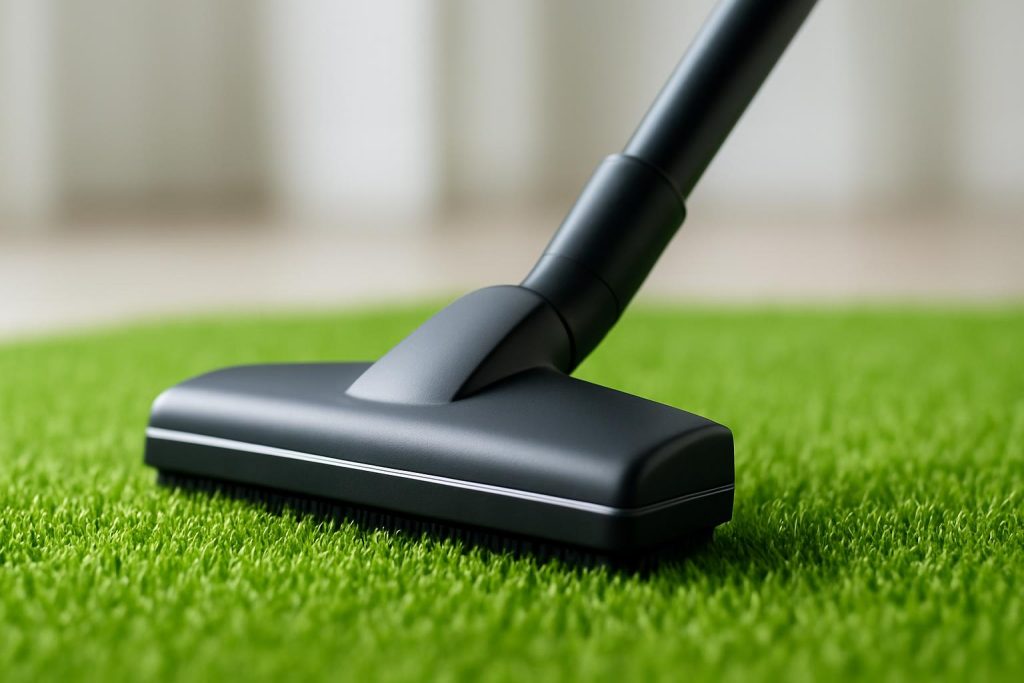
Artificial turf fibers are durable, but rotating brush bars can scuff, mat, or lift them. A safe approach is suction-first. That means a non-powered floor head, or an upright with a brush roll you can fully turn off. Height adjustment also helps the head glide instead of grabbing.
Granular Infill and Grit Control
Some indoor turfs contain sand or crumb rubber. Even if yours does not, grit migrates in from shoes and sports gear. Wide nozzles and hoses handle this better than tiny inlets. Wet dry vacs are excellent when you deal with heavy debris or spilled infill.
Dust and Microplastics Containment
Fine dust and tiny fibers require strong filtration. Bagged systems trap more mess when you empty. HEPA or sealed systems reduce spread in the room. If you prefer bagless, plan a careful, outdoor emptying routine.
Maneuverability and Reach
Indoor turf often spans wall to wall. Long hoses and cords, swivel heads, and light canisters help you reach seams and edges without dragging heavy gear across the surface.
How I Tested and What Matters In Daily Use
I think turf safety is non-negotiable. I focus on suction-only tools or brush-off modes, then set height so the head glides. I listen for tugging at seams and watch for fiber lift. I also pay attention to how easy it is to clear grit without clogs and how clean the air stays when I empty.
In practice, the vacuums that win here share a pattern: bagged or sealed filtration, a non-powered floor head or brush-off switch, and adjustable suction. Wet dry options are best for bulk debris, but I keep them on wide nozzles to protect fibers.
The 4 Best Vacuums for Indoor Artificial Turf in 2026
Miele Complete C3 Calima Canister Vacuum
Why it helps: The Calima pairs strong adjustable suction with excellent filtration in a fully sealed bagged system. It includes the Parquet Twister floor head, which is non-powered and glides on soft bristles. That makes it gentle on turf while still picking up dust and grit across a wide path.
Best for: Home gyms, playrooms, and multipurpose spaces with wall-to-wall turf where you want premium filtration and control.
What I like: The 6-step suction dial makes it easy to start low on turf and add power only as needed. The telescopic wand reaches under nets and benches without dragging the canister over the turf. The self-sealing GN bag contains dust and crumb-sized debris at disposal, which keeps the room cleaner.
Potential downsides: Price is high, and bags plus filters are ongoing costs. The included turbo brush is tempting, but I avoid it on turf and stick to the Parquet Twister. The Parquet head opening is moderate, so very large debris is better handled by a wet dry vac first.
Setup tips: Use the Parquet Twister. Set suction low to medium, and open the air-relief slider on the handle for extra glide if needed. Work with the grain of the fibers and along seams, not across them.
Kenmore Elite 31150 Bagged Upright
Why it helps: This upright offers strong suction, a brush roll on off switch, and height adjustment. Turn the brush off and raise the head and it becomes a powerful, turf-safe suction cleaner. HEPA filtration and a sealed system help keep fine particles under control.
Best for: Users who prefer upright handling, want a wide cleaning path, and need deep dust pickup with minimal scatter.
What I like: The brush-off mode makes a big difference on turf. Height settings let you dial in glide without sealing to the surface. The bag holds a lot, and the hose tools are handy for perimeter edges and seams. Headlights help spot grit on green surfaces.
Potential downsides: It is heavier than a canister and not as nimble in tight corners. It is also louder. With the brush off, you rely on suction and good technique for debris lift, so you may need a second pass over stubborn areas.
Setup tips: Turn brush roll off. Start at a higher height setting and lower only until debris picks up without grabbing. Use the hose and crevice tool along walls and line markings where grit collects.
Craftsman 16 Gallon 6.5 Peak HP Wet Dry Vac CMXEVBE17595
Why it helps: Large-capacity wet dry vacs shine when turf sees heavy debris, rubber crumb, or sand. The wide hose and utility nozzles swallow grit without clogging. The blower port is useful for lifting the pile lightly after vacuuming.
Best for: Home gyms and garages with training turf, heavy grit, or frequent infill control. Great as a secondary vac for big cleanups.
What I like: It handles bulk debris fast. The big canister saves trips to empty. The wide gulper nozzle is gentle if you keep it flat and moving. I think pairing this with a bag or fine dust filter makes cleanup far tidier.
Potential downsides: It is loud and bulky. Filtration on basic setups is not as fine as premium household vacs, so add a bag or fine cartridge for dust. Do not press a narrow crevice tool hard into the turf, and avoid hovering over loose seams with max suction.
Setup tips: Use the wide utility nozzle for turf. Keep filters dry for dry pickup. If you need to wash the surface, avoid saturating the turf and ensure full drying to prevent trapped moisture. Short, overlapping passes work best.
Eureka Mighty Mite 3670M Canister
Why it helps: This lightweight bagged canister is simple, effective, and gentle. The combo floor head is non-powered with bristles that can be lowered for smooth glide. Suction is strong for its size, and the hose makes edge work easy.
Best for: Budget-friendly turf rooms, small spaces, and users who want light gear they can carry easily.
What I like: It is under ten pounds and quick to deploy. Bags keep disposal clean compared to small bagless bins. The handle airflow slider is handy to reduce suction on delicate sections. The blower function can fluff fibers lightly after cleaning.
Potential downsides: No HEPA option in most versions, and the cord is shorter than premium canisters. Wheels are small, so I park the canister on a hard surface and work the hose over the turf when possible.
Setup tips: Use the floor head with bristles down. Open the handle airflow slider for easy glide. Empty the bag before it is too full so suction stays smooth and gentle.
Quick Setup and Technique Guide for Turf-Safe Vacuuming
Keep brushes off: Avoid powered brush tools on turf. Turn the brush roll off or use a non-powered floor head with soft bristles. Start with low suction and increase slowly.
Dial in suction and height: Use low to medium suction, open any air-relief slider, and raise the floorhead height so it glides instead of grabbing. Test in a corner and work with the grain of the fibers.
Mind the seams: Clean along seams, not across them. If you feel tugging, reduce suction or lift off slightly and resume at a shallower angle.
Work in lanes: Overlap passes by one third. For grit pockets, stop and lift debris with a hose tool instead of grinding the head back and forth.
Contain the mess at emptying: Bagged vacs seal dust. For bagless, empty outdoors, keep the bin low to the can liner, and wipe the bin and filters after turf sessions.
Care and Maintenance Tips That Extend Turf Life
Vacuum schedule: In high-traffic spaces, vacuum 1 to 2 times per week and spot-clean as needed. For low-traffic rooms, every one to two weeks is enough.
Grooming assist: After vacuuming, a soft brush or light blower pass can lift flattened fibers and freshen the look.
Stain control: Blot spills fast with a damp microfiber. Avoid harsh chemicals. If you rinse, dry thoroughly to prevent moisture buildup beneath.
Filter discipline: Replace bags before they overfill. Clean or replace filters on schedule so suction stays consistent and gentle.
Comparison Snapshot and How to Choose
Choose Miele Complete C3 Calima if you want premium control, sealed filtration, and a non-powered floor head that is gentle yet thorough. It is my top pick for full rooms and regular maintenance.
Choose Kenmore Elite 31150 if you prefer an upright, need a wide path, and want the flexibility to turn the brush off while keeping strong suction and height adjustment.
Choose Craftsman 16 Gallon Wet Dry if you deal with infill, sand, or frequent bulk debris. It is ideal as a heavy-duty partner for quick grit removal before a finishing pass with a gentler vac.
Choose Eureka Mighty Mite 3670M if you want a light, affordable, suction-only canister that handles small to mid-size turf areas without fuss.
Conclusion
Indoor artificial turf stays cleaner and lasts longer when you skip spinning brushes and control suction. A non-powered floor head or a brush-off upright protects the fibers, while bagged or sealed filtration keeps fine dust in check. For heavy grit or infill, a wet dry vac earns its keep. Pick the format that matches your room size and debris type, set it up for glide, and build a steady routine. Do that and turf cleaning turns into a fast, low-stress habit that preserves the look and performance you installed it for.
FAQ
Q: Can I use a beater bar or turbo brush on indoor artificial turf
A: Avoid powered brush tools on turf. Turn the brush roll off or use a non-powered floor head with soft bristles. Start with low suction and increase slowly.
Q: Is a bagged or bagless vacuum better for turf
A: Bagged models are better for capturing fine dust and infill without mess. Bagless can work if you empty outdoors and wipe the bin and filters after each turf session.
Q: How often should I vacuum indoor artificial turf
A: In high-traffic spaces, vacuum 1 to 2 times per week and spot-clean as needed. For low-traffic rooms, every one to two weeks is enough.
Q: Can I use a wet dry vacuum on indoor turf
A: Yes, for heavy debris and infill control. Use a wide utility nozzle, keep filters dry for dry pickup, and avoid soaking the turf to prevent trapped moisture.
Q: What vacuum settings should I use on turf
A: Use low to medium suction, open any air-relief slider, and raise the floorhead height so it glides instead of grabbing. Test in a corner and work with the grain of the fibers.