
We are reader supported. When you purchase through links on our site, we may earn an affiliate commission. Also, as an Amazon affiliate, we earn from qualifying purchases.
Ready to upgrade your bedroom with style that feels grown, practical, and comfortable. This guide keeps the process simple and focused, from layout and furniture to lighting, storage, and weekly habits. You will see what to pick, what to skip, and how to finish strong without clutter or confusion. Keep reading and move step by step.
Plan Your Direction
Pick a Style
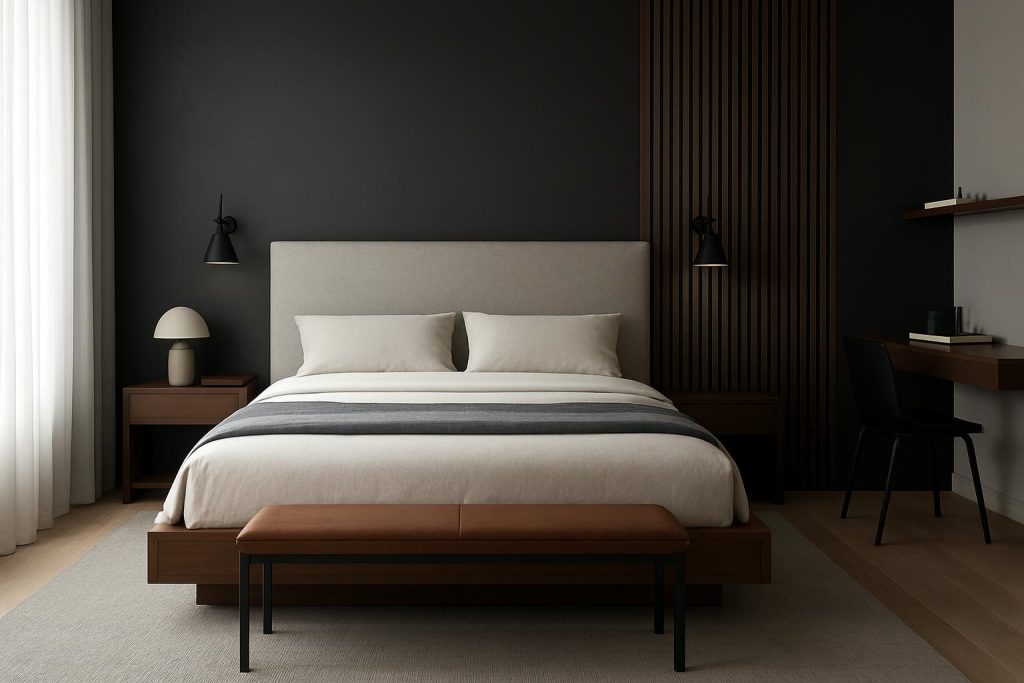
Choose one main style so every choice supports it. Try Japandi for calm wood, clean lines, and texture. Go Industrial for metal accents, darker tones, and durable finishes. Choose Modern Rustic for warm wood, natural fiber, and simple black details. Mid-Century blends low lines, walnut, and tapered legs. Moody Hotel Minimal leans dark walls, crisp bedding, and layered lighting. Commit to one and avoid mixing too many looks.
Define a Color Palette
Pick two core colors and one accent. Strong options include charcoal and sand with olive, navy and white with cognac, gray and beige with terracotta, or taupe and black with rust. Use the core colors for walls, large furniture, and bedding. Use the accent on a throw, art, or a lamp. Keep undertones consistent. If your room is small or low on light, keep walls light and add dark accents. If you want drama, go dark on the headboard wall and keep the rest mid-tone or light.
Choose Core Materials and Textures
Use wood for warmth and metal for edge. Walnut, oak, or ash are safe picks. Matte black or brushed metal hardware looks current. Layer linen, cotton, and wool for depth. Add leather or faux leather in a bench or pillow for structure. Keep patterns simple and scale larger to avoid noise. Texture beats busy prints in a modern men’s room.
Layout That Works
Measure and Map
Start with exact room dimensions and note outlets, windows, and doors. Center the bed on the longest uninterrupted wall. Leave at least 60 cm on both sides for nightstands and movement. Keep walkways clear and plan door swing.
Zoning Sleep, Work, Dress
Create three simple zones. Sleep zone holds the bed, nightstands, and ambient light. Work zone fits a compact desk or a wall shelf with a chair away from the bed if possible. Dress zone holds the closet, dresser, mirror, and laundry hamper. Group items by task to reduce mess and backtracking.
Small Room Moves
Use a low-profile bed or a slim platform to open sight lines. Mount lamps or use wall sconces to free nightstand space. Pick a narrow dresser with tall storage instead of a wide one. Use a single large rug under the bed to define space.
Furniture Essentials
The Bed Upgrade
A solid bed frame sets the tone. Choose a simple wood frame or an upholstered headboard in neutral fabric. Avoid shiny chrome or heavy ornament. Check mattress height so bedding drapes cleanly. Aim for a headboard tall enough to show above pillows for balance.
Nightstands and Dresser
Pick nightstands that match in finish or style. Two drawers or one drawer with an open shelf keeps function tight. Match hardware across the room for cohesion. For the dresser, choose wood with simple pulls. Top it with a tray, a lamp, and one personal item to avoid clutter.
Seating or Bench
Add a bench at the foot of the bed for shoes and bags. Choose leather, wood, or upholstered in a durable fabric. If space is tight, use a narrow stool or folding bench that tucks away.
Work Nook
Use a compact desk with cable pass-throughs. Mount a floating shelf above for storage. Pick a supportive chair that tucks in fully to save space. Keep colors tied to the main palette.
Lighting With Impact
Ambient, Task, Accent
Layer three types. Ambient could be a ceiling fixture or track light for general light. Task includes bedside lamps or sconces for reading, and a desk lamp for work. Accent adds depth with a floor lamp, picture light, or LED strip behind the headboard.
Color Temperature and Bulbs
Use warm white bulbs at night to relax, around 2700 to 3000K. Use neutral white for work tasks, around 3500 to 4000K. Keep all bulbs dimmable when possible so the room shifts from focused to restful.
Smart Controls
Use smart bulbs or a smart plug for scenes. Set wake-up lights to brighten slowly. Set a night routine that lowers lights and turns on only bedside lamps. Hide cords with cable sleeves and clips down the back of furniture.
Textiles That Add Depth
Bedding Stack
Start with crisp cotton or linen sheets in white, sand, or gray. Add a duvet in a solid core color. Layer a textured blanket or wool throw at the foot for contrast. Use two to four pillows max to keep it clean. Stick to solids or a subtle stripe.
Rugs
Pick a rug that extends at least 45 to 60 cm on the sides of the bed. Textures like wool, flatweave, or low-pile work best for easy cleaning. Choose a color that grounds the room without fighting the bedding. In a rental, a large rug also hides old floors and absorbs sound.
Window Treatments
Install blackout curtains for sleep quality. Layer with a sheer for daylight privacy. Mount the rod high and wide so windows look larger. Choose solid fabric in a tone that repeats your palette.
Walls and Art
Paint or Wallpaper
For paint, matte or eggshell finishes look modern and calm. Dark charcoal, deep navy, or olive green add mood on a feature wall behind the headboard. For wallpaper, choose a subtle texture or large-scale pattern in neutral tones. Keep other walls simple.
Headboard Wall Focus
Anchor the bed with a color block, paneling, or a wood slat feature. Align the width with the bed or extend to nightstands for a built-in feel. Use a slim LED strip behind the headboard for soft glow.
Art and Personal Items
Pick one or two large pieces over many small frames. Choose photography, abstract art, or a clean graphic. Center it above the bed or dresser at eye level. Keep shelves minimal and style with books, a plant, or a sculptural object only.
Storage and Organization
Closet System Basics
Use a mix of hanging, shelves, and drawers. Add a double hanging rod for shirts and pants. Use uniform slim hangers to increase space. Shelf dividers keep stacks from collapsing. A small box on the top shelf holds off-season items.
Underbed and Vertical Space
Use lidded underbed bins for spare bedding and out-of-season clothes. Choose clear or labeled bins so you find items fast. Add wall hooks or a valet hook near the door for next-day outfits or gym gear.
Nightstand and Dresser Organization
Use a drawer tray for wallet, keys, and watch. Keep a small notebook and pen instead of random notes. In the dresser, file-fold tees so you see all colors. Group socks and underwear in separate dividers. Limit the top surface to three items max.
Cable Management and EDC Station
Mount a multi-port charger to the back of a nightstand with adhesive strips. Use a cable clip near the top to secure cords within reach. Place a small tray at the dresser for daily carry items. Keep it consistent so you stop losing keys.
Laundry System
Use a divided hamper for lights and darks. Place it close to the closet. Keep a fabric shaver and lint roller in the top drawer for fast refresh. Do laundry on a fixed day to prevent pileups.
Tech That Stays Subtle
Sound, Sleep, Power
Use a compact speaker that blends with decor. Add a white noise mode or a dedicated sleep machine if street noise is an issue. Install blackout curtains and consider a draft blocker if sound or light leaks at the window. Use low-profile surge protectors and hide them behind furniture.
Cable Concealment
Run cables along baseboards with adhesive raceways. Use velcro ties and label ends. Keep the desk surface clear by mounting a small power strip under it.
Cleaning and Maintenance Routines
Daily 10 Minutes
Make the bed right after waking. Clear nightstands and the dresser top. Put clothes into the hamper or back on hangers. Reset pillows and throw. Open the window for five minutes for fresh air.
Weekly 30-Minute Reset
Change sheets and pillowcases. Dust surfaces including lamps and headboard. Vacuum the rug and under the bed if accessible. Wipe mirrors and hardware. Empty trash and clean the hamper liner if needed.
Monthly and Seasonal Tasks
Rotate the mattress if the type allows. Wash the duvet cover and blanket. Vacuum mattress and upholstered headboard with the upholstery tool. Condition leather items lightly. Tighten loose screws on hardware and bed frames. Clean light fixtures and replace dim bulbs.
Fabric and Surface Care
Wash sheets weekly and duvet covers monthly or biweekly if needed. Spot clean rugs as soon as spills occur. Use wood cleaner for dressers and nightstands every month. Avoid glossy polishes. For leather, use a gentle conditioner quarterly. For linen and cotton, follow care tags and avoid high heat.
Air, Scent, and Plants
Use a diffuser with a calm scent like cedar, sandalwood, or vetiver. Keep good ventilation while using any scent product. Add one or two low-care plants such as snake plant or pothos. Wipe leaves monthly to reduce dust.
DIY and Budget Upgrades
Headboard Hacks
Wrap plywood with foam and linen for a custom upholstered headboard. Mount with French cleats for stability. For a wood look, install vertical slats stained in walnut or oak. Keep spacing even and end at the nightstand width.
Nightstand and Dresser Refresh
Swap knobs or pulls to matte black or brushed metal. Sand and oil wood tops for a fresh finish. Add felt pads to drawer bottoms for a quiet glide. Line drawers with washable liners.
Paint and Hardware
Paint the door and trim in a satin finish to sharpen the room. Replace basic switch plates with clean metal or matte black. Update lamp shades to drum shapes for modern lines.
High-Impact Low-Budget Moves
Under a modest budget, focus on a new duvet set, two quality pillows, modern lamps, and blackout curtains. Add a large rug if floors are weak. Upgrade one art piece over the bed. These items shift the entire mood without a full overhaul.
Rental-Friendly Moves
Non-Permanent Fixtures
Use tension rods, removable hooks, and adhesive strips for art and lights. Try peel-and-stick wallpaper on the headboard wall. Use large area rugs to cover old carpet or tile.
Damage-Free Mounting
Mount cable raceways with removable adhesive. Use lightweight frames and stick-on hooks rated for weight. Keep original hardware in a labeled bag to reinstall before moving out.
Finish Strong With Styling
Symmetry or Intentional Offset
Symmetry with matching nightstands and lamps creates calm. If space is uneven, balance with a tall floor lamp on one side and art on the other. Keep visual weight even.
Color Balance
Repeat your accent color at least twice. Example, a throw and a pillow, or a lamp base and art tone. Spread colors around the room instead of grouping them in one corner.
Edit Down
Remove one item from every surface. Keep negative space. It makes cleaning easier and the room looks sharper. If something does not serve comfort or function, let it go.
Conclusion
A men’s bedroom works best when style and function move together. Start with one clear style, a tight color palette, and honest materials. Lock in a smart layout and strong lighting. Layer textiles for comfort and plan storage so clutter has no place to start. Add subtle tech, keep cables hidden, and follow short cleaning rhythms. Finish with one bold move and a clean edit. Do this once with intention and your room will stay easy to live in and easy to maintain.
FAQ
Q: What are reliable color palettes for a modern men’s bedroom
A: Strong options include charcoal and sand with olive, navy and white with cognac, gray and beige with terracotta, or taupe and black with rust. Use two core colors and one accent for balance.
Q: How can I make a small bedroom look bigger
A: Use a low-profile bed, mount lamps or sconces, choose a narrow tall dresser, and place one large rug under the bed. Keep walls light and add dark accents sparingly.
Q: What lighting setup works best for both work and rest
A: Layer ambient, task, and accent lighting. Use warm white bulbs at night and neutral white for work. Add dimmers or smart controls to switch scenes easily.
Q: Which budget upgrades deliver the biggest impact
A: Upgrade the duvet set and pillows, add modern lamps, install blackout curtains, and lay a large rug. Add one strong art piece over the bed for a clear focal point.
Q: How do I keep my room tidy with minimal effort
A: Follow a daily 10-minute reset, use a divided hamper, keep an EDC tray, manage cables with clips, and limit surfaces to a few items. Do a weekly 30-minute clean and a monthly deeper reset.