
We are reader supported. When you purchase through links on our site, we may earn an affiliate commission. Also, as an Amazon affiliate, we earn from qualifying purchases.
You wore it once. It is not dirty, but it is not fresh-from-laundry either. If you toss it on a chair, it wrinkles and looks messy. If you put it back with clean clothes, it can transfer odor. You need a clear plan. This guide gives you 15 smart storage ideas and the simple rules that make them work. Set up one small station, add two or three habits, and you will cut laundry, protect fabrics, and keep your room tidy.
Why a mid-wear station matters
Mid-wear storage stops clutter before it starts. When you have a clear place for worn-but-not-dirty items, you avoid floor piles and over-laundering. Clothes last longer, colors fade slower, and fibers pill less. You also move faster each morning because you can see what you can rewear. One small station is enough in most homes.
Simple rules before you store
Use these steps every time. They take under a minute and prevent odor.
1. Check quickly for stains, sweat marks, spills, or strong smell. If you see any, send to laundry now.
2. Air the garment for 15 to 30 minutes on a hanger or hook. Let moisture evaporate.
3. Empty pockets and remove belts or accessories.
4. Decide hang or fold. Hang structured items. Fold knits to avoid stretching.
5. Place the item in your mid-wear station, not with clean laundry.
6. Do a weekly reset. Move what needs washing to the hamper and re-hang what stays.
15 smart ideas for storing worn but not dirty clothes
1. Pull-out valet rod inside the closet
A slim valet rod mounts inside your closet and slides out when you need it. Use it for blazers, trousers, and dresses you plan to rewear. It keeps items visible and separate from fully clean pieces. When closed, it hides visual clutter.
2. Over-the-door multi-hook
Hook racks take seconds to install and fit renters. Assign each hook a category like tops, bottoms, sleep, gym. Limit to one item per hook to maintain airflow. This simple cap keeps odor away and prevents a new pile from forming.
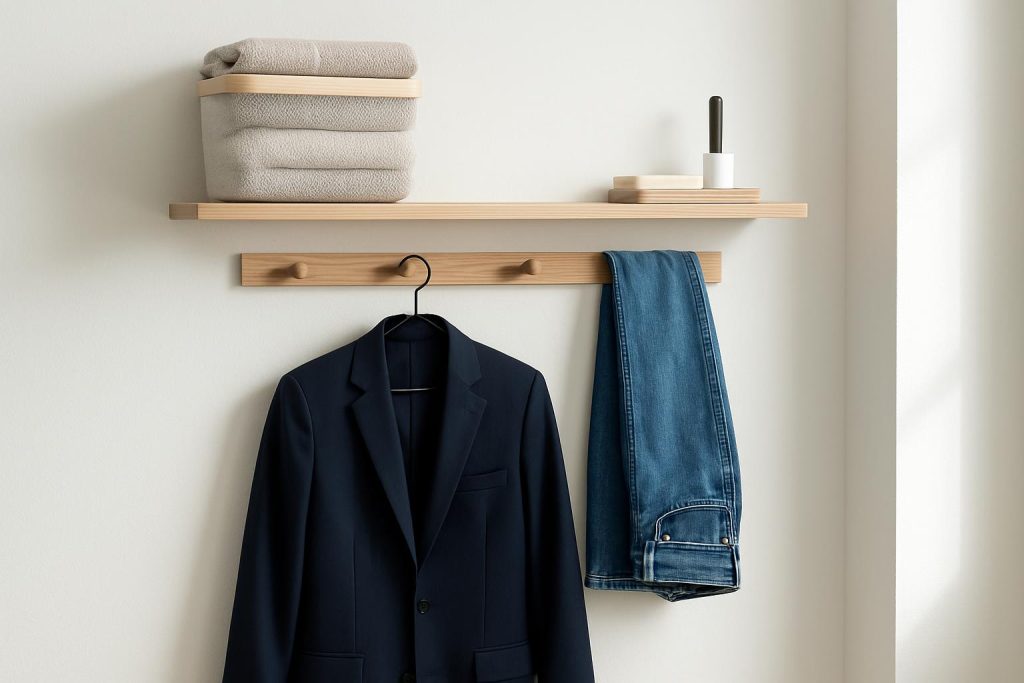
3. Wall-mounted peg rail
A wood peg rail looks neat and handles weight. Space pegs 4 to 6 inches apart. Hang jeans by the belt loop, drape scarves, and park a next-day outfit. Add a few S-hooks for bags or hats so they do not crush fabric.
4. Swing-arm hooks
These pivot away from the wall, spread garments for air, and fold flat when not in use. Install two at shoulder height near your closet. They are ideal for damp cuffs or collars after a long day.
5. Command-hook grid behind the door
If drilling is not an option, use removable hooks in a neat grid. Label the top row wear again and the bottom row laundry to decide quickly. Replace any hook that loosens to avoid falls and wrinkles.
6. Slim garment rack with a mid-wear zone
Use a narrow rack and divide it into two zones with a clip or ribbon. Left side is mid-wear, right side is clean. Cap the mid-wear side at 5 hangers. When it is full, you must either wash or return something to clean storage. This hard limit keeps the rack from becoming a second closet.
7. Freestanding valet stand
A valet stand holds a jacket, trousers, tie, and watch without squashing shape. It works well for office wear and uniforms. Hang trousers by the knee over the bar to release knee creases overnight. Keep a lint roller on the tray for a quick refresh.
8. Leaning ladder rack
A wooden ladder against a wall creates wide, airy rungs for knits and tees. Drape one item per rung. This prevents shoulder bumps and allows quick visual sorting. Choose a matte finish to avoid snags.
9. Blanket bar or towel bar
Install a strong bar at chest height. It is low-profile and ideal for jeans, joggers, and cardigans. Fold items once and drape evenly. The bar keeps airflow high and reduces hanger marks.
10. Shelf plus hanging rod combo
Add a short rod under a floating shelf. Use the rod for hangers and the shelf for a shallow tray that holds a fabric brush and a small mesh bag for socks you will rewear. This micro-station fits in an entry, bedroom corner, or laundry nook.
11. Breathable shelf basket labeled Wear Again
Place a mesh or open-weave basket on a closet shelf. Fold sturdy items like jeans and sweaters after airing. Avoid plastic bins with no vents. A clear label cuts decision time and helps others in the home follow the system.
12. Under-bed shallow bin with ventilation
Choose a bin with vent holes or a fabric zip cover. Only store fully dry items and leave the lid ajar for the first hour. Reserve this for off-season mid-wear items you rotate on weekends, like loungewear or denim.
13. Dresser drawer divider
Convert the top drawer into two zones. Left side wear again, right side clean. Use a rigid divider so piles do not collapse. This is effective for tees, workout shorts, and sleep shirts that see quick turnarounds.
14. Kids and sports zone
Mount two low hooks for school clothes and practice gear. Add a wire basket under the hooks for shin guards or caps. This keeps repeated-use outfits out of the hamper and speeds up school mornings.
15. Laundry room halfway station
Install a short bar or a few hooks above the washer. After work, hang pieces to air. Reassess after 30 minutes and move to either wear again storage or the hamper. This stop prevents damp garments from going into drawers too soon.
How to choose the right idea for your space
Tiny rooms
Go vertical. Use an over-the-door hook plus a narrow peg rail. Limit capacity to five items. Place it near the closet to avoid back-and-forth.
Shared bedrooms
Assign zones by person or category. Use color-coded hooks or separate rails. Post a small card with the rules to keep everyone aligned.
Open closets
Use a visually tidy option like a wooden peg rail or a valet rod hidden inside. Stick to neutral hangers for a uniform look. Keep the mid-wear section small so it never dominates the view.
Airflow and hygiene guidelines
Air every garment 15 to 30 minutes before storing. Space items so they do not touch. Do not compress items into drawers while warm from the body. Keep your mid-wear station away from humid corners. If a piece smells off in the morning, wash it. Never return damp gym wear to mid-wear storage. Let gym and swim items dry fully, then launder.
Hang or fold: quick decisions
Hang structured pieces like blazers, trousers with creases, dresses with shape, and button-down shirts. Use wide hangers for blazers and coats to protect shoulders. Fold knits, heavy sweaters, and stretchy tees to prevent stretching. Drape jeans on a bar or fold into a breathable basket. For delicate fabrics, use padded hangers and keep out of direct sun while airing.
How many wears before washing
Use ranges and adjust for climate and activity. Tops and tees often allow 1 to 2 wears. Button-down shirts allow 1 to 3 wears. Jeans and sturdy trousers allow 2 to 4 wears. Sweaters allow 3 to 5 wears with a shirt underneath. Always wash sooner if you sweat, spill, or notice odor.
Set a weekly reset
Five-minute Sunday routine
1. Scan your mid-wear station.
2. Move anything that smells or looks dull to the hamper.
3. Brush lint and surface dust from what remains.
4. Refold or rehang with space between items.
5. Wipe the hooks or rod and sweep the floor below.
This reset stops buildup and helps you start the week with clarity.
Keep the station tidy with micro-habits
Cap capacity. Five hangers or five hook spots is enough for most people. Use the one in, one out rule. When you add a new mid-wear item, remove one. Turn hangers backward for mid-wear so you can spot them at a glance. Keep a fabric brush and lint roller nearby. Put them where you naturally stand after changing.
Fabric care add-ons that help
Use a clothes brush on wool and suits to lift dust and refresh the nap. Give wool 24 hours of rest between wears. Steam lightly to remove wrinkles and mild odors. Place cedar blocks in closets to deter moths and add a gentle scent, but keep them away from direct fabric contact to avoid oil marks. Always test steam distance on delicate fabrics.
Avoid the chair trap
A chair invites stacking. Stacks trap moisture and create wrinkles. Replace the chair pile with a defined hook or bar. The visible limit forces faster decisions and prevents a hidden backlog.
Sample setups you can copy today
Fast renter setup
Install an over-the-door multi-hook on the bedroom door. Add a mesh basket on the closet shelf labeled Wear Again. Place a lint roller on the dresser. Air for 15 to 30 minutes, then move to hook or basket. Reset on laundry day.
Closet-integrated setup
Add a pull-out valet rod inside your closet. Place a small tray on a shelf with a clothes brush. Reserve five slim hangers on the rod for mid-wear only. Turn these hangers backward so you can identify them at once.
Small family setup
Mount a peg rail in the hallway with two pegs per person. Put a wire basket under each pair. Teach the same quick rules. Do the weekly reset together for two minutes, right before starting laundry.
Conclusion
You do not need a second closet to manage worn but not dirty clothes. You need a clear station, a five-hanger limit, and a short routine. Pick one of the 15 ideas that fits your space. Add the quick checks, a 15 to 30 minute air-out, and a weekly reset. Your room will look cleaner, your mornings will run smoother, and your clothes will last longer.
FAQ
Q: How long should I air clothes before putting them in mid-wear storage
A: Air garments for 15 to 30 minutes so moisture evaporates and odor does not build.
Q: Should I hang or fold items I plan to wear again
A: Hang structured items like blazers, trousers with creases, dresses with shape, and button-downs. Fold knits, heavy sweaters, and stretchy tees to prevent stretching.
Q: How many times can I wear something before washing
A: Tops and tees often allow 1 to 2 wears, button-down shirts 1 to 3, jeans and sturdy trousers 2 to 4, and sweaters 3 to 5 with a shirt underneath. Wash sooner if you sweat, spill, or notice odor.
Q: What is an easy small-space setup for mid-wear clothes
A: Use an over-the-door multi-hook plus a mesh basket labeled Wear Again on a closet shelf. Air for 15 to 30 minutes, then store. Do a weekly reset on laundry day.
Q: How often should I reset or clean the mid-wear station
A: Do a weekly reset. Move items that need washing to the hamper, brush what remains, and rehang with space between pieces.