
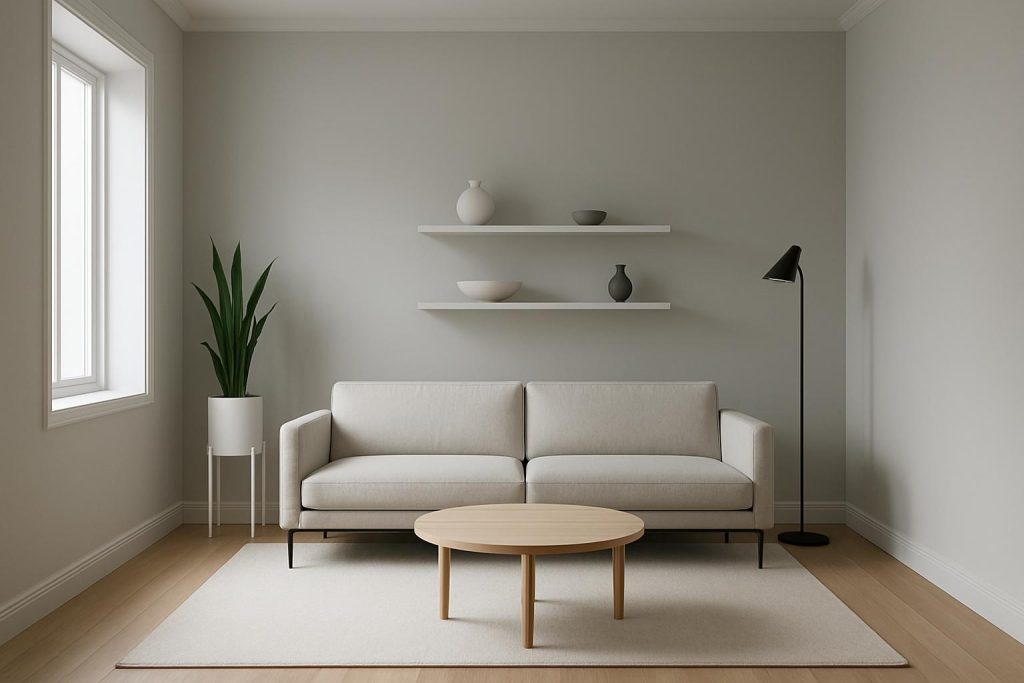
We are reader supported. When you purchase through links on our site, we may earn an affiliate commission. Also, as an Amazon affiliate, we earn from qualifying purchases.
A small living room can feel open, calm, and stylish with minimalist decor. You do not need a big budget or a full renovation. You need clear choices, simple lines, and consistent habits. This guide gives you practical steps you can apply today. Keep reading to learn how to edit, plan, shop, arrange, and maintain a small space that works every day.
Introduction
Minimalist decor is not about owning almost nothing. It is about keeping what you use and what you love, and letting go of the rest. In a small living room, this keeps the space flexible, easy to clean, and visually light. You will create calm by using fewer colors, fewer shapes, and smarter storage. You will also make the room feel larger with better light, scale, and proportions.
This article is beginner friendly. Each step builds on the last. You will learn how to choose a palette, pick furniture that fits, plan the layout, and add storage that disappears into the design. You will also see common mistakes and how to avoid them. By the end, you can set up a minimalist living room that supports your routine and looks good every day.
Start With a Clean Slate
Edit Without Hesitation
Clear the room of everything you can move. Only bring back what you use weekly and what adds real value. If two items do the same job, keep the one that works harder or takes less space. This step sets the tone for every choice that follows.
Measure and Map
Measure the length, width, and ceiling height. Note doors, windows, radiators, and outlets. Draw a simple floor plan on paper. Mark walkways and a main focal point, such as a window or media wall. Good measurements prevent buying pieces that are too big or too small.
Define the Purpose
List the three main activities you do in the room. Examples include relaxing, watching TV, reading, hosting two guests, working on a laptop, or playing with a child. Design for those activities first. Everything else is optional.
Choose a Simple Color Palette
Limit Colors to Keep the Room Cohesive
Pick two to three main colors. Use light neutrals as the base, such as white, cream, light gray, or greige. Add one soft accent color that you repeat sparingly in textiles or art. Fewer colors help walls recede and furniture blend, which makes the room feel larger.
Match Undertones
Keep undertones consistent. If your main neutral is warm, pick warm whites, warm woods, and warm metals. If your main neutral is cool, keep grays, blues, and chrome in the same family. Consistent undertones reduce visual noise.
Walls, Trim, and Ceilings
Paint walls and trim in the same color for a seamless look. Use a slightly higher sheen on trim for durability. A pale, matte ceiling opens the room and keeps it bright.
Pick Furniture With the Right Scale
Low Profile and Lifted Legs
Choose sofas and chairs with low backs and slim arms. Exposed legs lift furniture off the floor and create more visible space. Avoid bulky pieces with deep seats if the room is narrow.
Choose Multi Use Pieces
Use furniture that does more than one job. Try a storage ottoman instead of a coffee table, a nesting table set, a bench with a shelf, or a sleeper sofa for guests. These pieces reduce clutter and help you adapt the room as needed.
Materials and Finishes
Favor light wood, matte metal, glass, or clear acrylic to keep the look clean. Stick to two finishes across the room, such as light oak and black metal. Repeating finishes ties pieces together.
Plan a Clear Layout
Protect Walkways
Keep a walkway of about 75 to 90 cm or 30 to 36 inches where people pass often. This keeps movement smooth and prevents bumps. Do not block doors or access to windows.
Set Comfortable Distances
Place the coffee table 30 to 45 cm or 12 to 18 inches from the sofa. Aim for easy reach without leaning too far. Arrange side tables so each seat has a landing spot for a drink or a book.
Anchor the Focal Point
Face seating toward your focal point, such as a window view, art piece, or media unit. If the room is tight, float the sofa a few centimeters from the wall to allow air space and cable routing. Small adjustments can improve comfort and flow.
Use Smart Storage That Disappears
Go Vertical
Mount shallow shelves or a tall bookcase to use wall height. Keep heavier items on lower shelves and lighter decor up high. Choose closed storage for messy items and open shelves for a few display pieces.
Hide the Everyday
Use baskets or bins that fit inside cabinets or under benches. Label the inside rim to keep the outside clean. Store remotes, chargers, and small tech in a lidded box on the media unit or coffee table.
Use Doors and Corners
Add slim hooks behind doors for foldable stools or lightweight bags. Fit a corner shelf for speakers or a plant. These small zones free up floor space.
Textiles That Add Warmth Without Bulk
Rug Sizing
Choose the largest rug your room can handle. At minimum, front sofa and chair legs should sit on the rug. A larger rug simplifies the look and anchors the layout.
Window Treatments
Hang curtains high and just outside the window frame to extend the look of height and width. Use light fabrics that allow daylight to filter through. If you prefer blinds, keep them in a soft neutral to match the walls.
Pillows and Throws
Limit pillows to one to two per seat. Choose one texture story such as linen, cotton, or wool. Repeat the accent color once or twice and stop there.
Art, Mirrors, and Objects
One Focal Piece per Zone
Display one strong piece of art over the sofa or one sculptural object on the media unit. This keeps attention clear and reduces clutter. If you prefer a pair, use two pieces that match size and frame finish.
Mirrors for Light
Place a mirror across from a window to bounce light deeper into the room. Choose a simple frame in a finish you already use. Do not add mirrors on every wall. One well placed mirror is enough.
Keep Surfaces Clear
Leave open space on tables and shelves. Add one plant or one stack of books or one bowl for keys. Edit weekly to prevent a slow build up of small items.
Lighting Layers That Save Space
Ambient, Task, and Accent
Use a ceiling light or track light for general illumination. Add a floor lamp or plug in sconce for reading. Include a small table lamp or LED strip to highlight a shelf or art. Three light sources in the room create depth without clutter.
Choose Slim Profiles
Pick fixtures with small shades and narrow poles. Consider swing arm plug in sconces to free floor space. Keep finishes consistent with your furniture hardware.
Control and Bulbs
Use warm bulbs for evening comfort. Add dimmers or smart plugs to adjust light levels. Keep replacement bulbs in one color temperature so the room reads calm.
Plants That Stay Minimal
Size and Quantity
Use one to two medium plants or one tall plant if you have a corner to fill. Avoid many tiny plants that read as clutter. Choose low maintenance types that suit your light level.
Planters and Placement
Use plain planters in colors from your palette. Lift plants on stands to show more floor and increase airiness. Keep soil out of sight with a top layer of pebbles if needed.
Media and Cable Control
Conceal the Tech
Mount the TV or place it on a slim media unit. Hide cables using cord covers, raceways, or baskets fixed behind the unit. Use a power strip inside a closed cabinet to reduce visible cords.
Reduce Device Count
Consolidate remotes and consider streaming boxes that mount behind the TV. Store chargers in a labeled pouch inside a drawer. Less gear on show keeps the look clean.
Daily Habits That Keep It Minimal
One In, One Out
When a new item enters, remove an old item of the same type. This simple rule prevents clutter from returning. Apply it to pillows, books, gadgets, and decor.
Weekly Reset
Reset surfaces once a week. Return items to bins, fold throws, and water plants. Ten minutes protects all the work you put into the design.
Seasonal Edit
Each season, review what you did not use. Donate or store it out of sight. Small rooms stay pleasant when you make space for current needs.
Budget Friendly Tips
Prioritize Big Wins
Spend on the sofa, rug, and lighting because they set comfort and tone. Save on side tables, baskets, and frames. If the big pieces look right, the room will feel right.
Shop Secondhand
Look for solid wood, metal frames, and clean lines. You can refinish a top, change knobs, or add new legs. Avoid bulky overstuffed pieces and focus on scale.
Simple DIY
Paint walls, swap lamp shades, add peel and stick hooks inside cabinets, and use felt sliders under furniture to test layouts without damage. Small DIY steps make a big difference in small rooms.
Common Mistakes to Avoid
Too Many Small Items
Clusters of tiny decor pieces make the room feel busy. Use fewer, larger accents instead. One focal piece per zone is enough.
Pushing Everything to the Walls
Pull the sofa off the wall a little if it improves flow. A few centimeters of air space can change how the room feels.
Undersized Rugs
A rug that is too small breaks the room into parts. At minimum, front legs of seating should sit on the rug.
Heavy Drapes and Dark Fabrics
Thick, dark textiles can weigh the room down. Use lighter fabrics in your neutral palette to keep the space bright.
Open Shelves Packed Edge to Edge
Leave breathing room on shelves. Mix closed storage with a few open displays to balance function and calm.
Small Space Scenarios
Studio Living Room Zone
Use a larger rug to define the living area. Choose a sleeper sofa for guests. Add a slim console behind the sofa for storage and a small work zone.
Rental Friendly Choices
Use plug in sconces, peel and stick hooks, and freestanding shelves to avoid drilling. Keep walls light and bring in color through pillows and throws. Use furniture sliders to test layouts without marks.
With Kids or Pets
Pick washable slipcovers, performance fabrics, and rounded corners. Store toys in lidded bins that fit under a bench or in a cabinet. Reset the room each evening to keep clutter from building.
Putting It All Together
Step by Step Summary
Edit and measure first. Set a simple color palette with two to three colors and consistent undertones. Choose low profile, multi use furniture that fits your measurements. Plan clear walkways and comfortable distances. Add vertical and closed storage to hide the everyday. Use a larger rug, light curtains, and one focal art piece. Layer slim lighting and keep cables hidden. Maintain the look with one in, one out, a weekly reset, and seasonal edits.
Why This Works
Each step reduces visual noise and improves function. When the room only holds what you use and love, it becomes easier to live in and easier to clean. Minimalist decor in a small living room is not restrictive. It is a framework that helps you make fast, confident choices.
Conclusion
Your small living room can be calm, flexible, and welcoming with a minimalist approach. Start with what you have, clear what you do not need, and make simple, consistent choices. Keep scale right, storage smart, and colors tight. Maintain with quick routines. The result is a space that supports your life and leaves room to breathe.
FAQ
Q: How many colors should I use in a small minimalist living room
A: Pick two to three main colors with light neutrals as the base and one soft accent color. Keep undertones consistent for a cohesive look.
Q: What is the best distance between the sofa and the coffee table
A: Place the coffee table 30 to 45 cm or 12 to 18 inches from the sofa for easy reach and comfort.
Q: How do I choose the right rug size
A: Choose the largest rug your room can handle. At minimum, front sofa and chair legs should sit on the rug.
Q: How can I add storage without making the room look cluttered
A: Go vertical with shelves, use closed storage for messy items, and choose multi use furniture like a storage ottoman or a bench with a shelf.
Q: What are easy rental friendly ways to add lighting
A: Use plug in sconces, slim floor lamps, and smart plugs or dimmers to control light without drilling.