
We are reader supported. When you purchase through links on our site, we may earn an affiliate commission. Also, as an Amazon affiliate, we earn from qualifying purchases.
Your foyer sets the tone for your entire home. In a small space, every inch matters. The goal is simple. Create a clear path, a fast drop zone, and a polished first impression. You can do this with a few targeted changes. Keep reading for clear steps you can act on today.
Introduction
A small foyer does not limit your style. It focuses it. With smart layout, compact storage, and balanced decor, you can welcome guests with ease. You will learn how to measure, plan, choose materials, add storage, layer light, and style with purpose. Each section builds on the last so you can move fast and avoid mistakes.
Know Your Space
Measure and Map
Start with measurements. Note the width, depth, and ceiling height. Mark the door swing. Record outlet and light switch locations. Sketch the layout on paper. This prevents returns and wasted effort.
Identify Obstacles and Zones
List what must fit. Coats, shoes, keys, mail, umbrellas, and bags usually need a place. Decide the path from door to living area. Choose a drop zone side. Left or right. Keep it consistent so habits stick.
Set a Clean Foundation
Declutter Fast
Remove everything that does not serve daily entry needs. Keep only current season items here. Move extras to a closet or bin elsewhere. Clutter shrinks space. Less is more in a foyer.
Clean and Repair
Wipe walls, baseboards, and door trim. Tighten loose knobs and hinges. Patch nail holes. A clean envelope makes even budget pieces look better.
Choose a Focused Palette and Materials
Color that Expands Space
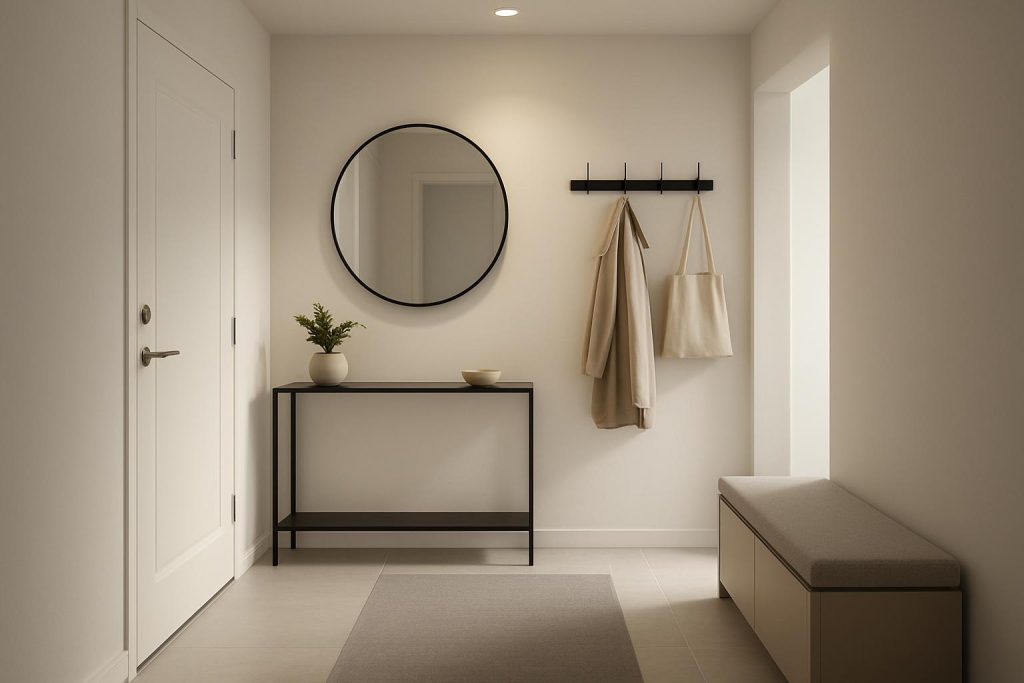
Use a light, cohesive palette. Soft white, warm beige, pale gray, or a gentle pastel keeps the space open. Paint walls, trim, and ceiling in tones that connect. Keep high contrast to a few accents only. A single dark element like a console or mirror frame can ground the area.
Durable Finishes for High Traffic
Pick scrubbable wall paint. Use a hardwearing entry mat. Choose furniture with wipeable surfaces. If you change flooring, consider a durable runner with a non slip pad. Small foyers take a beating. Durable finishes keep the look fresh.
Lighting that Welcomes
Ambient Lighting
Provide an overhead light that spreads evenly. Aim for about 800 to 1200 lumens in a small foyer. Select warm white bulbs around 2700 to 3000 Kelvin. Warm light flatters skin tones and creates a calm entry.
Task Lighting
Add a small lamp on a console or a wall sconce if you have no surface. Task lighting helps with keys, mail, and zippers. Keep shades compact to avoid crowding.
Accent Lighting
Use a slim picture light, a small LED strip under a shelf, or a candle style LED for mood. Accent light adds depth to a small footprint without bulk.
Switch Placement and Bulbs
Place switches near the door for instant control. Use dimmable bulbs if your switch allows. This lets you shift from bright for cleaning to soft for evenings.
Layout that Works
Keep a Clear Path
Preserve at least one doorway width for walking. Do not block the door swing. Any piece you add must leave comfortable clearance. If it crowds the path, pick a slimmer option.
Choose a Side for the Drop Zone
Put your main storage on one wall. This creates order and makes cleaning faster. A consistent side trains everyone to use the space the same way.
Go Vertical First
Small floors need tall solutions. Install hooks, a wall rail, or a shallow shelf before adding floor furniture. Vertical storage keeps the floor open and easy to sweep.
Storage that Hides Clutter
Wall Hooks and Rails
Mount sturdy hooks for coats and bags. Place adult hooks around 60 inches from the floor. Add a lower row around 36 to 42 inches if kids use the space. A rail with movable hooks adapts to seasons and guests.
Slim Console or Wall Shelf
Choose a console under 12 inches deep. In very tight entries, use a wall shelf 6 to 8 inches deep. This holds keys and mail without blocking movement. Secure it well to studs or with proper anchors.
Bench with Storage
Pick a bench 14 to 16 inches deep to save space. Look for a flip top or cubbies for hats, gloves, or reusable bags. A seat helps with shoes and gives guests a quick rest point.
Shoe Solutions
Use a vertical rack, a slim closed cabinet, or a mat under the bench. Keep only daily pairs at the door. Store the rest elsewhere. A closed unit reduces visual noise and improves air flow control.
Small Item Control
Use a tray for keys and sunglasses. Add a small bowl for coins. Install a two slot wall sorter for mail. One slot for action. One slot for outgoing. Label clearly so paper does not pile up.
Style with Purpose
Mirror to Boost Light
Hang a mirror to reflect light and check outfits. Center the mirror around 57 to 60 inches to the middle. Pick a frame that repeats hardware finishes for unity. One mirror is enough in a small area.
Art Scale and Placement
Use one or two pieces of simple art. Keep frames thin. Align the art with the console or bench edges. Avoid heavy gallery walls that crowd the eye.
Greenery
Add a small plant on the console or a narrow floor plant in a corner. Choose low shed varieties for easy cleanup. Greenery softens hard lines and signals care.
Textiles that Work
Place a durable scrape mat outside and a absorbent rug inside. A doormat should be as wide as the door. A runner two by six feet fits many narrow entries. Use a non slip pad to stop shifting.
Scent and First Impression
Keep a mild room scent or a fresh reed diffuser. Avoid strong fragrances. Clean air and a calm scent feel inviting and neat.
Wall and Floor Upgrades
Paint for Impact
Fresh paint changes everything. Use eggshell or satin on walls for easy wipe downs. Consider a subtle accent on the inside of the front door to add interest without clutter.
Peel and Stick for Renters
Use peel and stick hooks, tiles, or wallpaper to add pattern and function without damage. Choose light patterns that do not busy the space.
Rug Sizing and Care
Pick a rug that lets the door open freely. Leave a small reveal of floor around the rug to frame the space. Vacuum weekly. Shake outdoor mats often to reduce indoor dirt.
Seasonal and Daily Maintenance
Five Minute Reset
Daily, do a fast sweep. Hang coats. Clear the tray. Tuck shoes into the rack. Wipe the console if needed. A tiny habit beats a deep clean later.
Swap Strategy
Rotate items by season. Summer hats and light bags in front. Winter boots and heavy coats when needed. Store off season items out of sight. Label bins so changeovers are fast.
Safety and Practicalities
Non Slip Is Non Negotiable
Use a rug pad and choose mats with grip. Wet entry floors are a hazard. Replace worn pads and mats on schedule.
Door Swing and Fire Safety
Keep the door fully operable. Do not block the swing or latch. Maintain clear access to switches and outlets. Safety comes before decor.
Pets and Kids
Add a lower hook for small backpacks or leashes. Use lidded bins for pet gear. Choose closed shoe storage if pets chew or kids scatter items.
Budget and DIY Wins
High Impact, Low Cost
Top low cost changes include paint, a mirror, a hook rail, and a new runner. Upgrade bulbs to warm LEDs. Add a small plant. These changes transform the feel without big spend.
Weekend Plan Step by Step
Day one. Declutter. Clean. Patch and paint. Install a hook rail. Mount a slim shelf or console. Day two. Hang the mirror. Lay the rug and pad. Add tray, bowl, and mail sorter. Style with one plant and one art piece. Set the daily reset routine.
Common Mistakes to Avoid
Do not oversize furniture. Do not add too many hooks for the space. Do not use heavy scents. Do not block the path with baskets on the floor. Do not mix too many finishes. Keep it simple and consistent.
Space Illusions That Work
Repeating Finishes
Repeat two or three finishes. For example, black metal, light wood, and warm brass. Repeating tones calms the eye and makes the space feel larger.
Linear Lines
Use a vertical mirror, a tall plant, or a vertical panel to draw the eye up. Height shifts attention from the small floor area.
Reflective Surfaces
Choose a gloss paint on the door or a glass tray to bounce light. A few reflective touches increase brightness without adding fixtures.
Room by Room Flow
Connect to the Next Space
Match the foyer palette to the adjacent room. Carry one color across spaces. Use similar hardware finishes. This creates a smooth visual transition.
Contain Mess at the Threshold
Place the toughest mat outside and the soft runner inside. This double layer stops dirt and water before it spreads.
Quick Reference Dimensions
Guidelines for Fit
Hook height for adults around 60 inches. Lower hooks for kids around 36 to 42 inches. Console depth under 12 inches for tight spaces. Bench depth 14 to 16 inches. Mirror center at 57 to 60 inches from the floor. Aim for 800 to 1200 lumens of ambient light with warm bulbs around 2700 to 3000 Kelvin. A runner around two by six feet suits many narrow foyers.
Styling Finishes That Last
Hardware and Details
Update door hardware if worn. Match or coordinate metal finishes across hooks, frames, and lamp. Consistency reads as intentional design.
Personal Touches
Add one meaningful object such as a small photo or travel bowl for keys. Keep the rest functional. Personal touches should enhance, not clutter.
Maintenance That Sticks
Weekly and Monthly Tasks
Weekly, vacuum the rug and wipe the console. Monthly, wash the mirror, refresh the plant, and check hooks and screws. Seasonal, rotate gear and deep clean the floor edges.
Conclusion
A small foyer can be calm, practical, and impressive. Start with a clear plan. Use light color, layered lighting, and vertical storage. Keep surfaces slim and organized. Add one mirror, one plant, and a durable rug. Maintain a quick reset habit. Your guests will feel welcome, and you will enjoy a space that works every day.
FAQ
Q What makes a small foyer look bigger
A Use a light palette, add a mirror at eye level, repeat two or three finishes, and keep furniture slim with a clear path. Go vertical with hooks and a tall element to draw the eye up.
Q What lighting works best in a small foyer
A Provide 800 to 1200 lumens of ambient light with warm bulbs around 2700 to 3000 Kelvin, then layer task light with a small lamp or sconce and add a subtle accent light for depth.
Q How deep should a console or bench be in a tight entry
A Keep a console under 12 inches deep or use a wall shelf 6 to 8 inches deep. Choose a bench 14 to 16 inches deep with hidden storage to save floor space.
Q How do I keep shoes and keys organized without clutter
A Use a vertical shoe rack or slim closed cabinet and limit the foyer to daily pairs. Add a tray for keys, a small bowl for coins, and a two slot mail sorter labeled for action and outgoing.
Q What quick changes can I finish in a weekend
A Declutter, clean, and paint, then install a hook rail, a slim shelf or console, hang a mirror, roll out a runner with a non slip pad, add a plant, and set a five minute daily reset routine.