
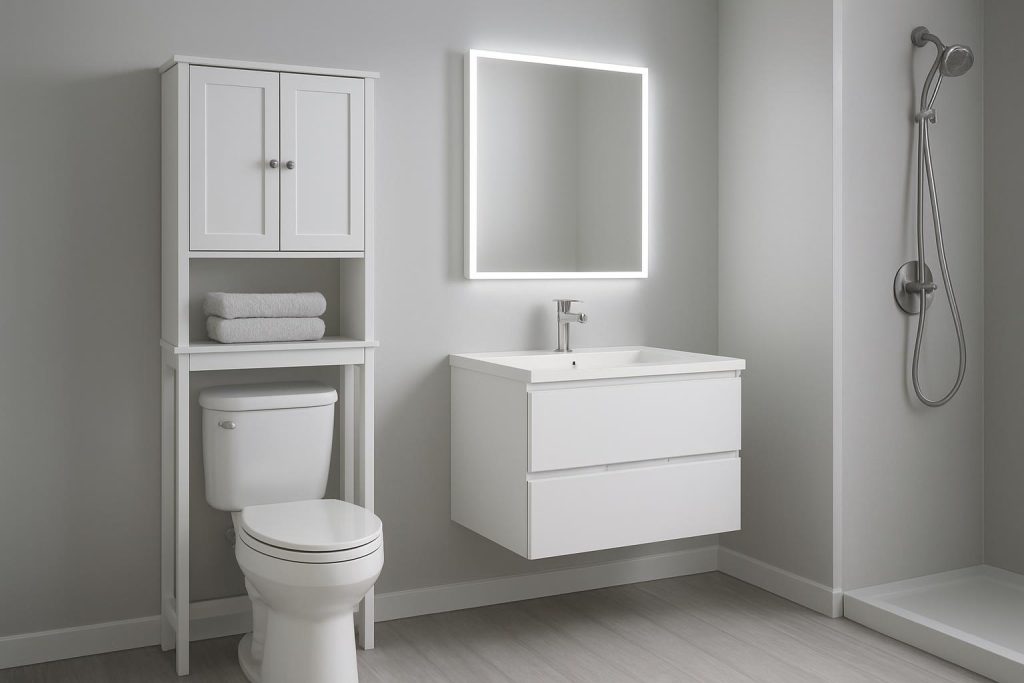
We are reader supported. When you purchase through links on our site, we may earn an affiliate commission. Also, as an Amazon affiliate, we earn from qualifying purchases.
Small bathrooms can feel tight, dark, and dated. You do not need a full gut to fix that. A few high impact swaps can change how the room looks and works. This 2026 guide focuses on four budget remodel ideas that are beginner friendly, fast to complete, and designed for tight footprints. Each idea includes a clear plan, one product pick I trust, simple steps, and honest tradeoffs. Read straight through, or jump to the idea that solves your top pain point right now.
Idea 1: Peel and Stick Floor Upgrade That Resists Splashes
What you change
You replace worn vinyl or tired ceramic with peel and stick floor tiles designed for bathrooms. No mortar. No grout. Minimal tools. This is a weekend project that instantly modernizes a small space.
Why it helps
A new floor shifts the entire mood of a compact bathroom. It brightens the footprint, hides small chips, and makes deep cleaning easier. Many peel and stick tiles have a textured, slip resistant finish and a thicker wear layer than older stick tiles.
What to buy: FloorPops FP2482 Medina Peel and Stick Floor Tiles
These tiles have a crisp pattern that reads clean, not busy, which matters in a small room. The adhesive is strong when the subfloor is prepped well. The top layer resists water and daily splashes, which is important around a vanity and toilet. Cutting around the toilet flange and door jambs is straightforward with a sharp utility blade and a metal straightedge. I think the pattern alignment is forgiving enough for first timers while still looking updated.
Best for renters, powder rooms, and tight full baths with intact subfloors.
Potential downsides they can telegraph deep grout lines from old ceramic if you skip a skim coat. They need a degreased, dust free, and flat surface. Heavy tub leaks will still find seams, so fix any plumbing drips first.
My take for low cost and speed, this is the single biggest visual change you can make without special tools.
Budget, time, difficulty
Budget is low to moderate depending on square footage. Time is one day for most small bathrooms. Difficulty is beginner, with patience around cuts.
How to do it
Remove quarter round or base shoe carefully. Clean the floor with a degreaser. Fill deep grout lines or chips with a floor leveler and let dry. Dry lay a few rows to plan your pattern and avoid thin slivers at the walls. Start from the visual center or the longest straight wall. Peel, stick, and press firmly with a J roller or a rolling pin wrapped in a towel. Trim at walls and around obstacles. Reinstall trim with finish nails and caulk the edges for a sealed look.
Pro tips
Warm the room a bit before install so the adhesive bonds well. Mark cut lines on the paper backing to avoid pencil on the wear layer. Keep spare tiles on hand for future swaps.
Idea 2: Over the Toilet Storage That Adds Vertical Capacity
What you change
You move daily items off the vanity and tank lid and into a slim storage unit that fits above the toilet. This unlocks dead wall space and opens up the counter.
Why it helps
Small bathrooms often fail because of clutter, not square footage. Vertical storage keeps towels, paper, and skincare within reach, which reduces visual noise and speeds up cleaning. A closed cabinet door also hides labels and mismatched packaging.
What to buy: UTEX Over The Toilet Storage Cabinet
This cabinet is stable when anchored, has doors to hide supplies, and an open shelf for tissues or a tray. The footprint is slim and the legs clear most standard bases. The finish wipes clean and resists humidity better than open particleboard units. I think the adjustable shelf is the hero detail because you can size it for tall bottles without wasting space.
Best for renters and owners who need hidden storage without drilling into tile. The feet sit on the floor, and you only anchor through drywall above the tank.
Potential downsides assembly takes focus and you must locate studs or use quality anchors. If your toilet supply valve sticks out far, you may need to notch the back panel.
My take it is the fastest way to make a tiny bath feel orderly, and it costs far less than recessed cabinets.
Budget, time, difficulty
Budget is low. Time is one to two hours including anchoring. Difficulty is beginner.
How to do it
Measure the distance from floor to tank top and between side walls. Leave enough space for the flush lever. Build the cabinet step by step and do not over tighten cams. Place it over the toilet, level it, and anchor to the wall with the included strap or an L bracket. Use a stud if possible. If not, use metal toggle anchors rated for the load.
Pro tips
Match the cabinet color to the trim so it looks built in. Add soft close pads to the doors to reduce noise. Use baskets inside to corral small items and labels that face inward.
Idea 3: Mirror and Lighting Upgrade That Expands the Room
What you change
You swap a small builder mirror for a bright LED mirror with anti fog and even light. This fixes dim corners and makes the room feel wider without changing walls.
Why it helps
Better lighting increases usability at the sink and improves the sense of space. An LED mirror casts forward light that reduces shadows on the face, which standard overhead lights often fail to do in tight rooms. Anti fog means you can use it right after a shower.
What to buy: Keonjinn 24 x 32 Inch LED Bathroom Mirror, Anti Fog, Dimmable
This mirror has consistent edge lighting, a reliable anti fog function, and a clean switch with memory. The size works well over a 24 to 30 inch vanity in a small bath. The mounting bar is solid and the power options are flexible. I think the dimmable feature is underrated because low light at night makes a bathroom feel calm and it saves energy.
Best for small main baths and powder rooms that lack side sconces. It delivers even light without extra fixtures.
Potential downsides you need a GFCI protected circuit and a plan for wiring. If you do not have a junction box nearby, you may need an electrician for a clean hardwire.
My take when space is tight, combining mirror and task lighting into one fixture is efficient and sleek.
Budget, time, difficulty
Budget is moderate. Time is one to two hours for a swap on an existing circuit. Difficulty is beginner to intermediate depending on wiring confidence.
How to do it
Turn off power and verify with a tester. Remove the old mirror. Install the hanging bracket level and into studs when possible. Make the electrical connections per instructions on a GFCI protected line. Hang the mirror and test the anti fog and dimmer. Seal the top edge where the mirror meets the wall with a thin bead of clear silicone to block steam.
Pro tips
Size the mirror narrower than the vanity by about one inch on each side for a tidy reveal. If you keep an overhead light, switch to a warm 3000K LED so skin tones look natural next to the mirror.
Idea 4: High Pressure Low Flow Showerhead Swap That Feels Luxe
What you change
You replace the old showerhead with a modern handheld that boosts pressure and adjusts spray. This is a 15 minute job with a wrench and tape, but the daily impact is large.
Why it helps
In a small bathroom, the shower is the main event. A better spray pattern makes the space feel like a spa without new tile. A handheld head also makes cleaning walls and rinsing the tub faster, which keeps a compact bath fresher with less effort.
What to buy: AquaDance High Pressure 6 Setting Handheld Showerhead
The head offers six useful spray modes, a flexible stainless steel hose, and a bracket that holds position well. The flow is efficient yet strong, especially on the power rain and massage settings. The install is simple and the kit includes washers and tape. I think the value to improvement ratio is excellent, especially if your current head is older and clogged with mineral scale.
Best for tub shower combos and stand up showers with standard half inch threads.
Potential downsides if your water pressure is extremely low, no head can fully fix it. Some users remove the flow restrictor for more force, but that may reduce efficiency and is not always necessary.
My take this is the fastest comfort upgrade for any small bath and it helps with weekly scrub downs too.
Budget, time, difficulty
Budget is low. Time is under 30 minutes. Difficulty is beginner.
How to do it
Unscrew the old head. Clean threads with a toothbrush. Wrap new Teflon tape clockwise three to four turns. Hand tighten the bracket and then snug one quarter turn with a wrench. Attach the hose and head with the included washers. Test for leaks and aim the bracket to avoid spraying the bath floor.
Pro tips
Pair the new head with a curved shower rod to add elbow room in a tight stall. Wipe the head dry after use to limit water spots and extend finish life.
Bonus Refresh Moves That Multiply Results
Recaulk and regrout touch up
Old caulk and dingy grout make a bathroom feel old even after new upgrades. Spend one hour removing loose caulk, cleaning with a mold targeted cleaner, and running a thin bead of fresh silicone along the tub or shower seams. Use a grout pen to brighten lines on stable tile. This small task makes every other improvement look twice as crisp.
Hardware consistency
Match metal finishes across the towel bar, hooks, toilet paper holder, and faucet where possible. When the eye sees one finish, the room reads larger and calmer.
Color control
Pick a light wall color with a satin finish for wipe ability. Keep towels and shower curtain to two colors max. Fewer colors make small rooms calmer and less choppy.
Quick Planning Framework
Set your constraints first
Decide your budget range, your weekend time window, and whether you can drill into tile or only drywall. Measure twice and write down clear dimensions of the vanity, toilet clearance, and shower area.
Sequence the work
Do the floor first, then storage, then mirror and light, then the showerhead. Finish with caulk and touch ups. This order prevents damage to new items during later steps.
Tools you will actually use
You will use a utility knife with fresh blades, a metal straightedge, a measuring tape, a small level, a stud finder, a drill with bits, wall anchors, a caulk gun, silicone sealant, painter tape, Teflon tape, a wrench, and safety glasses. These tools cover all four ideas and reduce last minute runs.
Before You Buy Checklist
Double check size and surfaces
Confirm your subfloor is flat and clean for peel and stick tiles. Confirm the height and width for over toilet storage. Confirm wiring for the LED mirror. Confirm your shower arm has standard threads for the new head.
Confirm moisture and ventilation
Run the exhaust fan test. Hold a tissue to the fan grill and confirm it holds. Good ventilation protects peel and stick adhesives, mirror electronics, and cabinet finishes.
Troubleshooting Common Hurdles
Tile edges lifting
If edges lift, heat the tile gently with a hair dryer and roll again. If the subfloor is porous, use a primer recommended by the tile brand before install.
Cabinet wobble
If the cabinet rocks, add stick on leveling feet at the legs and confirm a solid wall anchor at the top strap.
Mirror glare
If you see glare, dim the mirror to match any ceiling light or switch the ceiling bulb to a warm LED so both lights blend.
Showerhead drip
If it drips at the connection, remove and rewrap the threads with fresh tape. Do not overtighten, which can crack plastic fittings.
Conclusion
Small budget, big gains
Focus on four targeted upgrades and you can transform a compact bathroom in a single weekend. A peel and stick floor refreshes the entire base. Over the toilet storage calms clutter. An LED mirror brightens and expands the room. A high pressure handheld shower makes daily routines better. Add fresh caulk, keep finishes consistent, and use a simple color plan. The result is clean, bright, and easy to maintain without a full remodel.
FAQ
Q: What is the cheapest small bathroom remodel with the biggest impact
A: A peel and stick floor upgrade is the single biggest visual change you can make without special tools and it is usually the cheapest per square foot.
Q: How long does a peel and stick tile floor take in a small bathroom
A: Time is one day for most small bathrooms when the subfloor is clean and flat.
Q: Are LED mirrors worth it for small bathrooms
A: Yes, an LED mirror delivers even forward light, reduces shadows, and makes the room feel wider without adding sconces.
Q: What tools do I need for these projects
A: You will use a utility knife, metal straightedge, measuring tape, level, stud finder, drill, wall anchors, caulk gun, silicone sealant, painter tape, Teflon tape, a wrench, and safety glasses.
Q: What should I do before installing peel and stick tiles
A: Clean the floor with a degreaser, fill deep grout lines or chips, dry lay to plan your pattern, and start from the longest straight wall or visual center.