
We are reader supported. When you purchase through links on our site, we may earn an affiliate commission. Also, as an Amazon affiliate, we earn from qualifying purchases.
A sink mat protects your basin from scratches and broken dishes, but it also traps grease and food bits. That buildup turns into stains and odor if you do not clean it right. Many people wonder if the dishwasher can do the job. The short answer is sometimes. It depends on the mat material, your dishwasher settings, and how you load it. Use the guide below to decide fast, clean safely, and keep your mat in shape longer.
Quick answer
Yes, you can put many silicone sink mats and most stainless steel sink grids in the dishwasher. Use the top rack, a normal or gentle cycle, and turn off heated dry. Avoid high heat on PVC and some rubber mats because they can warp or turn sticky. Wood, bamboo, and fabric mats should not go in the dishwasher.
When unsure, check the care label. If there is no label, follow the hand wash method later in this guide. It always works and protects the mat.
Know your sink mat material
Silicone
Silicone usually handles dishwasher heat well. It keeps its shape and resists stains. Place it on the top rack, disable heated dry, and air dry flat. If the mat has suction cups, expect them to loosen over time with repeated high heat. Keep cycles moderate to extend life.
Rubber
Natural and synthetic rubber can soften, curl, or get tacky in high heat. Some rubber mats are labeled dishwasher safe on the top rack. If you do not have that label, wash by hand. If you do choose the dishwasher, use a short cycle, no sanitize option, and no heated dry. Check shape as soon as the cycle ends.
PVC or vinyl
PVC mats often deform or cloud when exposed to high heat. Some are top rack safe at low temps, but many are not. If you want to try the dishwasher, do a test on a short cycle with heated dry off. If the mat warps or feels sticky, switch to hand washing permanently.
Stainless steel grids
Stainless steel sink grids are generally safe in the dishwasher. Load them on the bottom rack or top rack as they fit, avoid direct contact with the heating element, and dry promptly to prevent water spots. Use a standard detergent and rinse aid if you like.
Wood, bamboo, and fabric
Do not put wood, bamboo, cork, or fabric mats in the dishwasher. They absorb water, swell, and may split or mildew. Hand wash only and dry thoroughly.
When a dishwasher is safe enough
The dishwasher is safe enough when the material tolerates moderate heat, the mat fits securely on the top rack, and you can run a cycle without sanitize or heated dry. The mat should not rest near the heating element. If your dishwasher tends to run very hot, skip the dishwasher for PVC and rubber.
If a mat has glued-on magnets or decorative inserts, avoid the dishwasher. Adhesives can soften and fail. If a mat has metal parts, confirm they are stainless steel to avoid rust spots on your dishes and the dishwasher tub.
How to wash a sink mat in the dishwasher step by step
Step 1. Rinse off food and grease at the sink. A quick scrub under warm water removes debris that could redeposit in the dishwasher.
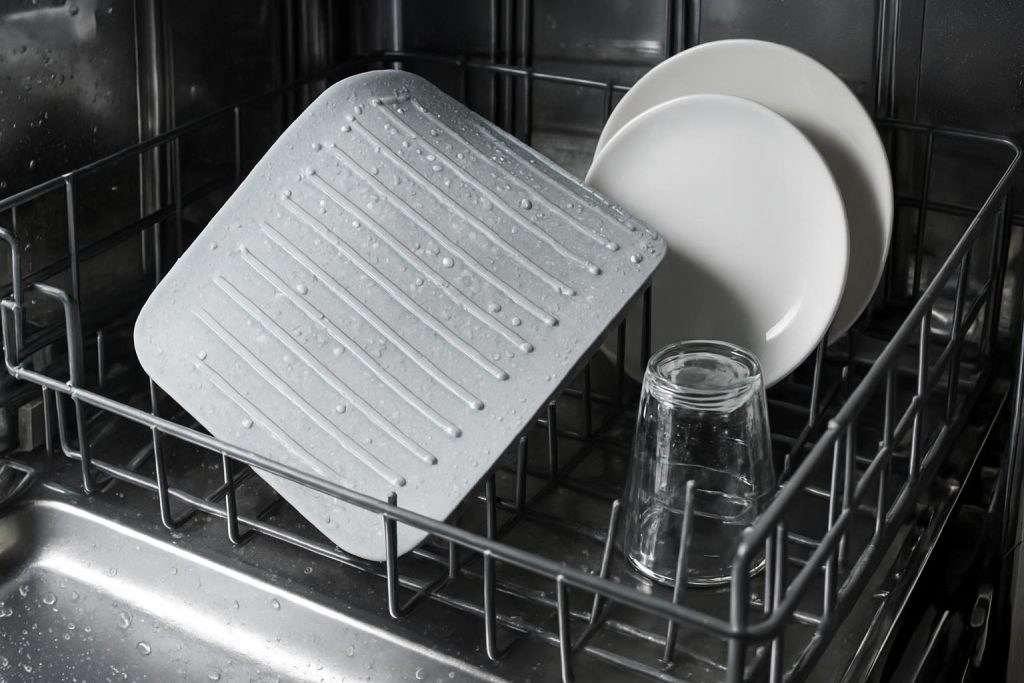
Step 2. Secure the mat on the top rack. Drape it over tines or slide it vertically between rack supports so water can spray through. Keep it away from the heating element.
Step 3. Add detergent as usual. Use your normal detergent. Avoid dishwasher boosters that raise water temperature if your mat is heat sensitive.
Step 4. Select a gentle or normal cycle. Turn off sanitize and heated dry. If your dishwasher has an air dry or energy saver option, use it.
Step 5. Remove promptly. As soon as the cycle ends, take out the mat. Reshape while warm if needed and lay it flat on a towel or hang to air dry fully before placing back in the sink.
Hand wash method that always works
Use this method for any mat when you do not have a care label or when you want to avoid risk.
Step 1. Fill the sink or a basin with warm water and a small squeeze of dish soap. Submerge the mat.
Step 2. Scrub both sides with a soft brush or sponge, paying attention to grooves and suction cups where gunk collects.
Step 3. Rinse with warm water until it runs clear. Shake off excess water.
Step 4. Disinfect if needed. Mix a mild disinfecting solution based on material. For silicone and stainless steel, use a vinegar soak at one part white vinegar to three parts water for ten minutes, then rinse. For tough cases on silicone or stainless steel, use a diluted bleach solution at one tablespoon bleach per gallon of water for two minutes, then rinse very well. Do not use bleach on natural rubber, PVC, or mats with colored coatings.
Step 5. Dry fully. Lay flat on a clean towel or stand it upright to drip dry. Ensure the mat is completely dry before putting it back.
Stain and odor removal
Grease film and trapped food cause odors. Remove them before they set in.
For silicone or stainless steel, make a paste with baking soda and a little water. Spread it on stains, wait ten minutes, then scrub and rinse. Follow with a vinegar rinse to cut any leftover soap film.
For PVC and rubber, use dish soap first. If stains remain, try a mild baking soda paste test on a small area. Rinse well. Avoid solvents and harsh cleaners that can break down the material or leave residue.
For stubborn odors on silicone, soak in a vinegar bath as above. Sun drying for one hour can also help with odor, but do not leave PVC or rubber in direct sun for long as it can speed up aging.
Common mistakes to avoid
Mistake 1. Using sanitize or heated dry on heat sensitive mats. High heat can warp PVC and rubber, and it shortens the life of suction cups.
Mistake 2. Placing the mat near the heating element. This can cause scorching or permanent curling.
Mistake 3. Skipping a pre rinse. Large food bits can get trapped in folds and redeposit on dishes or inside the dishwasher filter.
Mistake 4. Bleaching the wrong materials. Bleach is fine on silicone and stainless steel with good rinsing, but it can damage rubber and PVC and strip color from coated mats.
Mistake 5. Storing the mat wet and flat with no airflow. Trapped moisture breeds odor and mildew. Dry upright or hang.
Drying and reshaping
Air dry is best for all mats. After washing, shake off water and stand the mat on its side or hang it so both sides get airflow. If corners have curled, soak the mat in warm water for five minutes, lay it flat on a clean surface, and place a light, even weight on top until cool and dry.
If a silicone mat needs reshaping, do it while slightly warm after washing. Flatten gently by hand. Do not pull hard, as that can stress cutouts and weaken them.
Care schedule and replacement signs
Daily. Rinse the mat after heavy use and let it drain upright overnight. Lift and wipe the sink base so grime does not build under the mat.
Weekly. Do a thorough clean. Dishwash silicone and stainless steel on a gentle cycle, or hand wash all types. Disinfect as needed based on your cooking routine.
Monthly. Inspect for cracks, sticky surfaces, or odors that return quickly after cleaning. These are signs the material is breaking down. Replace the mat if it stays sticky, remains smelly after a deep clean, or shows cracks that trap grime you cannot reach.
Safety notes for kitchens with babies or pets
Rinse thoroughly after any disinfecting step. Residual cleaner on the mat can transfer to produce, bottles, or pet bowls set in the sink. If you use bleach on silicone or stainless steel, rinse until there is no scent left, then air dry fully.
If you prepare baby items or raw pet food in the sink, keep a second mat as a spare. Rotate and sanitize more often to reduce cross contamination risk.
Organizing and maintenance habits
Give the mat a home to dry. Install a small over the door rack inside the under sink cabinet or use a narrow tray against the backsplash. Airflow keeps odors down.
Keep a mini cleaning kit under the sink. Stock dish soap, a soft brush, baking soda, white vinegar, and a microfiber cloth. When supplies are at hand, you will clean more often and with less effort.
Trim to fit with care. Many silicone and PVC mats are trimmable. Mark cut lines, trim small amounts at a time, and test fit. Do not cut through structural ribs that prevent sagging.
Troubleshooting quick fixes
Suction cups not sticking. Clean both the cups and the sink surface with dish soap, rinse, and dry. Press firmly while both surfaces are slightly damp. Avoid oil based cleaners on the sink before applying suction cups.
Curled edges. Warm the mat in hot tap water for five minutes, flatten under a cutting board, and let it cool flat.
Discoloration on silicone. Use a baking soda paste, scrub, then soak in a vinegar bath. Repeat if needed. Stains fade with routine cleaning.
Stuck odor on PVC or rubber. Wash with dish soap, rinse, and dry in fresh air. If odor persists, it may be material breakdown. Plan to replace.
When to choose the dishwasher vs hand wash
Choose the dishwasher when your mat is silicone or stainless steel, you can place it on the top rack securely, and you can disable sanitize and heated dry. This saves time and cleans evenly.
Choose hand wash when your mat is PVC, rubber without a dishwasher safe label, or any wood, bamboo, or fabric style. Hand washing gives you control over heat and protects the material.
Eco and cost considerations
Dishwashing silicone or stainless steel mats with a full load is efficient. Avoid running a cycle just for a mat. Hand washing uses less energy and can be faster for a single item. Extending mat life by avoiding high heat and harsh chemicals reduces waste and replacement costs.
Conclusion
You can put many sink mats in the dishwasher, but not all. Silicone and stainless steel are good candidates on the top rack with moderate settings. PVC, rubber, wood, bamboo, and fabric are safer by hand. Pre rinse, avoid high heat, and dry fully to prevent warping, odor, and mildew. Follow the steps here, pick the right method for your material, and your sink mat will stay clean, neutral smelling, and ready to protect your sink day after day.
FAQ
Q: Can I put a silicone sink mat in the dishwasher
A: Yes. Place it on the top rack, use a normal or gentle cycle, turn off heated dry, and air dry flat.
Q: Are PVC or vinyl sink mats dishwasher safe
A: Often not. They can warp or turn sticky in high heat. If you test it, use a short low heat cycle with heated dry off, and switch to hand washing if it deforms.
Q: Can I wash a stainless steel sink grid in the dishwasher
A: Yes. Load it away from the heating element and dry promptly to prevent water spots.
Q: What is the safest way to clean any sink mat if I am not sure about the material
A: Hand wash in warm soapy water, scrub with a soft brush, rinse well, and air dry. Disinfect with a vinegar soak for silicone and stainless steel if needed.
Q: Should I use sanitize or heated dry when dishwashing a sink mat
A: No for most mats. High heat can warp PVC and rubber and shortens the life of suction cups. Use gentle or normal cycles and air dry.