
We are reader supported. When you purchase through links on our site, we may earn an affiliate commission. Also, as an Amazon affiliate, we earn from qualifying purchases.
If you are shopping for a new kitchen knife and keep seeing SG2 and VG10 in product descriptions, you are not alone. These are two popular Japanese stainless steels used for knife blades, and both have earned a strong reputation. The short version is simple: SG2 usually holds a sharp edge longer, while VG10 is a little tougher and easier to sharpen. The best choice depends on how you cook, how you maintain your knives, and the kind of cutting you do at home. In this beginner-friendly guide, we will break down what makes each steel special, how they behave in daily cooking, and how to care for them so your knives stay sharp and safe.
What Are SG2 and VG10?
Quick definitions
VG10 is a high-quality Japanese stainless steel designed for kitchen knives. It is known for taking a keen edge easily, resisting rust well, and performing reliably for home cooks and professionals.
SG2 (also called R2) is a powdered metallurgy stainless steel. The powder process helps create a very even, fine grain structure, which lets the blade get extremely sharp and keep that edge for a long time. SG2 is usually harder than VG10.
Composition at a glance
Both are stainless steels, meaning they have enough chromium to resist rust. VG10 typically has around 1.0% carbon and about 15% chromium, with additions like molybdenum, vanadium, and cobalt to improve performance. SG2 usually has a bit more carbon and vanadium, and it is made by powdered metallurgy, which helps edge retention and refinement. You do not need to memorize the numbers; what matters is how each steel behaves in real kitchen tasks.
How They Feel in Daily Home Cooking
Sharpness out of the box
Both SG2 and VG10 can be extremely sharp when new. Many cooks find VG10 takes a very crisp edge quickly during sharpening, which is why a lot of good mid-priced Japanese knives use it. SG2 can feel even keener because of its fine grain structure. However, the quality of the factory grind and polish matters just as much as the steel itself, so brands can vary.
Edge retention over weeks of cooking
Edge retention is where SG2 shines. If you cook often and slice lots of vegetables or proteins, SG2 will typically stay sharp longer than VG10 between sharpenings. For busy home cooks who want fewer sharpening sessions, SG2 can be a time-saver.
VG10 still holds an edge well, just not quite as long. If you cook a few nights a week or do a quick touch-up regularly, VG10 may be more than enough.
Toughness and chipping
Toughness is a blade’s ability to resist chips and micro-cracks. VG10 is usually a bit tougher than SG2 at typical kitchen hardness levels. That means VG10 can be more forgiving if you twist the knife slightly, hit a chicken joint by mistake, or cut on a harder board.
SG2, being harder, can be a little more prone to micro-chipping if misused or if the edge is ground extremely thin. Good technique and a suitable cutting board help avoid this. Many people use SG2 daily with no issues once their habits are dialed in.
Hardness and Heat Treatment
Hardness is commonly measured in HRC (Rockwell Hardness). Typical VG10 kitchen knives run around 60 to 61 HRC. SG2 is often 62 to 64 HRC. Higher hardness generally means better edge retention but less toughness. The maker’s heat treatment matters a lot; a well-treated VG10 can outperform a poorly treated SG2. Stick with reputable makers when possible.
Sharpening and Maintenance
Sharpening difficulty and tools
VG10 is easier and quicker to sharpen on common water stones. You can raise a burr without too much effort and bring the edge back in minutes. This makes VG10 friendly for beginners learning to sharpen at home.
SG2 takes more time and effort to sharpen because of its wear resistance. You may want a set of quality water stones: a medium grit for shaping (800 to 1,000), a finer stone for refining (3,000 to 6,000), and optionally a finishing stone. If you are new to sharpening, SG2 is still very doable, but expect a slightly longer session.
Sharpening angles that work
For most Japanese-style kitchen knives, aim for about 12 to 15 degrees per side. VG10 often does well around 15 degrees per side for a balance of sharpness and durability. SG2 can be taken slightly finer, around 12 to 14 degrees per side, thanks to its hardness and wear resistance.
If you find chipping or want more durability, add a micro-bevel: after your main edge, raise the spine a tiny bit (about 1 to 2 degrees more) and make a few light passes on a medium or fine stone. This quick step strengthens the edge without feeling dull.
Honing and stropping between sharpenings
A ceramic honing rod can refresh both steels. Use gentle, controlled strokes. For SG2, a smooth ceramic rod around 1,000 to 1,200 grit is kinder; avoid aggressive steel honing rods that might cause micro-chips. For VG10, a fine ceramic rod works well too.
Stropping on leather with a light compound is an easy at-home trick for both steels. Just a few passes can realign and polish the edge, extending the time between full sharpenings.
Stain and Rust Resistance
How stainless are they?
Both SG2 and VG10 are stainless, meaning they resist rust better than carbon steels. However, they are not magic. Acidic foods, salt, and moisture left on the blade can still cause spotting or pitting. Wipe your knife during prep and wash it as soon as you are done.
Simple cleaning routine after cooking
Hand wash with mild dish soap and a soft sponge. Rinse thoroughly. Dry immediately with a clean towel, paying attention to the edge and handle junction. Put it away right after drying. This quick routine prevents water spots and keeps your knife looking new.
Dishwasher warning
Do not put SG2 or VG10 knives in the dishwasher. Heat, harsh detergents, and banging around can dull or damage the blade and handle. Dishwashers also invite rust near the edge. Hand washing takes less than a minute and protects your investment.
Cutting Boards and Habits That Matter
Pick the right board
Use a soft, forgiving board. End-grain wood (like maple) or a quality soft plastic board is ideal. Avoid glass, stone, and very hard boards; they will dull any knife quickly. Bamboo can be harder and sometimes contains silica; it is acceptable but not the gentlest option for high-end edges.
Good habits, fewer chips
Avoid twisting or prying with the edge. Do not cut bones or frozen foods with a thin kitchen knife. Use a gentle forward and down slicing motion rather than pressing straight down and twisting. These habits help SG2 and VG10 perform at their best.
Blade Geometry and Cladding
Core steel vs cladding
Many Japanese knives are clad: a thin core of SG2 or VG10 is sandwiched between layers of softer stainless steel. The cladding protects the core and makes the blade easier to maintain. Performance at the cutting edge still depends mostly on the core steel and the edge geometry.
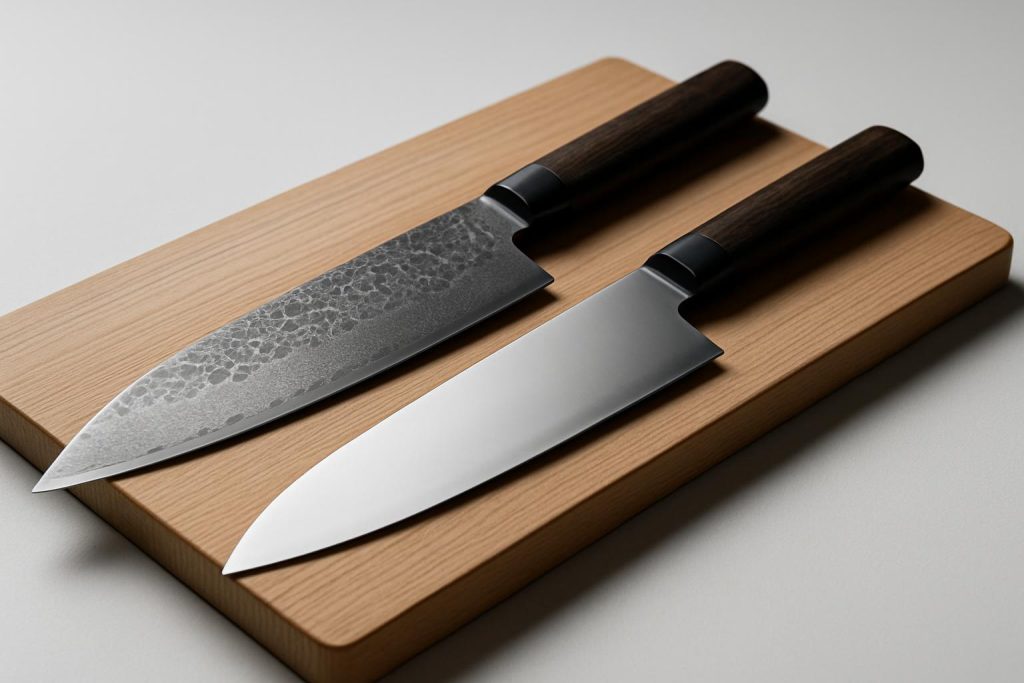
Damascus patterns are looks, not steel type
Beautiful swirled patterns often seen on knives are created by layered cladding. They look great but do not tell you which core steel is used. Always check the core steel listed by the maker to know if you are buying SG2 or VG10.
Price, Availability, and What to Expect
Budget and value
VG10 knives are widely available and often cost less than SG2. They are great value for home cooks stepping into Japanese steel. SG2 knives tend to be pricier because of the powdered metallurgy process and their higher hardness. If long-lasting sharpness is a top priority, the extra cost may make sense.
Brand differences
Heat treatment and factory grinding vary by maker, which affects sharpness, durability, and feel. A well-made VG10 can outperform a poorly made SG2. Read reviews, look for makers with consistent quality, and consider return policies. If possible, try a friend’s knife or handle display models to get a sense of balance and comfort.
Which Steel Is Better for You?
Choose SG2 if this sounds like you
You cook often and want an edge that stays sharp for a long time. You are willing to learn basic sharpening or plan to sharpen less frequently. You use good cutting boards and avoid rough tasks like prying bones. You prefer a slightly thinner, laser-like feel during slicing and are careful with your technique.
Choose VG10 if this sounds like you
You want a great stainless knife that is easier to sharpen at home. You want a bit more forgiveness against micro-chipping. You cook a few times a week and do regular quick touch-ups. You appreciate dependable performance without the higher price tag of SG2.
What if you are totally new to high-quality knives?
VG10 is a very friendly starting point. It teaches you what a sharp knife should feel like and helps you learn sharpening without too much struggle. Once you enjoy that, moving up to SG2 later can feel like a natural upgrade if you want even longer edge life.
Practical Care Tips From a Home Organization Perspective
Safe storage protects the edge
Keep your knife on a magnetic strip, in a wood block, or in a drawer insert with dedicated slots. If you have to store it in a drawer, use a blade guard or saya. Never toss knives loose in a utensil drawer; it dulls the blade and is unsafe.
Set up a simple cleaning station
Place a drying mat, a soft sponge, and a clean towel near your sink. After cooking, bring the knife over, wash, rinse, and dry it immediately. Returning the knife to its home right away becomes a habit and prevents rust spots and accidental damage.
Weekly touch-up routine
Once a week, strop your knife or make a few gentle passes on a fine ceramic rod. This habit takes less than two minutes and can double or triple the time between full sharpenings, especially for SG2. For VG10, it keeps the edge lively and ready for everyday prep.
Real-World Examples: Common Home Tasks
Vegetable prep
For lots of slicing, dicing, and chiffonade, SG2’s long edge life is noticeable. It will keep biting through tomato skins and herbs without tearing for longer. VG10 will also perform very well; you may just want a quick strop more often.
Protein trimming
Both steels are excellent for trimming chicken, fish, and beef. If you frequently encounter joints or cartilage, VG10’s extra toughness can be a comfort. Avoid twisting the blade in joints with either steel; use a dedicated boning or poultry shears for harder tasks.
Bread and hard rinds
Use a serrated bread knife for crusty loaves and hard rinds regardless of steel. Reserving your fine edge for clean slicing will keep your SG2 or VG10 chef’s knife performing longer.
Common Mistakes to Avoid
Leaving the knife wet
Even stainless blades can pit if left wet or dirty. Rinse and dry immediately after use, especially after cutting acidic foods like citrus or tomatoes.
Using the wrong board
Glass, stone, and ceramic boards ruin sharp edges. Hard, dry bamboo can be unforgiving too. Choose end-grain wood or soft plastic to protect your edge.
Heavy prying or twisting
Thin kitchen edges are made for slicing, not prying. If something is stuck, back out and re-approach the cut. Use the right tool for bones or frozen foods.
Troubleshooting: If You See Chips or Dullness
Small micro-chips
Try a micro-bevel during your next sharpening session to reinforce the edge. Also review your cutting board and technique. A few passes on a medium stone will often clean up minor chips in VG10. SG2 may take a bit longer but will restore nicely with patience.
Edge going dull quickly
Check your board, your storage, and whether you are dragging the edge against the board between cuts. A ceramic hone or strop may bring it back. If not, do a full sharpening session at the appropriate angle and finish with light strokes to deburr cleanly.
Environmental and Longevity Notes
Using fewer disposables
Keeping a high-quality knife sharp and clean reduces your need for cheap, throwaway knives. With simple habits, both VG10 and SG2 knives can last many years, saving money and reducing waste.
Resale and gifting
Quality knives hold value. If you take good care of a VG10 or SG2 knife, it can be a thoughtful gift down the line or something you resell when you upgrade. A well-maintained blade reflects good kitchen care and organization.
So, Which Knife Steel Is Better?
The honest answer
Neither is universally better; they are tuned for slightly different strengths. SG2 excels at long edge retention and ultra-fine sharpness, rewarding careful technique. VG10 is a fantastic all-rounder, offering strong sharpness, good toughness, and easier sharpening at a friendlier price.
Quick way to decide today
Pick SG2 if you cook frequently, want fewer sharpening sessions, and already use good boards and gentle technique. Pick VG10 if you want a reliable, forgiving stainless steel that you can sharpen quickly at home and that costs a bit less.
Conclusion
SG2 and VG10 are both excellent choices for home cooks. SG2 gives you superb edge retention and a refined cutting feel, especially if you cook a lot and treat your knives carefully. VG10 gives you dependable sharpness, easier maintenance, and a touch more toughness for everyday kitchen life. No matter which you choose, you will get the best results by using a soft cutting board, washing and drying by hand immediately after use, storing the knife safely, and doing quick touch-ups regularly. With these simple habits, your SG2 or VG10 knife will stay sharp, safe, and a pleasure to use for years.