
We are reader supported. When you purchase through links on our site, we may earn an affiliate commission. Also, as an Amazon affiliate, we earn from qualifying purchases.
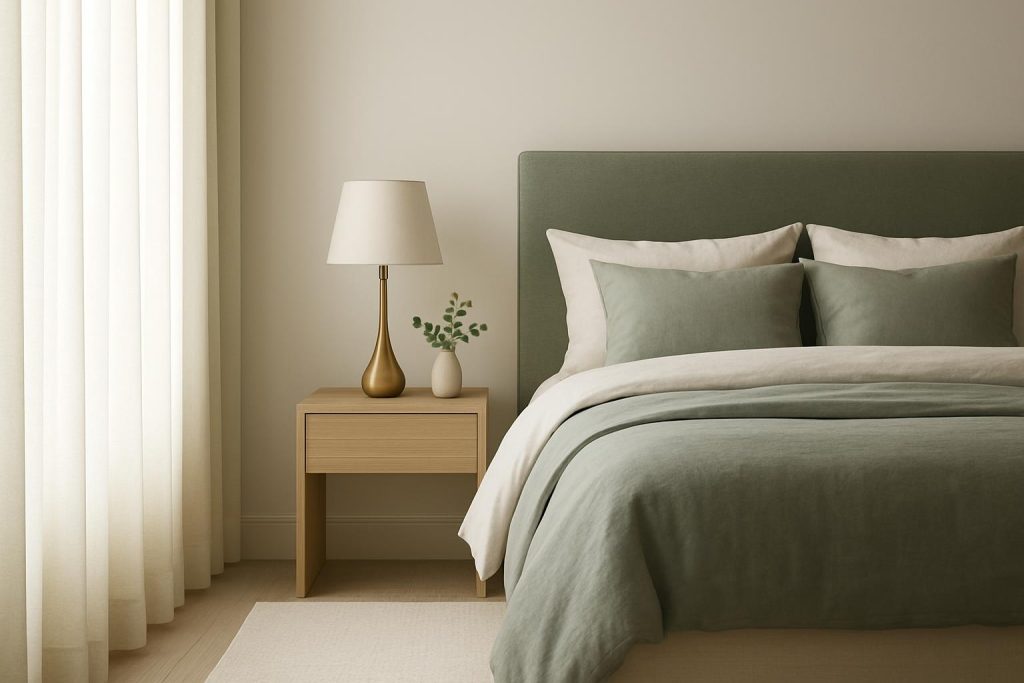
A sage green and cream bedroom gives an instant soft look that feels calm, clean, and timeless. The palette suits many styles, from modern to cottage. It works in large rooms and small rentals. Use the ideas below to plan colors, buy the right textiles, place furniture, and keep everything neat and fresh with simple routines.
Why Sage Green and Cream Work
Sage green has a muted, greyed base that reads gentle and natural. Cream adds warmth without the stark contrast of bright white. Together they reduce visual noise, soften hard edges, and create a space that supports rest. The palette handles wood tones, brass, and stone with ease.
This pairing is forgiving. It hides minor dust better than dark or pure white schemes. It lets you switch accents through the year without repainting. Start small or go all in and it still looks pulled together.
Build Your Color Palette
Core Shades
Choose a mid to light sage as the anchor. Aim for a quiet, herby green like hex #A7B8A0 or #B7C4B0. Pick a warm cream for balance like hex #F3EEE7 or #EFE8DD. Keep undertones warm rather than pink or blue.
Set a ratio that stays soft: 60 percent cream, 30 percent sage, 10 percent accents. Use cream on walls or large textiles. Use sage on a duvet, headboard, curtains, or a feature wall. Reserve accents for metals, wood, art, and small pattern.
Accent Support
Warm brass or brushed gold lifts the palette. Light to medium oak or ash wood adds a friendly grain. A touch of matte black grounds hardware or lamp bases. Soft blush, muted terracotta, or natural linen can add a small note without stealing focus.
Paint and Walls
Pick the Right Sage
Check test pots on two walls and in morning and evening light. North light leans cool, so pick a warmer sage with a hint of beige. South light amplifies yellow, so a cooler sage can balance it. If your cream looks grey in your room, move one step warmer.
Where to Use Color
All walls in cream with a sage headboard keeps the room airy. One sage feature wall behind the bed works if the room gets good light. Half wall sage with cream above softens height and frames the bed. Painted paneling or board and batten in cream adds depth without pattern.
Rental Friendly Options
Try peel and stick sage panels behind the bed. Use removable wallpaper with a micro pattern in cream and pale sage. If walls must stay white, rely on sage textiles and art mats in cream to carry the palette.
DIY Paint Steps for Clean Edges
Degloss glossy trim with a sanding sponge. Fill holes, sand smooth, and vacuum dust. Wash walls with mild soap and water. Prime spots as needed. Use quality tape and press edges with a putty knife. Cut in with an angled brush, then roll in a W pattern. Remove tape while paint is slightly damp.
Low Texture Wall Ideas
If you want interest without busy pattern, use vertical wood strips on the lower third, paint both sections in cream, then add a sage headboard. Or hang a large linen panel in sage behind the bed for a soft focal point.
Textiles That Add Softness
Bedding Stack That Works
Start with cream percale or sateen sheets. Add a sage duvet or quilt. Layer two euro pillows in cream, two standard pillows in sage, then one small accent pillow in linen or blush. Finish with a lightweight cream or oatmeal throw at the foot.
Keep prints small and quiet. A thin stripe or tiny leaf pattern works. If the duvet is sage, pick a micro pattern in cream for shams to avoid a flat block of color.
Curtains and Window Dressing
Use light filtering linen or cotton in cream or pale sage. Hang high and wide to make windows look larger. Rods in warm brass keep the look soft. If you need blackout, use a double rod with a sheer front panel and a lined back panel.
Rugs for Warmth
Pick a low to medium pile rug in cream, oatmeal, or a very muted sage mix. Natural fibers like wool or a wool blend feel soft and wear well. Size it so the front legs of the bed and nightstands rest on it. A 160 by 230 cm or 200 by 300 cm works for most queen beds.
Furniture and Finishes
Bed and Headboard
An upholstered headboard in cream linen adds softness. A wood bed in light oak keeps balance if you prefer easier care. If your walls are cream, a sage headboard gives a clean focal point without heavy contrast.
Nightstands and Dresser
Light to medium wood works with both sage and cream. If you like painted furniture, choose sage for one piece only to avoid overload. Keep lines simple. Swap hardware to warm brass or black to match your metal plan.
Metal Mix Guide
Use brass for 70 percent of visible metal like lamps and curtain rods. Use matte black for 30 percent like small knobs or picture frames. This keeps harmony while adding a hint of contrast.
Lighting Plan
Layered Light
Use three layers. Ambient light from a ceiling fixture or track. Task light from bedside lamps or wall sconces. Accent light from a small table lamp on a dresser or a picture light over art. Keep shapes simple and finishes warm.
Bulb Choices
Choose warm white LED bulbs at 2700 to 3000 K. Aim for high color rendering index if possible so fabrics look true. Diffused shades in linen or frosted glass keep glare low.
DIY Plug In Sconces
If hardwiring is not possible, use plug in sconces with cord covers painted to match the wall. Mount them just above shoulder height when seated in bed. Use a small shade in cream to spread light softly.
Styling and Decor
Art and Frames
Pick soft abstracts, line drawings, or botanical prints that echo sage and cream. Use wood, brass, or white frames. Add a cream mat to keep everything calm. A single large piece over the bed is cleaner than many small pieces.
Greenery and Florals
Eucalyptus, olive stems, or ferns suit this palette. One medium vase is enough. Keep leaf shapes simple. If maintenance is a concern, use high quality faux stems and dust them weekly.
Small Objects
Group items in odd numbers on trays. Use one tray per surface. Stick to the color plan. Candles, a ceramic dish, and a small photo can fill a nightstand without cluttering it.
Organization for a Calm Look
Declutter Fast
Do a 30 minute sweep. Clear floors, make the bed, empty the laundry basket. Nightstand rule: only lamp, book, water, and one small tray. Keep at least 20 percent of every surface empty to let the room breathe.
Storage Solutions That Blend
Use fabric bins in cream or sage inside closets and under benches. Choose woven baskets in natural tones for open storage. Use low under bed boxes for off season items and cover with a solid cream bed skirt.
Closet Quick Wins
Use matching hangers. Group clothing by type and then by color. Add sage fabric bins for small items and label the fronts. Place daily shoes on the lowest shelf and off season pairs in boxes up high.
Cleaning and Care
Keep Fabrics Fresh
Wash sage textiles in cold water with mild detergent. Turn items inside out and use a color catcher sheet the first few washes. Avoid bleach. Line dry when possible or tumble on low heat. Steam or iron on low if needed.
Upholstery and Dust
Vacuum upholstery weekly with a soft brush. Rotate pillows and shake out throws. Dust from high to low using a damp microfiber cloth. Clean lampshades with a lint roller.
Rug and Floor Care
Vacuum rugs weekly on a low to medium setting. Blot spills, do not rub. Use a wool safe cleaner on spots. For hard floors, mop with a mild solution and dry well to avoid warping wood.
Monthly Reset
Wash or replace pillow protectors. Deep dust baseboards and trim. Launder curtains if needed or vacuum them with a brush attachment. Review open surfaces and remove any build up of small items.
Small Rooms and Rentals
Make It Feel Bigger
Pick a lighter sage or use sage on textiles instead of walls. Hang curtains high and choose longer rods. Use a single large rug to unify the floor. Choose furniture with legs to show more floor. Add one mirror opposite a window to bounce light.
Temporary Upgrades
Use peel and stick panels behind the bed. Add plug in sconces and hide cords. Use large scale art on command strips. Dress the bed with cream and sage layers to shift the room without paint.
Budget Plan
High Impact, Low Cost
Start with textiles. Buy cream sheets and a sage duvet cover. Add light filtering cream curtains. Swap one lamp to a brass base. If you paint, do one wall behind the bed to save time and money.
Thrift and Flip
Find a simple nightstand and paint it sage. Replace knobs with brass. Sand and oil a light wood dresser to refresh its tone. Frame a fabric remnant in cream and sage as instant art.
Seasonal Switches
Spring and Summer
Use linen sheets, lighter throws, and more sheers. Add fresh eucalyptus or simple white flowers. Keep scents clean and airy.
Fall and Winter
Swap to a quilted or wool blend throw. Add two more textured pillows. Use heavier curtain liners. Bring in brass candleholders and a cedar or cinnamon scent.
Sample Room Plan
Day 1 morning: Clear the room, patch walls, and tape. Afternoon: Paint the feature wall in sage or all in cream. Evening: Install curtain rods higher and wider than the window.
Day 2 morning: Build the bed with cream sheets and a sage duvet. Add pillows in the planned stack. Afternoon: Place rug, then center the bed on it. Hang one large art piece over the headboard. Evening: Style nightstands with a lamp, tray, and one object. Add a plant on the dresser.
Day 3 morning: Review metal mix. Swap knobs to brass, add one matte black frame. Afternoon: Do a 30 minute declutter. Label bins and set up under bed storage. Evening: Install warm bulbs and adjust lamp heights.
Common Mistakes to Avoid
Picking a sage that is too cool next to a cream with pink undertones can clash. Always test large swatches at different times of day. Using sage on too many large surfaces can feel heavy. Balance with cream and light wood. Skipping texture makes the room flat. Add linen, knit, wool, and woven pieces. Forgetting warm bulbs can make sage look dull. Stick to 2700 to 3000 K.
Conclusion
A sage green and cream bedroom is a simple path to a soft, restful space. Build a palette with warm undertones, layer quiet textures, and keep surfaces calm with clear storage rules. Use brass for warmth, wood for depth, and greenery for life. Start with textiles if you are on a budget. Add paint or paneling when ready. With basic cleaning and a monthly reset, the room stays fresh and inviting all year.
FAQ
Q: What wall colors work best with sage green furniture?
A: Cream walls with warm undertones, soft white, or light greige work well. Test large swatches in your light before deciding.
Q: Which metals pair well with sage and cream?
A: Warm brass or brushed gold as the main finish with a small amount of matte black for hardware or frames.
Q: How do I keep a sage and cream bedroom looking soft, not dull?
A: Layer textures like linen and knit, add warm wood, keep patterns small, bring in greenery, and use warm white bulbs at 2700 to 3000 K.
Q: What is an easy low cost way to try this palette?
A: Start with a textile swap: cream sheets, a sage duvet cover, and two matching shams, then add one brass lamp.
Q: How do I clean sage textiles without fading?
A: Wash in cold water with mild detergent, turn items inside out, use a color catcher at first, avoid bleach, and line dry or use low heat.