
We are reader supported. When you purchase through links on our site, we may earn an affiliate commission. Also, as an Amazon affiliate, we earn from qualifying purchases.
Neutral decor builds a calm home that still feels warm, personal, and easy to live in. It cuts visual noise, balances light, and helps every room connect. If you have ever felt unsure about how to use neutrals without ending up with a flat space, this guide walks you through a clear plan. You will learn which colors to pick, how to layer texture, what to buy first, and how to keep the look clean and stress free.
Why Neutrals Create Calm
Neutrals reduce contrast and clutter. Your eye rests, and your brain works less to process the room. This lowers stress and sets a steady mood across your home.
Neutrals also improve flow. When rooms share a base palette, transitions feel smooth. This is helpful in small homes or open plans where many surfaces compete for attention.
Finally, neutrals are forgiving. They allow subtle shifts in light, finish, and texture without sharp clashes. This makes maintenance and updates easier over time.
Plan Your Neutral Palette
Understand Undertones and Temperature
Every neutral leans warm, cool, or balanced. Warm neutrals have yellow, red, or brown undertones. Cool neutrals carry blue or green undertones. Balanced neutrals sit near the middle. To keep calm, do not mix strong warm and strong cool undertones in the same room. Pick one direction and stay with it, or choose gentle, balanced shades.
Build a Three Tier Palette
Use a simple ratio to avoid guesswork. Set a base color for 60 to 70 percent of the room. Use a secondary neutral for 20 to 30 percent. Add a subtle accent for the last 10 percent. Repeat these colors on walls, large furniture, textiles, and decor. This creates depth without clutter.
Test in Real Light
Paint and fabrics shift through the day. Test swatches on different walls and view them morning, afternoon, and evening. Stand back at least two meters to judge the overall cast. If a sample goes pink, green, or purple in your light, move on. Light quality drives how calm your neutrals will feel.
Walls and Paint
Reliable Neutral Families
Pick from these steady groups.
Warm white with soft cream or beige notes for cozy spaces. Greige as a blend of gray and beige for flexible, modern rooms. Taupe when you want a little more depth but still soft edges. Soft gray for a cooler, airy tone. Light beige for classic warmth.
Choose the family that matches your flooring, fixed finishes, and light. If your floors are warm oak, a warm white or greige will blend better than a cool gray.
Finishes That Work
Use matte or flat on ceilings to hide imperfections. Use eggshell on living room and bedroom walls for a gentle sheen that cleans more easily than flat. Use satin in kitchens and bathrooms for better wipeability. Use semi gloss on trim and doors for durability and a crisp line.
Ceilings and Trim Strategy
For a seamless look, paint trim and doors the same color as walls in a higher sheen. For gentle contrast, keep trim a half shade lighter than walls. A lighter ceiling lifts the room. A matching ceiling coccoons the space and lowers visual noise. Choose one approach and repeat it through connected rooms to maintain calm.
Flooring and Large Surfaces
Wood Tones That Blend
Mid toned oak, ash, or maple in matte finishes create a stable base. Very red or very orange woods can fight with cool grays. If you have strong red tones, pick warmer walls and fabrics to harmonize. Keep floor sheen low to avoid glare.
Rugs As Anchors
Use wool, jute, sisal, or cotton in sandy, stone, or oatmeal shades. Choose low to medium pile for easy cleaning. A subtle stripe, herringbone, or diamond adds interest without noise. Size the rug so front legs of main furniture land on it. This anchors the layout and calms traffic lines.
Stone and Tile in Neutrals
Choose light limestone, travertine, honed marble, or porcelain that mimics stone. Avoid busy veining across many surfaces. If your countertop has movement, keep backsplash simple. If the countertop is quiet, you can add a soft textured tile in a similar shade.
Layer Texture To Add Depth
Fabrics That Feel Good
Mix smooth and nubby textures. Combine linen, cotton, wool, boucle, and velvet in the same color family. Keep patterns low contrast. A tight weave balances a chunky knit. This builds dimension without adding new colors.
Natural Materials
Bring in wood, rattan, cane, cork, stone, and clay. Use ribbed ceramics, matte glazes, and unpolished finishes. These absorb light and soften the room. Repeat one or two materials across rooms for continuity.
Patterns In Neutrals
Use tone on tone stripes, checks, small geometrics, or organic textures. Scale matters. One larger pattern on a rug or duvet pairs well with smaller patterns on pillows or towels. Keep contrasts gentle so the eye glides rather than jumps.
Furniture Selection
Shapes and Scale
Pick simple lines with rounded corners and thin to medium profiles. Avoid bulky arms and oversized legs if you want a lighter feel. Measure walking paths and leave clear space so the room breathes.
Upholstery Choices
Choose light beige, warm gray, or off white for main seating if you can maintain it. If you prefer low maintenance, go a step darker like mushroom or taupe. Performance fabrics and washable slipcovers reduce stress and extend life.
Storage That Hides Clutter
Use closed media units, sideboards, and nightstands with drawers. Baskets with liners hide small items and soften shelves. A calm room depends on what you do not see.
Lighting For A Soothing Tone
Layer Your Lighting
Use three layers. Ambient lighting for overall glow through ceiling fixtures or floor lamps. Task lighting for reading, cooking, and desk work. Accent lighting for shelves and art. This balance reduces glare and sharp shadows.
Pick the Right Bulbs
Use warm white bulbs around 2700K to 3000K for living spaces and bedrooms. Keep the color temperature consistent in a room so surfaces read true. Add dimmers to main fixtures to shift mood at night.
Window Treatments That Soften Light
Hang light filtering curtains in linen or linen blend for privacy without darkness. Pair with simple roller or roman shades for control. Mount curtains high and wide to lift the room and let in more light.
Styling With Restraint
Art in a Neutral Home
Pick artwork with soft palettes or monochrome photography. Use white, wood, or black frames for gentle contrast. Group pieces by theme, material, or color temperature to stay cohesive.
Greenery That Fits
Use plants with clean shapes and deep green leaves. Place them where they get enough light so they stay healthy and consistent in color. Simple ceramic or matte pots in white, stone, or sand finish the look.
Edit Surfaces
Keep table decor tight. Style trays with two to four items at varied heights and textures. Repeat materials from elsewhere in the room to link zones. Leave open space so your eye can rest.
Room by Room Tips
Living Room
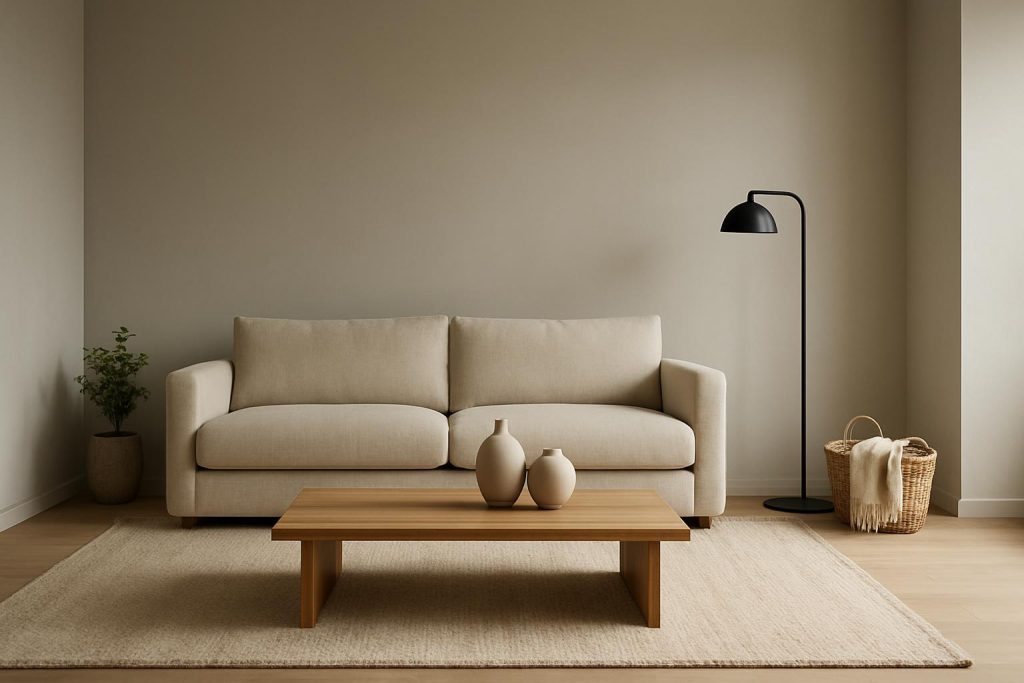
Pick a greige or warm white wall. Add a wool or jute rug in a sand tone. Choose a sofa in light beige or mushroom and add two to three pillows in linen and boucle. Use a wood coffee table in a matte finish. Add a black metal or oil rubbed bronze lamp for a small hit of contrast.
Bedroom
Keep walls soft and warm. Use a padded headboard in linen or a wood frame with a matte finish. Layer cotton percale or linen sheets with a textured quilt or coverlet. Keep nightstands simple with closed storage. Add blackout lining to shades if needed for sleep.
Kitchen
Use light cabinetry, wood accents, and quiet counters. Choose a simple backsplash tile in the same color family as your cabinets. Keep hardware in black, brushed nickel, or aged brass. Store appliances off the counter to maintain clean lines.
Bathroom
Pick light tile with a matte or honed finish to reduce glare. Keep grout lines thin. Use a wood or stone stool for warmth. Add white or oatmeal towels and a ribbed bath mat for texture.
Entryway
Set a bench with a closed drawer or a basket under it. Use a durable rug in a low contrast pattern to hide dirt. Add hooks or a rail for daily coats and bags. A tray for keys and mail keeps the top clear.
Keep It Clean and Maintained
Cleaning Neutrals 101
Protect fabrics with a fabric guard if safe for the material. Choose washable slipcovers for sofas and dining chairs where possible. Spot clean with mild soap and water before stains set. Vacuum rugs and floors weekly to lift dust that dulls light colors. Use microfiber cloths on walls and trim to avoid streaks.
Organizing Habits That Protect Calm
Set a landing zone by the door with hooks, a tray, and a bin. Use labeled baskets in living spaces to catch remotes, chargers, and toys. Hide cables with clips and cord covers. Reset surfaces every evening in five minutes to prevent clutter creep.
Seasonal Refresh Checklist
Each season, wash or dry clean covers, rotate rugs if possible, and check bulbs for consistent color temperature. Swap in a heavier or lighter throw based on weather. Review decor and remove one item from any crowded surface.
Budget Friendly Moves
Paint First
One fresh coat in the right neutral changes everything. Prioritize high impact rooms and open areas seen from many spots.
Slipcovers and Pillow Covers
Switch bold fabrics for linen or cotton covers in sand, stone, or oatmeal. Add one textured pillow to each seat for depth.
Swap Hardware
Change knobs and pulls to black or brushed nickel. Update door handles to match. Small changes align a room fast.
Thrift and Update Frames
Source frames secondhand and paint them white, black, or soft taupe. Use simple mats to unify mixed art.
Layer Rugs
Place a large neutral flatweave under a smaller patterned rug to tone down strong flooring while adding comfort.
Common Mistakes and Easy Fixes
Space Feels Too Cold
Add warm wood, linen, and wool. Shift bulbs to 2700K. Bring in a sand toned rug and a wood accent to balance gray surfaces.
Room Looks Flat
Increase texture. Add a nubby throw, a ribbed ceramic vase, and a woven basket. Keep colors similar while changing materials.
Undertones Clash
Test samples next to fixed elements like floors and counters. If a wall color turns green next to your flooring, choose a warmer neutral from the same family.
Clutter Creeps Back
Audit surfaces weekly. Set limits on open shelves. Move small items into closed storage. A calm look depends on clear lines of sight.
Conclusion
Neutral decor is not about bland rooms. It is about clarity, comfort, and ease. Start with a tight palette, repeat colors, and rely on texture for interest. Use lighting to support the tone, and pick storage that hides noise. Maintain simple cleaning and organizing habits so the look stays fresh. With these steps, any home can feel calmer, brighter, and more welcoming.
FAQ
Q: How do I build a neutral palette that still has depth
A: Start with a base color for 60 to 70 percent of the room, add a secondary color for 20 to 30 percent, and finish with a subtle accent for the rest. Repeat colors across walls, large furniture, textiles, and decor, and rely on texture and gentle contrasts for interest.
Q: What color temperature bulbs support a calming neutral space
A: Use warm white bulbs around 2700K to 3000K and keep the color temperature consistent within each room. Add dimmers to main fixtures to adjust mood in the evening.
Q: How can I keep a neutral home from feeling flat
A: Layer texture with linen, wool, boucle, jute, cane, stone, and ribbed ceramics. Add gentle contrast through wood tones and small black or oil rubbed bronze accents, and use low contrast patterns.
Q: What are easy budget updates to go neutral
A: Paint the walls, switch pillow covers and slipcovers, swap hardware to black or brushed nickel, thrift frames and paint them, and layer a neutral flatweave rug under an existing rug.
Q: How do I keep neutrals looking clean with kids and pets
A: Choose washable slipcovers and performance fabrics, pre treat textiles if safe, spot clean early with mild soap and water, vacuum weekly, and use entry mats and baskets to catch dirt.