
We are reader supported. When you purchase through links on our site, we may earn an affiliate commission. Also, as an Amazon affiliate, we earn from qualifying purchases.
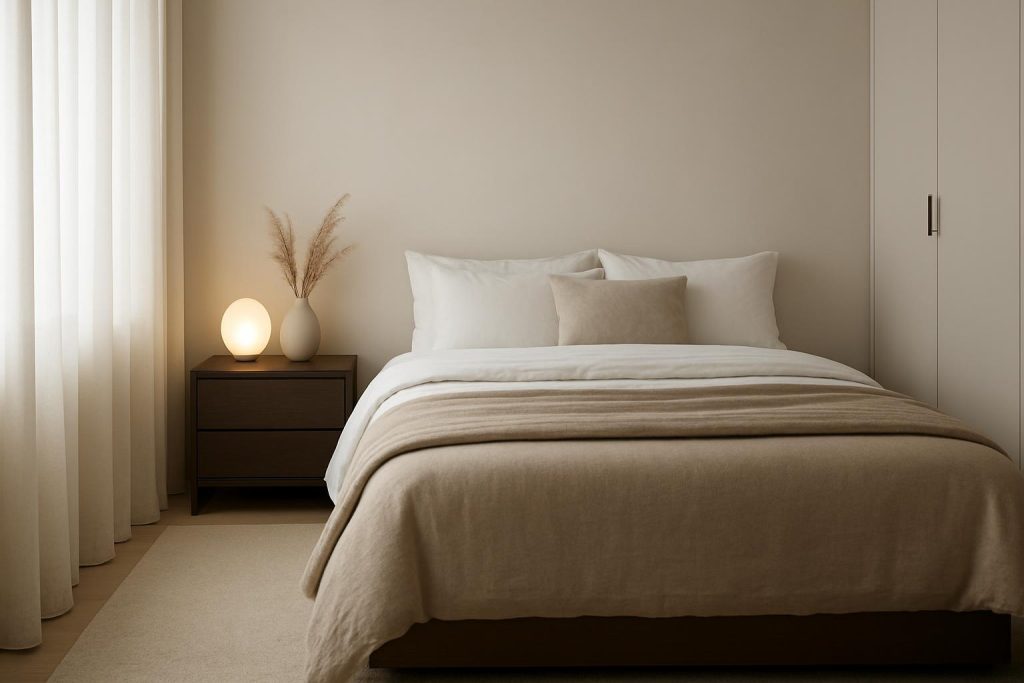
Sleep improves when your bedroom reduces visual noise, supports good routines, and feels grounded. This guide shows how to build a neutral bedroom that is calm, practical, and easy to maintain. You will learn how to pick colors, layer textures, set lighting, edit decor, and keep the space clean without fuss. Start with a clear plan, then move step by step.
Why Neutrals Work For Rest
What Neutral Really Means
Neutral does not mean boring. It means low contrast, balanced undertones, and a restrained palette that lets your eyes rest. This reduces stimulation at night. In a neutral room, shapes, textures, and light do most of the work, not loud color.
Benefits For Sleep
Low-contrast colors lower cognitive load. Softer lighting cues your body for wind-down. Fewer decor items reduce dust and simplify cleaning. Together, these factors support steady routines and deeper rest.
Build Your Neutral Palette
Base, Mid, and Accent Layers
Pick one base color for walls and ceilings. Choose one to two mid tones for furniture and rugs. Add a few soft accent notes for pillows or art. Keep differences subtle to avoid sharp jumps in contrast.
Undertones That Suit Your Light
Test paint cards in morning, afternoon, and night. North light often reads cooler; south light warms colors. If your room is dim, lean slightly warm with creamy whites and beiges. If your room runs hot in tone, temper with soft greige or muted taupe.
Simple Definition To Guide Choices
A neutral bedroom palette uses soft, low-contrast colors like whites, creams, beiges, taupes, warm grays, and desaturated greens or blues to create a calm base.
Texture And Material Choices
Natural Materials
Use wood with visible grain, linen, cotton, wool, and rattan for warmth. Add stone, ceramic, or matte metal for balance. Favor matte or eggshell finishes over glossy ones to prevent glare.
Textile Layering
Start with a breathable cotton or linen sheet set. Add a lightweight quilt or coverlet. Top with a textured throw for seasonal warmth. Choose a low to medium pile wool or cotton rug to soften step and absorb sound.
Furniture And Layout
Right-Size The Bed
Pick the smallest bed size that meets your comfort so you keep circulation space. Place the headboard against a solid wall. Center if possible to allow balanced nightstands and lamps.
Streamlined Pieces
Look for clean lines and closed storage. A bed with drawers, a dresser with smooth fronts, and a nightstand with a drawer keep surfaces clear. Closed storage reduces dust and visual clutter.
Small Room Tactics
Pick a light headboard or upholstered panel in the wall color to blend shapes. Mount sconces to free nightstand space. Use a narrow bench or floating shelf at the foot of the bed instead of a deep trunk.
To make a small neutral bedroom feel bigger, keep walls and large furniture in the lightest shades, use mirrors to bounce light, raise curtain rods, and keep the floor as clear as possible.
Lighting For Calm Evenings
Day And Night Balance
Maximize daylight with sheer curtains and light walls. At night, avoid a single harsh overhead. Use three layers: ambient, task, and accent.
Simple Formula
Layer lighting with warm color temperature bulbs, aiming for 2700K to 3000K at night, and add dimmers for flexibility.
Use fabric shades or frosted glass to diffuse. Place task lamps at both sides of the bed for balanced reading light. Add a low-output accent, such as an LED strip under the bed frame for safe movement without waking you fully.
Window Treatments That Work
Control Light And Privacy
Combine a light-filtering layer with a blackout option. Use linen or cotton sheers for day. Pair with lined curtains or a blackout shade for night. Keep colors close to the wall tone to avoid sharp breaks.
Better Proportions
Hang rods wider and higher than the window to let in more light and create a taller feel. If using shades, mount inside the frame for a clean line or a slim outside mount aligned with trim.
Declutter And Organize For Ease
Nightstand Rules
Limit the top to a lamp, water carafe, and one current book. Everything else goes inside a drawer or basket. Use a tray to group small items so cleaning is fast.
Closet And Dresser Flow
Group by category and color from light to dark. Use matching slim hangers to prevent crowding. Add dividers for socks and undergarments. Store off-season items in labeled underbed bins or top-shelf boxes.
Daily Reset
Make the bed each morning. Return clothes to a hamper or hanger the same day. Clear nightstands before lights out. A two-minute reset preserves calm for tomorrow.
Cleaning And Maintenance That Last
Weekly And Monthly Rhythm
Neutrals expose dust faster, so stay ahead with short, regular tasks. Focus on surfaces, floors, textiles, and air.
Keep a neutral bedroom clean and fresh by dusting weekly, vacuuming floors and under the bed, laundering sheets weekly, rotating a mattress seasonally, and airing the room daily.
Seasonal Refresh
Vacuum mattresses and upholstered headboards with an upholstery tool. Wash pillow protectors and duvet covers. Spot clean rugs and rotate them to even wear. Touch up wall scuffs with a small jar of the wall paint.
Scent And Air Quality
Low Irritant Choices
Choose fragrance-free or low-VOC detergents and paints. Ventilate during cleaning and painting. Open windows for ten minutes daily to cycle air.
Gentle Scent
If you like a scent, use one note at low intensity such as soft linen spray or a single essential oil diffuser on a timer. Avoid competing candles or strong blends that can linger.
Personal Touches Without Visual Noise
Curate, Do Not Crowd
Display items you use or love daily. Limit decor to a tight group on each surface. Choose frames and materials that match the room metals or woods.
Add personality by mixing textures, using subtle patterns, displaying a small curated set of personal items, and keeping accent colors soft and desaturated.
Art That Calms
Pick art with soft shapes and low saturation. Keep frames simple. Hang at eye level and align sizes for order.
Tech And Sleep Hygiene
Reduce Stimulation
Keep screens out of the bedroom if possible. If not, hide devices in a drawer. Use a warm light alarm clock. Charge phones outside the room or at least across the room with Do Not Disturb enabled.
Simple Wind-Down
Dim lights one hour before bed. Read a paper book or journal. Keep the thermostat cool and steady. These habits matter as much as design.
Budget And DIY Wins
Paint First
Paint is the biggest change for the lowest cost. Sample three to five colors on each wall. View in different light before deciding. Use a primer if covering strong colors. Choose eggshell or matte for walls to reduce sheen.
Upgrade Textiles
Swap old bedding for a neutral, breathable set. Add one new pillow cover set with texture such as waffle, boucle, or slub linen. Replace yellowed pillow inserts with fresh ones for instant lift.
Refinish Or Wrap
Refinish a nightstand with a light stain to match your palette. If refinishing is not an option, apply a removable wood-look vinyl to skirt flawed tops. Change hardware to simple knobs in matte black, brushed nickel, or unlacquered brass to coordinate metals.
Small Space And Rental Friendly Tips
No-Drill Solutions
Use tension rods for sheer curtains inside frames. Place adhesive hooks for robes or small art. Lean a mirror rather than drilling. Pick plug-in sconces with cord covers to free nightstands.
Light, Not Empty
Keep the palette light but add depth with texture. A linen headboard, ribbed throw, and nubby rug prevent flatness. Store extras out of sight, not in open baskets that can collect dust and visual mess.
One-Week Action Plan
Day 1: Assess And Clear
Remove everything not needed for sleep, dressing, or health. Box decor and extras. Wipe all surfaces.
Day 2: Choose Palette
Pick your base, mid, and accent tones. Buy paint samples and two pillow covers in your accent tone.
Day 3: Paint Prep
Patch, sand, and prime as needed. Sample on all walls. Decide by evening.
Day 4: Paint
Paint ceilings first, then walls. Let dry with windows open.
Day 5: Lighting
Add warm bulbs, install dimmers if allowed, and set up bedside lamps.
Day 6: Textiles
Lay the rug, make the bed with breathable bedding, add the throw and new pillows.
Day 7: Organize And Edit
Set nightstand rules. Tame cords. Hang art. Return only what supports calm and function.
Troubleshooting Common Issues
Room Feels Flat
Add a second texture at scale such as a woven bench or ribbed coverlet. Introduce a subtle pattern like a fine pinstripe or small herringbone in one element.
Too Dark At Night
Add another lamp at a low height. Use lighter shades. Increase bulb lumens while keeping the same warm color temperature.
Dust Build-Up
Reduce open shelving. Store less-used items in closed bins. Vacuum under the bed weekly and wash textiles on schedule.
Conclusion
A calm neutral bedroom is the result of consistent choices. Limit contrast, layer texture, set warm layered lighting, and keep surfaces clear. Support it with simple cleaning habits and smart storage. Start with paint and textiles, then tune lighting, layout, and decor. Small steps compound into a room that supports steady, restorative sleep.
FAQ
Q: What is a neutral bedroom palette?
A: A neutral bedroom palette uses soft, low-contrast colors like whites, creams, beiges, taupes, warm grays, and desaturated greens or blues to create a calm base.
Q: How do I make a small neutral bedroom feel bigger?
A: To make a small neutral bedroom feel bigger, keep walls and large furniture in the lightest shades, use mirrors to bounce light, raise curtain rods, and keep the floor as clear as possible.
Q: What lighting is best for a calm bedroom?
A: Layer lighting with warm color temperature bulbs, aiming for 2700K to 3000K at night, and add dimmers for flexibility.
Q: How can I add personality without breaking the neutral look?
A: Add personality by mixing textures, using subtle patterns, displaying a small curated set of personal items, and keeping accent colors soft and desaturated.
Q: How do I keep a neutral bedroom clean and fresh?
A: Keep a neutral bedroom clean and fresh by dusting weekly, vacuuming floors and under the bed, laundering sheets weekly, rotating a mattress seasonally, and airing the room daily.