
We are reader supported. When you purchase through links on our site, we may earn an affiliate commission. Also, as an Amazon affiliate, we earn from qualifying purchases.
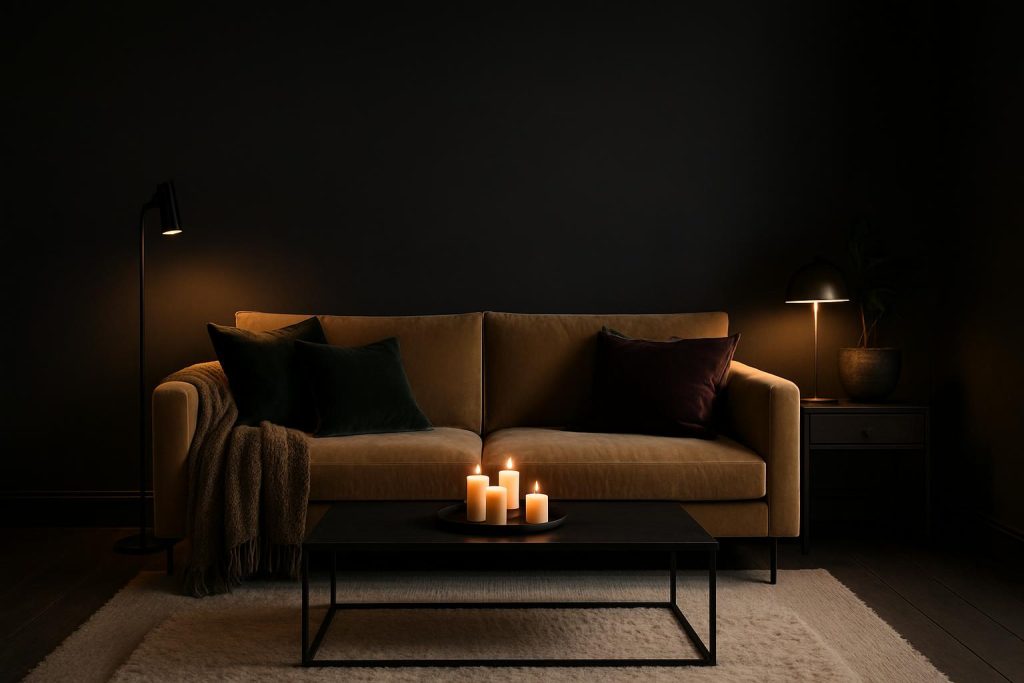
A moody living room looks rich, calm, and inviting. It uses deep color, layered lighting, and tactile materials to create comfort without clutter. You can build this look in any size room and on any budget with smart choices and a clear plan. Keep reading to learn how to choose colors, light the space, style it with intention, and keep everything clean and easy to maintain.
What Makes a Living Room Moody
Moody does not mean gloomy. It means controlled contrast, low glare, and a palette that wraps the room in depth. Darker walls, soft light, and dense textures create visual quiet. Clean lines and restrained styling keep the room from feeling heavy. Every element should support rest and focus.
Build a Rich Color Palette
Pick a confident base color
Start with one deep hue for walls. Consider charcoal, espresso brown, forest green, midnight blue, aubergine, or deep taupe. Choose the color that works with your floors and large furniture. If your sofa is warm beige, lean into greens or browns. If your floors are cool gray, consider navy or charcoal. Paint drives the mood more than any other decision.
Test undertones in real light
Undertones decide whether a color feels calm or loud. Paint sample swatches on two walls and look at them morning, afternoon, and night. If your room faces north, colors read cooler. Add warmth with greens or browns that have a touch of yellow or red. South or west light can intensify colors, so pick slightly muted tones to keep the room grounded.
Choose supporting colors with restraint
Limit the palette. Use one main dark color for walls, one medium tone for large furniture or rugs, and one accent color for pillows and art. Metals count as a color. Antique brass and black iron add warmth and structure without noise.
Select the right paint finish
Matte and eggshell finishes reduce glare and make colors look deeper. In high traffic areas, choose a scrubbable matte or an eggshell designed for durability. Use a higher durability satin or semi gloss on trim and doors for easy cleaning while keeping walls soft.
Light Like a Pro
Layer ambient, task, and accent
One overhead fixture will flatten a moody room. Use at least three light sources. Combine a dimmable ceiling light for general glow, a floor lamp by the sofa for reading, and a table lamp or picture light to highlight art or shelves. Place light where people sit, read, and gather.
Pick warm bulbs and dimmers
Use warm white bulbs in the 2700K to 3000K range. They flatter skin tones and deepen colors. Install dimmers on main lights to shift from lively to cozy fast. Opaque or linen shades soften hot spots and reduce glare on dark walls.
Control daylight
Layer window treatments. Use lined curtains or roman shades to cut harsh light and add privacy. Sheers can stay closed during the day to diffuse brightness while heavy panels frame the window. Mount rods wide and high to make the room feel taller and fuller.
Work With Texture and Materials
Choose tactile textiles
Texture carries warmth when colors are dark. Use velvet or chenille for pillows, wool or cotton knit for throws, and linen or twill for drapery. Mix smooth and nubby surfaces. Give each seat a soft touch point like a throw or cushion.
Balance wood, stone, and metal
Dark palettes need varied materials to avoid monotony. Medium to dark wood tones add natural depth. Honed stone or matte ceramic keeps glare down. Use blackened steel or antique brass to ground the scheme. Repeat metals in small doses to look intentional.
Elevate walls and ceilings
Paint the ceiling a shade lighter than the walls for a cocoon effect without lowering the room. If the room is tall, consider the same color on walls and ceiling for a seamless wrap. Add simple panel molding, beadboard, or a limewash finish for depth without pattern overload.
Plan a Layout That Feels Calm
Zone the room
Define a seating zone with a large rug that fits all front furniture legs. Keep walkways clear at about thirty to thirty six inches. Use a console table or low cabinet to anchor the back of a sofa if it floats in the room.
Match scale to the space
Deep sofas read luxurious in a moody room, but leave breathing room. If the room is small, pick one large sofa and a slim lounge chair instead of multiple bulky pieces. Rounded edges soften shadows and prevent the space from feeling boxy.
Support comfort with surfaces
Add side tables at arm height so drinks and books have a landing spot. Keep a lidded box or tray to hide remotes. Closed storage calms visual noise and makes the dark palette feel intentional.
Style With Intention
Use art with presence
One large piece or a tight pair often looks better than many small frames. Choose art that connects to your palette. A picture light adds glow and signals focus. Hang art so the center is about eye level when seated in the main zone.
Edit decor for impact
Dark rooms can look cluttered fast. Group books by tone, corral small items on a single tray, and leave negative space on shelves. Candles or a single sculptural object stand out more against a dark backdrop than many items competing for attention.
Add plants with structure
Choose plants with deep green leaves and simple shapes. Use matte or textured planters that match your metals or wall tone. Place plants where they catch indirect light without creating glare on walls.
Dial Up the Cozy Factor
Layer rugs and throws
A plush rug underfoot changes the room instantly. If budgets are tight, layer a smaller wool or cotton rug over a larger flatweave. Keep throws within reach on arms or in a basket. Use two or three pillow fabrics repeated across seats for cohesion.
Use scent and sound
Warm lighting pairs well with a cedar, amber, or soft floral scent. A small speaker at low volume can mask street noise and deepen the sense of calm. Keep cords tidy so the setup feels clean and safe.
Create a glow point
If you have a fireplace, let it lead with low light nearby. Without a fireplace, cluster candles on a nonflammable tray or use a dimmed table lamp as a focal glow. The eye reads the brightest spot as the center of the room.
Window Treatments for Depth
Choose weight and length wisely
Full length, lined curtains add height and softness. Puddling is optional, but a slight break at the floor keeps dust down and looks tailored. Roman shades work well in tight spaces where curtains overwhelm.
Unify hardware
Match curtain rods and rings to your room metals. Use simple finials to keep the look calm. Extend rods beyond the window so curtains stack off glass and maximize daylight control.
Maintenance and Cleaning Made Easy
Keep dust at bay on dark surfaces
Dust shows more on dark paint, shelves, and metals. Do a quick weekly pass with a dry microfiber cloth. For smudges on walls, use a barely damp microfiber and a drop of mild soap, then dry immediately. Around light switches and door frames, choose scrubbable paint and spot clean as needed.
Care for fabrics and rugs
Vacuum upholstery weekly with a soft brush attachment. Use a lint roller on velvet and dark pillows. Rotate cushions to even wear. Shake out throws and wash on gentle cycles. Vacuum rugs slowly in both directions and rotate them every few months for even fading and traffic patterns.
Protect wood and metal
Wipe wood with a slightly damp cloth, then dry. Use coasters and felt pads to prevent rings and scratches. For blackened steel or brass, dust often and spot clean with a non abrasive cloth. Avoid harsh chemicals that leave streaks on matte finishes.
Plan for paint touch ups
Keep a labeled sample of your wall paint for quick fixes. Touch up after moving furniture or seasonally near high use areas. Use a small foam brush and feather edges to blend.
Budget and DIY Strategies
Paint first
Dark, high quality paint is the fastest path to a moody look. Paint two coats and cut lines cleanly. If ceilings are low, paint the ceiling a lighter shade of the wall color to lift the room without losing depth.
Shop secondhand and upcycle
Find solid wood tables, vintage lamps, and real wool rugs at thrift shops or marketplaces. Update lampshades, swap hardware to antique brass or matte black, and refinish small tables with a matte topcoat. Reuse what you own by grouping items by tone rather than by set.
Use removable upgrades
Peel and stick wood planks, stone look tiles, or textured wallpaper add depth without commitment. Removable window film can diffuse harsh light. Slipcovers in heavy cotton or linen can shift a bright sofa into a moody palette for less.
Improve lighting cheaply
Add plug in sconces, clip on picture lights, or smart bulbs you can dim with an app. Replace bright white bulbs with 2700K bulbs to warm the space instantly.
Safety and Ventilation
Work clean and safe
Choose low VOC paints and adhesives when possible. Open windows while painting and let the room air out fully before heavy use. Manage cords with clips or covers to prevent trips. Keep candles away from curtains and never leave them unattended. Use stable ladders and protect floors with drop cloths.
Mistakes to Avoid and Quick Fixes
Too little light
If the room feels flat, add a lamp at the opposite corner of your main light source and install dimmers. Raise lamp shades to let more light escape and switch to 2700K bulbs.
One note color
If the room looks heavy, add mid tone elements like a walnut side table, a lighter rug, or linen curtains. Bring in a single accent color through pillows or art and repeat it twice.
Visual clutter
If surfaces feel busy, remove half the decor. Group remaining items on a tray and add closed storage. Tidy cables and store remotes in a box to simplify sightlines.
A Simple Weekend Plan
Friday evening
Choose your wall color, test swatches, gather supplies, and clear the room. Remove art and hardware. Patch holes and tape trim carefully.
Saturday
Paint walls and, if desired, the ceiling. While coats dry, assemble lamps, swap bulbs to 2700K, and mount curtain rods high and wide. Rehang curtains or install shades.
Sunday
Place the rug, set the sofa and chairs, and add side tables. Layer pillows and throws. Hang one or two key art pieces and add a picture light. Do a final clean, style a tray, and add plants. As dusk falls, set dimmers to warm the room and enjoy.
Conclusion
A moody living room is about control and comfort. Pick a deep, well tested palette. Layer light at warm color temperatures. Build texture through textiles and natural materials. Keep layouts clear and styling restrained. Maintain surfaces with simple weekly habits. Start with paint, solve light, and add only what supports calm. With a focused plan, any space can feel rich, cozy, and inviting.
FAQ
Q: What paint finish works best for a moody living room
A: Matte and eggshell reduce glare and make colors look deeper, while scrubbable matte or durable eggshell is best for high traffic walls. Use satin or semi gloss on trim and doors for easy cleaning.
Q: What light bulb temperature should I use to keep it cozy
A: Use warm white bulbs in the 2700K to 3000K range and add dimmers to shift the mood.
Q: How do I keep dark surfaces clean without streaks
A: Dust weekly with a dry microfiber cloth, spot clean walls with a barely damp microfiber and mild soap, then dry immediately, and avoid harsh chemicals on matte finishes.
Q: Can a small living room handle dark colors
A: Yes. Use one dark wall color, keep furniture scaled to the room, add layered warm lighting, and maintain clear walkways to prevent a cramped feel.
Q: What are the most budget friendly moves to get the look fast
A: Paint first, swap to 2700K bulbs with dimmers, thrift solid wood and vintage lighting, update hardware to antique brass or matte black, and use removable materials like peel and stick finishes or slipcovers.