
We are reader supported. When you purchase through links on our site, we may earn an affiliate commission. Also, as an Amazon affiliate, we earn from qualifying purchases.
Midcentury modern style feels fresh, calm, and practical. It suits small apartments and larger homes. It combines clean lines, warm wood, and purposeful furniture. This guide breaks it down into clear steps. You will plan, choose materials, pick colors, and set up lighting layer by layer. You will also learn how to clean, maintain, and organize the space so it looks good every day.
What Makes Midcentury Modern Work
Core Principles
Focus on function first. Keep lines clean and shapes simple. Choose honest materials like wood, metal, glass, and natural textiles. Aim for balance and negative space. Avoid excess ornament. Let each piece have a reason to exist.
Recognizable Features
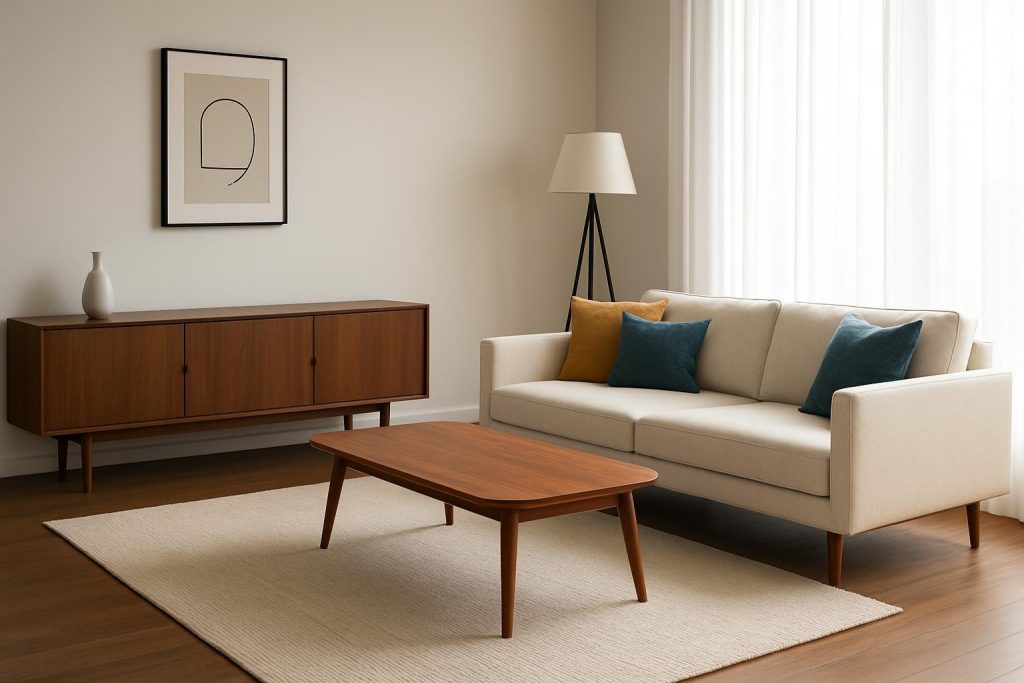
Low profiles and horizontal lines. Tapered legs and slim frames. Geometric forms and gentle curves. Modular pieces that move and adapt. Built-in storage or streamlined cabinets.
How It Feels
Open, light, and uncluttered. Warm but not busy. Graphic but not loud. The room should support daily life and invite easy cleaning and care.
Plan Your Space First
Measure and Map
Measure the room length, width, and ceiling height. Note doors, windows, radiators, and outlets. Sketch a simple floor plan. Mark zones for seating, reading, and media. Choose the largest item first, usually the sofa, then add chairs and tables that fit scale and flow.
Set a Focal Point
Pick one focal point. It can be a fireplace, a large window, a media wall, or a statement bookshelf. Aim furniture toward it and keep surrounding decor restrained.
Keep Traffic Flow Clear
Leave 90 cm to 120 cm main pathways if space allows. Leave 45 cm to 60 cm between sofa and coffee table. Place side tables within easy reach of seats. This makes living and cleaning easier.
Build a Cohesive Color Palette
Start With Warm Neutrals
Use white, cream, gray, or warm beige for walls. Add wood tones like walnut, teak, or oak through furniture. Keep base colors consistent so accents can stand out.
Add Saturated Accents
Use mustard, teal, olive, rust, navy, or brick. Choose two accent colors and repeat them across pillows, art, or a single chair. Add black or charcoal in small amounts for contrast.
Balance and Proportion
Keep about 70 percent neutral, 20 percent wood tones, and 10 percent accent color. If the room feels cold, add more wood and textured textiles. If it feels loud, reduce accent points and simplify patterns.
Choose Furniture That Fits the Look
Sofas That Work
Pick a low, streamlined sofa with clean arms. Bench seat cushions give a smooth look. Tight backs or subtle tufting keep it tidy. Opt for neutral upholstery that supports the palette. Consider raised legs for visual lightness and easy vacuuming.
Chairs That Add Character
Look for lounge chairs with wooden frames, scoop seats, or swivel bases. Mix one sculptural chair with one simple chair to avoid clutter. Keep fabrics in the same tone family as the sofa or in a chosen accent color.
Tables That Anchor the Room
Choose a coffee table with rounded corners for flow. Wood, glass, or marble tops all work. Side tables should be simple and sturdy. Mix shapes, such as a rectangular coffee table with round side tables, for balance.
Storage That Stays Slim
Use a credenza or low media console with tapered legs. Add a tall bookcase with open shelves for airiness. Use closed storage for cables and devices. Keep visible shelves edited.
What To Avoid
Avoid bulky rolled arms, heavy skirts, and ornate carving. Avoid too many matching sets. Skip high gloss colors that distract. Keep scale appropriate to room size.
Select Materials and Finishes
Best Woods
Walnut brings warmth and depth. Teak feels classic and refined. White oak gives a lighter look. Mix woods carefully and repeat the main wood tone at least twice in the room.
Upholstery Choices
Leather is durable and easy to clean. Wool blends add texture and hold shape. Linen looks airy but needs care. Performance fabrics resist stains and suit daily use. Choose smooth weaves for a crisp look and keep patterns simple.
Metals That Fit
Brass adds warmth. Blackened steel adds graphic lines. Chrome adds cool shine. Repeat the same metal finish in two or three places for consistency.
Plan Lighting in Layers
Ceiling Fixtures
Use a saucer pendant or a multi arm chandelier as a focal light. Keep scale proportionate to room size and sofa length. Place it centered to the seating zone, not just the room.
Floor and Table Lamps
Arc lamps bridge sofa and chair. Tripod lamps add height. Task lamps work on side tables for reading. Spread lamps around the room to reduce shadows and create evening warmth.
Bulbs and Dimmers
Use warm white bulbs around 2700K to 3000K. Add dimmers to control mood. Combine ceiling, floor, and table lights for flexible scenes.
Rugs and Textiles
Rug Size and Placement
Pick a rug large enough to fit front legs of sofa and chairs. Aim for at least 20 cm to 30 cm of rug on each side of the coffee table. Choose solid, heathered, or simple geometric patterns. Wool flatweaves are easy to clean.
Window Treatments
Use simple linen or cotton curtains. Hang rods wide and high to expand the view. For light control, add roller shades or wooden blinds behind curtains.
Pillows and Throws
Limit the palette. Mix a solid, a small scale pattern, and a texture. Keep pillow sizes consistent. Use a light throw to break up large sofa surfaces.
Art and Decor
Wall Art
Abstract, geometric, or graphic prints fit well. Use large scale art over the sofa or credenza. Keep frames slim in black, wood, or brass.
Objects and Books
Use ceramics, carved wood, or glass pieces. Group items in odd numbers and vary height. Stack books horizontally to ground small objects.
Greenery
Add a tall plant in a simple planter. Use low bowls for succulents on shelves. Repeat greenery in two or three spots to link zones.
Maximize Natural Light
Keep Sightlines Low
Choose low backs and slender profiles near windows. Avoid tall units that block daylight. Use mirrors sparingly to bounce light without clutter.
Clean Glass and Frames
Dust window frames weekly. Clean glass monthly. Use neutral sheer curtains to soften glare but keep brightness.
Integrate Technology Neatly
Hide Cables
Route cables through the media console. Use adhesive raceways along baseboards. Label cords and bundle extras in a closed bin.
Smart Controls
Add dimmer plugs or smart bulbs to floor and table lamps. Hide hubs inside closed storage with ventilation gaps. Keep remotes in a small tray.
Layout Recipes That Work
Small Living Room
Use a two to three seat sofa and one lounge chair. Choose a round coffee table to ease circulation. Mount the TV or use a slim console. Add a tall floor lamp to free table space.
Long Narrow Room
Float the sofa off the wall with a narrow console behind it. Create two zones such as seating and reading. Use a runner style rug or two rugs to define areas.
Open Concept
Anchor with a large rug and a central pendant. Position a credenza or open shelf as a divider. Repeat colors in the kitchen and dining area for unity.
Budget Strategies
Where To Invest
Invest in a quality sofa, a sturdy rug, and a solid wood credenza. These set the tone and last. Choose timeless lines so you can update accents later.
Where To Save
Save on side tables, pillows, lampshades, and decor. Choose simple frames for art prints. Use affordable curtains with a custom hem for good fit.
Vintage Sourcing
Look for real wood construction, tight joints, and intact veneers. Check drawer glide and door swing. Refinish light scratches with walnut oil or a touch up pen. Replace hardware only if needed and keep finishes consistent.
Maintenance and Cleaning
Wood Care
Dust weekly with a soft cloth. Use a slightly damp cloth for sticky spots, then dry. Avoid harsh cleaners. Use felt pads under decor and lamp bases. Re oil dry wood surfaces a few times a year if the finish allows.
Fabric and Leather Care
Vacuum upholstery weekly with a brush attachment. Blot spills fast with a white cloth. Use fabric cleaner tested on a hidden spot. Condition leather two to four times a year and keep it away from direct heat.
Daily Tidy System
Use a small tray for remotes and chargers. Keep a lidded bin in the credenza for cables and manuals. Do a five minute nightly reset to fold throws, fluff pillows, and clear surfaces. This keeps the style visible and reduces deep cleans.
Seasonal Refresh Ideas
Swap Textiles
Use wool and boucle in colder months. Use linen and lightweight cotton in warmer months. Keep the base palette and switch only textures and a few accents.
Rotate Art and Objects
Store extra art in a flat file or portfolio. Swap pieces each season. Edit open shelves so each item has space around it.
Sustainable Choices
Better Materials and Methods
Choose vintage or refurbished furniture to reduce waste. Look for FSC certified wood and low VOC paints. Pick durable fabrics that last and can be repaired. Maintain pieces so they avoid early replacement.
Common Mistakes and Fixes
Overcrowding
Too many small pieces make the room busy. Remove one item per surface. Choose fewer, larger pieces with clear purpose.
Poor Scale
A tiny rug shrinks the room. Size up the rug so furniture touches it. Keep lamp heights within reach and sofa depth comfortable for your height.
Color Imbalance
Too many accents create noise. Pull back to two accent colors and repeat them with intention. Add wood and neutrals to calm the mix.
Flat Lighting
One ceiling light creates glare and shadows. Add a floor lamp and two table lamps. Use warm bulbs and dimmers to shape mood.
Step by Step Starter Plan
Week 1 Plan and Palette
Measure the room and make a layout sketch. Choose wall color and wood tone. Pick two accent colors.
Week 2 Core Furniture
Buy the sofa and rug. Choose a coffee table that fits the layout. Confirm pathways and spacing.
Week 3 Storage and Lighting
Add a credenza or media console. Install the main pendant. Place a floor lamp and one table lamp.
Week 4 Decor and Textiles
Hang art. Add pillows, a throw, and curtains. Place a plant and a few objects. Set up cable management and the daily tidy tray.
Conclusion
Midcentury modern living rooms succeed through clarity and restraint. Start with function, then add warm materials and a tight color palette. Choose furniture with clean lines and scale it to your room. Layer lighting and edit decor. Maintain surfaces with simple routines. With these steps, the room will look composed, live comfortably, and stay easy to clean.
FAQ
Q: What are the core principles of midcentury modern living rooms?
A: Function first, clean lines, honest materials, balanced proportion, and uncluttered space.
Q: Which colors work best for a midcentury modern palette?
A: Warm neutrals with wood tones as the base, plus two accents such as mustard, teal, olive, rust, navy, or brick, and small amounts of black for contrast.
Q: What furniture should I prioritize on a small budget?
A: Invest in a quality sofa, a sturdy rug, and a solid wood credenza. Save on side tables, pillows, lampshades, and decor.
Q: How do I layer lighting in a midcentury modern living room?
A: Combine a central pendant or chandelier with floor and table lamps, use warm white bulbs around 2700K to 3000K, and add dimmers for control.
Q: How can I keep the room tidy day to day?
A: Use a small tray for remotes, a lidded bin for cables, and a five minute nightly reset to fold throws, fluff pillows, and clear surfaces.