
We are reader supported. When you purchase through links on our site, we may earn an affiliate commission. Also, as an Amazon affiliate, we earn from qualifying purchases.
The IKEA Trofast system is a workhorse for playrooms. It is sturdy, modular, easy to clean, and affordable. With a few smart tweaks, it turns clutter into clear categories kids can maintain. This guide gives you practical hacks, step by step. Each idea is beginner friendly and safe to implement. Follow along, pick what fits your space, and make cleanup fast and stress free.
Why Trofast Works For Playrooms
Trofast bins slide out at kid height. Children see what is inside and can reach it without help. That supports independent play and self directed cleanup. Frames come in different heights so you can fit under windows, alongside desks, or as a room divider.
Bins come in three depths. Shallow bins prevent overfilling and are great for small parts. Medium bins fit most sets and soft toys. Deep bins hold bulky items like blocks and dress up gear. Mix sizes to match what you own instead of forcing toys to fit one size.
Plastic bins are light and washable. If a mess happens, you can pull a bin to the sink. Frames are simple wood or particleboard, easy to anchor to a wall for safety. You can reconfigure rails or swap bins as kids grow.
Plan Your Setup Before You Buy
Map The Room Into Zones
List the activities you want to support. Common zones include building, pretend play, art, puzzles and games, and reading. Place Trofast near each zone so toys live where they are used. Keep messier zones on hard floors. Keep quiet zones like reading farther from the main traffic path.
Measure And Pick Frame Heights
Low frames fit under windows and tables and work for toddlers. Mid height frames make a good wall of storage and double as a counter surface. Taller frames save floor space but must be anchored. Measure lengths and heights and leave room for bin clearance and walking paths.
Match Bin Sizes To Categories
Use shallow bins for small parts like LEGO, magnetic tiles accessories, figurines, and art supplies. Use medium bins for train tracks, doll accessories, cars, and plush. Use deep bins for blocks, dress up, and oversized toys. Avoid mixing tiny parts with bulky items in one bin. One bin equals one category works best.
Plan A Simple Color Code
Pick one bin color per zone or per toy type. For example, white for building, green for pretend play, clear for art. Color hints cue kids even before they read labels. Stay consistent across the room to reduce decision fatigue.
Labeling That Kids Can Use
Picture Plus Word Labels
Take a quick photo of the actual contents on a plain background. Print small photos and add a simple word like Blocks or Animals. Tape to the front of each bin or use adhesive label holders. Pictures help pre readers. Words help older kids and caregivers stay consistent.
Two Part Labels For Fast Sorting
Place the same picture label on the shelf rail and on the bin. Kids match picture to picture. This reduces the guesswork and speeds up cleanup. When you rotate toys, move both labels together so the system stays clear.
Label Maintenance
Use removable tape or sleeves so you can swap labels without sticky residue. Keep a small envelope of spare labels in a kitchen drawer. Plan a five minute review once a month to fix missing labels and update categories.
Smart Trofast Hacks That Upgrade Function
Add Wheels To A Low Trofast Frame
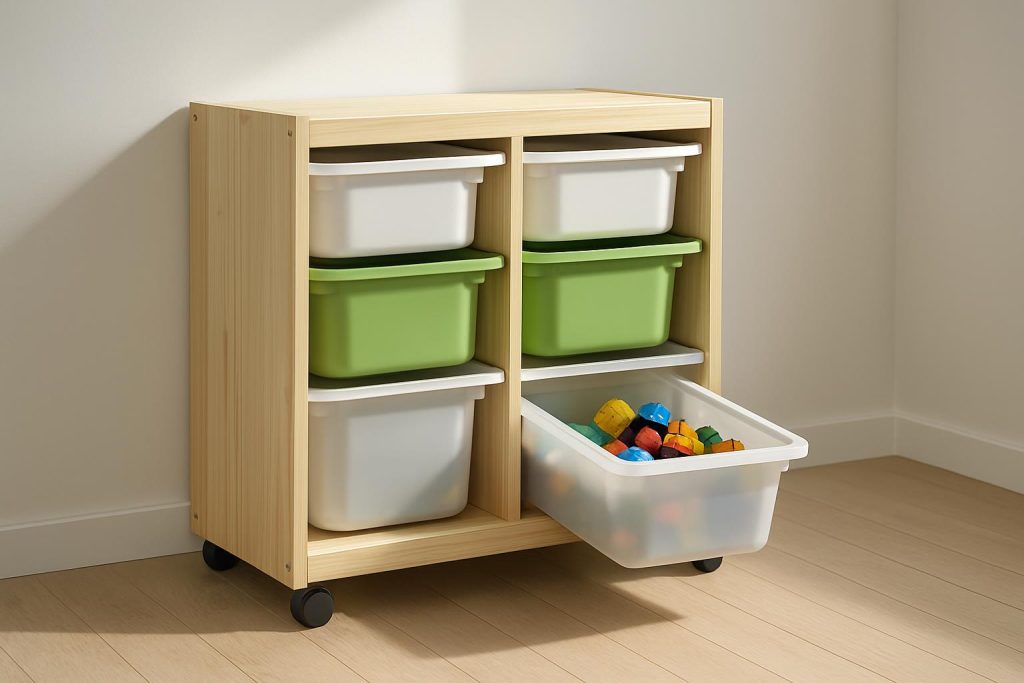
Turn a low frame into a rolling cart for flexible play. Choose low profile locking casters rated for the frame weight. Flip the frame, pre drill pilot holes near each corner, and attach casters with short wood screws. Lock wheels when parked so kids can pull bins safely. This works well for art stations and LEGO zones that move to where light is best.
Quiet Sliders And Stop Blocks
Reduce scraping sounds and prevent accidental dumps. Stick felt pads on the underside of bin rims where they contact the rails. To stop bins from sliding fully out, screw a small wooden stop block at the back end of each rail path. Leave enough gap so adults can lift bins out when needed. Test one bin first, then repeat across the frame.
Use Lids And Dividers For Small Pieces
Add insert trays or small containers inside shallow bins to separate minifigures, wheels, and specialty pieces. Fit-on lids keep sets together for transport to a table. Store instruction booklets in a clear pouch at the back of the bin. This keeps builds intact and reduces loss.
Create A Durable Worktop
Make the top of a mid height frame a workstation. Cut a plywood or laminated board to match the frame size. Round the corners and sand the edges. Fasten from underneath with small brackets or apply non slip pads for a removable top. Add a washable mat for art or building. This gives kids a defined surface and keeps mess contained to one zone.
Go Vertical With Wall Rails
Use Trofast wall rails or a wall mounted frame to free floor space. Find studs with a stud finder. Mark level lines. Pre drill and secure rails with suitable screws into studs. Hang shallow bins high for light items like craft paper and small sets. Keep heavier bins lower. Always anchor according to the wall type and product instructions.
Under Table Drawer Setup
Slide a low Trofast frame under a child height table to act as drawers. Align the frame so bins pull out from the seat side. Store crayons, paper, playdough, stamps, and scissors. Add a small bin for trash and one for clean cloths. This keeps the tabletop open and supplies within reach.
Two Sided Art Cart
Place two low frames back to back and attach the tops to create a double sided cart. Add locking casters. One side holds drawing and coloring, the other side holds paint and craft kits. Assign shallow bins to tools and medium bins to materials. Use picture labels to show scissors, glue, markers, and brushes. Roll the cart near a washable floor during messy work.
Game And Puzzle Station
Keep board games flat in medium bins. Use elastic bands or zipper pouches for loose cards. Store puzzles vertically in shallow bins with a simple file divider. Label by piece count so kids pick an appropriate challenge. Keep one bin empty as a return bin for pieces found around the house.
LEGO Sorting Station
Dedicate a mid height frame to building. Use shallow bins to sort by color or by type, not both. Pick the scheme you can maintain. Add one medium bin for in progress builds and one for baseplates. Use picture labels for consistency. Place a building mat or baseplates on the top surface for a defined workspace.
Soft Toy Corral
Use deep bins for plush and dress up. Limit the number of items per bin so kids can see the bottom. Label with a simple picture of a teddy or costume. If the bin gets jammed, remove one item before adding a new one. This keeps soft toys from spreading across the room.
Daily Reset Systems That Actually Stick
One Bin Out Rule
Set a clear rule. One bin out at a time. Before taking a new bin, the current one goes back. Keep it positive and consistent. Parents model the rule during the first week. Place a reminder label on the side of the frame at kid height.
Ten Minute Reset Timer
End the day with a short reset. Start a ten minute timer. Everyone returns items to the right bin using picture labels. Do the same after playdates. This keeps piles from growing and builds habit without stress.
Weekly Rotation Box
Keep a large bin on the top shelf labeled Rotation. Once a week, swap a few categories in and out. Store off cycle bins in a closet. Less choice helps kids focus and keeps the room fresh. Move the matching labels with the bins so your system stays clear.
Safety First For Every Setup
Anchor Against Tipping
Any mid or tall frame should be anchored to a stud. Use two L brackets, one near each top corner. Pre drill, use appropriate screws for the stud and for the frame, and check for level. If on casters, lock wheels before use. Never place heavy bins at the top. Keep the top light to reduce tip risk.
Distribute Weight Smartly
Store the heaviest items low. Medium weight items go in the middle. Light items go high. Avoid overfilling deep bins. Check that kids can slide bins with one hand without strain. If a bin is too heavy, split that category into two bins.
Child Friendly Hardware
Sand any sharp edges on custom tops or stop blocks. Use rounded corner protectors if needed. Keep screws flush. Test each rail after modifications. Repair loose parts immediately.
Cleaning And Care
Wash Bins Fast
Pull bins and wash in warm soapy water. Rinse and air dry. Wipe rails and frames with a damp cloth. Avoid soaking wooden parts. For quick touch ups, use disinfecting wipes on bin fronts and handles.
Sanitize Without Damage
For plastic bins, a mild disinfectant works well. Test any cleaner on a hidden spot first. Avoid harsh solvents. For sticky labels, use a citrus adhesive remover sparingly and wash afterward.
Repair And Spare Parts
Keep a small kit with felt pads, spare labels, a screwdriver, and extra screws. Replace worn felt pads to keep sliding quiet. Tighten loose rails during monthly reviews. Swap cracked bins early to prevent sharp edges.
Common Mistakes To Avoid
Do not buy only deep bins. They look generous but invite overfilling. Balance sizes. Do not skip labels. Even adults forget what goes where. Do not mix too many categories in one bin. One bin per category is faster to maintain.
Do not place all frames against one wall if you need play zones. Spread storage to where kids play. Do not leave tall frames unanchored. Secure them before use. Do not expect kids to guess your system. Teach it, practice it, and simplify until it works.
Budget And Sourcing Tips
Measure first, then buy. One extra bin per size is useful for rotation or laundry duty. Mix bin colors you already own with new ones if the color code remains clear. Check secondhand marketplaces for frames and add new bins if needed. Start with fewer bins and add only when a category has no home.
Quick Start Layouts
Toddler Friendly Setup
Two low frames, all shallow and medium bins. Categories include blocks, cars, animals, musical, and art basics. Picture labels only. One rolling cart for art. Heavy items bottom, light items top. One bin out rule posted at kid height.
Elementary Builder Setup
One mid height frame as a LEGO station with shallow bins and a top work surface. One low frame for vehicles and tracks. One wall rail for manuals and small kits. Labels with pictures and words. Stop blocks installed to prevent spills.
Shared Siblings Setup
Two mid height frames side by side. Left side for older child categories like LEGO and small games. Right side for younger child categories like plush and chunky puzzles. Color code by child. Shared art cart with locking casters. Anchors on both frames.
Step By Step Example: From Chaos To Calm
Empty every toy into categories on the floor. Measure the wall and choose frames that fit. Assign one bin per category. Place heavy bins on the bottom. Apply picture plus word labels to bins and matching labels to rails. Install stop blocks and felt pads. Anchor frames. Do a ten minute reset each night for a week. Review after seven days. If one bin stays messy, split that category or change bin size.
Conclusion
Trofast works because it is simple and adaptable. With clear categories, picture labels, safe anchoring, and a short daily reset, kids can manage their own space. Use the hacks that fit your room and skip the rest. Start small, get one zone working, and build from there. Your playroom will stay organized, easy to clean, and ready for play.
FAQ
Q: Which Trofast bin size should I use for LEGO and small pieces?
A: Use shallow bins for small parts like LEGO and add insert trays or small containers inside to separate pieces. Fit-on lids help keep sets together.
Q: How can I label Trofast bins for toddlers who cannot read?
A: Use picture plus word labels and place the same picture on the shelf rail and on the bin so kids can match picture to picture.
Q: Can I add wheels to a Trofast frame, and how do I keep it stable?
A: Yes. Add low profile locking casters with proper screws, lock the wheels when parked, and anchor mid or tall frames to a wall for safety.
Q: How do I stop kids from pulling bins all the way out and dumping?
A: Install small wooden stop blocks at the back of each rail path and add felt pads for smoother sliding. Teach the one bin out rule.
Q: What is a simple daily reset routine for a Trofast playroom?
A: Set a ten minute timer and have everyone return items to the right bins using picture labels. Do the same after playdates.