
We are reader supported. When you purchase through links on our site, we may earn an affiliate commission. Also, as an Amazon affiliate, we earn from qualifying purchases.
IKEA kitchens are modular, budget friendly, and easy to personalize. With a clear plan, smart storage, and a few pro tricks, you can build a kitchen that looks high end and works hard every day. This guide walks you through layout planning, cabinet choices, storage upgrades, lighting, installation, cleaning, and small space strategies. Each step is practical and beginner friendly, so you can move from idea to finished kitchen with confidence.
Introduction
A good kitchen is not only about looks. It must fit your space, support daily cooking, and stay easy to clean. IKEA makes this possible with a flexible cabinet system, many interior options, and accessories that stretch every centimeter. Start with layout, then lock in cabinets, storage, lighting, and finishes. Keep the process simple and you will avoid delays and costly mistakes.
Plan the layout first
Map your zones
Group tasks into zones. Prep near the sink. Cooking around the cooktop and oven. Cleaning at the sink and dishwasher. Storage for food near the prep area. Storage for dishes near the dishwasher. When zones are clear, your steps drop and workflow feels smooth.
Measure and check services
Measure the room length, width, ceiling height, and all openings. Mark water, waste, gas, and power points. Measure window heights and sill depths. Note radiators, pipes, and beams. Good measuring prevents last minute changes.
Pick a layout that fits the room
Galley works best in narrow rooms. L shape suits open corners. U shape maximizes storage in medium rooms. An island adds prep space and social seating in larger rooms. Aim for at least 100 cm walkway. In tight spaces, 90 cm is workable for one cook.
Plan clearances and ergonomics
Leave 5 cm to 7 cm fillers next to walls so doors and drawers open freely. Keep 120 cm between parallel runs if you want two people to pass. Set the oven at chest height for safe lifting. Standard counter height is about 91 cm with legs and plinths adjusted. If you are tall or short, tune leg height within the range of the system.
Choose the right IKEA system parts
Cabinets and frames
IKEA base, wall, and tall cabinets come in set widths and heights that combine easily. Use the suspension rail to hang and level wall and tall cabinets. Use adjustable legs for base cabinets and finish with a plinth. Add cover panels to exposed cabinet sides for a finished look.
Fronts and styles
Flat slab fronts feel modern and are easy to wipe. Shaker fronts add detail without fuss. Matte hides glare and fingerprints better than gloss. Glass doors break up long runs and let you display dishes. Two tone schemes lower cabinets dark, uppers light help balance weight and make rooms feel open.
Drawers and interior fittings
Use soft close drawer systems for smooth action and less noise. Choose deep drawers for pots and pans, and shallow ones for tools and spices. Add pull out shelves in lower cabinets if you must use doors. Inside tall cabinets, add pull outs for dry goods so items do not get lost at the back.
Hinges, handles, and safety
Use soft close hinges to protect doors and reduce slams. Handle choice changes the look fast with low cost. If you have children, use safety latches on hazardous areas and prefer handles that do not catch clothing.
Countertops and sinks
Laminate offers the best value and is easy to clean. Wood and wood veneer counters bring warmth but need oiling and fast wipe ups. Composite stone is durable but needs templating and pro install. Pair drop in sinks with any counter. Use undermount only with water safe tops.
Storage that works every day
Favor drawers in base cabinets
Drawers beat doors for access and capacity. You see everything from above and do not kneel to reach the back. Use three drawer stacks for most base units. Use a two drawer stack under the cooktop for pots below and tools above.
Build a full height pantry
Tall pantries with pull outs or interior drawers keep food organized and visible. Store heavy items between waist and shoulder height. Keep back stock high and daily items at eye level.
Conquer the corner
Use a corner carousel or pull out to reach deep zones. If corners are too tight, block the corner and gain more straight drawers. Straight runs with no corner device are often more efficient.
Use vertical space
Run wall cabinets to the ceiling to avoid dust traps and add storage. Add a filler to close gaps at the top. Consider a shallow row of wall cabinets above standard ones in tall rooms. Add toe kick drawers for trays or mats if you need every centimeter.
Organize the inside
Drawer dividers keep cutlery, tools, and spices in place. Add pan and lid organizers so stacks do not topple. Use bin systems for waste sorting and recycling. Label bins to help the whole family stay consistent.
Rails and open shelves
Wall rails hold utensils, paper towels, and small shelves. They keep counters clear and tools within reach. Open shelves work for daily dishes and jars. Keep them edited and wipe them during your weekly clean.
Small kitchen strategies
Choose compact modules
Use narrower cabinets near doors to ease traffic. Consider a 2 zone cooktop if you cook for one or two. A slim dishwasher or a single bowl sink frees space for drawers.
Build up, not out
Use tall cabinets and ceiling height storage. Add an extra rail row for mugs and tools. Fit organizers on the inside of doors for wrap and foil.
Add a flexible work surface
Use a rolling kitchen cart as a mobile prep island. Park it where you need it. Tuck it away when guests arrive. Choose a model with drawers and a shelf to add storage.
Light colors and clean lines
Light fronts, pale counters, and simple handles make rooms feel larger. Glass doors and reflective backsplashes bounce light. Keep the number of finishes low to avoid visual noise.
Lighting plan
Under cabinet task lights
Install continuous LED strips or modular lights under wall cabinets. Place them at the front of the cabinet underside for even counter light. Use one color temperature across the room for a calm look.
Inside cabinet and drawer lights
Add motion lights inside deep cabinets and tall pantries. They make finding items fast and reduce door open time.
Ambient and accent layers
Hang pendants over an island or table for ambient light. Add toe kick LEDs for a soft night path. Use dimmers to shift from bright prep to calm dining.
Island and peninsula ideas
Get the sizing right
Allow 100 cm to 120 cm clearance around an island. For seating, plan a 25 cm to 30 cm overhang at counter height. Add outlets to the island for mixers and laptops if code allows.
Use both sides
Face drawers to the kitchen side and add shallow cabinets or shelves to the seating side. Store napkins, placemats, and games where guests sit.
Consider a cart if space is tight
If fixed clearances are too small, a kitchen cart brings prep space without blocking traffic. Choose locking casters and a top that matches or complements your counters.
Style playbook on a budget
Scandinavian calm
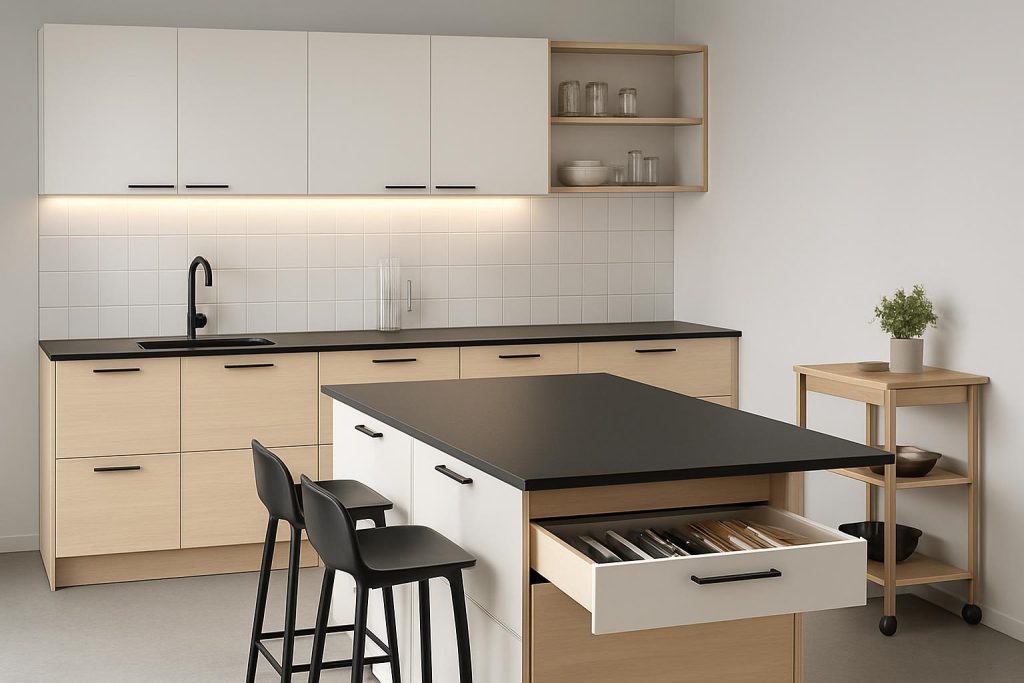
Combine light wood tones with white fronts and simple black or stainless handles. Add soft under cabinet lighting and clear counters.
Two tone balance
Use darker lowers for grounding and lighter uppers for height. Keep the backsplash simple so the color shift stays the focus.
Hardware swaps
Upgrade handles and knobs to change the mood fast. Long pulls feel modern. Knobs feel classic. Center lines must be consistent for a tidy result.
Smart backsplash choices
Laminate wall panels install fast and wipe clean. Classic tile adds texture on a budget. Run the backsplash at least 45 cm high between counter and wall cabinets. Seal edges for easy maintenance.
DIY installation tips
Prep and staging
Empty the room and protect floors. Confirm wall conditions and repair bumps. Unbox and group parts by cabinet. Check you have all legs, rails, hinges, and screws before you start.
Mark and level
Find and mark studs. Snap a level line at finished counter height minus cabinet and counter thickness. Hang the suspension rail on studs or with proper anchors. Check level twice before mounting cabinets.
Assemble in batches
Build several cabinet frames at once. Install legs loosely so you can adjust later. Hang wall and tall cabinets on the rail first. Then place base cabinets and connect them. Use clamps to align faces and tighten connector screws gradually.
Finish details
Add cover panels to exposed sides with even reveals. Install fillers to center doors and drawers and to clear walls and appliances. Scribe panels to floors or uneven walls for a clean look. Mount handles last so you can adjust for alignment.
Counters and cutouts
Dry fit laminate and wood tops. Seal joints and cutouts. For stone or composite, wait for templating after base cabinets are fixed. Do not move cabinets once templated.
Cleaning and maintenance
Daily care
Wipe fronts and counters with a soft cloth and mild soap. Dry after cleaning. Avoid abrasives, steel wool, and harsh chemicals.
Fronts and glass
Matte fronts hide fingerprints but still need regular wipes. Gloss fronts scratch if cleaned with rough cloths. For glass doors, use a glass safe cleaner and a lint free cloth.
Countertop care
Laminate needs only mild soap and a soft cloth. Do not place hot pots directly on it. Wood and wood veneer need regular oiling and fast cleanup of spills. Composite stone needs non abrasive cleaners and soft sponges.
Hardware tune ups
Check and tighten hinge screws every few months. Adjust drawer fronts if gaps drift. Soft close parts wear more slowly when doors are not slammed.
Waste and sink zone
Rinse and dry the sink daily. Clean waste bins weekly and dry them before replacing liners. Use a tray under the sink to catch drips and protect the cabinet base.
Smart upgrades you can add later
Add drawers to existing cabinets
If you started with shelves in base cabinets, install interior drawers later to boost access. Measure the clear opening and pick drawer sizes that avoid clashes with hinges.
Swap fronts or handles
You can refresh the look by changing only fronts or hardware. Keep the layout intact to save time and cost.
Improve lighting
Add under cabinet lights if counters feel dim. Install motion lights in deep pantries. Use the same color temperature as existing lights.
Budget and timeline planning
Set priorities
Spend on drawers, task lighting, and the worktop you touch daily. Save on end panels and hardware by choosing standard options. Keep appliance sizes standard to match cabinet modules.
Plan the sequence
Design and measure. Order and check parts. Demo and prep the room. Install rails and cabinets. Template and install counters. Fit backsplash. Install lighting and handles. Do a final adjust and clean.
Common mistakes to avoid
Skipping fillers
Without fillers, doors and drawers can hit walls or handles can block. Plan fillers in the design so lines stay centered.
Ignoring services
Do not block water shutoffs, outlets, or vents. Keep access panels where needed. Pre plan power for appliances and lights.
Forgetting end panels
Cabinet sides are not finished surfaces. Add cover panels to all exposed ends for durability and a clean line.
Too little light
Overhead lights alone cast shadows on counters. Add under cabinet task lights and use dimmers for control.
Not enough drawers
Base cabinets with shelves hide items and waste space. Choose drawers for most bases and add organizers inside.
Conclusion
An IKEA kitchen becomes a high performing space when you plan zones, choose drawers and interior fittings wisely, layer lighting, and finish details with care. Keep small spaces efficient with vertical storage and flexible pieces. Maintain surfaces with gentle daily care. Start simple and upgrade over time. With a clear plan and steady steps, you can build a kitchen that looks clean, works smoothly, and stays easy to live with.
FAQ
Q: How do I choose between drawers and doors in an IKEA kitchen
A: Favor drawers in base cabinets for better access and capacity. Use doors for cleaning supplies, tray dividers, or when a corner device is installed.
Q: What IKEA storage pieces give the biggest daily impact
A: Deep soft close drawers, full height pantry pull outs or interior drawers, drawer dividers and lid organizers, a bin system for waste sorting, and a wall rail for utensils.
Q: How should I plan lighting for an IKEA kitchen
A: Use under cabinet LED task lights at the front of the cabinet underside, add motion lights inside deep cabinets or pantries, and layer ambient light with pendants and toe kick LEDs. Keep one color temperature across the room.
Q: What are smart small kitchen strategies with IKEA
A: Choose compact modules, build storage up to the ceiling, add wall rails and shelves, use a rolling cart for extra prep space, and keep finishes light and simple.
Q: What maintenance does an IKEA kitchen need
A: Wipe with a soft cloth and mild soap, avoid abrasives, oil wood counters regularly, wipe spills fast, tighten hinges as needed, and clean waste bins weekly.