
We are reader supported. When you purchase through links on our site, we may earn an affiliate commission. Also, as an Amazon affiliate, we earn from qualifying purchases.
Cleaning bookshelves without removing books is possible, fast, and safe for fragile spines. This guide shows you how to do a thorough clean in place. You will control dust, protect materials, and leave shelves tidy with minimal shifting. Follow the sequence, work top to bottom, and keep tools gentle and dry. You will finish with cleaner air, cleaner shelves, and no pile of books on the floor.
Why Clean Without Removing Books
It saves time and energy. It reduces the risk of tearing jackets, bending pages, and breaking old glue. It prevents dust clouds that settle on other surfaces. It works for small spaces and busy homes. It suits renters and anyone with heavy or large collections.
Tools You Need
A soft microfiber cloth set. Use low-lint cloths for spines and a slightly thicker cloth for shelves.
A soft brush. A clean makeup brush or an artist brush helps reach tight gaps and edges.
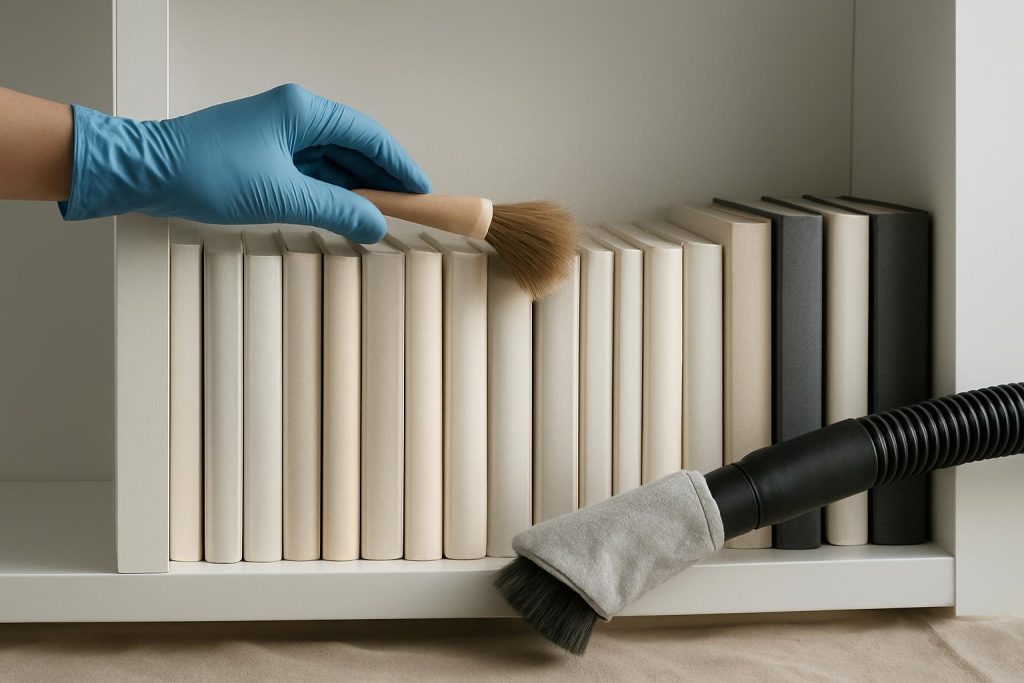
A vacuum with a soft dusting brush. A model with adjustable suction or a hose is ideal. Cover the brush with a thin cotton cloth if you are worried about pulling loose fibers.
A flexible microfiber wand. Choose a slim one that slides behind rows and along sides.
Cotton swabs and a small bowl of water. Add a few drops of mild dish soap for sticky shelf spots only. Keep the solution away from paper.
Isopropyl alcohol 70 percent for plastic and sealed shelf surfaces only. Use sparingly on a cloth. Do not use on leather or paper.
Nitrile gloves and a light mask if you are sensitive to dust. Use a respirator if you suspect mold.
A clean towel or drop cloth for the floor. This prevents re-soiling.
Preparation Matters
Stabilize the Area
Turn off fans and air purifiers for the duration to prevent dust spread. Close windows if wind is strong. Lay the drop cloth at the base of the shelves. Clear nearby surfaces so you have room to move.
Protect Delicate Items
If you see loose inserts or bookmarks, press them deeper inside the book before you start. If a book looks unstable, bandaged, or crumbling, leave it in place and handle the area around it with extra care.
Test Shelf Finishes
On wood, laminate, or painted shelves, test any damp cloth on a hidden corner. Check for color transfer. If you see color on the cloth, avoid moisture and stick to vacuum and dry methods.
Core Method in One Look
Work top to bottom. Clean spines and top edges first. Pull dust forward and capture it with the vacuum or cloth. Use a flexible wand behind the books. Use damp cleaning only on shelves, and only when needed. Avoid wetting books. Finish with a final pass on fronts and sides.
Step by Step Cleaning Without Removing Books
1. Set Suction and Cloths
Attach the soft brush to your vacuum. Set suction to low or medium. If your brush is stiff, wrap it in a thin cloth and secure it with a rubber band. Prepare two microfiber cloths. One dry for spines. One slightly damp for shelves, if the finish allows.
2. Dust the Top of Each Shelf
Start at the highest shelf. Run the vacuum brush along the top board and front edge. This prevents dust dropping onto cleaned areas later. Wipe with a dry microfiber cloth to pick up any fine residue.
3. Clean the Top Edges of Books
Hold the brush flat and sweep along the top edges of the row from left to right. Keep the nozzle close but not pressed into the paper. If you do not have a vacuum, use a soft brush and catch dust with a cloth held in the other hand. Avoid blowing, which drives dust deeper into the pages.
4. Clean the Spines
Use a dry microfiber cloth to wipe each spine downward. Support the book with your free hand to avoid twisting. For textured cloth spines, flick a soft brush gently to lift dust out of fibers. For glossy spines, use light pressure to prevent streaks.
5. Wipe the Fore Edges Without Pulling Books
The fore edge is the page block facing you. Use the soft brush to dust it lightly. Do not pinch or bend. If the gap allows, place a folded cloth on your finger and run it along the fore edges of several books at once with a gentle glide.
6. Clean the Shelf Surface in Front of the Row
Dust settles on the few centimeters of shelf that remain exposed. Wipe this strip with a dry microfiber cloth first. If sticky, use a slightly damp cloth with a drop of mild soap. Then go over once with a dry cloth to remove moisture. Keep liquid away from paper edges.
7. Slide a Flexible Wand Behind the Books
Insert a slim microfiber wand between the backs of the books and the wall or back panel. Move it side to side from one end to the other. Pull it out and shake dust into the vacuum. Repeat once if needed. If there is no back panel and you can access the rear, brush from back to front and vacuum as you go.
8. Detail the Corners and Side Walls
Use the soft brush to dust inner corners, side panels, and the underside lip of the shelf above. Corners hold dust clumps that later fall onto the books. Keep strokes small and controlled.
9. Address Tight Gaps
For very tight rows, wrap a microfiber cloth around a thin ruler or a clean butter knife without serrations. Glide it along the shelf surface between books. Do not force the tool. If gaps are too tight to enter, skip and use the vacuum brush angled downward.
10. Final Pass on the Row
Give the spines a quick final wipe. Check for fingerprints, label residue, and cobwebs. Vacuum the front edge of the shelf once more. Move down to the next shelf and repeat.
Special Care by Material
Dust Jackets
Use only a dry microfiber cloth or a very soft brush. Avoid moisture and solvents. If a jacket is loose, hold it with your free hand as you wipe to prevent tears. If the protective cover is plastic, you can lightly wipe with a barely damp cloth and dry immediately.
Cloth Bound Books
Rely on the soft brush and gentle vacuuming. Do not use water or soap on the cloth. If you see lint, pat with a slightly tacky lint roller held very lightly. Test on a corner first.
Leather Spines
Use a very soft dry cloth. Avoid water and alcohol. If the leather is flaking or red rot is present, do not touch it with the vacuum brush. Dust with a soft brush only and consider calling a conservator later.
Glossy and Laminated Covers
Wipe with a dry microfiber cloth. If you see smudges, use a barely damp cloth and dry right away. Avoid strong cleaners and alcohol on printed surfaces, as some inks can lift.
Gilded or Deckle Edges
Use only the soft brush with very light pressure. Do not use cloth or vacuum close to gilded edges, as they can scratch or flake.
Sticky Spots on Shelves Only
If a shelf has a sticky ring or residue, dab a corner of a cloth in water with one drop of mild soap. Wring until almost dry. Press and lift the residue. Do not rub near paper. Follow with a dry cloth. On laminate or sealed wood, a small amount of 70 percent isopropyl alcohol on a cloth can help remove adhesive. Test first. Never use alcohol on books, leather, or unfinished wood.
Mold, Mildew, and Odor
Identify and Isolate
Mold looks fuzzy, powdery, or speckled and may smell musty. If you see active growth, pause the routine. Wear a respirator. Close the area to kids and pets. Keep humidity low.
Dry First
Mold needs moisture. Run a dehumidifier in the room to bring humidity below 50 percent. Do not wipe wet mold. Let the area dry before handling.
Safe Removal in Place
Use a HEPA vacuum with a soft brush on the lowest suction to lift spores from the shelf surface, not from the paper. Do not brush moldy paper surfaces in place. If a book is moldy, place a clean sheet of paper against the spine as a shield and vacuum around it, not on it. Tag the book for separate treatment later.
Odor Control
After cleaning, keep humidity stable and air the room. Do not spray deodorizers on books. Use baking soda in an open box placed nearby for passive odor absorption, not in contact with books.
Quick Organization While You Clean
Set Shelf Zones
As you finish each shelf, confirm a simple order that you can maintain. For example, group by height or by category. Keep it obvious so you do not need to remove books to find items later.
Leave Breathing Space
Do not pack books tight. Leave a finger width gap to reduce friction during future dusting. This also improves airflow and reduces dust buildup.
Use Bookends
Sturdy bookends prevent leaning, which creates tight wedges that trap dust. Place them just firm enough to hold the row without squeezing.
Label Subsections
Add small, removable shelf labels at the ends of rows. This helps you return items without shifting others and keeps the cleaning route predictable.
Maintenance Schedule
Weekly Quick Pass
Run a soft brush or dry cloth over spines and top edges of the most used shelves. Vacuum the floor near the bookcase. This routine takes minutes and prevents heavy buildup.
Monthly In Place Clean
Follow the full method on all shelves. Wipe shelf fronts and sides. Use the flexible wand behind rows. Check for sticky spots and address them on the shelf only.
Seasonal Deep Check
Inspect for moisture, sunlight exposure, and pests. Adjust furniture placement or curtains if needed. Add felt pads to the vacuum brush if you notice scuffs.
Common Mistakes to Avoid
Do not spray cleaners directly on shelves near books. Always apply to the cloth first.
Do not blow dust off pages. It forces dust into the text block.
Do not use feather dusters on textured spines. They move dust around and can snag fibers.
Do not use strong chemicals on wood or laminate near books. Residue transfers to paper over time.
Do not rush with high suction near loose bindings. Lower the suction and support the spine.
Troubleshooting
Dust Returns Quickly
Check airflow. Vents blowing toward shelves increase dust. Redirect vents or place a deflector. Maintain vacuuming of the room and floor to reduce airborne dust.
Static Makes Dust Stick
Use a barely damp cloth on the shelf surface only, then dry. Keep humidity around 40 to 50 percent. Avoid synthetic cloths that build static.
Cloths Leave Lint
Use tighter weave microfiber. Wash cloths without fabric softener and air dry. Replace worn cloths that shed.
Fingerprints on Glossy Covers
Wipe with a dry microfiber cloth using light, straight strokes. If needed, use a barely damp cloth and dry immediately.
Pet Hair in Crevices
Use a vacuum brush wrapped with a thin cotton layer. A sticky lint roller can help on the shelf surface, but keep it away from paper.
When Not to Clean In Place
If you see widespread mold on multiple books, stop and seek professional guidance. If the shelf is unstable or bowing, secure or repair it before cleaning. If there is water damage, allow complete drying and assess each book individually. If pests are present, treat the area before you resume.
Safety and Care Tips
Wash hands or wear clean gloves to avoid transferring oils. Keep drinks away from the area. Work in short sessions if the collection is large. Rest your hands and back. Use step stools with a wide base for high shelves.
Quick Reference Method
Order of Operations
Top shelf first. Top board, top edges, spines, fore edges, front shelf strip, behind the row, corners, final pass. Move to next shelf and repeat. Finish with sides, back, and baseboard area.
Moisture Rules
Dry on books. Slightly damp on shelves only when needed. Test finishes. Dry immediately. Keep solutions minimal.
Tool Upgrades
Add a narrow, flexible dusting wand for tight spaces. Keep a dedicated brush just for books to avoid cross contamination from other surfaces.
Environmental Control
Keep humidity stable between 40 and 50 percent. Avoid direct sunlight on spines to prevent fading and brittle bindings. Use air purifiers placed away from shelves to reduce airborne dust. Vacuum floors and nearby fabrics weekly.
Small Spaces and Heavy Shelves
If you cannot access the back of the shelf, focus on spines, top edges, and the front strip. Use the slim ruler-and-cloth trick to reach small gaps. Do short sections at a time to reduce strain.
Before and After Check
Before You Start
Confirm tools are clean. Test finishes. Plan your path from highest to lowest shelf.
After You Finish
Vacuum the floor around the shelves. Wash or shake out cloths outdoors. Turn the fan or purifier back on. Note any books that need special care and schedule time for them later.
Conclusion
You can clean bookshelves thoroughly without removing a single book. Use gentle tools, move in a clear sequence, and keep moisture off paper. Dust the top edges and spines, clean the front shelf strip, sweep behind the row with a flexible wand, and detail corners. Adjust for material type, control humidity, and keep quick weekly passes. This method keeps your collection clean, your shelves neat, and your routine simple. Repeat it each month and enjoy the results without the mess of unloading your books.