
We are reader supported. When you purchase through links on our site, we may earn an affiliate commission. Also, as an Amazon affiliate, we earn from qualifying purchases.
How long does a Beauty Blender last is a question worth asking if you care about clean makeup tools and a smooth base. The short answer is around three months with steady use and proper care. The detailed answer depends on how often you use it, what products you apply, and how you clean, dry, and store it. If you want a reliable sponge that blends well, resists stains, and stays hygienic, keep reading. You will learn exactly how to extend its life and when to replace it before it harms your skin or your makeup finish.
The short answer and the realistic range
For most people who use a Beauty Blender or similar sponge several times a week, the typical lifespan is 6 to 12 weeks. Heavy daily use with full coverage products often lands closer to 6 to 8 weeks. Occasional use can stretch to 3 to 4 months if cleaning and storage are consistent and the sponge stays mold free. If you see damage or smell issues, replace it sooner. Hygiene comes first.
Professionals who work on multiple faces replace more frequently for safety. At home, the key is monitoring condition and following a tight clean and dry cycle. That cycle matters as much as the calendar.
What shortens a Beauty Blender’s life
Frequency and pressure
Daily use compresses the foam again and again. Hard pressure and aggressive rubbing break down the structure faster. A gentle bounce application reduces stress and preserves the shape.
Product type
Long wear foundation, waterproof concealer, and sunscreen with silicone or heavy oils cling to the sponge and are harder to remove. More aggressive cleaning is needed, which ages the foam. Powder use is easier on it than thick creams.
Skin care residue
Rich moisturizers, facial oils, and primers left on skin transfer to the sponge. If they are not fully washed out, they trap bacteria and soften the foam. Clean more thoroughly when using heavy prep products.
Water quality
Hard water leaves mineral residue that stiffens the sponge and slows drying. A final rinse with filtered water helps. If you see a chalky feel, your water may be the cause.
Storage environment
A damp sponge sealed in a pouch or drawer breeds bacteria and mold. Humid bathrooms slow drying. Good airflow and a breathable holder extend life. Never store wet.
Cleaning method and products
Harsh cleansers, pure alcohol, bleach, and boiling water degrade foam. Correct technique with a gentle cleanser keeps it clean without tearing the material.
Nails and tools
Long nails, rings, and brush ferrules can nick the sponge during washing. Small tears quickly grow. Handle with smooth fingertips and remove rings before cleaning.
Clear signs it is time to replace
Persistent stains and pilling
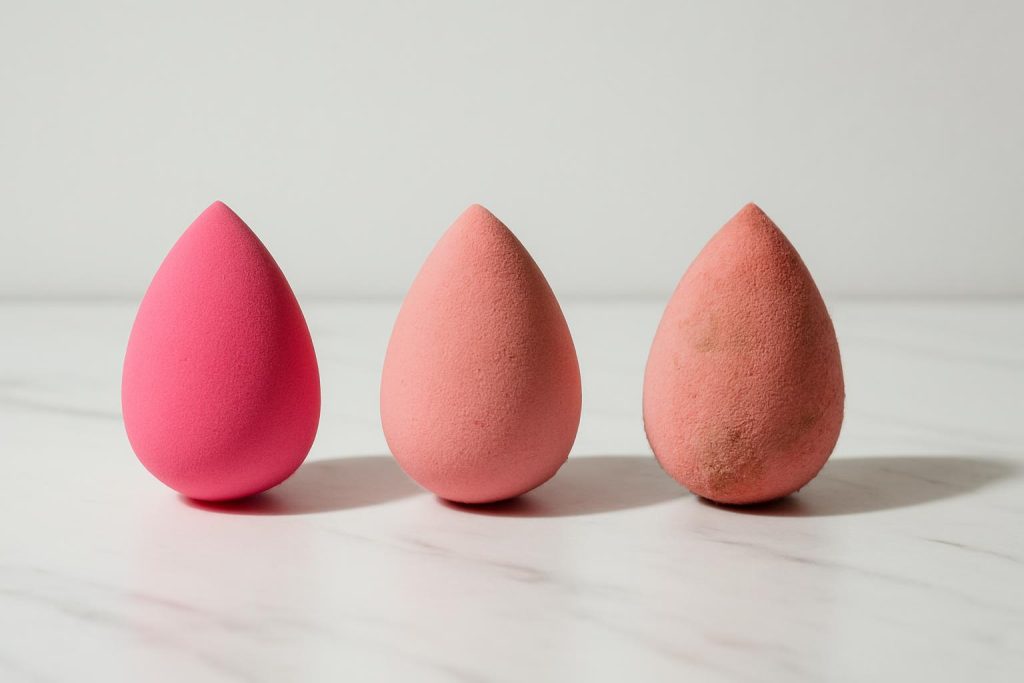
If deep stains remain after a proper deep clean, pigment and oil are lodged in the core. Pilling or flaking foam signals breakdown. Replace.
Noticeable tears or crumbling
Any rip that widens when you squeeze is a fail point. Crumbs on your face or sink mean the foam is deteriorating.
Smell or slime
A sour, musty, or rubbery odor after washing points to bacterial growth or trapped residue. A slippery film that will not rinse away is another warning.
Spots that look like mold
Dark green, black, or gray specks that reappear after cleaning are likely mold. Do not try to rescue it. Discard immediately.
Color bleeding
If dye bleeds every wash or transfers to your towel after weeks of use, the material may be breaking down. Replace to avoid skin irritation.
Loss of bounce
If the sponge no longer expands fully when damp or feels dense and slow to spring back, the structure is fatigued. Blending will look patchy.
Skin reaction
If you notice more breakouts, irritation, or tiny whiteheads and you have not changed products, your sponge may be harboring bacteria. Replace and tighten your cleaning routine.
The cleaning routine that actually works
Quick clean after every use
Rinse the sponge under lukewarm water until fully saturated and expanded. Apply a pea size amount of gentle cleanser such as a solid sponge soap, fragrance free hand soap, or a drop of mild dish soap for oil heavy makeup. Massage with fingertips using a rolling squeeze, not twisting. Rinse and squeeze until the water runs clear. Repeat once if needed. Press in a clean towel to remove excess water. Set on a breathable stand to dry.
Weekly deep clean
For heavy users, deep clean twice a week. Soak the sponge in a bowl of lukewarm water with cleanser for 10 minutes. Add a small drop of dish soap if you use long wear or waterproof makeup. Gently massage the sponge in the water, then rinse under running water while squeezing repeatedly from base to tip. Finish with a final rinse using filtered water if your tap is hard.
Makeup removal booster for stubborn oils
Apply a small amount of cleansing balm or a bit of micellar water directly onto stained areas. Work it in, then follow with your regular soap. This doubles the breakdown of silicones and sunscreen.
Safe disinfection step
Occasional disinfection can help, but do it safely. After washing, soak the sponge for 5 minutes in fresh soapy water at around skin temperature, then rinse thoroughly. Avoid pure alcohol, bleach, and boiling water. These weaken or melt foam bonds and shorten life.
What not to do
Do not microwave a sponge. Uneven heating can warp foam and is a fire risk if the sponge dries out in hot spots. Do not boil. Do not soak in vinegar, bleach, or strong solvent cleaners. Do not wring or twist. Do not scrub with brushes or nails.
Drying done right
Press, then air
After rinsing, press the sponge in a clean towel to pull out water. Do not rub. Place it on a vented holder where air can circulate on all sides. A soap dish with raised ridges or holes works well.
Avoid dark, humid corners
Keep it away from enclosed drawers, makeup bags, or cabinets until fully dry. A fan or open window speeds up evaporation in humid climates.
Sunlight caution
Indirect light is fine. Direct hot sun can fade dye and dry out foam. Aim for airflow over heat.
Time check
It should feel dry to the touch within 12 to 24 hours. If it stays damp longer, increase airflow or use a drier room. Slow drying raises mold risk and shortens lifespan.
Travel tip
For trips, let the sponge dry overnight before packing. If you must pack it damp, wrap it loosely in a clean paper towel and place it in a breathable mesh pouch. Unpack and dry fully at your destination.
Storage that extends life
At home setup
Use a small open stand, a wire egg holder, or a ventilated soap dish. Keep it off flat wet surfaces. Choose a spot with airflow, not inside a closed cabinet.
In a makeup bag
Only store the sponge in a bag when it is fully dry. Use a ventilated case or mesh pocket. Wash the pouch every two weeks to remove product dust and bacteria.
After cleaning
Do not place a damp sponge on fabrics or paper for long periods. Fibers can cling and foster mildew. A metal rack or silicone mat with drainage is ideal.
DIY drying stand
Repurpose a large binder clip as a stand by opening it and resting the sponge on the clip arms. Or place the sponge on an inverted egg cup so air reaches the base. Keep both setups on a clean shelf.
How many sponges do you need
Simple home rotation
Two sponges are enough for most people. Use one while the other dries and rests. Rotate daily to cut drying time pressure and reduce wear.
Separate by product type
Keep one sponge for complexion products and another for body makeup or self tanner. This prevents deep stains and odor build up.
Safety and hygiene myths
Microwave hack
Microwaving a wet sponge does not guarantee disinfection and can damage the foam. Skip it.
Boiling water
Boiling weakens glue points and may warp the sponge. It also does not clean trapped oils. Not recommended.
Alcohol spray
High alcohol content dries and cracks foam. It also does not remove grime. Wash with soap and water instead.
Bleach or vinegar
These can irritate skin and damage material. Cosmetic grade cleansers are safer and effective.
Cost versus lifespan
Use less product
Dot foundation on skin first, then blend with a damp sponge. This reduces product absorption and makes washing easier. A well dampened sponge absorbs less than a dry one.
Choose the right cleanser
A solid sponge soap or mild dish soap for oily products breaks down residue without harsh chemicals. Rinse until water runs completely clear to prevent buildup.
Be gentle
Massage, squeeze, and roll rather than wringing or stretching. Gentle handling keeps the foam intact longer.
Mind the water
If you have hard water, finish with a quick rinse using filtered water to remove minerals. This helps the sponge stay soft and bouncy.
Troubleshooting common issues
Stains that will not lift
Pre treat with a dab of cleansing balm or a tiny bit of makeup remover. Work it into the stain for 60 seconds. Follow with warm water and soap. If pigment still remains and you see no improvement after two tries, accept a cosmetic stain or replace if hygiene is in doubt.
Sponge shedding or pilling
This signals foam fatigue or harsh washing. Switch to a gentler cleanser and massage, not scrub. If shedding transfers to skin, replace immediately.
Persistent smell
Soak for 10 minutes in warm, soapy water. Rinse thoroughly and dry in strong airflow. If odor returns after one use, the core is compromised. Replace.
Rough texture
Mineral deposits from hard water can roughen the surface. Use a final filtered rinse. If texture does not improve, retire the sponge.
Mold discovered
Discard the sponge. Disinfect the storage area with a gentle surface cleaner. Improve drying by using a rack and better airflow. Replace towels used in the cleaning process.
Eco friendly disposal and alternatives
Disposal
Most makeup sponges are not curbside recyclable. Bag and bin them with regular trash once they are no longer safe to use. Do not compost synthetic foam.
Second life uses
If the sponge is clean but too stained for makeup, reassign it as a household tool. Use it for polishing shoes, applying leather conditioner, or cleaning grout corners with mild soap. Keep this separate from personal care items.
Material choices
Some brands offer plant based or biodegradable sponges. These can still harbor bacteria and need the same cleaning and replacement schedule. If hygiene is your top concern, replacement frequency matters more than material.
Quick reference timelines
Daily heavy use
Expect 6 to 8 weeks. Clean after each use, deep clean weekly, dry within 24 hours, store ventilated.
Moderate use three to four times per week
Expect 8 to 12 weeks. Follow the same cleaning and drying rules. Replace at first sign of damage or odor.
Occasional use once a week
Expect up to 3 to 4 months if hygiene is strict. Still clean after every use and ensure full drying to avoid mold during long gaps.
Special circumstances
After a skin infection or cold sore, replace immediately. If the sponge touches a contaminated surface, replace. When in doubt, choose safety.
Step by step daily routine to maximize lifespan
Before makeup
Wash hands. Wet the sponge thoroughly with lukewarm water. Squeeze until it expands fully. Towel press to remove excess water until the sponge is damp, not dripping.
During makeup
Apply product to skin first. Use a gentle bouncing motion. Avoid dragging or twisting on the face. Rinse the sponge between different products if needed.
After makeup
Rinse immediately with lukewarm water. Apply cleanser and massage. Rinse clear. Towel press and place on a ventilated stand in a dry area. Do not pack away while damp.
Common mistakes to avoid
Letting it sit dirty
Leaving makeup to dry in the sponge hardens stains and traps bacteria. Clean as soon as possible after each use.
Storing wet in a closed case
This is the fastest route to odor and mold. Always air dry first. Use breathable storage only.
Using too hot water
Very hot water can warp foam and set stains. Stick to lukewarm.
Over scrubbing with nails
Nails create micro tears that quickly become holes. Use soft fingertip pressure only.
When to buy a new Beauty Blender
Practical checkpoints
If you meet any one of these conditions, replace now. Visible tears. Persistent bad smell. Mold spots. Texture feels rough or crumbly. Sponge does not expand fully when wet. Makeup finish looks streaky or patchy despite proper technique.
Scheduled replacement
Set a reminder for every three months if you use it regularly. If you are heavy on long wear or waterproof formulas, shorten to every two months. If you rotate two sponges, you can alternate replacements for a steady refresh.
Advanced care for specific products
Waterproof and long wear
Pre treat with a bit of cleansing balm or a drop of dish soap before the main wash. This dissolves film forming agents that regular soap struggles with.
Sunscreen and silicone primers
Massage longer with soap and warm water. Rinse repeatedly until the sponge squeaks slightly when squeezed, a sign of residue removal.
Powder only use
Cleaning is easier, but do not skip it. Oil from skin still transfers. A quick daily wash keeps the foam fresh and extends life.
Organized setup that keeps you consistent
Create a cleaning station
Place a solid cleanser near the sink, keep a clean towel for pressing, and set a drying stand where air flows. When everything is within reach, you are more likely to wash after every use.
Set reminders
Use a phone reminder for weekly deep clean and a calendar event for replacement. Consistency beats guesswork.
Introduction recap
Lifespan is not just a number. It is the result of daily habits. Cleaning right after use, drying fully, and storing with airflow give you the longest safe use. Ignoring any one step shortens that timeline.
Conclusion
A Beauty Blender typically lasts about three months with normal use and proper care. The real measure is condition, not the calendar. If you keep a tight clean and dry routine, handle it gently, and store it with airflow, you will get a consistent blend and safer skin. At the first sign of tears, odor, mold, or loss of bounce, replace it. Build a simple system with two sponges, daily washing, weekly deep cleaning, and ventilated storage. Your makeup will look smoother, your sponge will last as long as it safely can, and your routine will feel easier every day.