
We are reader supported. When you purchase through links on our site, we may earn an affiliate commission. Also, as an Amazon affiliate, we earn from qualifying purchases.
Gray hallways can look clean and modern, but they often read dark and flat. You can change that without a full remodel. With the right gray, strong lighting, reflective surfaces, and simple organization, a dim corridor turns bright and useful. This guide gives clear steps, measurements, and product choices that beginners can follow. Read in order or jump to the sections you need. By the end, you will have a plan you can act on this weekend.
Assess the Space First
Check Natural and Artificial Light
Walk the hallway at three times of day. Morning, midday, and night. Note where light dies, where glare appears, and which doors or walls block light. Photograph each zone so you can compare later. Turn on every existing light at night and mark shadows. This baseline shows what to fix first.
Identify Surfaces That Absorb Light
Dark floors, low matte walls, heavy rugs, and bulky furniture eat light. Glossy doors, light trim, mirrors, and pale rugs bounce it back. List every element from ceiling to floor and label it as brightener or darkener. You will keep or adjust each item based on this list.
Declutter Before You Design
Remove extra coats, shoes, mail piles, and random decor. Keep one function per wall if possible. A clear hallway looks brighter even before paint or lighting changes. Aim for a free walking path of at least 90 cm.
Choose the Right Gray
Understand Undertones
Gray shifts with undertones. Blue and green undertones can look cold in low light. Purple can look blotchy. Warm grays and greiges are safer for dark halls because they neutralize shadows. Test three chips on the wall and watch them through the day. Pick the one that stays calm and even.
Pick LRV and Finishes That Reflect Light
Light Reflectance Value, or LRV, tells you how much light a paint bounces back. Higher is brighter. What LRV range works best for gray hallway paint in a dark space? Aim for an LRV of 60–70 on the walls and 80+ on the ceiling and trim. This keeps the hallway soft but bright.
Finish matters as much as color. What paint finish is best for hallway walls and trim? Use satin or washable matte on walls, semi-gloss on trim and doors, flat or matte on ceilings. Satin resists scuffs in high-traffic zones while still diffusing light. Semi-gloss on trim creates a crisp edge that frames the gray.
Ceiling and Trim Strategy
Paint ceilings lighter than the walls to lift the sightline. If you like a seamless look, ask for your wall color at 50 percent strength on the ceiling. For trim and doors, choose a soft white with high LRV. Keep door and baseboard color consistent to avoid choppy lines.
Create Contrast the Right Way
Use contrast to control focus. White trim against a mid-light gray sharpens edges and reads brighter. If your hallway is very narrow, use the same gray on walls and doors and carry the trim white only on the baseboard and crown. This reduces visual breaks and keeps the look clean.
Plan Lighting in Layers
Ambient Lighting That Covers the Length
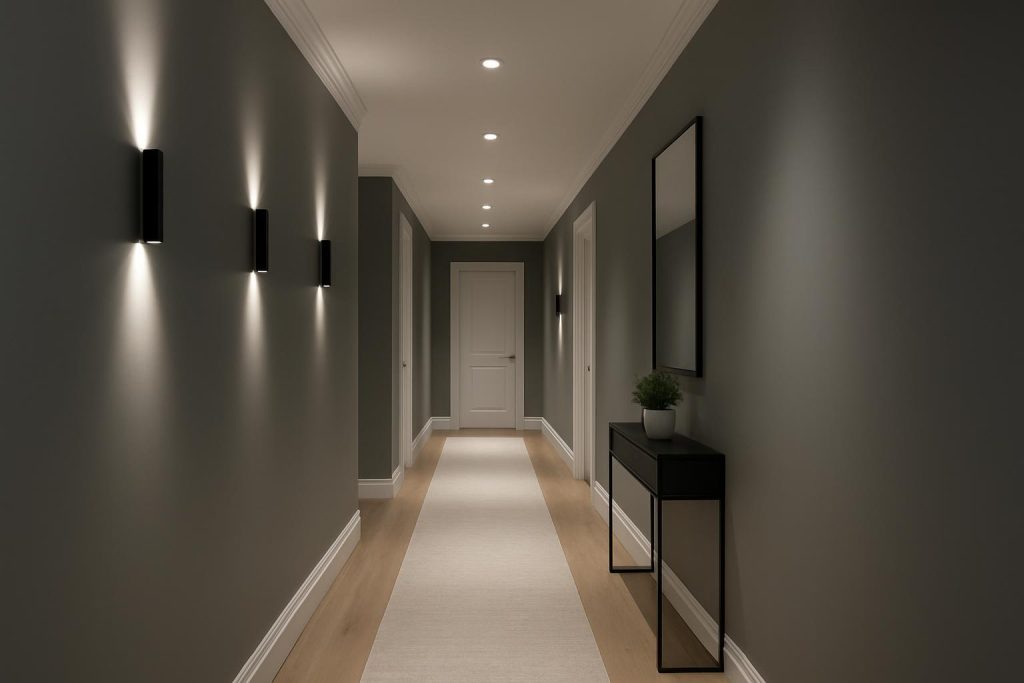
Ambient light is your foundation. In short halls, one flush mount or semi-flush mount may be enough. In long halls, add a ceiling light every 1.5 to 2 meters. For low ceilings, pick slim fixtures with wide diffusers. Avoid clear glass that causes glare and harsh shadows.
Place and Size Your Sconces
Sconces add side light that softens walls and brightens gray paint. How should I space sconces in a hallway? Place sconces 1.5–2 meters apart and mount them 165–170 cm from the floor. Choose shades that open top and bottom to wash the wall evenly. If hardwiring is not possible, use plug-in sconces with cord covers or battery sconces with replaceable rechargeable cells.
Accent and Task Light Where You Need It
Add a small picture light above art or a mirror if the ceiling lights cannot reach. Use LED strip light under a ledge or along a shelf lip for a soft glow. Toe-kick LED strips under a console or along baseboards help at night without glare. Keep wiring neat and use channels or diffusers for strips so you do not see dots.
Get Color Temperature and CRI Right
Light color affects gray paint. Warm bulbs can turn gray beige. Cool bulbs can make it look blue. What color temperature should hallway lights be? Use LEDs at 3000–4000 K with a CRI of 90 or higher. This range keeps grays honest and skin tones natural in a mirror.
Add Smart Controls
Use a dimmer for ambient lights so you can tune brightness with the time of day. Motion sensors near entries reduce fumbling and save energy. If your hall has multiple doors, a three-way switch solves dead zones.
Use Reflective and Clean Surfaces
Right Size and Place for Mirrors
Mirrors move light across the hall and help with last checks before heading out. Place a mirror opposite or near a light source to catch and bounce light. Hang the center of the mirror at about 150 cm from the floor for most homes. In long halls, use tall narrow mirrors between doors. Consider adding a narrow console under a mirror if space allows, but keep depth under 30 cm to protect the walkway.
Doors and Glass to Share Light
Swap solid hallway doors for doors with frosted glass panels if privacy allows. Add a transom window above doors to borrow light from brighter rooms. If you rent, use removable frosted film on interior glass to mute views but keep brightness.
Floors and Runners
Light floors reflect more light than dark ones. If changing floors is not an option, use a runner in a pale neutral with subtle pattern to hide dirt. Leave a small reveal of floor on each side so the hallway looks wider. Pair the runner with a thin, high-grip rug pad to prevent slips.
Organize for a Clear, Bright Look
Wall Storage That Stays Slim
Use wall-mounted shoe cabinets under 20 cm deep. Add peg rails or minimal hooks for daily items only. Place adult hooks around 150 cm high and children hooks around 100–120 cm. Use closed bins with labels on upper shelves to reduce visual noise. Keep the floor clear to keep light moving.
Make an Entry Zone That Works
Define a drop zone near the main door. One tray for keys, one mail slot, one hook per person. Keep a lidded basket for scarves or hats. Tight rules make the hallway look clean without constant effort.
Limit Decor to a Simple Palette
Choose two metals and one wood tone and repeat them. Brass or polished chrome adds brightness against gray. Matte black can work, but limit it to small accents so it does not pull the space dark.
Style That Supports Light
Art and Frames That Do Not Weigh Down Walls
Use art with white space or bright backgrounds. Float art in frames with white mats. Keep frame colors consistent. Align the top edges or centerlines for a tidy read. Leave at least 7 to 10 cm between pieces in a gallery set. Good spacing prevents a heavy block on the wall.
Hardware and Small Details
Swap dull knobs for glass, acrylic, or polished metal to catch light. Replace yellowed switch plates with clean white or metal to match fixtures. Keep door hinges and latches in one finish for a coherent look.
Plants and Simple Decor
Use one or two low-light plants like snake plant or pothos in slim planters. Place them where they do not narrow the path. In very dark halls, use quality faux plants to avoid maintenance and droop. Keep decor counts low so surfaces reflect light rather than hold clutter.
Small Upgrades With Big Impact
Wainscoting or Molding in a Lighter Color
Add simple wainscoting or a chair rail and paint the lower section a lighter gray or soft white. This breaks up a long wall and bounces light near the floor. Keep profiles thin to protect walkway width.
Stair and Riser Treatments
On stair halls, paint risers a soft white and keep treads in mid-tone wood for grip. Add a stair runner in a pale neutral with a tight weave and secure it with proper pads and rods if needed.
Electrical Basics and Safety
If adding fixtures, follow local code, use junction boxes, and do not overload circuits. Seal gaps around ceiling boxes to prevent air leaks that can cause dust rings. Use enclosed LED fixtures in tighter spaces to reduce heat and maintenance.
Cleaning and Maintenance for Lasting Brightness
Wall Care and Touch-Ups
Choose washable paint so scuffs come off with mild soap and water. Keep a small touch-up jar labeled with color and finish. For stubborn marks on trim, try a melamine foam sponge lightly and rinse. Vacuum ceilings and corners to reduce dust that dulls light.
Rug and Floor Care
Use an entry mat outside and a second mat inside to stop dirt. Shake runners weekly and deep clean seasonally. Lift rugs to clean under them so grit does not scratch floors and kill reflectance. Replace worn pads to maintain grip and cushioning.
Step-by-Step Action Plan
Follow These Simple Steps
1. Declutter the hallway and clear the path to at least 90 cm. Bag or box non-essentials.
2. Test three gray samples on the wall. Watch them all day and at night.
3. Pick the final color using reflectance and finish. Aim for an LRV of 60–70 on the walls and 80+ on the ceiling and trim. Use satin or washable matte on walls, semi-gloss on trim and doors, flat or matte on ceilings.
4. Paint the ceiling first, then trim, then walls. Keep edges clean for crisp lines.
5. Upgrade ambient lighting. In long halls, add a ceiling light every 1.5 to 2 meters.
6. Add sconces for side light. Place sconces 1.5–2 meters apart and mount them 165–170 cm from the floor.
7. Set bulb specs. Use LEDs at 3000–4000 K with a CRI of 90 or higher.
8. Hang a mirror opposite a light source. Center it at about 150 cm from the floor.
9. Add slim storage. Mount a shallow shoe cabinet and a peg rail at the right heights.
10. Lay a pale runner with a grippy pad. Keep its edges straight and clear.
11. Style with restraint. One or two metal finishes, simple art with white space, and a plant.
12. Finish with dimmers or a motion sensor for comfort and savings.
Conclusion
Bright Without Losing the Calm of Gray
Gray can be bright, soft, and functional in a hallway if you manage light and reflection with intent. Start with the right undertone and LRV, layer clean lighting at accurate heights, add mirrors and light trim, and keep storage slim and ordered. Small choices, repeated down the length of the corridor, add up to a clear and welcoming path. Follow the action plan, and your hallway will look brighter, work better, and stay tidy with less effort.
FAQ
Q: What LRV range works best for gray hallway paint in a dark space?
A: Aim for an LRV of 60–70 on the walls and 80+ on the ceiling and trim.
Q: What color temperature should hallway lights be?
A: Use LEDs at 3000–4000 K with a CRI of 90 or higher.
Q: How should I space sconces in a hallway?
A: Place sconces 1.5–2 meters apart and mount them 165–170 cm from the floor.
Q: What paint finish is best for hallway walls and trim?
A: Use satin or washable matte on walls, semi-gloss on trim and doors, flat or matte on ceilings.