
We are reader supported. When you purchase through links on our site, we may earn an affiliate commission. Also, as an Amazon affiliate, we earn from qualifying purchases.
Getting your sleep setup right starts with the order of your bedding layers. Put them in the wrong order and you may sleep hotter, your topper might slide, your mattress stays unprotected, and laundry becomes harder. This guide shows you exactly where the mattress topper and mattress protector should go, why it matters, and how to adjust for different beds, materials, and needs. Keep reading for simple rules, clear scenarios, and step by step setup you can do in minutes.
Quick Answer
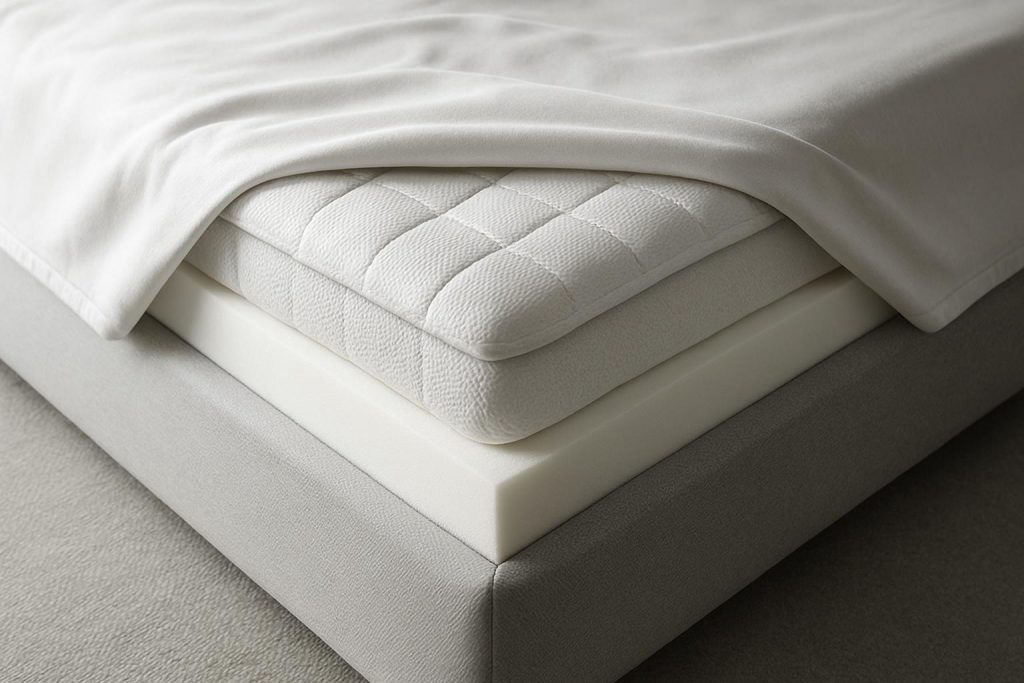
In most homes, the mattress protector goes over the mattress topper. Then the fitted sheet goes on top. This way, spills, sweat, dust, and allergens do not reach the topper or the mattress. The result is cleaner bedding, easier laundry, and better protection.
Exception one is an encasement protector designed to zip around the mattress only. In that case, put the encasement on the mattress, then the topper, then a fitted sheet or a second deep pocket protector, then the fitted sheet. Exception two is a shallow protector that cannot stretch over both layers. In that case, place the protector on the mattress, then the topper, and finish with a fitted sheet, or upgrade to a deep pocket protector that can cover both.
Understand Each Layer Before You Stack
Mattress
The mattress is the base. It needs protection from moisture, dust, and wear. Once stained, a mattress is hard to clean and can lose warranty coverage. Protect it from day one.
Mattress protector
A mattress protector is a removable layer that shields against spills, sweat, body oils, dust, and allergens. There are two main styles. Fitted protectors look like a fitted sheet with a top panel and elastic skirt. Encasement protectors zip around all six sides to seal the mattress completely. Materials vary. Waterproof protectors use a thin membrane. Non waterproof protectors focus on breathability and dust control.
Mattress topper
A mattress topper changes the feel of the bed. It adds cushioning, firmness, or temperature balance. Common materials include memory foam, latex, down alternative, wool, and featherbed. Toppers are not as easy to wash as a protector, so protecting the topper saves time and money.
Fitted sheet
The fitted sheet is your comfort contact layer. It must have enough pocket depth to wrap over your final stack and stay snug without straining the elastic.
Why Protector Over Topper Is Usually Best
Protection works best at the top. If the protector is over the topper, any spills, sweat, and skin debris stop at the protector. You remove and wash one item. Your topper and mattress stay clean. If you place the protector under the topper, spills will soak into the topper. Many toppers cannot go in a standard washer. Cleanup becomes slower and riskier.
Protecting on top also helps with allergies. A protector above the topper reduces exposure to dust and dander in the topper fill. This matters with fiberfill, featherbed, or wool, which can trap more allergens than solid foams.
When To Put The Protector Under The Topper
Using a zippered encasement
If you use an encasement protector that zips around the mattress, install it directly on the mattress. Then add the topper. If you want protection above the topper too, add a deep pocket fitted protector over the topper. Finish with a fitted sheet.
Shallow protector or tight fit
If your current protector cannot stretch over both the mattress and topper, place it on the mattress, then add the topper, then the fitted sheet. Know that the topper is not protected from spills in this setup. Upgrade to a deep pocket protector when possible so the protector can sit on top.
Topper Materials And What Works Best
Memory foam and latex toppers
These toppers contour to your body. A protector on top should be thin, quiet, and stretchy to keep the pressure relief feel. Look for a knit fabric with a breathable waterproof membrane if you need spill protection. If the protector is stiff or plasticky, it can reduce contouring. Switching to a soft stretch protector above the topper keeps the feel while still guarding against spills.
Down, featherbed, and fiberfill toppers
These toppers are plush but absorbent. They are often spot clean only. Put the protector on top to block moisture and body oils. Choose a protector with enough depth and a smooth surface so the topper can loft underneath without bunching.
Wool toppers
Wool balances temperature well. It handles humidity but does not like soaking. Use a breathable protector on top to keep spills off while allowing airflow. A tight or plastic feel protector can cancel some of the comfort, so favor a soft, quiet fabric.
Best Layer Order By Situation
Standard home setup
Mattress, topper, protector, fitted sheet. This guards both the topper and the mattress. It is easy to remove and wash the protector and sheet as needed.
Allergy control
Mattress with zippered encasement, topper, protector, fitted sheet. The encasement blocks dust from the mattress. The protector above the topper stops allergens from entering the topper and simplifies laundry.
Bed bug prevention
Mattress with a certified bed bug proof encasement, topper, protector, fitted sheet. The encasement prevents entry and exit. Leave the encasement on long term and launder the protector on top.
Kids, pets, rentals, and dorms
Mattress, topper, waterproof protector, fitted sheet. For heavy spill risk, consider a spare protector to swap quickly on laundry day.
Heat sensitive sleepers
Mattress, breathable topper, breathable protector, fitted sheet. Pick a protector labeled as cooling or air permeable. A thick plastic feel protector can trap heat. A thin membrane with a knit top is better for airflow.
Crinkle noise or reduced contouring
Use a soft stretch knit protector above the topper. If noise persists, test a non waterproof, highly breathable protector above and add a spill safe routine, or try a higher quality waterproof protector designed to be quiet.
How To Check Fit And Pocket Depth
Measure your mattress height from the bottom to the top seam. Measure your topper height. Add them together. Add 2 to 3 inches for tuck and shrinkage. That total is the minimum pocket depth you need in both your protector and fitted sheet.
Example. Mattress 12 inches plus topper 3 inches plus allowance 2 inches equals 17 inches. Shop for a protector and sheet with at least 17 inch pockets, or deep pocket models often labeled 18 inches to 22 inches.
If the protector label only lists mattress height and not pocket depth, check the skirt material. High stretch skirts can fit more depth. Low stretch woven skirts fit less and may pop off.
Step By Step Setup
1. Strip the bed completely. Vacuum the mattress surface to remove dust.
2. If using an encasement protector, install it now over the mattress, zip fully, and secure the zipper end if there is a lock or flap.
3. Place the topper centered on the mattress. Align edges flush. If the topper has corner straps, secure them.
4. Install the protector. For the standard setup, stretch the protector over both the topper and mattress. Smooth the top surface with your hands to remove wrinkles.
5. Add the fitted sheet over everything. Pull each corner down fully. Lift the mattress corner slightly rather than yanking elastic to avoid tearing.
6. Lie down and check feel, heat, and noise. If the protector changes the feel too much, switch to a thinner or stretch knit model.
Care And Cleaning
Wash the mattress protector every 2 to 4 weeks, or immediately after any spill. Follow the label. Use cold or warm water and mild detergent. Avoid bleach and fabric softeners if the protector is waterproof. Tumble dry low or air dry to protect the membrane.
Spot clean toppers as needed. Most foam toppers should not be machine washed. Use a small amount of mild detergent and water on a cloth, dab gently, then air dry fully. Shake and fluff fiberfill or featherbeds regularly to maintain loft. Rotate the topper head to foot every 1 to 3 months to spread wear.
Wipe the encasement seams and zipper area during seasonal cleaning, and keep the zipper closed to maintain the barrier.
Common Mistakes To Avoid
Placing the protector under the topper in a home with frequent spills. This leaves the topper unprotected and harder to clean.
Using a stiff, plasticky protector over a contouring foam topper. This flattens the feel and traps heat. Choose a soft, breathable, stretch knit design.
Buying the wrong pocket depth. Sheets and protectors that are too shallow pop off and wrinkle. Measure stack height first.
Skipping an encasement for allergy or bed bug control when you need it. Fitted protectors alone do not seal all sides.
Washing a foam topper in a machine. Most foams absorb water and tear. Spot clean and air dry only unless the label clearly allows machine washing.
Troubleshooting Guide
Topper sliding or bunching
Confirm the protector and fitted sheet are tight enough to grip. If the skirt is loose, move to a deeper but snug elastic skirt. Corner straps on the topper help. Center the topper carefully before remaking the bed.
Sleeping hot after adding a protector
Switch to a breathable, stretch knit waterproof protector or a non waterproof protector if spills are rare. Pair with breathable cotton or Tencel sheets. Check room temperature and bedding layers like heavy comforters.
Protector feels crinkly or noisy
Choose a higher quality membrane with a soft knit face. Wash once following the label to relax the fabric. Ensure a snug fit to reduce movement noise.
Fitted sheet keeps popping off
Recheck total stack height and upgrade pocket depth. Elastic corner anchors on the sheet can help, but sizing right is the long term fix.
Buying Checklist
Confirm your final stack height. Add mattress height, topper height, plus 2 to 3 inches.
Decide on protection level. Waterproof for kids, pets, and rentals. Breathable non waterproof if spills are rare and you want maximum airflow.
Pick fabric feel. Stretch knit protects contouring toppers better. Woven cotton feels crisp but may reduce contour slightly.
Match style to your goal. Use an encasement for full mattress sealing. Use a fitted protector for easy laundry and to cover both mattress and topper when pocket depth allows.
Check care label. Look for machine washable, low heat dry, and clear instructions.
Simple Layering Rules To Remember
Protector over topper for everyday homes. Encasement on the mattress, then topper, then protector if you need total sealing. Upgrade pocket depth so the protector and sheet fit the whole stack without strain.
Conclusion
The right order saves time, protects your investment, and keeps sleep comfortable. In most cases, place the mattress topper on the mattress, then put the mattress protector over the topper, and finish with the fitted sheet. Use an encasement directly on the mattress if you need full sealing, and add a fitted protector above the topper when you can. Measure your stack, pick breathable materials, and follow the care schedule. Set it up once, sleep better every night, and spend less time on cleanup.
FAQ
Q: Does a mattress topper go over or under a mattress protector?
A: In most homes, put the mattress protector over the mattress topper, then add the fitted sheet. This shields both the topper and the mattress from spills, sweat, and dust.
Q: When should the protector go under the topper?
A: If you use a zippered encasement designed for the mattress only, install it on the mattress first, then add the topper, and finish with a fitted sheet or a second deep pocket protector. If your current protector is too shallow to cover both layers, place it on the mattress, then the topper, and use a fitted sheet, or upgrade to a deep pocket protector that can sit on top.
Q: Will a protector over a memory foam topper change the feel?
A: It can if the protector is stiff. Choose a thin, soft, stretch knit protector that is breathable so the foam can contour and you do not trap heat.
Q: How do I measure pocket depth for my setup?
A: Add your mattress height plus your topper height, then add 2 to 3 inches for tuck. Buy a protector and fitted sheet with at least that pocket depth.
Q: How often should I wash the mattress protector?
A: Wash the protector every 2 to 4 weeks, and immediately after any spill. Follow the care label and use low heat to protect any waterproof membrane.