
We are reader supported. When you purchase through links on our site, we may earn an affiliate commission. Also, as an Amazon affiliate, we earn from qualifying purchases.
A cozy porch turns unused square feet into a daily retreat. With a clear plan, weather-smart materials, easy-care textiles, and a few simple DIY upgrades, you can build an outdoor space that supports quiet mornings, relaxed evenings, and easy hosting. This guide walks you through each step so you avoid clutter, resist high-maintenance choices, and finish with a porch that stays comfortable and clean with little effort.
Plan Your Cozy Vision
Define how you will use the porch
Decide your top two priorities. Common goals include morning coffee for two, evening reading, casual dinners for four, kids play zone, or a pet-friendly lounge. Your top uses drive seating choices, table size, lighting layers, and storage needs.
Measure and map traffic flow
Measure the full porch footprint and note door swings. Keep a clear path of 30 to 36 inches from door to steps. Place main seating off that path so people do not bump into chairs. Mark zones on paper or painter tape before you buy anything.
Set a realistic budget and timeline
Split the budget into foundations, seating, lighting, textiles, plants, and decor. Prioritize seating and lighting first. Plan two sessions: a build day for furniture and anchors, and a styling day for textiles, plants, and small decor. This keeps the work manageable.
Choose Weather-Smart Foundations
Flooring that handles rain and sun
For wood decks, repair loose boards and re-seal with exterior-grade finish. For concrete slabs, clean with a degreaser and consider a porch and patio paint for a fresh base. Add an outdoor rug to define your seating zone. Choose polypropylene or recycled plastic that dries fast and resists mildew.
Paint and stain for durability
Use exterior paint on railings, trim, and doors. A satin or semi-gloss finish wipes clean faster than flat. For natural wood looks, use a penetrating exterior stain. Stick to light-to-medium tones to reduce heat gain and extend wood life.
Railings and safety checks
Tighten loose rails, replace cracked balusters, and sand splinters. Check steps for wobble and add non-slip treads where needed. Confirm any hanging swings or chairs are anchored to structural framing and rated for the weight you expect.
Seating That Invites You to Stay
Layouts for small and large porches
Small porch: pick one compact loveseat or two chairs with a small side table. Use nesting tables to save space. Medium porch: choose a loveseat plus two chairs facing each other across a low coffee table. Large porch: create two zones, such as lounge on one side and a bistro set on the other, keeping the 30 to 36 inch walkway clear.
Cushions and comfort that last
Choose solution-dyed acrylic or polyester fabrics and quick-dry foam. These resist fading and dry fast after rain. Pick removable covers for easy washing. Add one lumbar pillow per seat to support posture without adding clutter.
Pet and kid friendly choices
Opt for tightly woven rugs with low pile so crumbs and pet hair vacuum easily. Choose rounded table corners and sturdy frames. Add a washable throw to protect cushions from paws and snacks. Keep breakable decor out of reach.
Layers of Lighting for Day to Night
Ambient, task, and accent
Ambient lighting sets the overall mood. String lights or a ceiling fixture work well. Task lighting supports reading and games. Use a table or floor lamp with a weighted base. Accent lighting highlights plants or art. Use small solar stakes or low-voltage spots aimed downward to avoid glare.
Bulb color and placement
Choose warm white bulbs at 2700 to 3000 K for relaxing evenings. Place lights at different heights for even coverage. Keep fixtures away from direct rain unless they are wet rated. Use timers or smart plugs to automate evenings.
Safe power management
Use outdoor-rated cords and fixtures. Plug into GFCI-protected outlets. Add weatherproof covers for outlets and cord joins. Coil cords neatly and keep them off walking paths.
Textiles That Warm the Space
Rug sizing and placement
Size the rug to fit under all front legs of chairs and sofa. Common porch sizes are 5 by 7 feet for small zones and 8 by 10 feet for larger ones. Align the rug with the house wall, not the steps, to make the area feel grounded.
Throws and cushion care
Keep one breathable throw per person for cool nights. Choose machine-washable fibers. Set a storage plan so textiles do not live outdoors full time. Store cushions upright in a ventilated deck box or inside when not in use. Rotate cushions weekly to even out wear and fading.
Plants That Thrive on Porches
Match plants to light
Observe sun patterns for a few days. South and west porches get strong sun. North and east porches lean shady. Group plants with similar needs to simplify watering. Use taller plants in back and trailing plants in front for full coverage without blocking airflow.
Smart containers and watering
Choose containers with drainage holes and saucers. Add a layer of coarse material at the bottom only if it does not reduce soil volume. Consider self-watering planters if you travel. Water early in the morning so leaves dry fast. Do not let water pool in trays for more than a day.
Low-maintenance routine
Prune dead leaves weekly, check soil moisture before watering, and wipe planters monthly to remove algae and dust. Inspect for pests and remove them with a soft cloth and mild soapy water. Keep plants away from door swings and seating edges.
Privacy, Shade, and Wind Control
Simple privacy layers
Use outdoor curtains on tension rods or cable wire for adjustable privacy without drilling into brick. Add freestanding folding screens where drilling is not allowed. Grow a trellis with vines along one side if you have soil access and want a green barrier.
Shade and wind fixes
Use a tilting umbrella for fast shade that moves with the sun. Add a retractable awning if you need coverage across a wide span. For persistent wind, pair curtains with screen panels to reduce gusts while keeping airflow.
Style Cohesion With Color and Materials
Unify your palette
Pick one main color, one neutral, and one accent. Repeat those three on textiles, planters, and decor. Keep metal finishes consistent. Mix wood tones thoughtfully and keep them in the same warm or cool family.
Keep decor practical
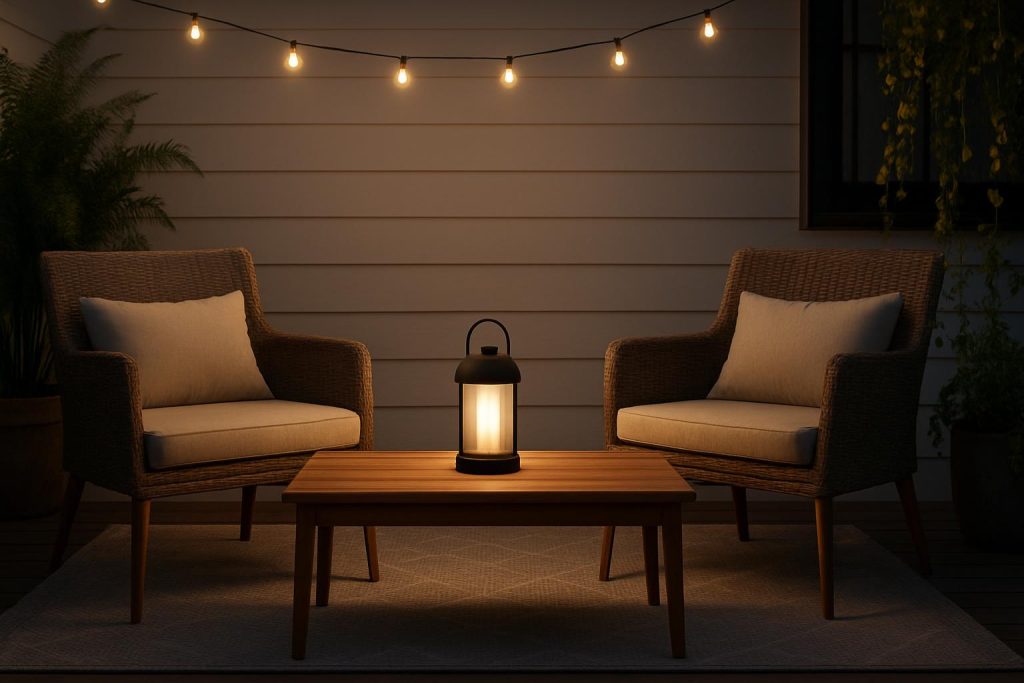
Use trays to corral remotes, books, and sunscreen. Add a lantern with LED candles for soft light and safety. Hang weatherproof wall art where rain cannot reach. Avoid too many small items that collect dust and pollen.
Keep Bugs and Mess Under Control
Mosquito and pest control without harsh chemicals
Run a ceiling fan or a box fan during evenings to disrupt mosquito flight. Remove standing water from trays and gutters. Install tight screen panels or repair holes in existing screens. Use yellow LED bulbs that attract fewer insects. Keep plants pruned and seal gaps where pests enter.
Easy cleaning routine
Weekly, sweep floors, wipe tables, and shake out rugs. Monthly, clean glass, launder removable pillow covers, and inspect lights and cords. Seasonally, deep clean floors, re-seal wood as needed, oil metal to prevent rust, wash screens, and rotate textiles for the weather ahead.
Seasonal Switches Without Clutter
Smart storage
Label breathable bins for pillows, throws, and covers. Use vacuum storage bags only for completely dry textiles. Store bins in a dry area. Keep a small caddy on the porch with glass cleaner, microfiber cloths, and a soft brush for quick touch-ups.
Fast seasonal swaps
Spring: add light throws and fresh herbs. Summer: switch to lighter cushions and add a fan. Fall: bring in warmer tones and heavier throws. Winter in mild climates: keep a small seating setup and add thicker rugs and LED candles. In cold regions, store textiles and cover furniture to extend life.
Budget and DIY Upgrades
Low-cost seating builds
Build a pallet sofa only with heat-treated pallets rated for load. Sand all surfaces, add corner braces, and seal with exterior finish. Use thick outdoor cushions for comfort. For a cinder block bench, keep stacks low and stable, add construction adhesive between blocks, and top with a sealed wood slab.
Refresh what you have
Sand and paint old metal or wood chairs with exterior paint. Replace worn slings or add custom cushion covers. Swap hardware on storage benches for a quick update. Thrift a side table and repaint to match your palette.
Renter friendly moves
Use tension rods for curtains and command hooks for lights. Add freestanding screens and planters on casters. Choose foldable furniture that stores flat during moves.
Safety and Maintenance Essentials
Fire and power safety
Use LED candles instead of open flame. Keep real candles off windy edges and away from textiles if you use them. Run only outdoor-rated extension cords and avoid daisy chaining. Plug into GFCI outlets and use weatherproof covers on all exterior connections.
Anchoring and weight limits
Anchor tall shelves and screens to prevent tipping. Confirm ceiling joist capacity before hanging swings and chairs. Follow the weight rating on all hardware. Check anchors twice a year.
Sample Layouts You Can Copy
Tiny porch about 4 by 8 feet
Place one slim lounge chair angled toward the street, plus a narrow side table against the wall. Add a 3 by 5 foot rug to define the zone. Mount one wall sconce or clip-on rail light. Use rail planters to save floor space. Keep the 30 inch path clear to the door.
Medium porch about 6 by 12 feet
Set a loveseat on the long wall and two chairs facing it across a 4 by 2 foot coffee table. Add an 8 by 10 foot rug under front legs of all seats. Hang string lights around the perimeter and add one floor lamp. Place tall plants on the corners for privacy.
Large wraparound porch
Create two zones. Lounge zone with sectional and low table near the front door. Dining zone with a small round table and four chairs around the corner. Use two rugs to mark each area. Add curtains on the windward side and a fan near the lounge. Keep a continuous 36 inch walkway connecting both zones.
Quick Checklist to Get It Done
Simple steps
Step 1: Measure, map the walkway, and choose top uses. Step 2: Fix flooring, railings, and paint or seal surfaces. Step 3: Place main seating first and test the traffic flow. Step 4: Add layered lighting and check power safety. Step 5: Lay the rug, set cushions, and add throws. Step 6: Place plants and adjust for sun and shade. Step 7: Add privacy curtains or screens if needed. Step 8: Style with a tray, lantern, and one or two decor pieces. Step 9: Set your weekly, monthly, and seasonal cleaning plan. Step 10: Sit down and test the comfort, then tweak.
Conclusion
Bring it all together
A relaxing porch is simple when you plan the flow, choose weather-tough materials, and keep maintenance light. Start with seating and lighting, add textiles for warmth, and layer plants and privacy where you need them. Use renter friendly fixes if you cannot drill. Follow the quick routine to keep everything tidy. With these steps, your porch becomes a calm, useful extension of your home.
FAQ
Q: How do I make a small porch feel cozy without crowding?
A: Use one compact loveseat or two chairs plus a small side table, keep a 30 to 36 inch clear path, choose nesting tables, mount lights or use rail planters to save floor space, and size the rug so front legs of furniture sit on it.
Q: What lighting is best for relaxing evenings outdoors?
A: Use layers with ambient string lights or a ceiling fixture, task lighting from a table or floor lamp, and accent lights aimed downward, choose warm bulbs at 2700 to 3000 K, set timers or dimmers, and use outdoor-rated fixtures on GFCI outlets.
Q: How can I control mosquitoes without harsh chemicals?
A: Run a ceiling or box fan, remove standing water, repair or add tight screens, switch to yellow LED bulbs, keep plants pruned, and seal gaps where pests enter.
Q: What porch textiles hold up outdoors and how do I clean them?
A: Choose solution-dyed acrylic or polyester fabrics, quick-dry foam, and polypropylene rugs, wash covers with mild soap and water, rinse and air-dry, and store cushions upright in a ventilated box when not in use.
Q: What routine keeps a porch tidy with little effort?
A: Weekly sweep and wipe tables and shake rugs, monthly clean glass and launder pillow covers and inspect cords, and seasonally deep clean floors, re-seal wood, oil metal, wash screens, and rotate textiles for the coming weather.