
We are reader supported. When you purchase through links on our site, we may earn an affiliate commission. Also, as an Amazon affiliate, we earn from qualifying purchases.
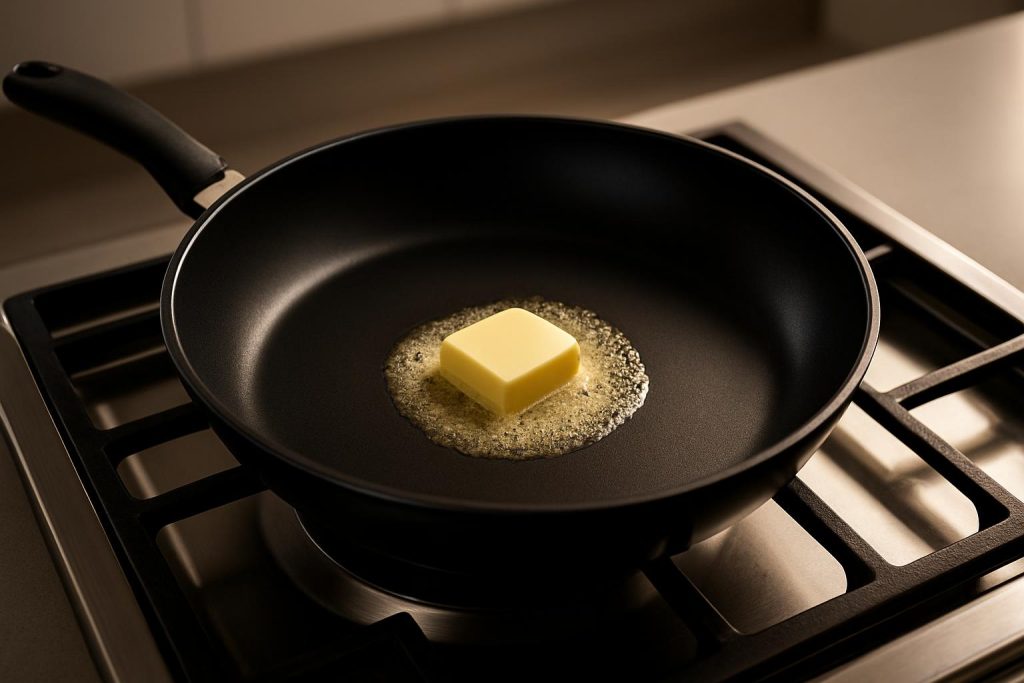
Butter and nonstick pans cause confusion. Some say never use it. Others swear by it for eggs. Here is the clear answer based on what cookware makers and cooking instructors teach. You can use butter on nonstick pans, but you must control heat, avoid burning, and clean the pan correctly. If you follow a few simple rules, your pan will last longer and your food will taste better.
Short Answer
Yes, you can use butter on nonstick pans. It is safe for the coating when used at low to medium heat. The problem is not the butter itself. The problem is burned milk solids and overheated pans. Keep the heat in check, add butter at the right time, and clean the residue promptly.
What Experts and Manufacturers Say
Cookware companies allow butter on nonstick, but advise against high heat. They warn about aerosol cooking sprays because the additives stick to the surface and create a stubborn film. Culinary teachers focus on heat control. They use butter for flavor and finish, and choose higher smoke point fats for searing.
The shared guidance is simple. Use butter to cook at gentle to moderate heat. Switch to clarified butter or high smoke point oils when the pan gets hotter. Do not let the pan smoke. Do not leave butter to burn.
How Butter Behaves on Nonstick
Smoke Point and Milk Solids
Whole butter has a low smoke point around 300 to 350 degrees Fahrenheit. It contains water and milk solids. Those solids brown and then burn. On a nonstick surface, scorched solids cling and leave a brown film. That film makes food stick the next time you cook.
Residue and Sticky Film
Brown spots around the edges of the pan come from overheated butter. They can bake on over time. This residue can turn a slick pan into a tacky surface. It also causes uneven browning.
Does Butter Damage the Coating
Butter does not chemically damage PTFE or ceramic coatings. Overheating does. If you cook on high with or without butter, you risk weakening the coating and discoloration. Keep temperatures reasonable and the coating will stay intact.
The Right Way to Use Butter on Nonstick
Heat Control and Timing
Start with medium or medium low heat. Preheat the empty pan for 30 to 60 seconds only. Add a small amount of butter and let it melt gently. If it sizzles aggressively or smokes, reduce the heat. Add the food as soon as the butter foams lightly and smells nutty, not burned.
Step by Step for Common Tasks
For eggs, heat the pan on medium low. Add one teaspoon of butter. Swirl to coat. Add eggs immediately. Cook slow and steady. Slide eggs out while still tender. Wipe the pan if you plan a second batch.
For pancakes, preheat the pan on medium. Brush a thin film of butter or oil. Pour batter once the butter stops foaming. If the butter darkens fast, the heat is too high. Lower it for the next batch.
For fish, start with a neutral oil for the initial sear on medium. When the fish is almost done, add a small pat of butter to baste for flavor. This avoids burning the butter while still getting taste and shine.
When to Add Butter for Flavor Only
Add butter near the end of cooking to finish sauces, glaze vegetables, or baste proteins. This protects the butter from long exposure to heat. You keep the flavor without the burnt residue.
Better Options for High Heat
Clarified Butter or Ghee
Clarified butter and ghee have the milk solids removed. They handle higher temperatures, often up to about 450 degrees Fahrenheit. They give a butter flavor and reduce the risk of burnt bits sticking to the pan.
Neutral High Smoke Oils
Refined avocado, canola, peanut, and sunflower oils work well for hotter tasks. They reduce smoke, keep the pan clean, and preserve the coating. Use them for stir fry or quick searing. Add a small pat of butter at the end if you want that classic taste.
Mixing Oil and Butter
Use a half oil and half butter mix. The oil raises the overall smoke point. The butter provides flavor. This method gives you a wider safety margin on nonstick without giving up taste.
Common Mistakes to Avoid
Aerosol Spray Trap
Aerosol sprays often contain propellants and emulsifiers. These leave a gummy film on nonstick surfaces. Over time, the coating feels sticky even when clean. Use a pump oil mister or a small amount of oil or butter instead.
Empty Preheating on High
Do not heat a nonstick pan empty on high. It can reach unsafe temperatures quickly, especially on gas or induction. Overheating risks the coating and can produce fumes. Always start with low to medium heat and add fat within a minute.
Metal Tools and Rough Scouring
Metal utensils can scratch the coating. Hard abrasives wear it down. Use silicone or wood tools. Clean with a soft sponge or nonabrasive scrubber. Treat nonstick gently and it will last much longer.
Dishwasher Issues
Some nonstick pans are labeled dishwasher safe. Hand washing still preserves the coating better. Detergent, heat, and other items banging in the cycle can shorten lifespan. Wash by hand for best results.
Cleaning a Nonstick Pan After Butter
Daily Quick Clean
Let the pan cool for a few minutes. Wash with warm water, mild dish soap, and a soft sponge. Rinse well and dry fully. Do not shock a hot pan with cold water to avoid warping.
Removing Brown Film
If butter residue builds up, use a paste of baking soda and water. Rub gently with a soft sponge. Rinse and repeat if needed. For tougher spots, simmer a little water with a drop of dish soap for 5 minutes, then wipe clean.
Deep Clean and Re Season
After the pan is fully clean and dry, rub a teaspoon of neutral oil across the surface with a paper towel. Heat on low for 2 minutes, then cool and wipe off the excess. This light seasoning improves release and slows future buildup.
Nonstick Types Matter
PTFE Nonstick
PTFE coatings are very slick and last with gentle treatment. They dislike high heat and sharp tools. Butter is fine at low to medium heat. Avoid preheating empty on high and avoid broilers.
Ceramic Nonstick
Ceramic nonstick is also easy release but can lose slickness faster if overheated. It benefits from a touch of oil or ghee and careful heat control. Butter works, but the same rules apply. Keep the heat modest and prevent scorching.
Anodized Aluminum with Nonstick Interior
Many pans have an anodized exterior for strength and a nonstick interior for release. The anodized layer is tough, but the interior still needs gentle care. Treat it like any nonstick surface.
Induction and Heat Distribution
Induction heats fast. A thin nonstick pan can overshoot. Start lower than you think and increase slowly. Use pans with flat, induction ready bases for even heat. This prevents hot spots that burn butter.
Health and Indoor Air Quality
Smoke and Acrolein
Burning butter produces smoke and harsh fumes, including acrolein. Keep your kitchen ventilated. Use the vent hood or open a window. Avoid smoking fat for your comfort and safety.
PTFE Fumes and Pets
Extremely high heat can produce fumes from PTFE coatings. This is rare with proper use. Never heat the pan empty on high. Keep birds out of the kitchen during high heat cooking, as they are very sensitive to fumes.
Fats and Nutrition
Butter adds flavor but also saturated fat. If you cook often with butter, balance it with heart friendly oils in other meals. You do not need a large amount of fat on a quality nonstick pan. A teaspoon often does the job.
When to Replace Your Pan
Signs of Wear
Replace the pan if the coating is deeply scratched, peeling, or pitted. Replace if food sticks even with proper heat and small amounts of fat. Replace if the base is warped and does not sit flat.
Extending Lifespan
Use low to medium heat. Avoid aerosol sprays. Hand wash with gentle tools. Store with a soft liner between pans. Follow these steps and a nonstick pan can last several years depending on use.
Practical Cooking Scenarios
Eggs and Omelets
Use a nonstick pan on medium low. Add a teaspoon of butter. Pour in beaten eggs. Do not rush. Glide the eggs gently with a silicone spatula. The result is tender eggs that release cleanly and a pan that wipes out easily.
Pancakes and Crepes
Brush a thin layer of butter or oil across the pan. Too much butter will burn at the edges. Cook on medium heat. Flip when bubbles form and the edges look set. Re grease lightly between batches.
Fish and Delicate Proteins
Sear in a small amount of neutral oil first. Add butter near the end to baste and finish. This keeps milk solids from scorching while still giving flavor and gloss.
Vegetables and Sauté
For a quick sauté, use a high smoke point oil. Add a teaspoon of butter in the last minute to coat and season. This method avoids smoky butter while delivering taste.
Quick FAQ
Is butter necessary on nonstick
No. You use it for flavor or browning, not for release. A quality nonstick surface can cook with little or no fat. Add butter if you want taste or a light crust.
Can butter make food stick
Yes, if it burns and leaves residue. Keep heat moderate and clean the pan after cooking. Use clarified butter if you need a bit more heat.
Is margarine better than butter on nonstick
Not usually. Many margarines have water and emulsifiers that can spatter and burn. Use real butter at low heat or switch to oils or ghee for higher heat.
Can I use browned butter on nonstick
Yes, but control the heat. Browned butter already has toasted solids and can burn fast. Keep the pan gentle and add food quickly.
Can I season a nonstick pan
Yes. A light oil wipe and brief low heat can help maintain release. Do not bake oil on at high temps. Keep it simple and low heat.
Conclusion
You can use butter on nonstick pans safely. The key is heat control, clean technique, and smart choices for the task. Use butter at low to medium heat for eggs, pancakes, and finishing sauces. Choose ghee or high smoke oils for hotter cooking. Avoid aerosol sprays. Clean gently and remove residue before it builds up. Treat your pan well and it will stay slick, easy to clean, and ready for daily cooking.