
We are reader supported. When you purchase through links on our site, we may earn an affiliate commission. Also, as an Amazon affiliate, we earn from qualifying purchases.
Can you press start when the glass plate is missing, cracked, or in the sink? Yes, the microwave will still make heat. But using it without the glass plate changes how food heats, can stress parts inside, and can cause messy spills. If you want safe, even results, you need to know when it is okay, when it is not, and how to do it right in a pinch. This guide explains the why, the risks, the workarounds, and the best fix, so you can decide with confidence.
What the Glass Plate Actually Does
It rotates food for even heating
The glass plate turns your food through different parts of the microwave field. This avoids hot spots and cold spots. Without rotation, energy can collect in certain zones while other zones stay weak. The plate keeps food moving so heat spreads more evenly.
It supports the roller ring and coupler
Under the glass plate there is a plastic roller ring with small wheels, and in the center a motor-driven coupler. The glass plate rides on these parts and spreads the weight of your dish. Without the plate, weight sits on tiny points and can stress or break the support or motor.
It gives a clean, stable surface
The plate is smooth, easy to wash, and designed to fit snugly. It prevents bowls from wobbling, reduces spills, and keeps cleanup simple. It also stays slightly raised so steam and spills do not pool around the drive parts.
Short Answer: Can You Use a Microwave Without the Glass Plate
Yes, but not the same and not always safe for results
The microwave will run and heat. Food will warm up. But expect uneven heating, longer times, and a higher chance of scorching or cold centers. You also risk wearing out the turntable parts if you place weight on them without the plate.
There are two kinds of microwaves
Turntable models use the glass plate to rotate food. Flatbed models do not have a turntable and use internal wave stirrers to spread energy. If you own a flatbed, using it without a plate is normal because there is none. If you own a turntable model, the plate is part of the system and skipping it is a compromise.
Some models let you turn the turntable off
Many ovens include a turntable off function for large dishes that cannot rotate. This is not the same as having no plate. The plate stays in place as a flat surface, and you follow special steps like longer times and more stirring. If your model has this button, use it when needed and follow the manual.
Risks of Running Without the Glass Plate
Uneven heating and food safety issues
Without rotation, hot spots and cold spots are stronger. You can get boiling edges and cold centers. This is a problem for leftovers with meat, rice, or eggs. Cold spots can let bacteria survive. You must compensate with stirring and resting time.
Stress on the roller ring and motor coupler
Do not put a bowl directly on the roller ring or coupler. The small wheels and the plastic coupler are not designed to carry a point load. They can warp, crack, or strip. The turntable motor can stall or overheat if the coupler is jammed under a heavy dish.
Spills and splatters
Without the smooth glass surface, containers can sit unevenly on the cavity floor. Liquids slosh, topple, and leak into the corners. Cleanup becomes harder. Sugar and fat spills can scorch and leave burnt smells.
No benefit to energy or safety
Skipping the plate does not save energy or make the oven safer. The magnetron still runs the same. Running the oven empty is harmful. Running with food but no plate still requires careful loading and timing.
When It Is Acceptable To Use It Without the Plate
You have a flatbed microwave
If your model has no turntable by design, you are fine. Use a microwave safe dish, center it unless the manual says otherwise, and follow normal cooking steps.
The glass plate is cracked and you are waiting for a replacement
A short, careful reheat is possible if you set up the dish safely on the bare cavity floor. Remove the roller ring and coupler if they lift out easily. Use light loads only. Follow the safe method below. Replace the plate as soon as possible.
The dish is too large and you must disable rotation
If your model supports turntable off, use it and leave the glass plate in place as the stable surface. If you must remove the plate to fit a large, stable tray, accept that you need more stirring and more time. Watch closely.
How To Do It Safely If You Must
Set up the surface
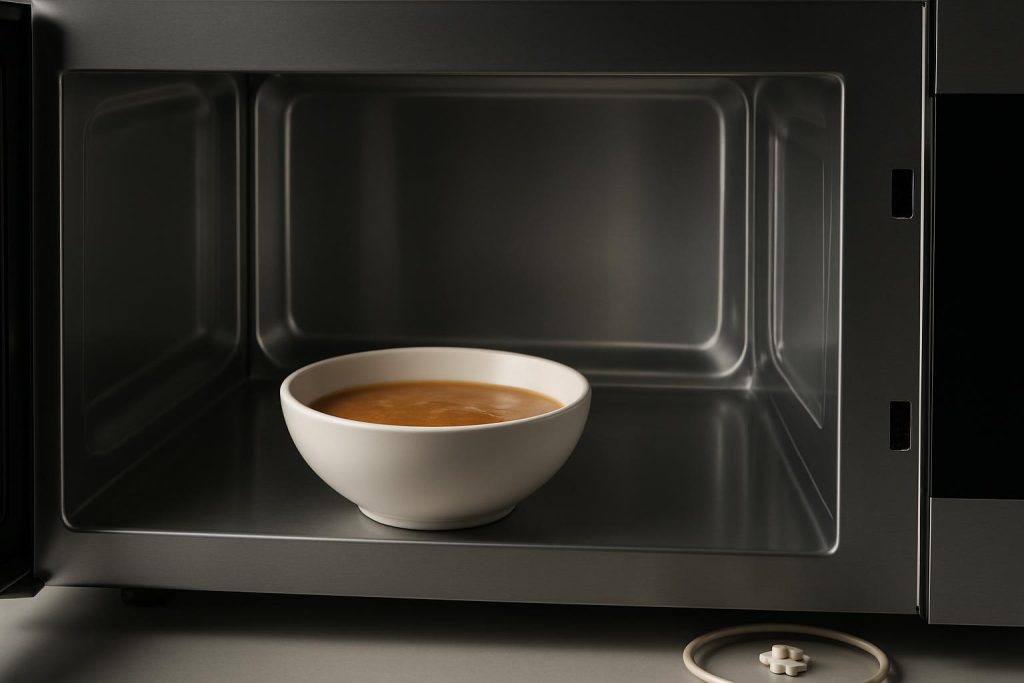
Lift out the roller ring and the small center coupler if they are removable. You want a flat, solid cavity floor so your bowl does not tip. Check that your dish does not rest on or jam the coupler post if it stays in place. If the dish wobbles, stop and do not proceed.
Choose the right container
Use microwave safe glass or ceramic. Use a wide, shallow dish rather than a tall, narrow one. Avoid thin plastic that can warp. Never use metal, gold trim, or foil. Use a vented microwave cover or a vented silicone lid to control splatter and keep steam moist.
Place food off center
On a non rotating setup, placing the dish slightly off center can reduce the effect of fixed hot and cold zones. Move the dish about one to two inches off the center point. This often gives a more even result than dead center.
Reduce power and extend time
Use 50 to 70 percent power for reheating. Heat in short bursts of 30 to 60 seconds for small portions and 90 seconds for larger ones. Check and stir between bursts. Lower power lets heat move inward more evenly.
Stir, flip, and rest
Stir or rotate the food by hand after each burst. For slices or patties, flip them. For soups, stews, pasta, and rice, stir well, scraping the bottom. After heating, let food rest covered for one to two minutes. Residual heat helps even out the temperature.
Use small portions
Reheat one serving at a time when the plate is missing. Large bowls are hard to heat evenly without rotation. Divide large portions into two or more batches.
Map your microwave hot spots in five minutes
Place a sheet of parchment on the cavity floor. Sprinkle a thin, even layer of shredded cheese or mini marshmallows. Heat on high for 20 to 40 seconds while watching closely. The first areas to melt mark hot spots. Use this map to position your dish slightly away from very hot zones to avoid scorching. Clean any residue after the test.
Protect the hardware
Never place a dish directly on the roller ring. Never set a heavy pot on the center coupler. If the coupler is fixed and sticks up, use only dishes that bridge over it safely without rocking. If you hear grinding, squeaking, or feel resistance, stop.
What Not To Do
Do not run the microwave empty
Running empty can reflect energy back into the magnetron and can damage the oven. Always have food or a cup of water inside when testing functions.
Do not stack heavy items to fake a turntable
Do not build towers of bowls or stands to create height over the coupler. Stacks can topple and break. Use a single, wide, stable dish only.
Do not cover vents
Check the sides and ceiling of the cavity for vents. Do not press large platters against these areas. Airflow is important to prevent overheating.
Do not ignore stirring and resting
Without rotation, you cannot skip manual rotation. Always pause, stir, and rest. This is how you avoid cold centers.
Best Fix: Replace the Glass Plate
Find the right size
Measure the diameter of your original plate or the support ledge inside the cavity. Common sizes are about 9.6, 10.6, 11.25, 12.5, 13.5, and 16.5 inches. Match the size closely so the plate clears the walls and doors and sits on the roller ring.
Match the center fitting
Check the shape of the plate hub underneath. Most use a three spoke pattern that mates with the coupler. Make sure the replacement hub pattern matches your coupler style and size.
Use model number and parts catalogs
Look inside the door frame or on the back panel for the model number. Search that number plus turntable plate, glass tray, or carousel tray. Manufacturer parts sites and reputable appliance parts stores list exact fits.
Consider universal plates carefully
Universal plates can work if the diameter and hub pattern match and the plate is tempered glass rated for microwave use. If either does not match, skip it. A plate that does not seat correctly can slip and break.
Replace the roller ring if worn
Inspect the ring. If wheels are flat spotted or the ring is warped, replace it. A smooth rolling ring prevents wobble and reduces motor strain.
Cost and where to buy
Most replacement plates cost a modest amount depending on size and brand. Buy from manufacturer parts sites, appliance parts stores, or reputable online sellers. Avoid used plates with chips or deep scratches. Tempered glass with damage can shatter.
Prevent future issues
Always use microwave safe containers that are not too heavy. Do not drop cold liquid onto a very hot plate. Let the plate cool before washing in cold water. Remove and wash the plate and ring regularly to prevent grit that can cause wobble.
Special Cases and Tips
Large dishes that cannot rotate
If your oven has turntable off, use it and leave the plate in. Center the dish if possible. Use lower power, longer time, and frequent stirring. If your oven has a metal rack designed for it, follow the manual. Do not add random racks or stands.
Inverter microwaves
Inverter models control power more smoothly at lower levels, which can help even heating when the plate is not rotating. The same rules still apply. Use lower power and stir often. The missing plate still reduces uniformity.
Office or rental microwaves
If you share the microwave, avoid using it without the plate. Others may not know to stir or may place dishes on the roller ring and break it. Report a missing or broken plate and replace it quickly.
Quick Troubleshooting Checklist
If food heats unevenly without the plate, reduce power to 50 to 70 percent and increase time. Stir or rotate by hand every 30 to 60 seconds.
If dishes wobble, remove the roller ring and coupler if removable and use a wide, flat dish on the cavity floor. If the dish still rocks, stop and do not use until the plate is replaced.
If the turntable motor makes noise without a plate, stop. A jammed coupler or a heavy off center load can damage the motor.
If you see scorch marks or burnt smells, clean the cavity with warm soapy water once cool. Then steam clean with a bowl of water and a slice of lemon for five minutes on high and wipe dry. Resume only with lower power and better stirring.
If you must keep using the microwave for a few days without the plate, stick to small portions, soups, and liquids in wide bowls. Avoid dense casseroles and large leftovers that are hard to heat evenly.
Pros and Cons Summary
Pros of using it without the plate
You can finish a quick reheat in an emergency. You can fit a dish that would otherwise hit the door if the turntable turns. You avoid stopping your day if you are waiting for a replacement plate.
Cons of using it without the plate
More cold spots and more stirring are required. Higher chance of spills and scorching. Real risk of damaging the roller ring and coupler if you place load on them. No speed or energy benefit. Food safety risk if you do not compensate correctly.
Practical Example: Safe Reheat Without the Plate
Goal: Reheat one bowl of chili without a glass plate.
Step 1. Remove roller ring and coupler if possible. Wipe the cavity floor clean and dry.
Step 2. Use a wide, microwave safe bowl and a vented cover. Place the bowl slightly off center.
Step 3. Heat at 60 percent power for 60 seconds. Stir well, scraping the bottom. Heat again for 45 to 60 seconds. Stir again.
Step 4. Check temperature. If not hot enough, repeat in 30 second bursts. When hot, rest covered for one to two minutes. Eat. Clean any splatter.
FAQs
Will I damage the microwave by running it without the plate
The oven itself will not break just from the absence of the plate, but you can damage the roller ring, the coupler, or the turntable motor if you place weight on them. Food may also heat unevenly. Use the safe method or replace the plate.
Can I put a regular dinner plate inside as a substitute
You can use a microwave safe ceramic or glass dinner plate as a temporary flat surface if it sits stable on the cavity floor and does not press on the coupler. Do not place it on the roller ring. Check stability before heating.
Is it safe to cover food
Yes. Use a vented cover, a microwave safe lid with a vent, or a damp paper towel. Covering reduces splatter and improves moisture and even heating. Leave a small vent for steam.
How do I know the replacement plate fits
Match the diameter and the hub pattern to your model. If both match, it will fit. If either does not match, do not use it.
Conclusion
Yes, you can use a microwave without the glass plate, but it is a temporary workaround with tradeoffs. The glass plate is there for a reason. It rotates food for even heating, supports the turntable parts, and keeps the surface stable and easy to clean. If you must run without it, remove the roller ring, use a wide microwave safe dish on the cavity floor, place the food slightly off center, use lower power with short bursts, stir and rest often, and keep portions small. Do not place weight on the roller ring or the coupler. The best fix is to replace the glass plate with the correct part as soon as you can. That single step restores even heating, protects the hardware, and makes your microwave work the way it should.