
We are reader supported. When you purchase through links on our site, we may earn an affiliate commission. Also, as an Amazon affiliate, we earn from qualifying purchases.
Wondering if you can put a Peloton on carpet without wobble, noise, or damage to your floor. You can, but it needs the right setup. With a stable base, proper leveling, and smart cleaning habits, your bike or tread can sit on carpet safely and feel solid under your feet. This guide breaks down what works, what does not, and how to set it up step by step.
Short Answer
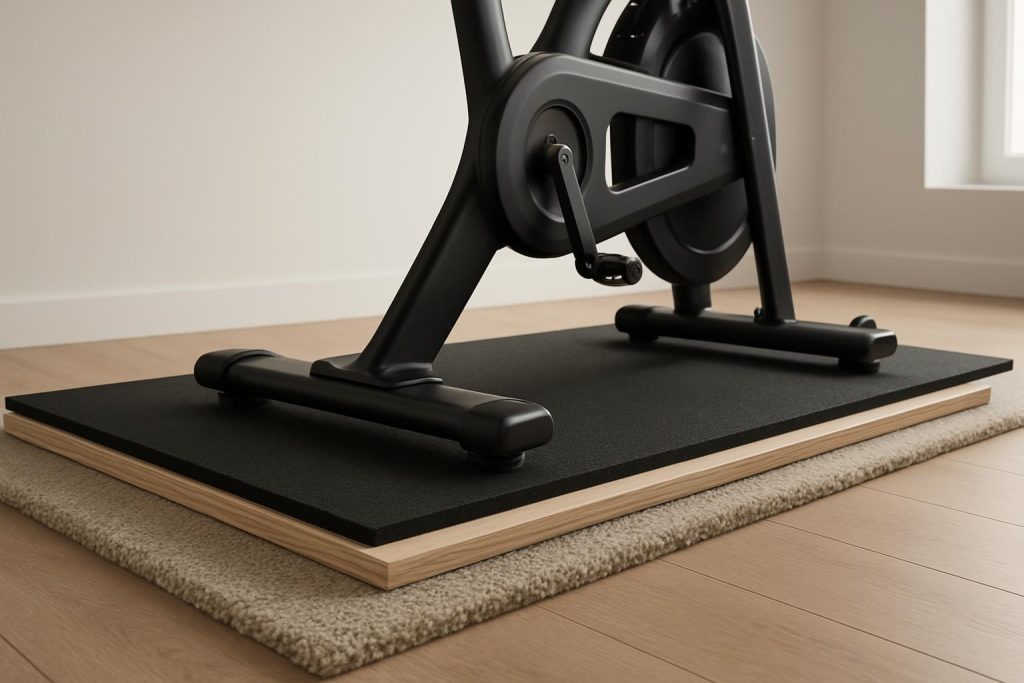
Yes, you can put a Peloton on carpet. Use a dense equipment mat and, for medium to high pile carpet, add a rigid board under the mat to prevent sinking. Level the feet, protect the carpet from sweat, and check stability before riding.
What Happens When You Put a Peloton on Carpet
Stability and Rocking
Carpet compresses. The bike or tread can sink unevenly and rock side to side. That makes rides feel unstable and can affect form. On plush carpet, this is more noticeable, especially during high cadence or out-of-saddle work.
Frame Stress and Accuracy
Rocking adds stress to joints and bolts. Over time, that may cause creaks or loosened hardware. Instability can also affect power and cadence readings because movement absorbs effort and changes your pedal stroke.
Noise and Vibration
Carpet helps with airborne noise but not structure-borne vibration from pedaling or running. A rigid base spreads the load and lowers thumps that neighbors feel below you.
Sweat and Hygiene
Sweat drips into carpet and padding. Salt can corrode metal and create odors. A waterproof mat and a regular cleaning routine stop this problem before it starts.
How Carpet Type Changes the Setup
Low Pile or Commercial Carpet
This is the easiest case. A dense equipment mat under the bike or tread is often enough. Level the feet and you are ready to ride. Still use a sweat barrier and clean often.
Medium Pile Residential Carpet
You may feel mild rocking. Add a rigid layer under your mat to stop sink. Thin plywood, OSB, MDF, or tempered hardboard works. Keep edges smooth to protect the carpet.
High Pile or Plush With Thick Pad
This needs a firmer platform. A rigid board plus a dense rubber mat is the baseline. For a tread, consider a small platform or interlocking rubber tiles over plywood to fully stabilize the base.
Area Rugs vs Wall to Wall
Small rugs can slide and bunch. Avoid placing a Peloton on a loose rug. If you must, trap it under a rigid board that extends beyond the rug edges, then place the equipment mat on top.
The Right Base Under a Peloton
Good, Better, Best Options
Good. A thick, dense equipment mat made for bikes or treads. Look for heavy rubber or vinyl, not a yoga mat.
Better. A rigid sheet under the mat to prevent carpet compression. One piece of 0.5 inch plywood or MDF is common for plush carpet. For lower pile, 0.25 inch tempered hardboard can work.
Best. A sandwich. Rigid board on the carpet, then dense rubber mat, then the bike or tread. For upper floors and heavy use, consider rubber tiles over plywood for better vibration control.
What to Look For
Material. Vulcanized rubber or heavy vinyl for the mat. Avoid soft foam.
Density. The mat should feel heavy and stiff, not spongy. Heavier mats transmit less wobble.
Size. The mat must fully cover the footprint with at least 2 inches extra on all sides to catch sweat and dirt. For the tread, follow the manufacturer footprint and add clearance for getting on and off.
Leveling and Placement
Use the Built In Leveling Feet
Peloton bikes have adjustable feet on the base. After placing the bike, adjust each foot until there is no rock in any corner. Check again after a few rides as carpet settles. For the tread, adjust each corner and recheck monthly.
Allow Clearance
Leave at least 24 inches on each side and behind the bike for body movement and safety. For the tread, keep the rear clear by 6 feet if possible and do not place it directly against a wall. Maintain airflow around consoles and motors.
Cable and Outlet Safety
Use a grounded wall outlet that matches the device rating. Do not run power cords under rugs. Keep cables routed along walls with low profile covers. Avoid tripping hazards in your dismount path.
Step by Step Setup on Carpet
Step 1. Measure the Space
Confirm room for the bike or tread, mat, and safe clearance. Check ceiling height for standing climbs or running posture.
Step 2. Pick the Base
For low pile, use a heavy bike mat. For medium or high pile, cut a sheet of plywood or hardboard slightly larger than the mat. Sand edges smooth. Place board on carpet and mat on top.
Step 3. Place the Peloton
Set the bike or tread on the mat. Center the frame on the rigid support so all feet sit on the mat. Confirm the wheels or feet are not on a seam or edge.
Step 4. Level the Feet
Push on each corner to find any rock. Adjust the leveling feet until the base feels solid. Tighten lock nuts if present.
Step 5. Check Power and Network
Plug into a grounded outlet within reach and route the cable safely. Connect Wi Fi or Ethernet. Keep cables off the path where you mount and dismount.
Step 6. Perform a Rock Test
Get on the bike, clip in, and pedal easy. Stand up and sway slightly side to side. The base should not shift. For the tread, walk, then jog lightly. There should be no lateral movement.
Step 7. Fine Tune
If you feel wobble, re check level. Add shims under the rigid board corners if your floor is uneven. If the carpet still feels soft, upgrade to thicker plywood or add rubber tiles under the mat.
Step 8. Protect Against Sweat
Place a microfiber towel on the frame touch points. Keep a floor towel within reach. Add a small fan to reduce sweat drip. Consider a moisture barrier film under the board if you sweat heavily.
Step 9. Verify Noise
Ride at your normal intensity and listen for thumps. If downstairs neighbors feel vibration, add mass and decoupling. Rubber tiles over plywood help. Ensure pedals and cleats are tight to reduce mechanical noise.
Step 10. Set a Cleaning Routine
Commit to quick wipe downs after each session and weekly vacuuming around and under the mat. Sweat and dust are easier to control with a simple routine.
Safety Checks Before Your First Hard Ride
Rock Test and Foot Retention
Confirm zero rocking with moderate side force on the bars or tread handrails. Check pedals or running shoes for secure engagement. Loose retention increases wobbles.
Bolts and Hardware
Tighten seat, handlebar, pedal, and screen hardware to spec. Recheck after the first week as the base settles into the carpet.
Emergency Stop and Path
Know where the stop button is and practice using it. Keep the area behind a tread clear. Do not place furniture or boxes in your exit route.
Children and Pets
Keep kids and pets away while in use. Unplug the machine or use screen locks when not in use. Store the power adapter where it cannot be pulled.
Noise and Neighbor Friendly Tips
Use a Sandwich Base
A rigid board plus dense rubber mat reduces vibration and spreads impact. For the tread, two layers of rubber over plywood improve decoupling on upper floors.
Maintain the Drivetrain
Quiet bikes have clean belts, aligned pulleys, and tight pedals. Wipe sweat, check crank and pedal tightness, and keep cleats in good condition. A noisy drivetrain can sound like floor noise even when the base is solid.
Ride Form Matters
Smooth pedaling and a relaxed upper body create less vibration. For the tread, avoid heavy heel striking. Light footfalls reduce noise and joint stress.
Cleaning and Maintenance on Carpet
After Every Session
Wipe the frame, bars, screen, and any sweat prone areas with a lightly damp microfiber cloth. Dry metal parts to prevent corrosion. Wipe the mat and board edges.
Weekly Routine
Vacuum the surrounding carpet and the edges of the mat. Lift each side of the mat and vacuum under it. Salt crystals from sweat can cut carpet fibers if left in place.
Monthly Deep Clean
Carefully move the bike forward or backward a few inches to expose the mat and board. Clean the mat with a mild soap solution and dry fully. Inspect for mold or odor under the board. If needed, lift the board, let the carpet air out, and run a fan.
Corrosion Control
Inspect bolts, pedals, and base hardware for rust. Apply a light silicone safe protectant to exposed metal if you sweat heavily. Keep towels and fans close to reduce moisture buildup.
Protecting Your Floor and Carpet
Moisture Barrier
For heavy sweaters, place a thin polyethylene sheet under the rigid board to block moisture. Tape seams so sweat cannot reach the carpet pad. Keep the barrier smaller than the mat so edges are hidden and safe.
Indentation Management
Heavy equipment can leave dents. The rigid board spreads the load and reduces indentations. If you relocate the bike, steam the carpet lightly and brush fibers upright to help them recover.
Moving the Unit Safely
Do not roll the bike wheels directly on plush carpet. They can dig in and tear fibers. Lift slightly with two people or use a rigid ramp board to roll on. For the tread, follow the manufacturer moving instructions and avoid tipping on soft carpet.
Common Mistakes to Avoid
Using a Yoga Mat
Yoga mats are too soft and narrow. They increase wobble and do not protect from sweat. Use a heavy duty equipment mat.
Skipping the Rigid Layer on Plush Carpet
Without a board, the feet sink and the base rocks. Add plywood, MDF, or hardboard to stabilize the footprint.
Letting Sweat Sit
Salt is corrosive. Wipe down after every ride. Keep towels and a spray bottle nearby. Wash towels often to prevent odor.
Ignoring Ventilation
Heat and humidity increase odor and corrosion. Use a fan, open a window, or run a dehumidifier in small rooms.
Peloton Bike, Bike Plus, and Tread on Carpet
Bike and Bike Plus
Both weigh around 135 to 140 lb. They feel stable on low pile carpet with a dense mat. On plush carpet, add a rigid board. Recheck leveling feet monthly.
Tread
The tread is heavy and has a longer footprint. On carpet, use a thick mat over plywood or rubber tiles over plywood. Keep a clear safety zone behind the deck. Confirm the floor can support the load and avoid placing it over weak subfloor areas.
When to Get Help
Custom Platform
If your carpet is very plush or your floor is uneven, build a small platform. Use 0.75 inch plywood on sleepers with rubber underlayment, then a dense mat on top. This creates a level, quiet surface that protects carpet.
Electrical and Room Setup
If outlets are far, hire an electrician to add a grounded receptacle. Avoid running extension cords across walkways. For basement or upper floors, consult a contractor if you notice excessive bounce or noise transfer.
Quick FAQs
Do I need a mat on carpet
Yes. A dense equipment mat protects carpet from sweat, spreads weight, and reduces movement.
Can I use interlocking foam tiles
Avoid soft EVA foam alone. Use rubber tiles or place foam over plywood with a dense top mat to keep the surface firm.
Will carpet void my warranty
Using the equipment on carpet does not by itself cause issues, but improper setup can. Keep it level, use a proper base, and follow safety guidelines.
How often should I re level
Check after the first week, then monthly, or any time you move the unit or notice wobble.
What if my downstairs neighbor complains
Add mass and decoupling. Plywood plus rubber tiles plus a dense mat reduces impact. Ride with smoother cadence and adjust scheduling if needed.
Conclusion
You can place a Peloton on carpet and keep it stable, safe, and quiet. Match the setup to your carpet type. Use a dense equipment mat. Add a rigid layer for medium or high pile. Level the feet, confirm zero rock, and keep cables safe. Control sweat with towels and regular cleaning. If noise or movement persists, upgrade the base with rubber tiles over plywood. With these steps your rides feel solid, your carpet stays clean, and your space stays protected.