
We are reader supported. When you purchase through links on our site, we may earn an affiliate commission. Also, as an Amazon affiliate, we earn from qualifying purchases.
Wondering if your mixer grinder can make real juice. Yes, it can. You can get clear juice with a simple strain, or a thicker, high-fiber juice you drink right away. This guide shows you what to expect, how to prep, the fastest methods, and how to clean up without lingering smells. Keep reading for step-by-step instructions that work with everyday kitchen tools.
Can You Make Juice In A Mixer Grinder
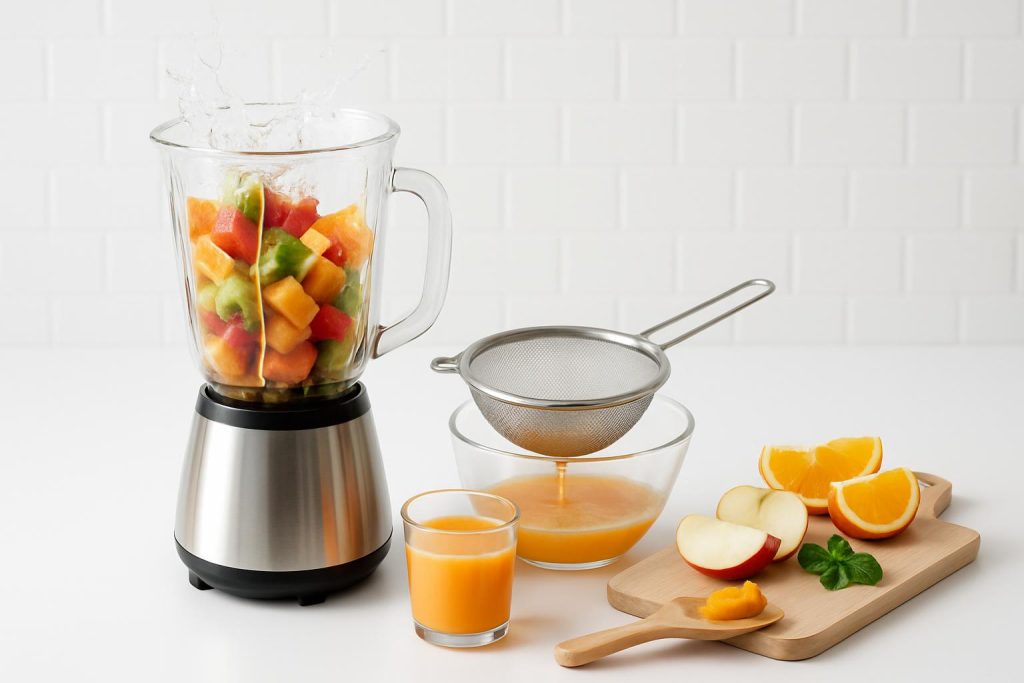
Yes. A mixer grinder can make juice by blending produce with a little water and then straining out the pulp. If you keep the pulp, you get a smoothie-style drink that is thicker and more filling. If you strain it, you get a clearer juice. The taste is fresh, the method is simple, and the cleanup is manageable if you do it right away.
Mixer Grinder vs Juicer vs Blender
How Each Works
A juicer separates juice from pulp using a mesh or a spinning basket. It produces clear juice and drier pulp. A blender or mixer grinder breaks everything into a puree and keeps it together unless you strain it. The result depends on how you process and strain.
What To Expect From A Mixer Grinder
You will likely add a little water to help the blades move. You will often strain to get clear juice. Yield can be slightly lower than a dedicated juicer, but the convenience is high. The taste is excellent when ingredients are fresh and cold.
Tools And Attachments You Might Use
Best Jar And Blade Choices
Use the wet grinding jar for most juices. Use the chutney jar for small batches or hard items like ginger or spices. A multipurpose blade works well for fruits and soft vegetables. For leafy greens, combine with water for smoother blending.
Straining Options
Use a fine mesh sieve for quick straining. For a clearer finish, use a nut milk bag or clean muslin cloth. A regular tea strainer works for small glasses. Choose a finer mesh for clearer juice and a coarser mesh if you want some body.
Helpful Extras
Keep a bowl for strained pulp, a spatula to press the pulp, chilled water to keep flavors bright, and a clean bottle or jar with a tight lid for storage. Cold ingredients reduce foam and preserve taste.
Prep Your Produce Right
Wash, Peel, Trim
Wash all produce under running water. Scrub firm skins like carrots and apples. Peel thick or bitter skins like pineapple and oranges. Trim stems and remove bruised parts.
Remove Seeds And Tough Bits
Remove apple cores and hard seeds. Remove citrus seeds and most white pith to avoid bitterness. Peel ginger only if the skin is tough. Pick out large, hard pits like those in cherries or peaches.
Chop Small And Chill
Cut into small pieces for smoother blending and less strain on the motor. Chill fruits and vegetables beforehand to reduce foam and oxidation. Cold juice tastes cleaner and needs less ice.
Basic Method: Clear Fruit Juice In A Mixer Grinder
Step 1. Add 2 cups chopped fruit to the jar. Use mango, apple, grapes, pineapple, watermelon, or a mix.
Step 2. Add 1 cup cold water. Start with less water for higher intensity. Add more only if the blades struggle.
Step 3. Pulse 3 to 4 times to break down chunks. Then blend on medium speed for 30 to 45 seconds. Stop and scrape if needed. Avoid long continuous runs to protect the motor.
Step 4. Strain through a fine sieve or cloth into a bowl. Press with a spatula to extract more liquid. For a clearer finish, strain twice.
Step 5. Taste and adjust. Add lemon for brightness, a pinch of salt for balance, or a little honey if needed. Keep additions light so the fruit shines.
Step 6. Chill or serve over ice. Drink within 24 hours. Shake before serving if it separates.
Step 7. Save pulp if you like. Stir a spoonful into porridge, add it to muffins, or mix into chutney for extra fiber. Use within a day or freeze.
High-Fiber Smooth Juice Method
If you want more body and fiber, skip straining. Use 2 cups chopped fruit and half a cup of cold water. Blend until smooth. Drink right away for the best texture. Expect a thicker mouthfeel and slower oxidation because the vitamin C and fiber mix reduces browning in some fruits.
Vegetable Juice Method
Vegetables need a bit more care because they are fibrous. Use a mix like carrot, beet, cucumber, tomato, and spinach.
Step 1. Add 2 cups chopped vegetables to the jar. Add 1 cup cold water.
Step 2. Pulse to break down. Blend 45 to 60 seconds. If the motor heats, stop for 30 seconds and continue.
Step 3. Strain through a fine sieve or cloth for a smoother drink. Press pulp well to increase yield.
Step 4. Balance the flavor. Add lemon or lime, a pinch of salt, and a small piece of ginger. A few mint leaves help with freshness. Avoid dairy in acidic vegetable juice to prevent curdling.
Special Cases And What Works Best
Citrus Fruits
Oranges, sweet lime, and grapefruit can be bitter if you blend the pith and seeds. Peel fully, remove seeds, section the fruit, and blend briefly. Or use a manual citrus press and mix that juice with other blended juices to keep it bright.
Watermelon And Melon
These blend easily with very little water. Strain once for a clear drink. Add mint and a squeeze of lime for balance.
Apple And Pear
These can brown fast. Work with cold fruit. Add lemon during blending. Strain for a lighter texture or skip straining for a smoothie. Do not blend the core and seeds.
Pineapple
Remove the skin and eyes. Pineapple can get foamy. Chill it well and blend with a little cold water. Strain to reduce fiber strands. A pinch of salt balances tang.
Pomegranate
Blend seeds gently to avoid crushing the bitter inner seed too much. Pulse a few times, then strain through a fine cloth. Press lightly. Over-blending can make it astringent.
Leafy Greens
Spinach, kale, and mint need water to move freely. Blend with cucumber or apple for sweetness. Strain if you want a lighter texture. Use lemon to reduce grassy notes.
Hard Roots
Carrots and beets need small pieces and more water. Blend in short bursts to protect the motor. Strain well. Combine with orange or apple for balance.
Not Ideal In A Mixer Grinder
Sugarcane and wheatgrass are tough and fibrous. They need a dedicated juicer or press. Using a mixer grinder for these can stress the motor and produce poor texture.
Flavor Boosters And Balance
Use small amounts of ginger for warmth, mint for freshness, and lemon for brightness. A pinch of salt can enhance sweetness. Add honey or dates if needed, but blend lightly. Spices like a tiny pinch of black pepper or cinnamon can work with apple, carrot, or pineapple. Keep additions minimal so the main produce leads.
Safety And Motor Care
Batch Size And Run Time
Do not overfill the jar. Work in smaller batches for hard produce. Use pulse mode to break down chunks. Blend in 30 to 45 second intervals. Let the motor rest if the base feels hot.
Protect The Machine
Never run the jar empty. Do not add boiling liquids. Secure the lid and hold it if needed. Keep vents clear. If you smell burning, stop and let it cool. Check the gasket and blade assembly for tightness to prevent leaks.
Troubleshooting
Juice is too thick. Add a little cold water and blend briefly. Strain if you want it clearer.
Low yield. Blend longer in short bursts and press the pulp firmly while straining. Use riper, juicier produce.
Bitter taste. Remove seeds and pith. Do not over-blend citrus or pomegranate. Add a bit of lemon and salt to balance.
Excess foam. Use cold produce and cold water. Blend at medium speed. Skim foam before serving.
Separation in the bottle. Normal for fresh juice. Shake before serving. Strain finer next time if you prefer less separation.
Stringy texture. Strain through a cloth or blend a little longer with more water. Avoid overloading with fibrous greens.
Too noisy or vibrating. Reduce batch size. Ensure the grinder is on a flat, dry surface. Check that the jar is locked correctly.
Cleaning And Odor Control Tips
Rinse the jar, lid, and blade immediately after juicing. Dried pulp is harder to remove and can trap odors.
Quick clean method. Fill the jar halfway with warm water and a drop of mild dish soap. Blend for 10 seconds. Rinse well. Air dry fully.
Stain control. For turmeric or beet stains, apply a paste of baking soda and water. Rub gently, rinse, and dry.
Deodorize. Blend warm water with a spoon of white vinegar. Rinse thoroughly. Leave the jar open to air dry.
Blade and gasket care. Remove the blade assembly if your model allows. Clean the grooves and gasket. Dry fully to prevent mold and odors.
Strainer and cloth care. Rinse immediately. Soak in warm soapy water. For cloth, hand wash and sun-dry if possible. Replace cloth if it holds odors after washing.
Avoid cross-contamination. Wash thoroughly between vegetable and fruit batches. Use separate cloths for strong-smelling produce like onion or garlic if you use the grinder for other cooking tasks.
Organize Your Juicing Setup
Create A Small Station
Keep the grinder, sieve or cloth, knife, cutting board, and a bowl together in one cabinet or countertop zone. Place a small bin for peels and pulp nearby. Keep a clean bottle ready for the finished juice.
Prep In Batches
Wash, peel, and chop fruits and vegetables ahead. Store in airtight containers in the fridge for up to two days. Keep citrus whole until juicing to prevent drying out.
Label And Rotate
Label containers with the prep date. Use the oldest first. If you freeze pulp or extra juice, label with the contents and date.
Freeze Building Blocks
Freeze cubes of lemon juice, ginger puree, or mint water. Drop a cube into fresh juice for quick flavor and chill without watering down too much.
Storage And Serving
Keep It Cold
Chill the glass bottle before filling. Cold storage slows oxidation and keeps flavor bright. Fill to the top to reduce air exposure.
Time Limits
Fresh juice is best within 4 to 6 hours. It stays acceptable up to 24 hours in the fridge. Some green juices lose brightness sooner. If it smells off or tastes fermented, discard it.
Prevent Browning
Add a small squeeze of lemon to apple or pear juice. Store in a dark glass bottle if available. Shake before serving.
Cost And Time Trade-Offs
A mixer grinder is versatile and already in many homes. You save space and money compared to a separate juicer. You may use a bit more water and time to strain, and the yield is slightly lower than a centrifugal or cold press juicer. Cleanup is fast if you rinse right away. For daily use, the mixer grinder is practical and reliable.
Frequently Asked Questions
Do I need to add water
Often yes, especially for hard or fibrous items. Start with a small amount to help the blades, then adjust for the texture you want.
Will the motor overheat
It should not if you work in short bursts, avoid overfilling, and let it rest between runs. If it feels hot, stop and cool down before continuing.
Can I skip straining
Yes. You get a thicker, more filling drink. Drink soon for the best texture.
Is the juice as nutritious as from a juicer
Nutrient levels are comparable for home use when ingredients are fresh and cold. Cold press juicers can yield more and may reduce oxidation slightly, but the difference is small if you drink soon after making the juice.
What do I do with the pulp
Use it in baking, porridge, soups, or smoothies. Or compost it. Refrigerate or freeze if not using immediately.
Quick Starter Recipes
Simple Apple Lemon
Two apples, half cup cold water, squeeze of lemon. Blend, strain, and serve cold.
Carrot Orange Ginger
Two carrots, one peeled orange, small piece of ginger, three quarters cup cold water. Blend, strain, and add a pinch of salt.
Green Refresh
One cucumber, a handful of spinach, half an apple, a few mint leaves, half cup cold water. Blend, strain if desired, and add lemon.
Conclusion
Yes, you can make juice in a mixer grinder and get excellent results. Prep well, keep ingredients cold, blend in short bursts, and strain when you want a clear finish. Protect the motor by avoiding overload and taking brief pauses. Clean right away to prevent stains and odors. Organize a small juicing setup so the process is quick and repeatable. With these steps, your everyday mixer grinder can produce fresh, balanced juice at home without extra equipment.