
We are reader supported. When you purchase through links on our site, we may earn an affiliate commission. Also, as an Amazon affiliate, we earn from qualifying purchases.
Liquid detergent is popular because it dissolves fast, works well in cold water, and is easy to measure. Many people still wonder if they can skip the dispenser drawer and pour it straight into the drum. The short answer is that you can in many cases, but it depends on your machine, your cycle, and how you dose. This guide explains when drum dosing is smart, when it is risky, and exactly how to do it right.
Quick answer
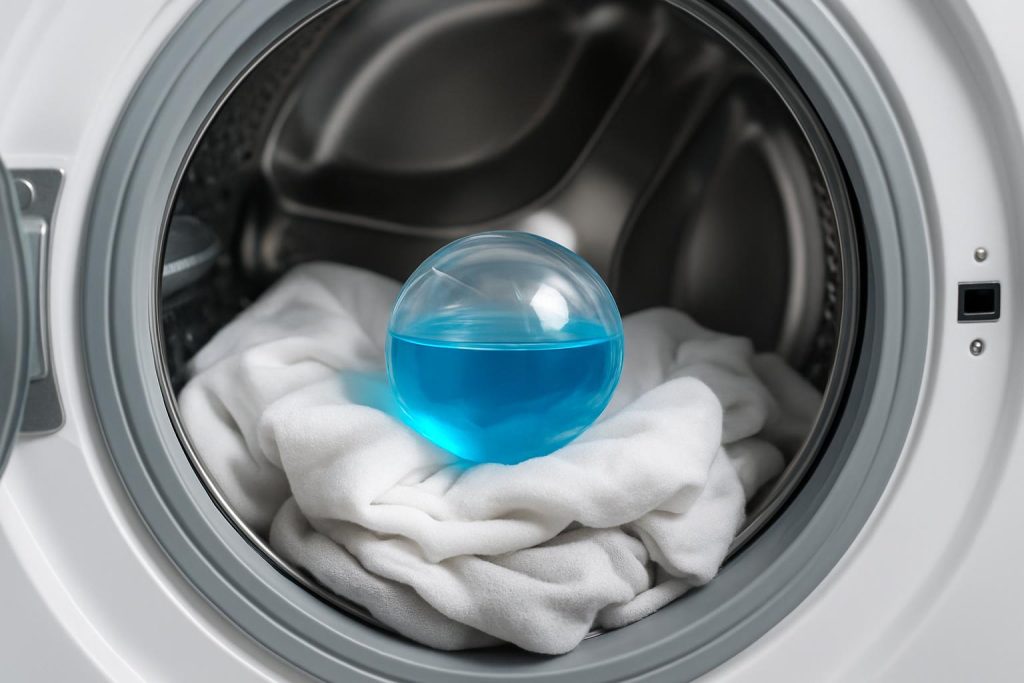
Yes, you can put liquid detergent in the drum if your washing machine manual allows it. Use a dosing ball or cap placed on top of the laundry, not directly on the rubber seal. Do not do this if your machine has auto dosing, if you are running a prewash, or if your manual explicitly requires the dispenser drawer. Measure carefully to prevent residue and excess suds.
How washing machines are designed to handle detergents
Why the dispenser drawer exists
The drawer meters detergents and additives at the right time. Main wash detergent flows in during the main phase. Prewash detergent flushes in earlier if selected. Fabric softener is held back until the final rinse. Water passes through the drawer and carries the product into the tub evenly diluted. This protects fabrics and helps rinsing.
What changes when you dose in the drum
Placing liquid in the drum sends concentrated detergent directly onto fabrics at the start. If you use a dosing ball, the liquid disperses as the drum turns. There is no timed release for a prewash or softener. Distribution can be uneven if overdosed or if you pour directly onto dry garments. With the right amount and a dosing device, drum dosing can still clean well.
When putting liquid detergent in the drum makes sense
When the dispenser drawer is clogged, moldy, or missing, a dosing ball is a practical workaround. In laundromats where drawers look dirty or are stuck, drum dosing can be cleaner and faster. With quick cycles that skip prewash, there is less need for timed release, so the drawer offers less advantage. For top loaders that instruct adding detergent directly to the tub before clothes, drum dosing is the standard process. Liquid detergent dissolves well in cold water, so drum dosing with cold cycles is usually fine if measured correctly.
When you should not put liquid detergent in the drum
Do not drum dose if your machine has auto dosing tanks. The machine is designed to meter product automatically, and manual drum dosing can cause overdosing and warranty issues. Avoid drum dosing when running a prewash because you need the drawer to separate prewash and main wash products. Do not drum dose chlorine bleach or oxygen bleach. Bleach belongs in the correct drawer compartment to dilute safely. Some manufacturer manuals require using the drawer for liquids. If your manual says that, follow it to avoid damage and warranty problems. Skip drum dosing for very small loads unless you halve the dose, as concentrated liquid can leave marks. Avoid pouring liquid straight on delicate fabrics such as silk or wool. Use the drawer or a ball instead.
Pros of putting liquid detergent in the drum
It is convenient and quick. A dosing ball can prevent clogs in a gunky drawer. Liquids dissolve fast even in cold water, so there is less chance of undissolved product than with powder. You control exactly what goes into the wash, which is useful in communal machines. It can reduce drawer residues in homes where the drawer is rarely cleaned, though you must then watch for residue in the door gasket instead.
Cons and risks you need to manage
You may miss timed release for prewash and softener. Overdosing is easy, and excess suds can lead to poor rinsing, odors, and even leak faults in high efficiency machines. Liquid can leave dark or greasy marks on clothing when poured directly onto fabric without water. Residue can collect in the door gasket or on the drum baffles. Dosing balls can rattle and sometimes get trapped in sheets or duvet covers. In some machines, ignoring drawer use can conflict with the manual and affect support.
Best practices if you choose to dose in the drum
Step by step for front loaders
Check the manual. If allowed, proceed. Measure the detergent based on load size, soil level, and water hardness. Use a dosing ball or the cap that came with the detergent. Load the drum loosely. Do not overpack. Place the dosing ball on top of the laundry, away from the rubber door seal. Select the cycle. For normal soil, a standard cotton or mixed cycle with the default temperature is fine. Start the wash. Remove the dosing ball at the end and rinse it. Wipe the door gasket weekly to prevent residue buildup.
Step by step for top loaders
For HE top loaders with impellers, add liquid detergent directly to the empty tub before adding laundry, unless the manual says otherwise. Then add clothes and start the cycle. For agitator models, start filling with water, add detergent to the moving water, then add clothes. Measure carefully. HE machines need HE detergent with low suds.
How much liquid to use
Follow the detergent label, then adjust for your home. For soft water, use less. For hard water, use a little more. For small loads, use half to two thirds of the regular dose. For large or very soiled loads, use the full dose. For HE machines, never exceed the HE guideline. If clothes feel slimy after washing or smell perfumed after drying, you used too much. If they feel rough, look dull, or still smell sweaty, increase slightly next time.
Special cases and product types
Machines with auto dosing
If your washer has built in detergent tanks that meter product automatically, use that system. Do not add extra liquid in the drum. If you must bypass the tanks for a specialty wash, check the manual for a program that disables auto dosing and follow its instructions.
Pods, capsules, and detergent sheets
Pods are made for drum dosing. Put a pod at the back or bottom of the drum before adding clothes. Never put pods in the drawer. Detergent sheets can go directly into the drum as they dissolve quickly. Use one sheet for small to medium loads and two for large or very soiled loads, according to the brand guidance.
Fabric softener and in-wash scent boosters
Liquid fabric softener belongs in the softener compartment so it releases in the final rinse. If you put softener directly in the drum at the start, it reduces cleaning and can spot fabrics. If you must avoid the drawer, use a softener ball that releases at the right time. Scent booster beads are designed for drum dosing at the start. Follow the amounts on the package and avoid overdosing to maintain rinse quality.
Stain removers, boosters, and bleach
Oxygen bleach and powder boosters can go in the drawer or drum depending on the brand. Dissolve powders in warm water first if your cycle is cold, or use a dosing ball to help dispersion. Chlorine bleach should only go in the dedicated bleach compartment if your machine has one. Never pour it directly on clothes.
Prevent residue, odors, and faults
Use the right dose. Overdosing is the main cause of residue and smell. Choose HE liquid for HE machines to control suds. Run a monthly maintenance cycle at a hot temperature with a washing machine cleaner or a cup of oxygen bleach. Wipe the door gasket and the glass after the last wash of the day. Clean the dispenser drawer monthly even if you are drum dosing, since moisture can still collect there. Leave the door and drawer open between washes to dry. Do not rely on cold short cycles only. Run a hot cycle occasionally to clear biofilm.
Common mistakes to avoid
Pouring liquid directly onto dry clothes without a dosing device causes stains and residue. Using regular non HE liquid in an HE machine creates excess suds and poor rinsing. Filling a dosing ball past the recommended line leads to odor and gray laundry. Drum dosing while also running prewash gives weak results because the detergent is not timed. Mixing bleach and detergent in the drum is unsafe. Ignoring the manual can lead to support issues for some brands.
Front loader vs top loader differences
Front loaders use less water, so suds control is critical. Drum dosing can work well if measured and placed in a dosing ball. Front loaders rely on the drawer for timed softener and prewash, so drawer use is preferred when you need those. Top loaders use more water and can handle drum dosing easily. For HE top loaders, add detergent first to the empty tub, then clothes. For traditional agitator models, let water flow and mix with detergent before adding laundry.
Water hardness, temperature, and soil level
Hard water needs a little more detergent to prevent mineral bonding with soils. If you do not know your water hardness, start with label directions and watch results. Cold water washing is fine for liquid detergent and saves energy, but heavy body oils and towels may need warm or hot to rinse clean. For heavy soil, pre treat stains with a small amount of liquid detergent rubbed gently, then use the regular dose in the drum or drawer.
What to do if you see residue or poor results
Reduce the dose by one third for the next wash. Choose a longer cycle to improve rinsing. Increase spin speed to help remove suds before the final rinse. Run a hot maintenance wash to clear the drum and gasket. Check pockets and loads for tissues and lint that can trap detergent. If marks persist, switch back to the drawer for a few cycles to evaluate whether distribution improves.
Will drum dosing damage the washer
With correct products and amounts, drum dosing does not damage the machine. Damage risks arise from bleach misuse, chronic overdosing, and ignoring HE requirements. Always read your manual. If it allows drum dosing or does not forbid it, you are safe to proceed with the best practices outlined here.
Will drum dosing void the warranty
Most brands focus on using HE products, correct dosing, and not using prohibited chemicals. Some specify that the dispenser drawer should be used for certain programs. If in doubt, use the drawer, especially during the warranty period. If the manual is silent or allows a dosing ball, you can dose in the drum without concern.
Simple dosing guide you can apply today
Small load in soft water: about half the label dose. Medium load in normal water: label dose. Large or very soiled load: up to the full label dose, not more. HE machines: never exceed HE amounts. If the rinse water has visible suds at the end, reduce next time. If laundry does not smell fresh or looks dull, increase slightly or choose a hotter wash for that item type.
Safety notes for homes with kids and pets
Keep liquid detergent, pods, and dosing balls out of reach. Wipe any drips from the exterior of containers and the machine. Store products closed and upright. Remove the dosing ball after the cycle ends and store it safely. Rinse hands after handling detergents.
Practical examples
You run a mixed cottons cycle with no prewash on a front loader. The drawer is dirty. Use a dosing ball with the normal liquid dose, place it on top of the clothes, start the cycle, and remove the ball at the end. You run a heavy soil towel load in hard water. Use the drawer with a full HE dose and a hot cycle to ensure thorough rinse and hygiene. You use an HE top loader. Add the measured HE liquid directly to the tub first, then add the load, and start. You want to use fabric softener. Put softener in the drawer compartment, not in the drum, unless using a softener ball.
Troubleshooting noises and lost dosing balls
If a dosing ball rattles, it may be hitting the drum baffles. Reduce the fill level slightly or place the ball deeper into the load. If it gets trapped in a duvet cover, use a laundry bag for the ball or switch to the drawer for that item. Inspect the gasket after the wash to ensure the ball did not wedge there.
Maintaining both drawer and drum areas
Even if you drum dose, clean the drawer monthly to prevent mold and smells. Pull out the drawer, soak it in warm water with mild dish soap, scrub, rinse, and dry. Wipe the cavity and run a hot maintenance cycle afterward. For the drum and gasket, wipe with a microfiber cloth weekly, especially under the gasket folds where water and residue collect.
Final checks before you choose your method
Look up your machine manual for guidance on detergent placement. Confirm whether prewash or softener is needed for the cycle. Decide whether a dosing ball gives you an advantage today, such as in a dirty laundromat or with a sticky drawer. Measure with care based on load and water. Review the results and adjust next time.
Conclusion
You can put liquid detergent in the drum in many situations, and it can work well if you measure correctly and use a dosing ball. It is not ideal when you need prewash timing, when using bleach or softener without a timed release, or in machines with auto dosing. For front loaders, the drawer is usually best for complex cycles and additives. For top loaders, drum dosing is often standard, especially with HE models. Follow your manual, match your dose to the load and water, keep the washer clean, and you will get clean clothes without residue or odors. Choose the method that fits the cycle and the machine, and keep it simple.