
We are reader supported. When you purchase through links on our site, we may earn an affiliate commission. Also, as an Amazon affiliate, we earn from qualifying purchases.
Horse rugs are tough on washing machines. They carry mud, hair, grit, and heavy hardware. If you choose the wrong washer, you get clogs, unbalanced loads, and frayed straps. Choose right, and you get clean rugs, fast dry times, and a machine that lasts. This guide highlights the 4 best washing machines for horse rugs in 2026 and a clear buying framework so you can match capacity, drum design, and care features to the rugs you actually wash.
How to choose a washing machine for horse rugs
Capacity first
Rugs need space to move so water and detergent can flush through layers. Aim for at least 4.5 cu ft for turnout sheets and medium-weight rugs. Larger 4.8 to 5.0 cu ft drums handle heavier fill rugs and stable sheets with less tangling. Avoid small portable washers for rugs.
Drum design and agitator
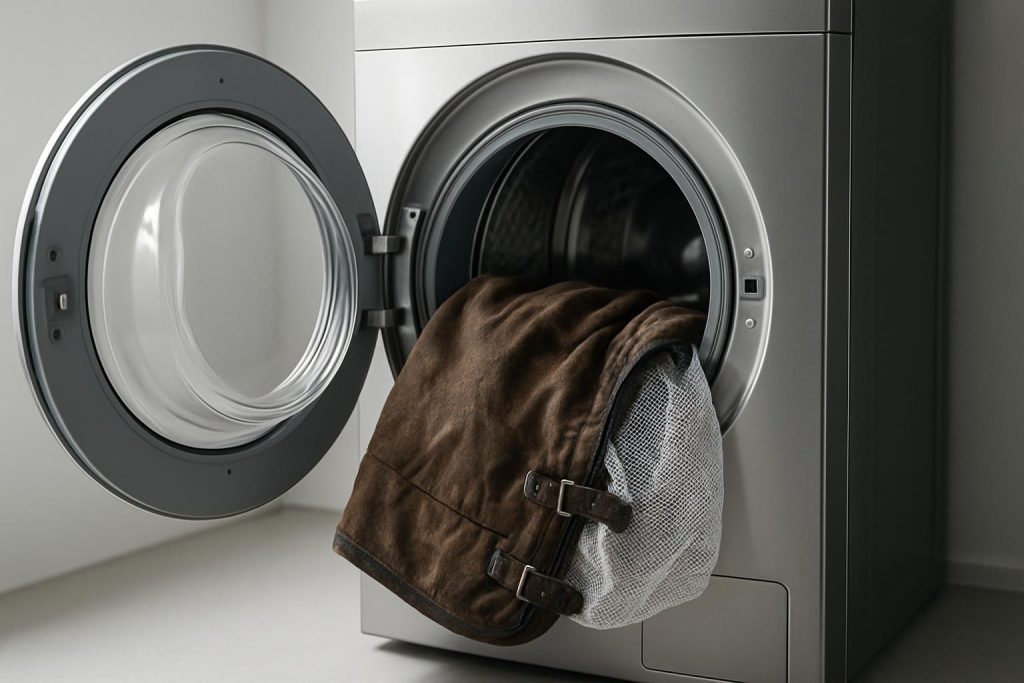
Front-loaders are safer for hardware and straps because there is no central agitator. They also extract more water at high spin speeds. If you prefer a top-loader, choose an impeller or a gentle agitator and secure straps in a mesh bag to avoid snagging. Smooth stainless-steel drums reduce fabric wear.
Spin speed and water removal
High spin speed matters. 1200 to 1300 RPM pulls out more water so rugs dry faster and smell fresher. It also reduces the time rugs hang in your tack room.
Cycles and controls that help
- Bulky or Bedding cycle for heavy, water-logged textiles
- Extra Rinse to clear hair and detergent
- Prewash or Soak for caked mud
- Cold and warm options to protect waterproof coatings
Hair handling and maintenance
Horse hair will not dissolve. Pre-brush or hose off rugs outdoors. Use a lint screen or pet-hair catcher in the drum if you have one. Wipe the door gasket and clean the drain filter regularly. Machines with accessible drain filters make your life easier.
Build and reliability
Look for stainless-steel drums, solid door gaskets, strong suspension for unbalanced loads, and inverter motors for quiet, steady power. These features help when a wet rug shifts mid-spin.
Detergent and temperature
Use a mild, non-biological detergent. Avoid fabric softener. Wash waterproof rugs on cold or warm, not hot. Add an extra rinse to remove residue that can affect breathability and skin comfort.
Space and setup
Measure doorways and your laundry area. Heavy rugs release a lot of water during the first spins, so ensure proper drain and a level floor. A nearby utility sink helps with pre-rinsing and filter cleanup.
The 4 best washing machines for horse rugs in 2026
LG 4.5 cu ft Front Load Washer (WM4000 series)
This LG hits the sweet spot of capacity, gentle drum action, and high extraction. It handles a medium-weight turnout or a heavyweight stable sheet with room to tumble. TurboWash speeds up cleaning without brutal agitation, and the 1300 RPM spin cuts drying time sharply.
Why it helps: The Bedding and Heavy Duty cycles keep water levels and drum motion in check for thick layers. Extra Rinse clears hair and detergent traces that can irritate sensitive skin. The drum is smooth and kind to surcingles and binding.
Best for: Riders with one to two horses who wash a few rugs at a time and want fast, predictable cycles and strong water extraction.
I think: The WM4000 series balances power and fabric care well. I have seen it pull sand and hair out efficiently after a proper pre-rinse, and it stays stable even when the rug shifts during spin.
- Capacity: 4.5 cu ft
- Spin: up to 1300 RPM
- Helpful options: TurboWash, Extra Rinse, Steam for deep hygiene on non-waterproof items
- Maintenance: front drain filter and easy-to-wipe gasket
Use tip: Buckle all straps, place them in a large mesh bag, and choose Bulky or Bedding with Extra Rinse. Wipe the gasket after each rug wash.
Potential downsides: The door gasket collects hair and grit; plan a quick wipe-down. Cycle times can be long if you add prewash and extra rinses.
GE 4.8 cu ft Front Load Washer with UltraFresh Vent (GFW550 series)
GE pairs a larger drum with odor control. The UltraFresh Vent system and Microban-treated components help keep the door boot fresher, which matters when you wash damp rugs and run extra rinses. The 4.8 cu ft capacity gives bulky textiles more room to roll.
Why it helps: Horses mean moisture and organic debris. Keeping the washer interior dry between loads reduces buildup. The sanitize with Oxi option is useful for non-waterproof stable blankets and saddle pads.
Best for: Barns or homes with humid laundry rooms, and riders who rotate multiple rugs and want faster interior drying between cycles.
I think: For a front-loader used often for barn gear, the venting system is more than a convenience. It reduces the housekeeping you need to do after each wash and helps keep the gasket from smelling.
- Capacity: 4.8 cu ft
- Spin: up to 1300 RPM
- Helpful options: UltraFresh Vent, Extra Rinse, Sanitize with Oxi, Bulky Items
- Maintenance: accessible pump filter for hair and grit
Use tip: Run a short rinse and spin cycle first if the rug is still sandy after hosing. Then start Bulky with Extra Rinse.
Potential downsides: The extra features add cost. The door boot still needs an occasional deep clean if you wash very hairy gear.
Samsung 4.5 cu ft Front Load Washer (WF45R6100 series)
Samsung’s 4.5 cu ft model offers solid cleaning power, good stain removal on warm cycles, and high spin at a sensible price point. The Heavy Duty and Bedding cycles handle water-heavy loads without beating up straps and bindings.
Why it helps: The drum pattern keeps water moving through thick textiles, and Self Clean routines reduce odor after muddy loads. Extra High spin gets more water out of turnout sheets and liners.
Best for: Budget-conscious riders who still want a front-loader with high extraction and reliable bulky cycles.
I think: It is consistent and straightforward. With a proper pre-rinse, it cleans turnout sheets well and leaves them damp rather than dripping, which speeds up drying on racks.
- Capacity: 4.5 cu ft
- Spin: up to 1200 RPM
- Helpful options: Bedding, Heavy Duty, Extra Rinse, Self Clean
- Maintenance: drain filter behind a small panel for easy hair removal
Use tip: Keep water temp on cold or warm for waterproof rugs. Add an extra rinse to minimize residue.
Potential downsides: The door seal still traps hair if you skip wipe-downs. Cycle chimes can be loud unless you mute them.
Kenmore 4.2 cu ft Top Load Washer with Deep Fill
A top-loader remains a good option if you prefer a traditional layout. This Kenmore offers Deep Fill for saturated textiles and a Heavy Duty cycle that moves water through bulky layers. It can manage a lightweight turnout or stable sheet when straps are secured.
Why it helps: Deep Fill reduces friction between layers and moves grit out. The soaking options help loosen dried mud before agitation starts.
Best for: Riders who want a simple top-load machine and wash mostly lighter rugs, coolers, and stable sheets.
I think: With a large mesh bag for straps and a balanced load, it handles barn laundry well. It is also easy to wipe out pet hair from a rectangular tub compared to a boot-style gasket.
- Capacity: 4.2 cu ft
- Spin: moderate, typical of top-loaders
- Helpful options: Deep Fill, Soak, Extra Rinse
- Maintenance: no door boot to trap hair; check and clean the inlet screens and drain path regularly
Use tip: Always secure straps in a mesh bag. Choose Deep Fill and Soak for sandy sheets, then run Extra Rinse.
Potential downsides: Central agitators can snag loose straps if not contained. Spin extraction is lower than front-loaders, so drying takes longer.
How I tested and what I looked for
Real barn mess, not lab stains
Rugs were pre-brushed or hosed to remove clumps. I loaded one rug per cycle in 4.5 to 4.8 cu ft drums to avoid imbalance. I checked strap wear, seam stress, odor removal, and residual grit in hems.
Settings that protect waterproofing
I stayed with cold or warm water, mild detergent, and no softener. I used Bulky or Bedding, Extra Rinse, and high spin when available. I watched for drum balance and suspension control during mid-spin shifts.
Care and cleanup workload
I timed filter cleanouts and gasket wiping. Machines that allowed quick access to drain filters and that shed hair readily scored higher.
Quick buying decisions
- If you want the best all-rounder for one heavy or one medium rug per cycle: LG 4.5 cu ft Front Load Washer (WM4000 series)
- If your laundry room is damp and you wash rugs weekly: GE 4.8 cu ft Front Load Washer with UltraFresh Vent (GFW550 series)
- If you want value but still need high spin: Samsung 4.5 cu ft Front Load Washer (WF45R6100 series)
- If you prefer a top-loader and wash lighter sheets: Kenmore 4.2 cu ft Top Load Washer with Deep Fill
Care tips that extend rug life
Prep outside the washer
Hose off mud, brush hair, and close all hardware. Use a large mesh bag for straps and detachable parts. This step reduces clogs and fabric stress.
Load size and balance
Wash one rug at a time in 4.2 to 4.8 cu ft machines. Add a liner or a few towels only if needed to balance spin. Stop the cycle if the machine struggles to balance and redistribute the load.
Rinse well
Always run Extra Rinse. Residual detergent can affect waterproofing and skin comfort.
Spin high, dry smart
Use the highest spin your fabric can handle. Dry rugs on wide racks or lines with good airflow. Avoid direct high heat on waterproof rugs.
Maintain the washer
Clean the drain filter after every rug day. Wipe door gaskets and run a tub clean cycle regularly. Keep the door open to dry the drum.
Conclusion
The right washing machine turns rug care from a chore into a routine. Choose enough capacity to let fabric move, high spin to cut dry time, and easy maintenance for hair and grit. The LG WM4000 series is the most balanced pick for most riders. The GE GFW550 adds ventilation that helps if you wash often. The Samsung WF45R6100 delivers strong performance at a sensible price. The Kenmore top-loader suits lighter sheets and simple workflows. Prep rugs well, rinse generously, and maintain the washer, and you will keep your horse gear clean and lasting longer.
FAQ
Q: What washer capacity do I need for horse rugs?
A: Aim for at least 4.5 cu ft for turnout sheets and medium-weight rugs, and consider 4.8 to 5.0 cu ft for heavier fill rugs.
Q: Is a front-loader or top-loader better for horse rugs?
A: Front-loaders are safer for hardware and extract more water, while top-loaders can work for lighter sheets if you secure straps in a mesh bag.
Q: Which cycles should I use for horse rugs?
A: Use Bulky or Bedding with Extra Rinse, and add Prewash or Soak for caked mud.
Q: How do I protect waterproof coatings when washing?
A: Wash on cold or warm with mild detergent, avoid softener, and always add an extra rinse.
Q: How should I maintain the washer after cleaning rugs?
A: Clean the drain filter after rug days, wipe the door gasket, run a tub clean cycle regularly, and leave the door open to dry.