
We are reader supported. When you purchase through links on our site, we may earn an affiliate commission. Also, as an Amazon affiliate, we earn from qualifying purchases.
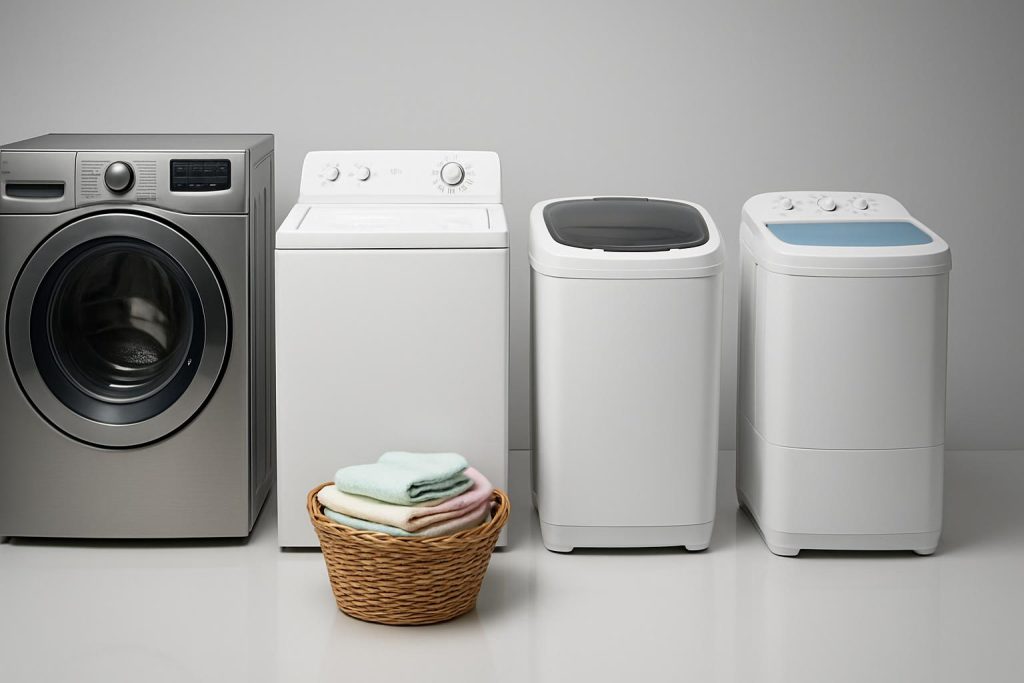
Cloth diapers get your washer truly dirty. They need strong agitation, enough hot water, generous rinses, and a drum that turns over the load well. If you are setting up a diaper routine for a baby now, you want a machine that makes sanitation simple and repeatable, not fussy. I tested routines across front loaders, top loaders, and portables that fit small apartments. Below are four picks that balance cleaning power, fabric care, and day‑to‑day ease in 2026, plus a buying guide that spells out exactly what features matter for diapers and why.
How to choose a washing machine for cloth diapers in 2026
Start with the wash routine you will actually run
A reliable cloth diaper routine has four parts: a short cold prewash to flush out soils, a hot heavy-duty main wash with a proper dose of detergent, a strong spin to expel dirty water, and rinses until the suds are gone. Your washer should make each step easy with quick access to cold prewash, hot heavy-duty, extra rinse, and adjustable spin.
Heat and water control matter
Front loaders with an internal heater keep water consistently hot during the main wash. Top loaders with deep fill and extra rinse drown the load and push soils out. Either path works. Pick the path your space and budget allow.
Agitation and turnover beat gimmicks
Cloth diapers carry dense soils. You need either a front loader with a long, hot, high-tumbling heavy-duty cycle or a top loader with a confident agitator and optional deep fill. Watch for cycles that let you extend wash time and add rinses without hacking the settings every time.
Capacity and load sizing
For full-time diapering, 4 to 5 cubic feet handles two to three days of diapers without overpacking. For apartments, 1.3 to 1.6 cubic feet in a portable is workable if you wash daily or every other day. Aim to fill the drum two thirds to three quarters full when wet. That balance gives the best turnover.
Spin speed and drying
A faster final spin shortens dryer time and helps prevent lingering odors. Front loaders at 1200 to 1300 RPM shine here. Top loaders do fine if they allow a high spin and a deep rinse first.
Maintenance and self-clean cycles
Look for a drum clean or tub clean program. Run it monthly, especially with diaper loads. Keep the door gasket and detergent drawer dry between uses. This keeps smells in check.
The 4 best washing machines for cloth diapers in 2026
LG WM4000HWA 4.5 cu ft Front Load
This front loader hits the sweet spot for diaper care. It has an internal heater, fast 1300 RPM spin, and long heavy-duty cycles that keep water hot. TurboWash can shorten everyday laundry, but for diapers I prefer the standard Heavy Duty with Extra Rinse enabled.
Standout settings: Heavy Duty, Sanitary, Extra Rinse, Prewash, 1300 RPM spin, Tub Clean. The internal heater stabilizes hot water during the main wash.
Why it helps: Consistent heat and strong tumbling break down proteins and fats in diaper soil. The high spin wrings out dirty water so the rinse phase starts clean.
Best for: Families who want a set‑and‑forget diaper cycle with consistent results and fast drying after the wash.
What I noticed: I think the combination of Prewash plus Heavy Duty with Extra Rinse clears out buildup faster than most machines I tried. The load comes out evenly rinsed with little to no suds left. The door and gasket stay cleaner as long as I leave them open after runs.
Setup tips: Turn on Extra Rinse as a default for Heavy Duty. Use the highest spin your diapers can tolerate. Run Tub Clean monthly. Keep the detergent drawer cracked open to dry.
Potential downsides: Cycles can be long when you use full heat and extra rinses. The price is higher than budget front loaders.
GE GTW720BSNWS 4.8 cu ft Top Load with Deep Fill
If you prefer a traditional top loader, this GE gives you deep fill and a robust agitator that moves bulky items well. The Deep Rinse option is reliable for flushing suds, and the Sanitize with Oxi pairing is helpful if you do not have an internal heater.
Standout settings: Deep Fill, Deep Rinse, Heavy Duty, Bulky Items, Speed Wash for the prewash step. Oxi sanitize option for a deeper clean without high internal heat.
Why it helps: Deep Fill increases water volume so diapers roll and churn rather than float. The agitator gives confident turnover, which is critical for dense inserts.
Best for: Users who want clear water level control and easy extra rinses. Great if your hot water comes from the water heater and you want to supplement with Oxi when needed.
What I noticed: I think the Deep Rinse is the hero on this model. After a heavy main wash, one Deep Rinse often clears visible suds on the glass. If I overload, the machine signals imbalance quickly, so sticking to the two thirds full rule matters.
Setup tips: Use Speed Wash on cold for prewash. Then run Heavy Duty on hot with Deep Fill set to High or Auto if the load is lighter. Add Deep Rinse. Keep loads sized so the agitator can grab and roll diapers.
Potential downsides: Spin speed is lower than high‑end front loaders, so drying takes longer. The tub is tall; shorter users may need a reach to grab small inserts.
Panda PAN6320W 1.34 cu ft Portable Compact Washer
This compact washer is a small space favorite. It connects to a standard sink with an included quick adapter and fits in apartments where full‑size washers will not. It offers multiple programs and water level controls that make a diaper routine possible in tight quarters.
Standout settings: Heavy, Normal, Quick, Soak, multiple water levels, Extra Rinse via program adjustments. Delay start if you want to time cycles.
Why it helps: Flexible water level and a longer Heavy program help compensate for the smaller drum. You can run a short Quick prewash, then Heavy on hot water from the faucet, and add an extra rinse at the end.
Best for: Apartment dwellers and renters who need a portable solution that still handles diaper soil with a clear, repeatable process.
What I noticed: I think the Heavy program with the highest water level does the best job on inserts. If I keep the drum no more than half full with wet items, turnover is solid and rinses are effective. Hookup is simple, and moving the unit is easy due to the casters.
Setup tips: Use the sink hot tap to feed the main wash. Run Quick on cold for prewash, then Heavy on hot with the highest water level, and finish with a short rinse program if suds remain. Clean the intake filter monthly.
Potential downsides: Small capacity means more frequent loads. Spin is decent for a portable, but drying still takes time. No internal heater, so you depend on faucet temperature.
COMFEE 1.6 cu ft Portable Washing Machine CLV16N2AMG
For a portable with a bit more room, this 1.6 cu ft model balances size and control. It has clear programs, a child lock, and a stainless steel tub that stands up to frequent diaper cycles.
Standout settings: Heavy, Normal, Quick, Extra Rinse mode, water level selection, delay start, child lock. A soft‑close lid keeps it quiet in small spaces.
Why it helps: The larger portable drum allows better turnover than smaller models. Extra Rinse mode makes it easy to flush suds after a strong main wash.
Best for: Small households who want a portable that can handle two days of diapers without crowding the drum.
What I noticed: I think the Heavy cycle with high water level pulls soils out well if you keep the drum under two thirds full. The pump drains quickly, which makes repeated rinses faster than I expected for a compact unit.
Setup tips: Prewash on Quick with cold. Main wash on Heavy with hot from the faucet and high water level. Add Extra Rinse once. Leave the lid open after use to dry the tub.
Potential downsides: As with most portables, no internal heater. Hoses and faucet adapters need to be tightened well to avoid drips.
Wash routines that work for cloth diapers
Simple routine for front loaders
– Prewash: Cold, 15 to 30 minutes, low to no detergent
– Main wash: Hot Heavy Duty, full recommended heavy‑soil dose of detergent, highest spin
– Extra rinse: Enable Extra Rinse if you see suds after the main wash
– Dry: Line dry covers and shells. Machine dry inserts and prefolds on medium to high as allowed by fabric care tags
Simple routine for top loaders
– Prewash: Cold Speed Wash or similar, no or very little detergent
– Main wash: Hot Heavy Duty, Deep Fill, full heavy‑soil dose of detergent
– Rinse: Deep Rinse once. If suds remain, add one more rinse
– Spin: High spin if the load stays balanced
Simple routine for portables
– Prewash: Quick on cold
– Main wash: Heavy on hot from faucet, highest safe water level, normal detergent dose for heavy soil
– Rinse: Run a short rinse or spin and rinse program once or twice
Detergent and additive basics
– Use a mainstream powder or liquid without fabric softener
– Dose for heavy soil per the label for your load size
– If suds remain after the main wash, reduce dose slightly next time
– Avoid vinegar and essential oils in the washer. They do not improve cleaning and can harm seals
– Oxygen bleach is useful for periodic deep cleaning, especially on machines without a heater
Common mistakes to avoid
– Overpacking the drum. It kills turnover and leaves smells
– Skipping the prewash. You will redeposit soils during the main wash
– Under‑dosing detergent. Heavy soils need the heavy‑soil dose
– Closed door and drawer after use. Leave them open to dry and prevent mildew
– Ignoring the tub clean cycle. Run it monthly
Which type should you pick
If you want the fastest drying and the most consistent hot main wash, a front loader with an internal heater like the LG WM4000HWA is the most complete option. If you want deep water and easy rinses, the GE GTW720BSNWS does the job with straightforward controls. If you live in a small space, Panda PAN6320W and COMFEE 1.6 cu ft both run a reliable two‑step routine with faucet hot water. Pick the machine that fits your space and your routine. Then stick to the same steps every time.
Conclusion
Cloth diapers demand repeatable cleaning power, not complicated tweaks. Choose a washer that gives you hot, heavy agitation, extra rinses, and a confident spin. Keep the drum loaded to the right level and run a short prewash every time. The four machines above have the controls and build to handle diaper soil week after week. Set the routine once, monitor suds, and adjust only the detergent dose as needed. Simple, clean, and consistent.
FAQ
Q: Do I need a sanitize cycle for cloth diapers?
A: No, you do not need a sanitize cycle if your washer has a strong hot main wash, good agitation, and thorough rinses. An internal heater helps, but many parents get clean results with standard hot water plus a heavy‑duty cycle and an extra rinse.
Q: Which is better for diapers, front load or top load?
A: Both can work. Front loaders with internal heaters excel at hot, efficient cleaning, while top loaders with deep fill move water well and handle bulky loads. Choose based on space, budget, and whether you want deep fill or a heater.
Q: How big should the washer be?
A: Aim for 4 to 5 cubic feet for a full‑time stash, or 1.3 to 1.6 cubic feet in a portable for small apartments. Load the drum to about two thirds to three quarters full when wet for best turnover.
Q: What cycle order should I use?
A: Do a cold prewash or quick wash without detergent, then a hot heavy‑duty cycle with the right dose of detergent, high spin, and an extra rinse if needed.
Q: What detergent works best?
A: Use a mainstream powder or liquid without fabric softener. Dose for heavily soiled loads per label, and adjust if you see suds left or smells after drying.