
We are reader supported. When you purchase through links on our site, we may earn an affiliate commission. Also, as an Amazon affiliate, we earn from qualifying purchases.
Gladiolus are tall, elegant, and demanding. The wrong vase makes them slump. The right vase holds their lines, opens every bloom, and keeps water clean. This 2026 guide breaks down what matters, how to choose fast, and the four best vase styles that keep gladiolus upright and impressive. I focus on stability, height, mouth shape, and real setup tips you can use today.
How to Choose a Vase for Gladiolus Fast
Height and proportion
Gladiolus stems are long. Cut stems are often 24–36 inches. Aim for a vase that is 60–70 percent of the stem length. In practice that means 16–24 inches tall. Go taller if you do not want to cut much. Go 16 inches if you plan to trim for a table centerpiece.
Mouth shape and support
A narrow or gathered neck controls heavy stems. A flared lip spreads open blooms without crowding. A plain cylinder works as long as you build a simple tape grid across the top. This one step stops flop.
Base width and weight
Gladiolus are top-heavy. Thick glass or a wide foot matters. Add pebbles or glass gems first if the base feels light. Avoid very narrow bases on busy tables.
Material and cleaning
Glass lets you watch water clarity and stem placement. Ceramic hides stems and water lines and often adds weight. Both work if you can reach inside with a long bottle brush. Tall vases need long tools.
Water capacity and maintenance
Gladiolus drink fast. A taller cylinder holds enough water to last a day. Slim vases need refills more often. Plan to change water every 24–48 hours and re-cut stems slightly each time.
The 4 Best Vases for Gladiolus in 2026
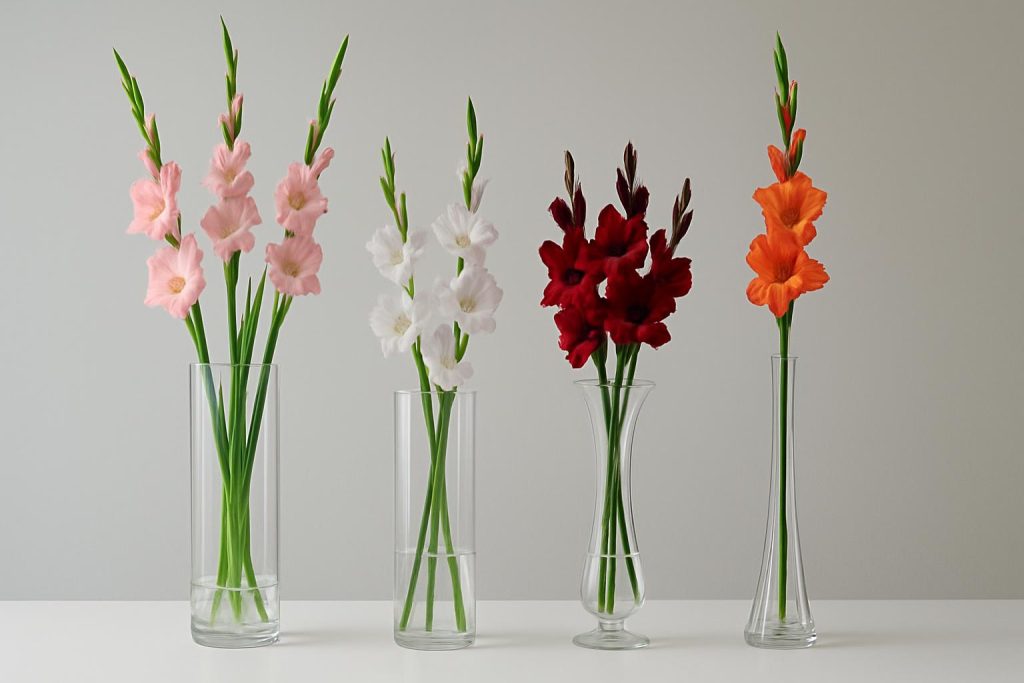
1) CYS EXCEL Tall Glass Cylinder Vase, 20 inch
This tall cylinder is the reliable workhorse. It is simple, sturdy, and tall enough to control long stems without heavy trimming. Thick glass walls and a stable base handle the weight of open blooms. If you want one vase that does most gladiolus jobs, pick a tall cylinder like this.
Why it helps: The height supports the full spike so flowers open in sequence without sagging. The straight sides let you create a quick tape grid across the top. It also holds enough water to reduce daily fuss.
Best for: Entry tables, mantels, kitchen islands, and corners where you want vertical drama. Great when you buy full-length stems and want maximum height.
Potential downsides: It is large and can be awkward to wash in a small sink. If your console table is very narrow, check depth so it does not sit close to the edge. You need a long bottle brush for deep cleaning.
Care and styling tips:
- Add 1–2 inches of glass gems or pebbles for extra stability.
- Lay a 3 by 3 tape grid to keep stems vertical.
- Trim stems so the top third clears the rim by a few inches.
- Change water every 24–48 hours and re-cut each stem by 0.5 inch on a slant.
What I think: I reach for this style first. It is forgiving, stable, and makes tall spikes look clean and professional with minimal effort.
2) Libbey 16-Inch Cylinder Glass Vase
This mid-height cylinder is a versatile pick for everyday use. It fits dining tables and sideboards without blocking faces. It still offers enough height to support most store-bought gladiolus with a modest trim.
Why it helps: The 16-inch height keeps stems upright while staying practical for narrow surfaces. The base is substantial for glass and the mouth is wide enough to work a small grid or a reusable flower frog.
Best for: Dining tables, coffee tables, or desks. Ideal when you want a neat bouquet that does not overwhelm a room.
Potential downsides: If your stems are extra long, you must trim more to avoid top-heavy drift. With a wide mouth, use a grid to prevent splaying.
Care and styling tips:
- Use a 4 by 4 tape grid for clean spacing.
- Place 5–7 stems for a full look without crowding.
- Remove lower leaves that would sit in water to keep it clear.
- Refresh water daily if your room is warm.
What I think: This height is easy to live with. It looks tidy on a table and still gives the height gladiolus need. With a quick grid, it behaves well even for beginners.
3) Royal Imports 16-Inch Trumpet Pilsner Vase
A trumpet or pilsner vase adds a gathered neck and flared rim. That neck naturally corrals stems. The flare gives open blooms room without rubbing, which keeps petals clean. A weighted foot improves balance.
Why it helps: The narrow neck acts like a built-in support system, often making a tape grid optional. It shapes the bouquet so blooms radiate evenly around the rim.
Best for: Formal spaces, entry consoles, and wedding-style displays where symmetry matters.
Potential downsides: The narrowed neck can be harder to clean by hand. You need a long, thin brush. In very busy areas, any taller, footed vase can be bumped, so place it away from edges.
Care and styling tips:
- Load taller spikes at the center, medium around, and shorter near the rim.
- Use 4–6 stems for a structured look with good spacing.
- If the surface is slick, add a thin, clear, non-slip pad under the foot.
- Rotate the vase daily so blooms open evenly on all sides.
What I think: I like this for polished rooms. The neck control reduces fuss, and the flare shows each bloom tier cleanly. It is a good step up from a basic cylinder when you want shape without extra tools.
4) Koyal Wholesale 24-Inch Eiffel Tower Vase
This slim, towering vase is a classic event choice that also works at home for a minimal, sculptural look. The narrow opening holds stems snug. The height lets you keep full-length spikes without heavy cuts.
Why it helps: The narrow throat prevents splay, so even one to three stems stand tall. It lifts blooms well above a table surface, which can look striking on a buffet or console.
Best for: Dramatic single-stem or two-stem displays, alcoves, and corners where you need height and a small footprint.
Potential downsides: The base is small and can tip if left unweighted or placed in high-traffic zones. Water capacity is limited, so refills and changes must be frequent. Not ideal around pets or young kids.
Care and styling tips:
- Weight the base with pebbles or glass marbles first.
- Use 1–3 stems max to avoid crowding the narrow neck.
- Change water daily and re-cut stems slightly to keep uptake strong.
- Place against a wall or mirror for extra visual support and safety.
What I think: I use this when I want height with very few stems. It looks architectural and clean. Just add weight at the base and keep it out of busy pathways.
Gladiolus Setup That Prevents Flop
Prep the stems
Unwrap and remove any foliage that would sit below the water line. This prevents rot and cloudy water. Re-cut each stem on a slant by about 1 inch under running water or in a bowl of water to reduce air intake.
Build a support grid
For cylinders or wide mouths, make a simple grid on the rim with clear floral tape or regular clear tape. Two to three strips each way are enough. Leave gaps large enough to insert stems without scraping.
Set water depth and food
Fill vases about one-third to halfway with fresh, cool water. Add commercial flower food if you have it. Gladiolus drink fast, so plan a refill practice. Top up as needed so stems never sit dry.
Place and adjust
Insert the tallest stems in the center or back. Step shorter stems forward for a tiered view. Turn the vase until the line looks straight from your main viewing angle.
Maintain daily
Change water every 24–48 hours, clean the vase walls quickly with a brush, and re-cut each stem slightly. Keep the arrangement away from heat vents, strong sun, or fruit bowls.
Buying Guide Details
Material choice
Glass is simple, shows water clarity, and suits modern rooms. Ceramic adds weight, hides stems, and works well in traditional settings. For tall spikes, stability matters more than style, so pick the heavier option if your surface is narrow.
Shape and mouth size
Choose a cylinder for flexibility. Choose a trumpet for built-in control and a polished silhouette. Choose an Eiffel Tower style for single or double stems with maximum height in a tight footprint. For most homes, a cylinder and a trumpet cover all needs.
Stability tricks that work
- Weight the base with pebbles or glass gems.
- Use a grid, pin holder, or reusable flower frog for control.
- Keep the vase at least a few inches from the table edge.
- Place tall arrangements against a wall for backup.
Capacity and cleaning
Taller cylinders hold enough water to stretch maintenance to 48 hours. Slim vases need daily attention. Own a long bottle brush and a narrow-neck brush so cleaning is quick. Cleanliness is what keeps blooms opening in order.
Arrangement Ideas That Always Look Good
Pure vertical line
Use a tall cylinder or Eiffel Tower vase. Insert one to three stems only. Keep the line straight. This looks sharp on a mantel or entry console.
Full but controlled
Use a 16-inch cylinder with a 4 by 4 tape grid. Place 5–7 stems. Stagger heights slightly. This reads full without blocking views at the table.
Formal flare
Use a trumpet vase. Seat stems in the neck, then let the flared rim spread open blooms. Aim for even spacing around the rim. This suits living rooms and dining buffets.
Common Mistakes to Avoid
- Vase too short. Stems bend and look heavy. Go taller or trim more.
- Mouth too wide with no grid. Blooms splay and lose structure.
- Base too light. Add pebbles or switch vases.
- Dirty water. Change water every 24–48 hours for best bloom life.
- Too many stems in a narrow neck. Crowding blocks water flow.
Conclusion
Gladiolus need height, control, and stability. A tall cylinder covers most situations and takes a simple tape grid well. A 16-inch cylinder fits daily life and still supports clean lines. A trumpet vase adds built-in control and a refined shape. A 24-inch Eiffel Tower vase is the dramatic pick for minimal stems and maximum height. Use the right height, add weight if needed, keep water fresh, and your gladiolus will stand tall and open cleanly from base to tip. I think these four vase types give beginners and enthusiasts a dependable toolkit for every room and season.
FAQ
Q: What vase height works best for gladiolus?
A: Aim for 16–24 inches. Choose a vase that is about 60–70 percent of your stem length so spikes stay upright without slumping.
Q: How do I keep gladiolus from flopping in a vase?
A: Use a narrow neck or make a tape grid, trim stems, remove lower leaves, add pebbles for weight, and place the vase against a wall if needed.
Q: How many gladiolus stems should I put in each vase type?
A: For a 16-inch cylinder use 5–7 stems, for a trumpet use 4–6, and for a 24-inch Eiffel Tower style use 1–3.
Q: Is glass or ceramic better for gladiolus arrangements?
A: Glass lets you monitor water and stems, while ceramic often adds weight and hides the water line. Both work if the vase is tall and stable.
Q: How often should I change the water for cut gladiolus?
A: Change water every 24–48 hours and re-cut stems slightly each time to keep blooms opening in order.