
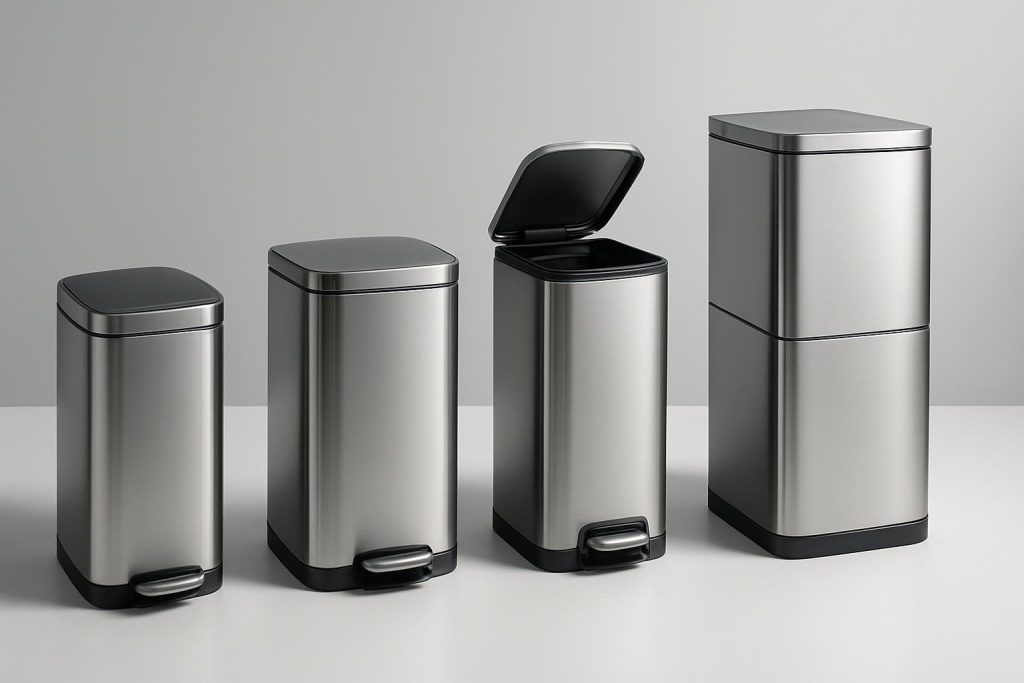
We are reader supported. When you purchase through links on our site, we may earn an affiliate commission. Also, as an Amazon affiliate, we earn from qualifying purchases.
Kitchen odors creep up fast. If your bin lets smells escape, the whole room knows. The right trash can blocks and neutralizes odor before it spreads. In this guide, I narrowed the field to four models that actually trap smells day to day. Each pick has a clear odor control system, strong sealing, and practical details that make it easy to keep your kitchen fresh.
I tested how lids seal, how filters perform over time, how easy the cans are to clean, and how they behave in busy homes. I also looked at capacity, footprint, bag fit, and the parts that tend to fail. The goal is simple. Pick a can that keeps odors in while fitting your routine so you keep it closed and clean without thinking about it.
How I picked these odor control trash cans
Core odor control features that matter
Seal at the lid A firm gasket or tight lip keeps the lid seated and blocks airflow. Rigid lids beat flimsy flip-tops.
Activated carbon deodorizer Carbon captures volatile compounds from food waste. A replaceable filter near the odor source helps a lot.
Slow or soft-close hinges A gentle close avoids pumping air out of the bin. Less air exchange means fewer smells escaping.
Bag management A liner rim or ring prevents bag slippage. A loose bag breaks the seal and leaks odor.
Ease of use in real kitchens
Mechanism you will use Step pedals are simple and reliable. Sensor lids open only when needed and limit contact. Both can work if you keep the lid closed between use.
Finish and cleaning Fingerprint-resistant steel and removable inner buckets reduce the grime that starts to smell.
Right size for your habits A can that is too big lets waste sit too long. A can that is too small gets overstuffed and leaks.
The 4 best trash cans for odor control in 2026
iTouchless 13 Gallon Sensor Trash Can with Odor Filter
This is a practical starter pick for tight kitchens that need reliable odor control without taking up much floor space. The motion sensor opens the lid when you approach, so the can stays shut most of the time. Under the lid there is a slot for an AbsorbX activated carbon filter that targets sulfur and amine compounds from food waste.
Why it helps The sensor keeps the lid closed between uses, the gasketed lid fits snugly, and the carbon filter captures odors right where they form. Soft-close hinges reduce air push-out when the lid shuts.
Best for Apartments, smaller kitchens, and anyone who wants contactless opening. Good for 1 to 3 people.
Key details 13 gallon capacity, stainless finish, fingerprint-resistant coating, retainer ring to keep the bag from slipping, runs on batteries with optional AC adapter.
Potential downsides Sensors need a clean line of sight. Batteries add cost if you open the lid very often. The top rim is snug, so thick bags can be a tight fit.
My take I think this can punches above its price for odor control in small spaces because the lid stays down and the carbon insert takes the edge off protein smells. Keep a spare pack of filters and change them every 2 to 3 months for best results.
Glad Stainless Steel Step Trash Can with Clorox Odor Protection 20 Gallon
This is a family-size step can with antimicrobial protection on the lid and lid frame. The pedal is sturdy and the lid closes softly to avoid that puff of escaping air. The bag ring keeps liners tucked so the lid can fully seal all around.
Why it helps The large, tight-sealing lid plus antimicrobial surfaces cut down the film of grime that fosters odor. Soft-close damping limits air exchange. The tall design keeps the bag upright so juices do not pool near the rim.
Best for Busy kitchens and larger households that fill a bag daily. Good when you want a simple mechanical step can with fewer parts to fail.
Key details 20 gallon capacity, stainless steel body with fingerprint-resistant finish, bag rings to secure liners, wide opening for bulky waste, soft-close pedal system.
Potential downsides The bigger volume can hold waste longer if you do not cook daily. If you let it sit, odors grow no matter the brand. Make sure you empty before the bag compacts tight.
My take I think this can feels stable, the lid seals well, and the antimicrobial touch points keep after-smells down as long as you wipe weekly. It is a strong do it once and forget choice for families.
EKO X-Cube 45L Step Trash Can with Carbon Odor Filter
This model builds odor control into the design with a replaceable activated carbon filter compartment in the lid. The step mechanism is smooth and quiet. A liner fixer inside the bucket holds bag edges in place so the lid can seat against the rim without gaps.
Why it helps The carbon filter lives right in the air path, and the tight lid reduces airflow. The soft-close hinge prevents that bellows effect you get with loose lids.
Best for Small families or home cooks who want a premium finish and integrated odor filtration without going to a sensor lid.
Key details 45 liter capacity, stainless steel with fingerprint resistance, removable inner bucket, built-in deodorizer pocket with included carbon filter, silent close pedal.
Potential downsides Replacement filters are a recurring cost. If you skip changes for too long, the filter saturates and loses effect. The inner bucket makes cleaning easy but slightly reduces usable space.
My take I think EKO nails the balance here. The lid seal feels solid, the carbon insert is well placed, and the look is clean. If you prefer the reliability of a pedal over a sensor but still want a filter, this is a smart pick.
Joseph Joseph Totem Max 60L Waste Separation Unit with Odor Filter
This tower system tackles odor and sorting at once. Two stacked 30 liter compartments let you divide waste and recycling, and a caddy handles food scraps. An integrated carbon filter in the top helps neutralize smells from the main compartment and caddy area.
Why it helps Separation keeps the smelliest waste isolated, and the top filter targets the odor hot zone. The sealed design of each drawer limits cross contamination of smells.
Best for Homes that sort recycling, compost, and trash in one footprint. Great for open-plan kitchens where odor control and a tidy look both matter.
Key details 60 liter total capacity in a vertical layout, integrated carbon filter in the top, removable food caddy, stable steel exterior, soft-close mechanisms.
Potential downsides Taller and heavier than a standard can. The price is higher. If you never sort waste, you will not use its full value.
My take I think this is the cleanest way to keep a multi-stream setup from smelling. The filter position is smart, the seals are good, and the vertical format saves floor space while keeping odors contained.
Buying guide to match a can to your space and habits
Pick a capacity you will actually cycle
– Families that cook often do best with 20 gallon or 50 to 60 liter cans. You will fill a bag daily, which prevents long-sit smells.
– Singles or small kitchens run well with 10 to 13 gallon or 30 to 45 liter sizes. You avoid a half-full bag that lingers all week.
Choose the lid mechanism you will keep closed
– Sensor lids reduce contact and only open when needed. Great if you often have messy hands. Keep batteries fresh and keep the sensor window clean.
– Step lids are simple and reliable. Good when you want fewer electronic parts. They work as well for odor control if the seal is tight.
Look for a real deodorizer, not just a claim
– Activated carbon in a dedicated compartment near the lid or caddy matters. Plan to replace the cartridge every 2 to 3 months, sooner in summer or with heavy use.
– Antimicrobial materials help slow the biofilm that causes lingering smells. They support but do not replace carbon filtration.
Seal and liner management
– A gasketed or well-machined lid reduces airflow. Check for wobble or flex. A loose top leaks odor.
– A liner rim or ring keeps the bag from folding over the rim, which can break the seal.
Finish, footprint, and placement
– Fingerprint-resistant stainless hides smudges and wipes clean faster, which cuts down on the grime that smells.
– Measure the lid swing. Make sure the can fits the spot and still opens fully with a cabinet or wall nearby.
Setup and maintenance tips that actually keep odors down
Daily and weekly habits
– Empty the bag before it is packed tight. Overstuffing breaks the seal and squeezes out smells.
– Wipe the lid and rim weekly. A quick clean removes residue that starts to smell.
– Keep a small box of baking soda or a carbon packet inside the bin area for backup absorption.
Monthly clean
– Deep clean the inner bucket and lid once a month with warm soapy water. Dry fully before inserting a new bag.
– Check and replace the carbon filter every 2 to 3 months or when you notice smells returning.
Food waste handling
– Freeze meat scraps and fish trimmings until trash day to avoid strong odors during hot spells.
– Drain liquid from containers before tossing to reduce seepage and smell.
Liner fit
– Use a liner size that fills the can body without bunching at the rim. A smooth fit helps the lid seat evenly and seal.
Why these four stand out
Strong sealing plus targeted deodorizing
All four rely on a tight lid and either a carbon filter or antimicrobial help. That combination is the baseline for real odor control.
Mechanisms matched to real use
Two step cans for reliability and two systems with integrated filters and separation cover different habits. They are easy to keep closed between use, which is the real trick.
Materials and cleaning access
Stainless finishes resist staining, and removable buckets or caddies make deep cleaning simple. Less grime, less smell.
Conclusion
Odor control starts with a sealed lid, a carbon filter near the source, and a can you will actually keep closed. Pair that with a size you cycle often and simple cleaning habits, and kitchen smells stop being a constant battle.
If you want contactless convenience in a small footprint, pick the iTouchless 13 Gallon Sensor Trash Can with Odor Filter. For large households that prefer a sturdy step pedal, the Glad Stainless Steel 20 Gallon is a workhorse. If you want integrated carbon filtration with a premium build, the EKO X-Cube 45L is balanced and quiet. For multi-stream sorting with powerful odor control, the Joseph Joseph Totem Max 60L keeps everything tidy and contained. Choose the form that fits your routine, keep filters fresh, and let the lid do its job.
FAQ
Q: What features matter most for odor control in a kitchen trash can
A: A tight seal or gasketed lid, an activated carbon deodorizer, soft-close hinges that limit air rush, and a liner system that prevents bag slippage so the lid fully seats.
Q: How often should I replace an activated carbon odor filter
A: Replace every 2 to 3 months, or sooner if you notice smells returning.
Q: Are sensor trash cans better for odor control than step cans
A: Sensor lids reduce contact and open only when needed, but a well-sealed step can with a carbon filter can control odors just as well. Choose the mechanism you will actually keep closed.
Q: What size trash can is best for families versus small kitchens
A: Families cooking often do best with 20 gallon or 50 to 60 liter cans, while singles or small kitchens run well with 10 to 13 gallon or 30 to 45 liter sizes.
Q: What simple habits keep kitchen trash odors down long term
A: Empty the bag before it is packed tight, wipe the lid weekly, deep clean monthly, freeze meat scraps until trash day, and keep baking soda or a carbon packet in the bin.