
We are reader supported. When you purchase through links on our site, we may earn an affiliate commission. Also, as an Amazon affiliate, we earn from qualifying purchases.
Spin mops save time, keep hands out of dirty water, and make floor care easier for small apartments and busy homes. The right set should wring efficiently, glide under furniture, and stand up to weekly use. This guide covers what to look for and reviews four reliable picks that stay practical year after year. I focus on real cleaning impact, not gimmicks, and keep every recommendation beginner friendly.
How I chose these spin mops
What matters for everyday cleaning
Mop head fibers: Dense microfiber with edge-to-edge coverage lifts fine dust and grabs hair without pushing debris around.
Wringer design: Smooth pedal or pump action wrings fast without splashing. Fewer moving parts usually means fewer problems.
Water separation: Two-tank setups keep clean and dirty water apart for better hygiene on large or grimy jobs.
Handle durability: Stainless or heavy-duty aluminum resists bending. A solid joint between handle and head matters more than handle length alone.
Maneuverability: A low-profile triangular head reaches corners and under toe-kicks. A swivel joint makes edging along baseboards simple.
Refill availability: Common-sized refills lower long-term costs and make upkeep painless.
Best spin mops in 2026
O-Cedar EasyWring Microfiber Spin Mop and Bucket
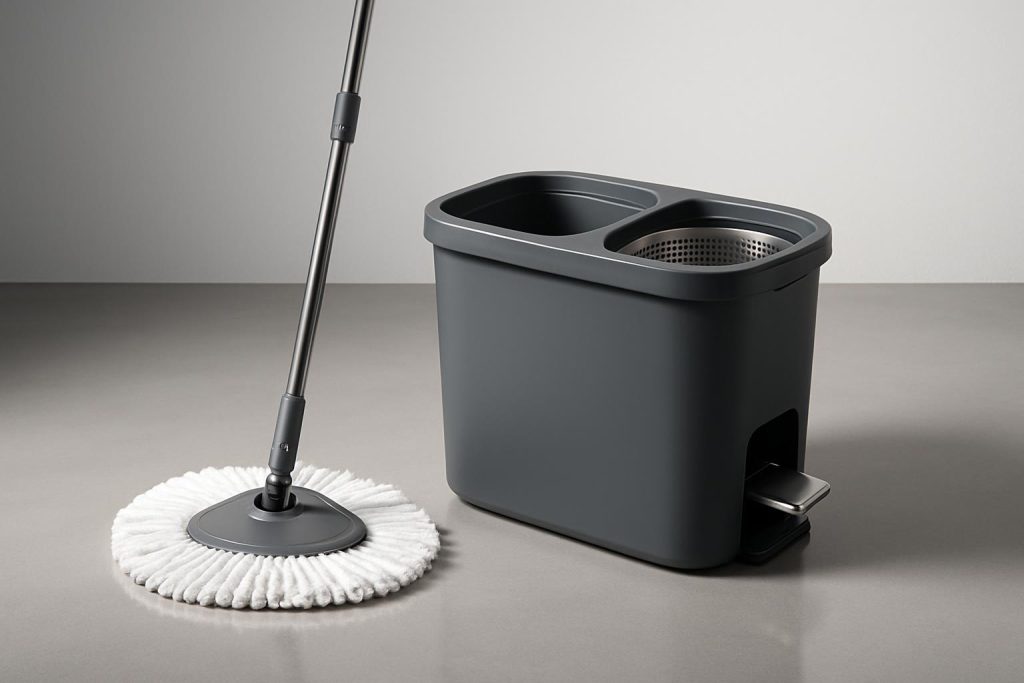
This classic set is the most balanced option for most homes. It keeps the price sensible while delivering reliable wringing and versatile microfiber that works on tile, vinyl, and sealed wood.
Why it helps: The foot pedal wrings quickly with good control, so you can dial in moisture for delicate floors. The triangular head reaches into corners and along trim where dust collects. The bucket feels stable and resists tipping when you pump the pedal.
Best for: Small to medium spaces, weekly maintenance, pet hair, and quick kitchen resets.
Potential downsides: Single-tank water means you should dump and refresh more often during deep cleans. The plastic pedal can squeak if you overpump or do not rinse out grit.
Key specs: Foot-pedal wringer, triangular microfiber head, telescoping handle, single-tank bucket.
Practical use and setup
Snap the head on firmly and set the handle to a length that lets your elbow stay slightly bent. For sticky spills, pre-spray the area, then mop with a slightly damp head. I think the sweet spot for wringing is two to four pedal presses for sealed wood and five to seven for tile and grout.
Pro tip: Keep a spare head on hand. Rotate after greasy jobs so fibers last longer.
O-Cedar EasyWring RinseClean Microfiber Spin Mop and Bucket
This upgrade keeps clean and dirty water separated. If you mop large areas or want the most hygienic routine, the two-tank design is worth it.
Why it helps: A built-in divider keeps clean water flowing to the mop while dirty water drains away. Floors stay cleaner longer during deep sessions because you are not re-depositing grime. The familiar pedal and triangular head keep the learning curve low.
Best for: Homes with kids and pets, high-traffic entryways, and anyone sensitive to cross-contamination.
Potential downsides: The bucket is bulkier and a bit heavier when full. Rinsing both sides after each use takes an extra minute.
Key specs: Foot-pedal wringer, dual-tank bucket, triangular microfiber head, telescoping handle.
Practical use and setup
Fill the clean chamber with warm water and your preferred neutral floor solution. Dip, wring, and refresh when the dirty chamber approaches full. I think this set pays off most in open-plan living rooms or kitchens where you need consistent, clean water across a big footprint.
Pro tip: Mark the clean side with a small piece of tape if you store the bucket nested or disassembled. It prevents mix-ups during fast setups.
Mopnado Deluxe Stainless Steel Rolling Spin Mop
Mopnado focuses on durability and mobility. If you value stainless steel components and a bucket that rolls from room to room, this is a strong pick.
Why it helps: The stainless steel wringer resists cracking and flex better than plastic. Integrated wheels and a pull handle spare your back on larger areas. The microfiber heads are thick and absorbent, and the handle extends long for tall users.
Best for: Bigger homes, garages with sealed floors, and users who prefer a rolling bucket to carrying weight.
Potential downsides: The bucket footprint is larger than most. The rolling design needs smooth thresholds to avoid bumps and splashes. Replacement heads can cost a bit more than entry-level sets.
Key specs: Stainless steel wringer, rolling bucket with wheels and pull handle, long telescoping handle, round microfiber heads.
Practical use and setup
Extend the handle high enough to keep your back neutral. Roll the bucket on the dry path and mop your way out to avoid tracks. I think the rugged wringer feels reassuring for heavy, grimy jobs like post-renovation dust or seasonal deep cleans.
Pro tip: Store the bucket dry with the lid open so the steel wringer does not trap moisture.
HAPINNEX Spin Mop Wringer Bucket Set
This set emphasizes spill control and light weight. The balanced carry handle keeps water steadier when moving from sink to floor.
Why it helps: The self-balancing bucket design reduces slosh. The wringer action is smooth and easy for beginners. The microfiber heads cover a wide radius, which speeds up maintenance passes.
Best for: Small spaces, upstairs apartments, and anyone who wants a straightforward kit that is easy to carry and store.
Potential downsides: The plastic components are lighter than premium sets. The handle is comfortable but not as rigid as stainless options, so avoid over-tightening the joints.
Key specs: Lightweight bucket with balance handle, smooth wringer, microfiber refills, compact storage footprint.
Practical use and setup
Use warm water and a mild neutral cleaner. Wring a little longer before moving to wood or laminate. I think this is a sensible pick for first-time spin mop users who want minimal setup and a gentle learning curve.
Pro tip: Keep a drying towel under the bucket when learning wringing rhythm to catch drips, then remove once you have your routine.
Buyer guide: choose the right spin mop
Match the head to your floors
– Microfiber is safe on sealed wood, vinyl, tile, and laminate.
– Triangular or low-profile heads reach corners and around table legs more easily.
– Round heads can feel smoother on open areas but may need extra edge passes along baseboards.
Pick the wringer style you will use consistently
– Pedal wringers keep hands free and control moisture well.
– Stainless wringers add durability if you mop often or tackle gritty messes.
– Smooth bearings reduce splashing. If noise bothers you, choose a set known for a quiet pedal or pump.
Decide on single-tank or dual-tank
– Single-tank is lighter and simpler for quick cleaning.
– Dual-tank keeps clean and dirty water apart for higher hygiene on large jobs.
Check handle build and length
– Stainless or heavy aluminum feels sturdier. Look for a secure head joint with minimal wobble.
– A handle that reaches mid-chest helps posture and reduces wrist strain.
Confirm refill access and cost
– Choose a brand with widely available microfiber refills.
– Keep two or three heads in rotation so you always have a dry one ready.
Storage and footprint
– If space is tight, a compact bucket with nested wringer saves room.
– Rolling buckets need floor space and a clear path. Compact buckets suit small laundry areas.
How to get the best results
Set a simple routine
– Daily or every other day: quick dry sweep or vacuum.
– Weekly: spin mop with warm water and a neutral cleaner.
– Monthly: focus on grout lines and edges behind doors and under appliances.
Dial in moisture
– For sealed wood and laminate: extra wringing reduces swelling and streaks.
– For tile and grout: slightly wetter passes lift clingy dirt, then finish with a drier pass.
Work in sections
– Start farthest from the exit and mop toward the door.
– Rinse and wring after each small area to keep fibers fresh.
– Replace water when it looks cloudy or after tackling greasy zones.
Care and maintenance
– Rinse the head thoroughly after each session and air-dry.
– Machine wash microfiber heads on cold without fabric softener. Air-dry to protect fibers.
– Empty the bucket fully and let it dry. Wipe the wringer to prevent grit buildup.
– Inspect handle joints monthly and snug them if they loosen.
Which one should you choose
If you want a safe pick for most homes
Choose the O-Cedar EasyWring. It balances cost, control, and cleaning power with minimal learning curve.
If hygiene is your top priority
Choose the O-Cedar RinseClean. The two-tank design keeps floors cleaner across large spaces and heavy messes.
If you need durability and mobility
Choose Mopnado. The stainless wringer and rolling bucket suit bigger jobs and frequent cleaning.
If you prefer light weight and easy carry
Choose HAPINNEX. The self-balancing bucket reduces slosh and fits small storage spaces.
Conclusion
Spin mops win when they wring fast, move easily, and last under routine stress. Focus on fiber quality, wringer smoothness, and a handle that feels secure. Keep one or two spare heads ready, refresh your water during deep cleans, and store the bucket bone dry. With those habits, any of the four sets above can deliver clean, streak-free floors with less effort week after week.
FAQ
Q: Which spin mop is the best overall for most homes
A: The O-Cedar EasyWring is the most balanced choice thanks to its reliable wringer, triangular microfiber head, and easy setup.
Q: When is a dual-tank spin mop worth it
A: A dual-tank system is worth it if you clean large areas or want better hygiene because clean and dirty water stay separate throughout the job.
Q: How do I prevent streaks on sealed wood or laminate
A: Wring the mop more to keep moisture low, use a neutral cleaner, and finish with a dry pass on high-traffic paths.
Q: How many microfiber heads should I keep
A: Keep two or three heads in rotation so one can air-dry while another is ready for the next session.
Q: What is the simplest way to maintain a spin mop set
A: Rinse the head after each use, machine wash on cold without fabric softener, air-dry, empty the bucket fully, and let all parts dry before storage.