
We are reader supported. When you purchase through links on our site, we may earn an affiliate commission. Also, as an Amazon affiliate, we earn from qualifying purchases.
Indoor water fountains can turn a room into a calmer space fast. The right model creates steady white noise, masks street sounds, and adds gentle humidity. The wrong model gurgles, splashes, or hums from the pump. This guide shows how to pick a fountain for sound quality first, then reviews four models that deliver clean, rich water sound in small and medium rooms. I include setup and care tips from a home care and organizing perspective so the fountain stays quiet, clean, and easy to live with.
What Makes an Indoor Fountain Sound Good
Flow control is non‑negotiable
Look for a pump with an adjustable slider or a fountain body with a valve. Flow control lets you tune loudness and tone to the room. Lower flow softens treble splashes. Higher flow raises volume and bass presence.
Drop height and basin design shape the tone
Small step drops create a soft, even trickle. Taller drop points add brighter notes and can get splashy on hard surfaces. A deeper, wider lower basin absorbs impact and removes harshness. Shallow or narrow basins sound sharper.
Materials change timbre
Resin gives a mellow sound and is lightweight. Slate and ceramic add body and warmth but can emphasize drips if the fall is tall. Metal channels amplify higher frequencies. Mixes of slate and copper sound balanced when tuned well.
Pump noise must be masked by water
A good fountain keeps the pump submerged and decoupled from the shell. Rubber feet, foam pads, and proper water level reduce hum. If you only hear the pump at low flow, the design is not ideal for sound.
Placement matters
Hard surfaces reflect splash and treble. A soft mat or felt pads under the base reduce vibration. Corners boost low frequencies and overall volume. Desks and nightstands need gentler flow and larger basins to avoid splash.
Quick Picks Overview
- HoMedics 3‑Tier Tabletop Fountain — Best beginner pick for soft, even trickle and easy care.
- Alpine Corporation 3‑Tier Rock Tabletop with LED — Best for adjustable loudness and natural, balanced tone.
- Kenroy Home Spillway Slate and Copper Table Fountain — Best for warm, full sound with modern look.
- Sunnydaze 6‑Inch Ceramic Tabletop Fountain — Best compact option for desks and nightstands.
The 4 Best Sounding Indoor Water Fountains in 2026
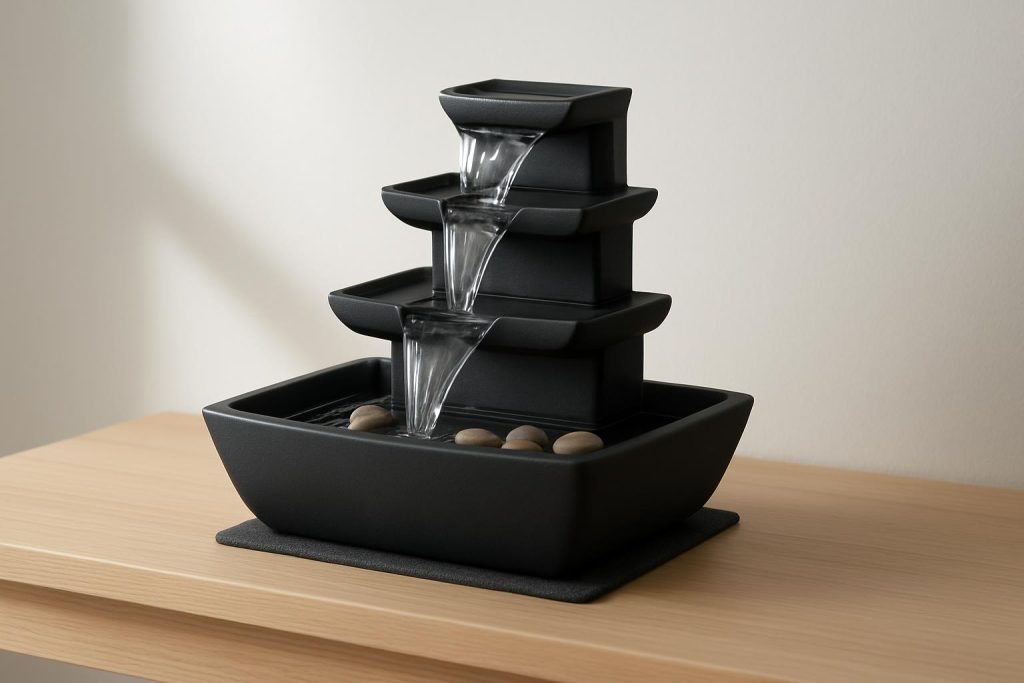
1) HoMedics 3‑Tier Tabletop Relaxation Fountain
This compact resin fountain is a classic for a reason. Its three small steps spread water into thin sheets that land on a broad lower basin. That shapes a soft, continuous trickle with low splash. The pump includes simple flow control.
Sound profile: Gentle white noise with minimal drips. Medium to low volume. At higher flow, it adds a pleasant babble without sharp peaks. The large basin keeps the tone mellow.
Setup notes: Rinse the parts to remove dust. Seat the pump fully on rubber feet. Make sure tubing is straight with no kinks. Fill until the pump is well covered. Adjust flow so the sheets of water cling to the steps rather than breaking into drops.
Maintenance: Top off water every 2 to 3 days. Use distilled water if possible to reduce mineral scale. Clean the pump intake every 2 weeks. For light scale, soak the pump in a 1 to 3 vinegar and water mix for 15 minutes, then rinse.
Why it helps: Predictable, soothing sound that masks HVAC and hallway noise without drawing attention. Easy tuning and low splash suit small rooms.
Best for: Bedrooms, home offices, therapy rooms, anyone sensitive to pump hum.
Potential downsides: Resin shell can show water spots over time if you use hard tap water. At the very lowest flow, you may hear the pump if the water level gets low. Keep it topped off.
I think this is the safest first fountain for sound. It hides the pump well and the sheets of water stay smooth once you find the right flow setting.
2) Alpine Corporation 3‑Tier Rock Tabletop Fountain with LED Lights
Alpine’s tiered rock design uses layered ledges and a deep catch basin. The molded stone texture adds visual depth, and the LED makes the water path visible in low light. With the pump slider, you can tune from soft to moderately loud.
Sound profile: Balanced and natural. At medium flow, you get a mix of sheet water and short drips that form a steady mask. At higher flow, the tone thickens without harsh splatter, thanks to the basin depth.
Setup notes: Level the base. If water spits off an edge, reduce the flow slightly or nudge a ledge so water clings. Add a thin round of foam shelf liner under the fountain to cut vibration if you place it on a hard console.
Maintenance: Rinse debris from the ledges weekly. Wipe the basin rim to stop mineral crust. Monthly, pull the pump cover and clean the impeller cavity with a soft brush.
Why it helps: Adjustable loudness makes it flexible for open living rooms or small dens. The deep basin keeps higher flow settings listenable.
Best for: Living rooms, entry consoles, open studios needing extra volume without a tall floor fountain.
Potential downsides: At max flow, a little splash may escape if the unit is off level. Take a minute to fine tune placement and flow.
I think this model gives the most range for the size. You can dial it down for a desk or open it up to mask TV or kitchen hum across a larger space.
3) Kenroy Home Spillway Slate and Copper Table Fountain
This design pulls water across a copper trough and down a natural slate wall into a collection basin. The mix of slate and metal adds warmth to the tone while the vertical plane spreads the sound evenly.
Sound profile: Full and warm. The copper channel softens the initial fall. The slate wall adds a soft glide that removes sharp drip notes. Volume sits at medium with good presence in larger rooms.
Setup notes: Slate is heavy. Place the fountain on a stable, level surface. Use felt pads or a cork mat to isolate vibration. Adjust the pump so water sheets on the slate without breaking into streams. If you hear bright drips, raise the water level a little.
Maintenance: Wipe the slate face with a damp microfiber cloth weekly to stop scale lines. Dry the copper channel after long runs to prevent patina marks if you prefer a clean look.
Why it helps: Warm, even noise that blends into a room. Great if you dislike bright or tinkly sounds.
Best for: Living rooms, reading nooks, workspaces that need a calm focus sound.
Potential downsides: Heavier than resin. If you place it on a glass table, use a thick pad to avoid resonance.
I think this is the best mid‑size option for tone quality. The slate face removes harshness and the look fits modern or rustic rooms easily.
4) Sunnydaze 6‑Inch Ceramic Tabletop Fountain
This small ceramic piece is ideal for close‑range use. A central bubbler lifts water that rolls over a rounded bowl back into a deep reservoir. The ceramic body gives a smooth, rounded tone at modest volume.
Sound profile: Soft burble with very low splash. Great near a computer or bedside. At higher flow, it adds a little sparkle but stays controlled because the lip rolls water inward.
Setup notes: Center the pump so vibration does not touch the bowl. Fill to the marked line or slightly above to submerge the pump. If you hear drips, tilt the bowl a millimeter to steer water along the glaze rather than over an edge.
Maintenance: Because the bowl is small, top off daily. Use distilled water to prevent white scale on the glaze. Clean every 2 weeks with mild dish soap and a soft cloth.
Why it helps: Delivers close, calming sound without taking desk space. Easy to move and simple to clean.
Best for: Desks, nightstands, small shelves, renters who want a portable option.
Potential downsides: Limited maximum volume. Not ideal for masking noise across a large room.
I think this one is the easiest daily companion. It stays quiet, looks tidy, and the tone is gentle enough for long work sessions.
How to Choose by Room and Use
Bedroom
Pick soft, even tone, low splash, and a deep basin. Keep flow low. Place the fountain two to six feet from the bed, not at ear level. HoMedics 3‑Tier and Sunnydaze Ceramic work best here.
Home office
Use a compact model with clean white noise and minimal pump hum. Foam underlay helps on hard desks. HoMedics 3‑Tier or Sunnydaze Ceramic are ideal.
Living room
Choose adjustable flow and a design that can get a bit louder without splash. Alpine 3‑Tier Rock and Kenroy Spillway fit wider spaces.
Open plan or entry
Pick a model with a deep basin to control splash at medium to higher flow. Alpine 3‑Tier Rock gives flexible output for these spots.
Setup and Tuning Tips for Better Sound
- Level the base before filling. A tilt makes water break into sharp drips.
- Start at medium flow, then lower until the water clings to surfaces and the pump is fully masked.
- Add two to three smooth river stones in the basin to soften impact if the tone is too bright.
- Place a thin foam or cork mat under the fountain to cut vibration, especially on wood, glass, or metal furniture.
- Keep water level above the pump intake. Low water exposes pump hum and adds bubbles.
Care and Cleaning Schedule
- Daily or every other day: Top off with distilled water to slow mineral scale and reduce cleaning time.
- Weekly: Wipe ledges and basin rim with a damp microfiber cloth to remove film before it hardens.
- Biweekly: Clean the pump intake and impeller. Soak in a mild vinegar solution if you see scale, then rinse well.
- Monthly: Empty and rinse the fountain body. Inspect tubing for kinks and algae. Replace pre‑filter foam if the pump includes one.
From a home care view, a few minutes per week prevents noise issues. Most pump hum and splash problems come from low water level, clogged intake, or a tilted fountain.
Buying Guide Essentials
Key specs to check
- Adjustable flow control on the pump or body
- Deep lower basin that catches falls cleanly
- Rubber feet or isolation pads under the pump
- Simple tubing path with no sharp bends
- Materials that match your sound goal: resin for mellow, slate or ceramic for warmth
Common pitfalls to avoid
- Tiny catch basins that cause sharp drip notes at normal flow
- Pumps that sit against the shell and transmit hum
- Tall drops without a way to lower flow
- Hard, reflective surfaces under the fountain with no pad
Conclusion
For the most dependable soft sound, pick the HoMedics 3‑Tier. For more range and room coverage, choose the Alpine 3‑Tier Rock. For warm, full tone with a designer look, go with the Kenroy Spillway. For compact desks and nightstands, the Sunnydaze Ceramic is the winner. Set the fountain level, tune flow so water clings to surfaces, and keep the pump covered. Stay on a light cleaning schedule and you will get clean, steady sound day after day.
FAQ
Q: How do I make my indoor fountain sound softer and less splashy
A: Start at medium flow, then lower until the water clings to surfaces and the pump is fully masked. Add two to three smooth river stones in the basin to soften impact if the tone is too bright. Place a thin foam or cork mat under the fountain to cut vibration.
Q: What is the best indoor fountain for a bedroom
A: Pick soft, even tone, low splash, and a deep basin. HoMedics 3‑Tier and Sunnydaze Ceramic work best here.
Q: How often should I clean an indoor water fountain pump
A: Biweekly, clean the pump intake and impeller. Soak in a mild vinegar solution if you see scale, then rinse well.
Q: Why does my fountain hum even when the water sounds good
A: The pump may touch the shell or the base may vibrate on a hard surface. Seat the pump on rubber feet, ensure it is fully submerged, and place a thin foam or cork mat under the fountain.
Q: Which fountain can cover a larger living room space
A: Alpine 3‑Tier Rock and Kenroy Spillway fit wider spaces because they keep balance and presence at medium to higher flow.