
We are reader supported. When you purchase through links on our site, we may earn an affiliate commission. Also, as an Amazon affiliate, we earn from qualifying purchases.
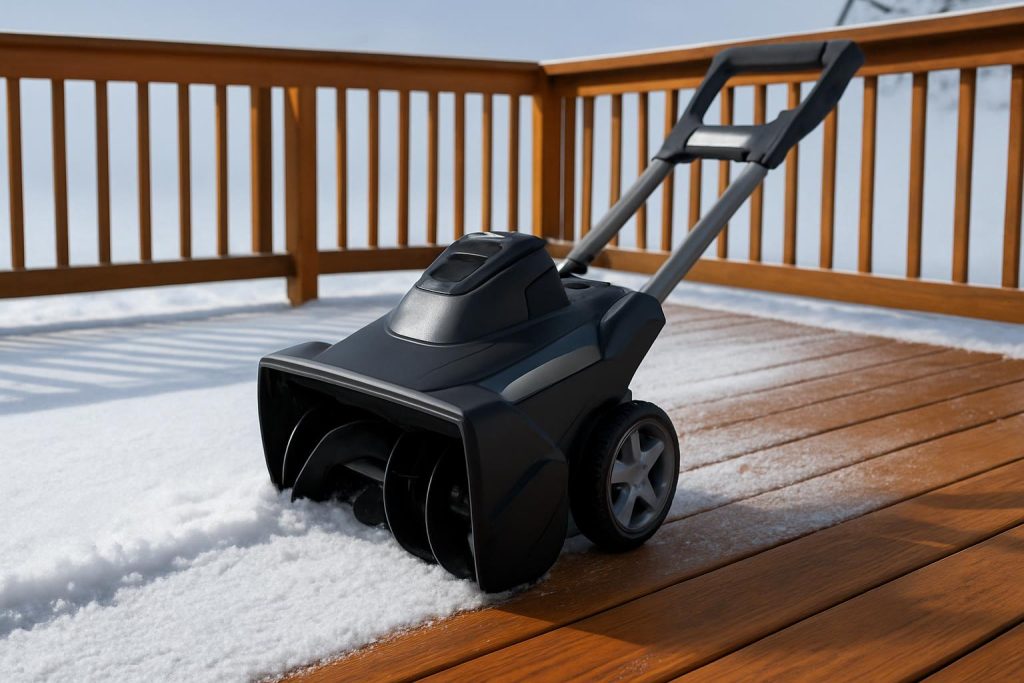
Wood decks need special care in winter. Steel augers, heavy machines, and sloppy technique can gouge boards, pop fasteners, and strip finish. The right snow blower changes that. Choose a light, single-stage unit with rubber paddles and a gentle scraper bar, then use it with a soft touch. This guide covers how to choose safely, four proven machines that respect wood, and the setup and technique that keep your deck looking new.
How to choose a snow blower for a wood deck
Weight and footprint come first
Lower weight puts less stress on boards and joists. Under 60 lb is a good target. A compact deck-friendly footprint also lets you pivot without scraping rail posts or stairs.
Rubber auger paddles protect surfaces
Single-stage machines with rubber paddles are the safest style for wood. Rubber contacts the surface and squeegees snow without chiseling. A replaceable plastic or composite scraper bar is a plus. Avoid steel augers and skid shoes on decks.
Battery power reduces risk on wood
Battery units run clean, start instantly, and have no fuel drips or exhaust. Cords are trip hazards on stairs, so cordless beats corded on most decks. Gas can work but needs added care to avoid stains and vibration wear.
Clearing width and intake height
For decks, 18 to 21 inches wide is the sweet spot. It fits tight spots and stays light. An intake around 10 to 12 inches handles typical deck snow without forcing the auger to dig.
Chute control and edge awareness
A smooth-turning chute that resists drift helps you aim away from glass doors and planters. A deflector that holds its angle reduces blowback. If your deck rails are close, a joystick or quick-lever chute is faster and safer than two-hand knobs.
Deck prep matters
Clear stones, branches, and ice chunks before you start. If your fasteners sit proud, set the machine to skim gently instead of forcing contact. A thin protective mat at thresholds and step edges prevents scuffs where turning is tight.
The 4 best snow blowers for wood decks in 2026
1) Snow Joe 24V-X2-SB18 48V iON Plus Cordless 18-Inch Snow Blower Kit
This compact 18-inch single-stage cordless unit is a deck specialist. The rubber paddle auger squeegees well on wood, the scraper bar is forgiving, and the weight stays manageable even with two batteries installed. It clears a standard deck briskly and stores upright in a closet without dripping fuel or oil.
Why it helps The rubber auger and light chassis reduce scratching risk, while 48V power keeps momentum through typical deck snow without forcing the paddles to grind.
Best for Small to mid-size decks with up to 8 inches of light to moderate snow, composite decking, and homeowners who want push-button starting and low noise.
I think This is the most beginner-friendly deck option. I like the predictable chute rotation and the way the paddles feather against wood. It feels nimble on stairs landings and around grill corners. The battery meter is easy to read before a quick pass.
Potential downsides Throw distance drops in heavy wet snow. If you face frequent deep drifts, you may need slower passes or a second battery set for large wraparound decks.
Notable features 18-inch width, about 10-inch intake, dual 24V batteries, brushless motor, plastic scraper bar that is easy on sealers and stains.
Use tip Start one paddle width back from thresholds to avoid scraping door sills, then finish with a short backdrag at the edge.
2) EGO Power Plus SNT2112 21-Inch 56V Single-Stage Snow Blower
EGO’s single-stage delivers stronger clearing power while staying deck-safe. Rubber paddles, bright LED lights, and a stout frame make it steady on long runs. Peak Power draws from two batteries for extra punch, but it still respects wood thanks to its compliant paddle contact and refined scraper bar.
Why it helps Extra width means fewer passes on larger decks. Variable-speed auger lets you match bite to the snow so you can skim on wood and press harder across a yard path.
Best for Larger decks or frequent storms where you want a stronger throw without moving to steel augers. Works well for homeowners who already own EGO tools and batteries.
I think This is my pick when a deck connects to wide walkways and you want one machine for both. The paddles feel controlled, not grabby, on sealed cedar and composite boards. The lights matter for early mornings when frost glare hides screw heads.
Potential downsides It is heavier than compact 18-inch units. If your deck is small or has tight turns, you will notice the weight when pivoting near rail posts.
Notable features 21-inch width, variable auger speed, dual battery operation, quick-fold handle, sturdy chute that holds its aim in wind.
Use tip On fresh powder, back off the auger speed one notch to keep the paddles floating rather than biting into soft grain near board ends.
3) Greenworks Pro 80V 20-Inch Single-Stage Snow Blower
This 80V single-stage strikes a balance of power and deck safety. The rubber-blade auger moves slush better than many light units, and the 20-inch width suits most decks without feeling bulky. The chute adjustment is smooth, and the scraper bar is forgiving on natural wood fibers.
Why it helps Higher voltage maintains rotor speed in wet snow, which lets you skim the surface instead of pushing down and scuffing boards.
Best for Homeowners who deal with mixed snow types from powder to spring slush and want one battery system for yard tools and winter clearing.
I think The Greenworks Pro is a smart upgrade from an entry model if your deck faces drifting or eave dumps. It coasts across board seams without chatter, which tells me the scraper bar material and paddle profile are well matched for wood.
Potential downsides The chute crank sits a bit low for tall users in gloves, and throw distance falls off at the last few feet of a charge in heavy slush.
Notable features 20-inch width, 180-degree chute, bright LEDs, quick-fold handle, replaceable scraper bar that is kinder to stain and paint.
Use tip Angle the chute with the wind at your back and keep a slow, steady pace so the paddles glide rather than hop across nail lines.
4) Toro Power Clear 518 ZE 18-Inch Gas Single-Stage
Gas is not my first choice on wood, but the Toro 518 ZE earns a spot because its rubber Power Curve paddles and light chassis behave well on decks when handled carefully. It starts easily, chews through end-of-driveway slop, and still turns tight around rail posts. For homeowners who prefer gas, this is the safer deck-oriented pick.
Why it helps Rubber paddles and a compact build reduce deck contact pressure compared to larger gas units. Toro’s curved paddle keeps the machine pulling forward so you do not lean down on the handle.
Best for Cold regions with frequent heavy snow where battery runtime or torque is a concern, and for users who already maintain small gas engines.
I think Used with a light touch, it clears wood fast. I place a mat at my threshold and keep a drip tray under the unit in storage to protect finish. The paddle design is predictable on older boards with minor cupping.
Potential downsides Fuel spills can stain wood. Vibration is higher than battery units, so do not muscle the machine. Let the paddles do the work and avoid idling on the deck.
Notable features 18-inch width, electric start on ZE model, rubber paddles, quick lever chute, compact storage footprint.
Use tip Fill and wipe the tank in the garage, not on the deck, and run the machine dry before long storage to avoid odor and drips.
How to clear a wood deck with a snow blower safely
Prep the surface
Walk the deck and pick up stones, branches, and planters. Knock icicles off rail caps. Check for proud screws and mark any trouble spots with painter tape for the first pass.
Start with a light first pass
Set a shallow approach. Let the rubber paddles kiss the surface without pressure. Take the first pass across the longest run to see how the deck finish reacts.
Mind the edges and thresholds
Stop short of door sills and step noses by a few inches, then backdrag gently to meet the edge. Place a thin mat at tight corners if the deck finish is delicate.
Work with the wind
Set the chute to throw downwind across the rail gaps or into a safe dump zone. Avoid blasting glass doors or piling snow against siding.
Take smaller bites in heavy or wet snow
In slush, push slower and let the auger clear without forcing down. Two shallow passes beat one deep grind that scuffs wood grain.
Finish with a soft clean-up
After the main clearing, feather the paddles along seams to lift thin films. For ice, switch to a plastic shovel or apply a wood-safe de-icer rather than grinding with the blower.
Maintenance and storage that protect your deck
Replace wear parts early
Rubber paddles and scraper bars are consumables. Replace them before they harden or wear thin. Fresh rubber grips snow better and is gentler on wood.
Keep the underside clean
After use, knock off packed snow and wipe moisture. Packed slush can freeze into sharp ridges that scrape on the next start.
Store on a tray or mat
Battery units can sit inside a mudroom. Gas units should park on a drip tray in a ventilated space. Either way, use a mat to protect finishes from moisture and grit.
Battery care improves deck safety
Warm batteries deliver steadier auger speed, which means smoother paddle contact. Charge and store packs at room temperature and bring them out just before use.
Conclusion
Pick light, pick rubber, and use a soft touch
The safest snow blowers for wood decks are single-stage models with rubber paddles and gentle scraper bars. Battery units shine for clean operation and easy handling. My top picks balance surface protection with real clearing power. The Snow Joe 24V-X2-SB18 is the most approachable for small to mid decks. The EGO SNT2112 suits larger areas and mixed conditions. The Greenworks Pro 80V 20-inch is a balanced choice when you see both powder and slush. The Toro 518 ZE is the gas alternative if you need it and will handle it carefully.
Match the machine to your deck size, keep the approach light, and maintain paddles and scraper bars. Do that, and your deck will look good long after the snow melts.
FAQ
Q: Which type of snow blower is safest for wood decks
A: Single-stage units with rubber paddles and a gentle scraper bar are the safest for wood decks.
Q: What clearing width is ideal for decks
A: A clearing width between 18 and 21 inches fits tight spaces and keeps the machine light.
Q: Are gas snow blowers safe on wood decks
A: Gas can work with care, but battery units are cleaner and safer for wood because there are no fuel drips or exhaust.
Q: How do I prevent scratches when using a snow blower on a deck
A: Use a light touch, let rubber paddles skim the surface, avoid forcing pressure, and place a mat at thresholds and tight corners.
Q: Can I use a two-stage snow blower on a deck
A: Avoid two-stage models on decks because steel augers and skid shoes can gouge wood.