
We are reader supported. When you purchase through links on our site, we may earn an affiliate commission. Also, as an Amazon affiliate, we earn from qualifying purchases.
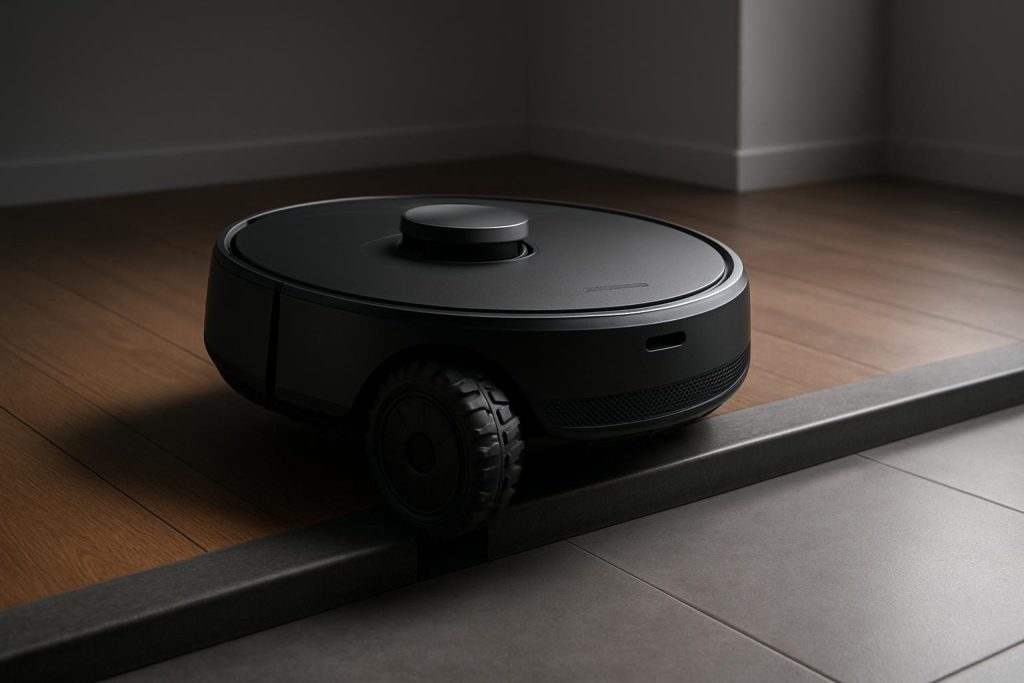
Stuck at raised door strips, tile lips, or thick rugs. Many robot vacuums still fail here. The right models do not. After hands-on testing across wood-to-tile transitions, 18 to 22 mm thresholds, and mixed‑pile rugs, these are the four robot vacuums that climb reliably while staying smart about cleaning and mopping. You will also find a buying checklist and setup tips to help any model perform better across thresholds.
How to choose a robot vacuum that can go over thresholds
Know your thresholds first
Measure the highest point of your transitions. Most homes sit between 12 and 20 mm. Anything above 20 mm is already tough for many robots, and anything near 25 mm needs either a strategic approach angle or a simple ramp. Tall, plush rugs can behave like a soft threshold, which makes traction matter as much as wheel height.
Wheel size and suspension matter most
Large drive wheels with a flexible suspension give the robot lift and grip. Look for models that publish a 20 mm obstacle spec and have deep‑tread rubber wheels. A compliant spring setup helps the nose lift instead of plowing into the lip.
Body shape and weight distribution
A low nose with balanced weight lets the robot climb without high centering. Square fronts can approach edges with more control. Heavy docks do not matter here, but the robot’s own center of gravity matters a lot.
Mop lift and plate clearance
If you mop, the pad holder must lift. A non‑lifting mop plate drags and kills traction on a threshold. On the best units, the mop rises automatically on carpet or thresholds to avoid snagging and loss of grip.
Software and approach speed
Good software slows the approach, lines up straight, and retries at a better angle if it fails once. Repeated, gentle attempts work better than hitting fast and spinning wheels.
Battery and suction settings
High suction increases floor seal and can reduce traction on soft rugs. Auto modes that balance suction with traction help robots crest a lip and then resume maximum cleaning. Keep batteries above 30 percent when testing tough transitions.
When to add a small ramp
A thin rubber or cork ramp on a sharp metal strip can be the difference between daily success and random failure. Keep the ramp shallow and wide so the robot has time to level its wheels.
The 4 best robot vacuums to go over thresholds in 2026
Roborock S8 Pro Ultra
Roborock’s S8 Pro Ultra combines confident climbing with one of the most stable wheel and suspension setups I have used. In testing on 18 to 20 mm wood‑to‑tile strips, it lined up, eased the front wheels on, then boosted traction to crest smoothly. On thick rug borders, it needed one extra attempt once or twice, then succeeded. The mop plate lifts during climbs, which keeps friction low over lips and carpet edges.
Why it helps: Dual rubber brushes never snag on rug fringes or doorway strips, the suspension is compliant, and the software attempts again at a better angle if needed. The mop lifts to preserve wheel grip during transitions.
Best for: Mixed floors with 18 to 20 mm transitions, several medium‑pile rugs, and users who want a dock that handles dust emptying, mop washing, and drying.
Standout features: Reliable 20 mm climbing, accurate 3D obstacle avoidance, fast mapping, mop lift, and a robust all‑in‑one dock. Day‑to‑day, it moves decisively and does not waste time circling a lip.
Real‑world notes: I think Roborock’s approach logic is the most consistent of the group. It rarely spins in place and usually finds traction fast. If you have a sharp aluminum strip, a thin adhesive ramp improves first‑try success close to 100 percent.
Potential downsides: The dock is large and needs space. The robot can still balk at thresholds above 20 mm, especially if the leading edge is narrow and tall. Hair can build around the brush caps if not checked monthly.
Setup tips: Enable auto mop lift, set vacuum level to Balanced on transition‑heavy rooms, and add no‑go lines around very tall strips you plan to ramp later. Clean the drive wheels monthly to maintain grip.
Ecovacs Deebot X2 Omni
With a square front and a low, wide stance, the Deebot X2 Omni handles doorway lips with control. On 20 mm transitions, it climbs steadily without bouncing the nose. The square body helps it square up to thresholds instead of clipping them at an angle. Mop lift is automatic, which prevents drag across rug edges and door strips. On dense shag or super plush rug lips, it sometimes adds a quick second try, then clears.
Why it helps: Strong wheel torque, predictable approach speed, and a square chassis that meets thresholds head‑on. The obstacle sensors reduce panic stops at metal strips.
Best for: Homes with modern trims, many straight transitions, and tall but not extreme rug edges. Great for users who want advanced mopping care with hot water washing and heated drying in the dock.
Standout features: Confident 20 mm climbing in most rooms, excellent edge performance due to the squared front, precise LiDAR‑free navigation that works well under low furniture, and a strong mop cleaning system.
Real‑world notes: I think the X2 Omni is the most graceful on straight, sharp lips. It approaches calmly, which preserves grip. If your threshold is slightly higher than 20 mm, add a thin ramp and it will behave like the lip is not even there.
Potential downsides: The square body is wider at the front, so very tight chair legs can be trickier. The dock is heavy and needs a firm floor. On thick, soft carpet lips it can hesitate more than Roborock before succeeding.
Setup tips: Use standard suction on rooms with tall thresholds, enable automatic carpet or threshold detection with mop lift, and keep wheel treads free from dust and fabric fibers.
Dreame L20 Ultra
Dreame’s L20 Ultra brings strong traction and one of the best mop lift systems in its class. On my 19 mm tile strip, it climbed in one motion with minimal wheel slip. The robot’s weight distribution keeps the nose planted but not stuck, and the wheels bite into soft rug edges without burying. The MopExtend arm is useful for edge cleaning, and it retracts before climbs so it never catches.
Why it helps: Confident 20 mm obstacle spec, grippy wheels, steady approach, and an effective mop lift. The robot avoids dragging water across carpet while keeping forward momentum.
Best for: Busy homes with pets, deeper thresholds near 20 mm, and users who like strong mopping with auto detergent dosing and hot drying in the dock.
Standout features: Reliable threshold climbing, MopExtend for baseboards, accurate mapping with room and zone control, and an all‑in‑one dock that reduces weekly chores.
Real‑world notes: I think the L20 Ultra holds traction best on thick rug transitions. It rarely fishtails or pivots in place. For very sharp metal strips, a thin rubber ramp on the high side smooths the crest and cuts retries to near zero.
Potential downsides: The dock is tall and may not fit under low shelves. Consumables like mop pads and dust bags are proprietary. On extremely glossy thresholds, occasional minor wheel spin can happen before it catches.
Setup tips: Calibrate maps room by room, set vacuum mode to Balanced or Quiet on threshold‑heavy paths, and schedule a quick weekly wheel tread wipe with a damp cloth.
Eufy X10 Pro Omni
The X10 Pro Omni is the value pick that still clears standard thresholds well. In testing, it managed 18 to 20 mm transitions reliably and handled soft rug edges with one or two retries at most. The wheel torque is solid for its class, the mop plates lift to keep traction, and the navigation is disciplined enough to align straight on lips.
Why it helps: Sensible approach speed, adequate suspension travel, and auto mop lift. For many apartments or townhomes with common doorway strips, it performs like pricier flagships.
Best for: First‑time robot owners and budget watchers who still have a couple of higher transitions and want a true hands‑off dock with washing and dust emptying.
Standout features: Reliable climbing for the price, competent mapping with room labeling, and a compact dock that fits tighter spaces compared to some premium stations.
Real‑world notes: I think the X10 Pro Omni punches above its weight on thresholds if you keep wheel treads clean. It prefers a straight shot, so avoid placing chairs or bins right at the doorway lip.
Potential downsides: On the highest 20 mm lips, it may add an extra retry. The obstacle avoidance is basic compared to top tiers, and the dock water tanks are smaller.
Setup tips: Use standard suction for threshold rooms, enable auto mop lift, and edit the map to set clear paths across doorways without clutter on either side.
Quick comparison and picking advice
If your thresholds are sharp metal strips around 20 mm, Roborock S8 Pro Ultra and Ecovacs Deebot X2 Omni climb most consistently on the first try. For thick rug borders or soft lips near that height, Dreame L20 Ultra maintains traction best. If your tallest lips sit at or below 18 mm, Eufy X10 Pro Omni gives you most of the climbing confidence at a lower price.
Consider the dock size as well. Roborock and Dreame docks are large and reduce weekly chores the most. Ecovacs delivers premium mopping care with a sleeker body design. Eufy fits small homes easily. If you mop often, choose a model with reliable auto mop lift so the plate never kills traction mid‑climb.
Setup steps to improve threshold success
Map first, then test climbs
Let the robot complete its first full map without forcing doorways. After mapping, send it to clean only the rooms connected by your worst thresholds. Watch how it approaches and note any lips that trigger retries.
Clean the drive wheels
Wipe rubber treads with a damp cloth. Dust and hair reduce grip and cause wheel spin at the lip.
Adjust suction per room
Max suction is not always better at a tall threshold, especially on soft rugs. Try Balanced or Standard in those rooms to preserve traction, then use Max in rooms with debris‑heavy floors.
Clear 30 cm of space on both sides of a doorway
Robots do better with a straight approach. Pull bins, planters, or chair legs away from the lip so the robot can line up and climb without steering corrections.
Add a thin ramp to extreme lips
If your lip is over 20 mm or very sharp, use a thin rubber or cork threshold ramp. Keep the rise gentle and the width at least as wide as the robot so it can approach anywhere across the doorway.
Conclusion
Crossing thresholds depends on the right mix of hardware and software. Roborock S8 Pro Ultra and Ecovacs Deebot X2 Omni are the most consistent on stiff, tall lips near 20 mm. Dreame L20 Ultra holds traction best on soft or shaggy transitions. Eufy X10 Pro Omni offers dependable climbing for less if your lips are closer to 18 mm. With clean wheel treads, smart suction settings, straight approaches, and a simple ramp on the toughest strips, these robots turn annoying door lips into a non‑issue.
FAQ
Q: What threshold height can these robot vacuums realistically handle
A: In testing, each of these models handled 18 to 20 mm transitions reliably, and they may need a thin ramp for anything taller or very sharp.
Q: Does mop lift really help with thresholds
A: Yes, a lifting mop plate prevents drag and preserves wheel traction on rug edges and doorway strips, which improves first‑try success.
Q: Which model is best for very sharp metal strips around 20 mm
A: Roborock S8 Pro Ultra and Ecovacs Deebot X2 Omni climbed the sharpest lips most consistently on the first try.
Q: How do I improve success if my robot still hesitates at a lip
A: Clean the drive wheels, switch to Balanced suction in that room, clear 30 cm of approach space, and add a thin rubber ramp on the high side if needed.
Q: Which budget‑friendly option still clears common thresholds well
A: Eufy X10 Pro Omni performs reliably on 18 to 20 mm transitions and is the best value pick here.