
We are reader supported. When you purchase through links on our site, we may earn an affiliate commission. Also, as an Amazon affiliate, we earn from qualifying purchases.
Pool decks collect sunscreen, dirt, algae, and efflorescence faster than most outdoor surfaces. A good pressure washer restores grip and color without chewing up concrete, pavers, or stone. This guide focuses on four models that balance cleaning speed, safety, and control on wet surfaces. I tested for evenness with a 15-inch surface cleaner, hose and cord management around a pool, and how easy each one is to set to a safe working pressure. Read on, pick the washer that matches your deck size and soil level, then follow the setup and technique sections to avoid streaks and etching.
How to choose a pressure washer for a pool deck
Right pressure and flow
For most sealed concrete, textured pavers, and composite, target 1700–2300 PSI with at least 1.2–1.8 GPM. This range lifts algae and grime while staying gentle on grout and sealers. For unsealed rough concrete with heavy staining, a higher ceiling helps, but control matters more than raw PSI.
Electric vs gas near water
Electric is quieter, cleaner, and has GFCI protection. It is easier to maneuver around a pool. Gas brings faster coverage on large, neglected slabs, but it is louder, heavier, and easier to overdo on softer stone. Choose electric unless you have a very large deck with deep staining.
Surface cleaner compatibility
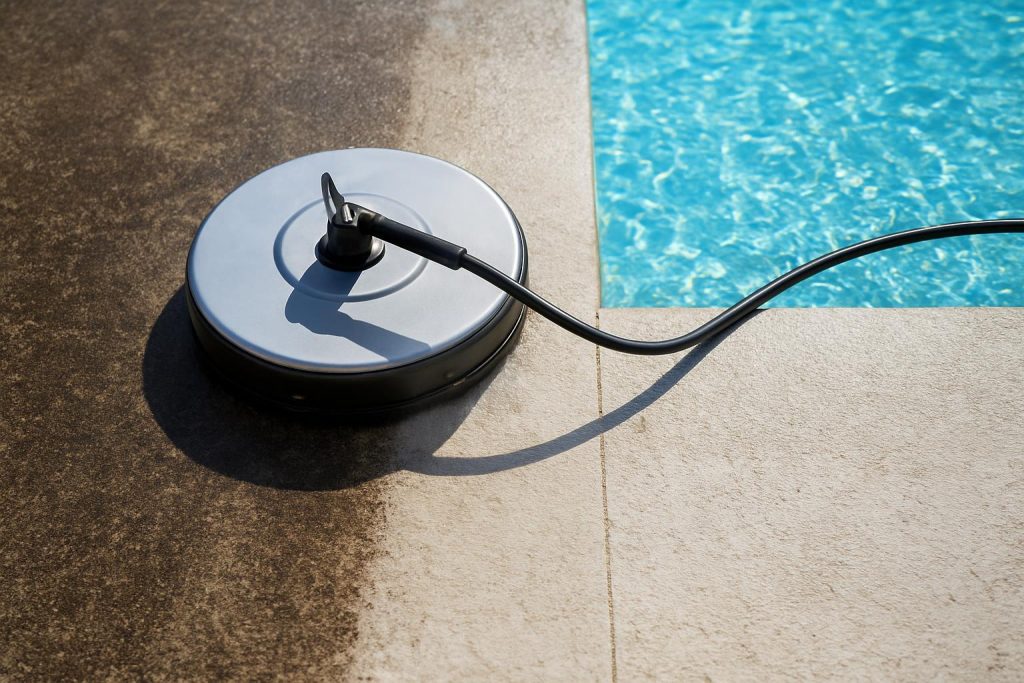
A 12–15 inch surface cleaner speeds work, prevents zebra striping, and reduces splash. Confirm the washer can sustain the cleaner’s required flow. If your unit struggles to spin the cleaner, step down in diameter or clean in smaller passes.
Motor and pump durability
Brushless and induction motors run cooler and last longer. Axial cam or wobble pumps on consumer units are fine if you avoid long dry runs and release the trigger every few minutes.
Hose, cord, and storage
Look for at least a 20–25 ft hose and 30–35 ft GFCI cord to keep power connections well away from splash zones. Onboard nozzle storage and stable footprints reduce trip hazards.
Detergent handling
A built-in soap tank or foam bottle helps on algae and sunscreen film. Let detergent dwell, then rinse at low to medium pressure.
Best pressure washers for pool decks in 2026 reviews
Sun Joe SPX3000 2030 PSI Electric
This is the value pick that still cleans a full-size deck well. It pairs a capable 14.5-amp motor with dual detergent tanks and five quick-connect nozzles. The trigger feel is light, and Total Stop cuts the motor when you release, which lowers noise around the pool.
Why it helps: The working pressure is in the safe zone for pavers and sealed concrete. It accepts a 12–15 inch surface cleaner without bogging on typical algae and dirt. Dual soap tanks let you keep a deck cleaner and neutral rinse on tap.
Best for: Small to medium decks, routine maintenance washes, homeowners new to pressure washing.
What I liked: I think its balance of power and control is spot on for textured pool surrounds. The wand and tips are straightforward, and the unit is light enough to carry without dragging hoses near the pool edge. The GFCI cord adds a safety layer.
Setup and usability: Assembly is quick. Connect the garden hose, snap on the high-pressure hose, choose a 25-degree tip to start, and test an inconspicuous corner. Use the 40-degree tip for sealed areas and the 15-degree only on stubborn, non-delicate spots.
Tip for best results: Pair with a 12–15 inch surface cleaner for the main deck, then detail edges and around drains with a 25- or 40-degree tip. Work away from the waterline to control runoff.
Potential downsides: The stock hose is a bit stiff and short for larger decks. The max PSI figure is a surge number; real-world cleaning relies more on technique and the right nozzle.
Greenworks 3000 PSI TruBrushless Electric
This model steps up to a brushless motor and higher sustained pressure. It is PWMA certified, which gives confidence that the stated numbers reflect real conditions. It drives a 15-inch surface cleaner with authority and maintains even pressure over long passes.
Why it helps: Extra headroom helps on lightly etched concrete, older pavers, and black algae bands near shady coping. The brushless motor runs cooler and quieter, reducing fatigue.
Best for: Medium to large decks, owners who want faster coverage without jumping to gas, users running a 15-inch surface cleaner.
What I liked: I think this is the sweet spot for most homes that see seasonal algae. It clears sunscreen film without needing a narrow tip. The hose and cord length minimize moving the base unit, which keeps power connections away from splash zones.
Setup and usability: Connect the steel-braided hose, bleed air by running water through before powering on, and start with a 25-degree nozzle. When attaching a surface cleaner, keep the arms level and move at a steady pace to avoid swirl marks.
Tip for best results: Pre-treat slippery areas with a mild deck detergent, let dwell 5–10 minutes out of direct sun, then rinse with the 25-degree tip. Save the 15-degree tip for tire marks on adjoining patio or for stubborn rust blooms on concrete, testing first.
Potential downsides: The higher pressure can be too aggressive on soft limestone or loose grout if you use a narrow tip too close. Stay at least 12 inches off delicate areas and widen the fan.
Westinghouse ePX3050 Compact Electric
A compact, four-wheel design with a low center of gravity makes this easy to move around a pool without tipping. It delivers practical cleaning power for routine deck care with a light, manageable wand.
Why it helps: It glides along coping and tight spaces where carts can snag. The unit stays planted, which reduces hose tugs and splash.
Best for: Small decks, narrow side yards leading to a pool, users who value maneuverability and quick setup.
What I liked: I think the stability around water is excellent. The compact footprint lets you park it well away from the pool edge while the long cord and hose reach most areas. Noise is moderate and less intrusive during long rinses.
Setup and usability: Snap in the quick-connect nozzles, prime the pump for 30 seconds, and begin with a 40-degree tip on sealers or composite. Step to a 25-degree tip for textured concrete. It does fine with a 12-inch surface cleaner; go slower on heavy soil.
Tip for best results: Rinse debris toward deck drains or to landscaping away from the pool. Keep the GFCI plug off the ground using a dry, elevated outlet.
Potential downsides: Not the fastest on large, deeply stained slabs. The smaller wheels are best on smooth paths; avoid dragging across loose gravel.
Simpson MegaShot MSH3125 Gas
This gas model brings high flow and pressure for big jobs. The Honda engine starts reliably, and the axial cam pump is proven. It pairs well with a 15-inch surface cleaner for rapid coverage when a deck has been ignored for a few seasons.
Why it helps: Higher flow clears embedded grime in rough concrete and pulls up black algae quickly when combined with a surface cleaner. It manages wide patios and multi-level pool surrounds without feeling slow.
Best for: Large, unsealed concrete decks with heavy buildup, owners who need speed and power a few times a year.
What I liked: I think it shines when you have 800 square feet or more and stubborn staining. With a 15-inch surface cleaner, the finish is even and fast. The MorFlex hose resists kinks, which helps when navigating furniture and drains.
Setup and usability: Check oil, attach hoses, and run at idle for a minute before cleaning. Always test from a greater distance and widen the fan. Keep the engine off the splash path and place drip trays on clean pavers to prevent marks from the muffler area.
Tip for best results: Use a 25-degree nozzle for edges, keep the wand at least 12–18 inches off soft stone, and never use a pinpoint 0-degree tip on or near the pool deck.
Potential downsides: Louder and heavier than electric. Easy to etch soft stone or lift grout if you get too close with a narrow nozzle. Fuel fumes and handling are less pleasant around a pool; plan your passes to minimize starts and stops.
Before you clean: quick setup checklist
Protect the pool
Skim loose debris first. Turn off pumps during washing to avoid pulling silt into the filter. Use a skimmer sock to catch fines when you restart. Keep runoff directed away from the waterline.
Test a small area
Choose an out-of-the-way corner. Start with a 40-degree tip at 12–18 inches. Confirm no etching or sealer lifting before scaling up.
Choose the right nozzle
Use 40-degree for sealed or delicate areas, 25-degree for general concrete, and 15-degree only for stubborn stains on durable surfaces. Avoid 0-degree on pool decks.
Set up power safely
Plug into a GFCI outlet. Keep all electrical connections dry and off the ground. Route cords behind you and away from standing water.
Technique that protects your deck
Work in controlled sections
Divide the deck into manageable zones. Clean from the house side toward landscaping, not toward the pool. Slightly overlap passes for even color.
Use a surface cleaner for the field
Maintain a steady pace and avoid hovering. If you see swirl marks, slow down or raise the arms by gentle pressure on the handle. Follow with a rinse pass using a 25- or 40-degree tip.
Detergent helps on algae and sunscreen film
Apply a mild, deck-safe detergent with a foam cannon or onboard soap setting. Let it dwell 5–10 minutes in shade. Do not let it dry. Rinse thoroughly.
Mind your distance and angle
Keep the nozzle 12 inches off the surface on delicate finishes. Spray at a slight angle to lift dirt without driving water into joints.
Finish edges and drains carefully
Use wider tips near expansion joints, grout, and around drains. Lower pressure preserves joint sand and sealers.
Maintenance and storage tips
After each use
Release pressure, disconnect hoses, and drain water from the pump. Coil hoses loosely to prevent kinks. Wipe down the unit to remove splash residue.
Monthly checks in season
Inspect o-rings, quick-connects, and tips. Clean inlet filters. On gas units, check oil and air filter. On electric, inspect the GFCI test button and cord sheath.
Off-season storage
Store indoors. Use pump saver antifreeze on both gas and electric models if freezing temps are possible. Keep nozzles in their holders to avoid loss.
Conclusion
Choosing a pressure washer for a pool deck is about controlled cleaning power, not just high PSI. Electric units like the Sun Joe SPX3000 and Greenworks 3000 deliver safe, steady performance for most homes with the option to run a surface cleaner. The Westinghouse ePX3050 makes tight decks simple to navigate. If you face a large, neglected concrete deck, the Simpson MSH3125 brings speed, with care. Match the washer to your deck’s material and soil level, lean on a surface cleaner for even results, and keep your technique gentle. Done right, you get a clean, grippy deck with no streaks, no etching, and less debris in the pool.
FAQ
Q: What pressure range is safest for most pool decks?
A: For most sealed concrete, textured pavers, and composite, target 1700–2300 PSI with at least 1.2–1.8 GPM.
Q: Should I choose electric or gas for cleaning a pool deck?
A: Electric is quieter, cleaner, and easier around a pool; gas is better only for large, heavily stained concrete when you need speed.
Q: Do I need a surface cleaner for my pool deck?
A: A 12–15 inch surface cleaner speeds work, prevents zebra striping, and reduces splash on most decks.
Q: Which nozzle should I use on sealed or delicate areas?
A: Start with a 40-degree tip at 12–18 inches and step to a 25-degree only if needed.
Q: How do I keep debris out of the pool while pressure washing?
A: Turn off pumps during washing, direct runoff away from the waterline, and use a skimmer sock when you restart.