
We are reader supported. When you purchase through links on our site, we may earn an affiliate commission. Also, as an Amazon affiliate, we earn from qualifying purchases.
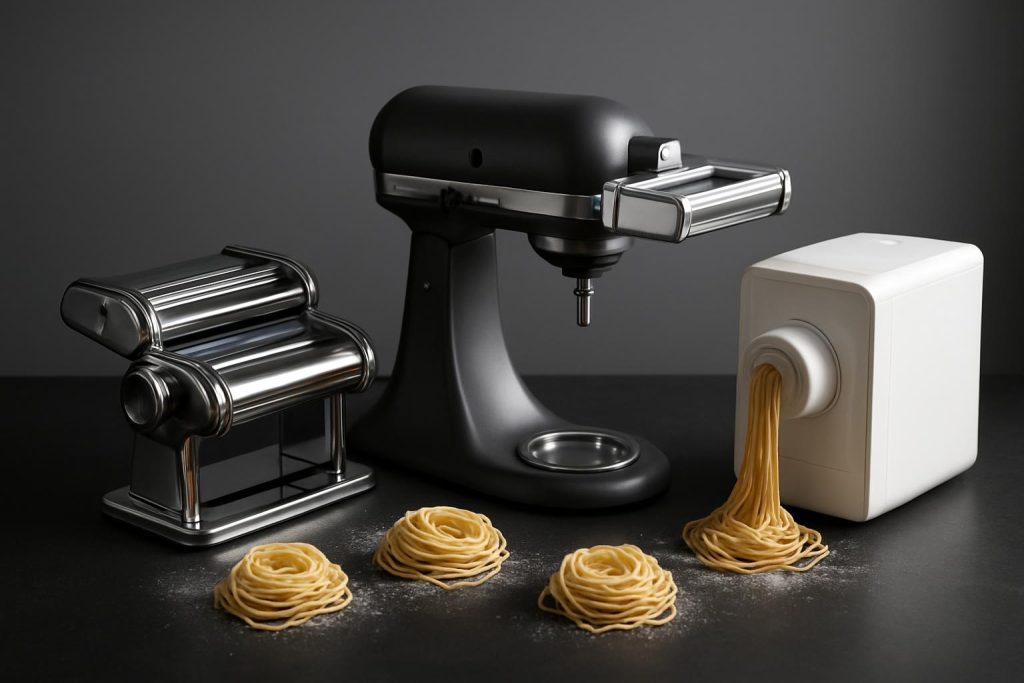
Fresh ramen noodles need strength, bounce, and a uniform bite. The right pasta maker will give you even sheets, precise thickness, and clean cuts. The wrong one will fight your dough, jam, or produce soft strands that overcook fast. I tested and compared popular machines with ramen in mind. Below is a clear guide to choosing well and using each machine to get springy, consistent noodles at home.
How to choose a pasta maker for ramen
Roller vs extruder
Most home ramen makers use a roller machine. You sheet the dough, then cut with a narrow cutter. This works because ramen dough is low hydration and firm, and rolling aligns the gluten for a chewy bite. An extruder can also work if you use the right disc and a dry, crumbly dough. Think about how you cook. If you want control and a classic ramen texture, go with rollers. If you value push-button speed and consistent strands from discs, an extruder is attractive.
Thickness control and cutter widths
Ramen is usually thin to medium-thin. You need a dial that moves in small, repeatable steps and a cutter around the spaghetti or tagliolini range. Aim for a mid-range sheet thickness on the dial and a narrow cut. Fine control helps you match different ramen styles, from delicate shoyu to richer tonkotsu.
Build, cleaning, and storage
Low hydration dough is stiff, so a solid roller assembly matters. For cleaning, dry brushing and toothpicks beat washing. Removable parts save time. For storage, attachments add up fast, so label small bins and keep silica gel packs near cutters and discs to stay dry.
Manual versus motorized
Manual cranks give tactile control and cost less. Motorized rollers free your hands so you can guide the sheet and reduce tearing. If you own a stand mixer, hub attachments are convenient. If not, a manual roller with an optional motor is a flexible path.
The 4 best pasta makers for ramen in 2026
1. Marcato Atlas 150 Pasta Machine
The Marcato Atlas 150 is a classic roller and cutter system with a smooth, precise dial and durable build. It handles stiff ramen dough without chatter. The standard cutters include a narrow strand that works well for everyday ramen.
Why it helps: Stable clamping and smooth rollers make it easy to laminate firm, low-hydration dough. Small, repeatable thickness steps let you dial in texture fast. The standard narrow cutter gives a clean edge that separates well during cooking.
Best for: Home cooks who want classic roller control and a long-term, serviceable machine.
Key ramen settings: Start with a mid-range sheet thickness. Laminate the dough through thicker settings a few times before stepping thinner. Cut with the narrow cutter for a springy slurp. Dust lightly with flour or potato starch before cutting.
What I think: I think the Atlas 150 gives the most consistent ramen sheet among manual machines at this price. The rollers feel tight and true, and the handle motion stays smooth even with stiff dough. The narrow cutter separates strands cleanly so you get fewer clumps in the pot.
Potential downsides: Manual cranking takes two hands unless you add the motor. Cleaning needs patience because you should not wash the rollers. You have to wait for stuck bits to dry and brush them out.
Build and care tips:
- Clamp firmly and work on a stable counter to prevent bounce.
- Use a soft brush and wooden picks to remove dry crumbs. Avoid water on the rollers.
- Store cutters in a labeled box with a silica gel packet.
2. KitchenAid 3-Piece Pasta Roller and Cutter Set
This set uses the power of a KitchenAid stand mixer to roll and cut. It includes a roller plus spaghetti and fettuccine cutters. For ramen, the spaghetti cutter hits the right width, and the powered feed means you can guide the sheet with both hands.
Why it helps: Hands-free rolling lowers the chance of tearing. The steady motor keeps thickness uniform across the sheet. You can move quickly from rolling to cutting, which reduces drying and cracking.
Best for: KitchenAid owners who want speed and consistent results without a separate motor base.
Key ramen settings: Use a mid dial setting on the roller for a thin, elastic sheet. Keep mixer speed low and feed short lengths for better control. Lightly flour each pass and dust before cutting with the spaghetti cutter.
What I think: I think this set is the easiest way for beginners to get repeatable ramen noodles if they already have the stand mixer. The powered roller frees your hands to support the sheet, and the spaghetti cutter makes a tidy, slurpable strand.
Potential downsides: You need the stand mixer to use it. The set is heavier than manual cutters for storage. Like all roller systems, cleaning is dry only, so you need a brush and time.
Build and care tips:
- Always start on the thickest setting and laminate several times before going thinner.
- Run a small piece of scrap dough through after use to pull out flour and crumbs.
- Keep the included brush with the attachments in a labeled pouch.
3. Philips Pasta and Noodle Maker Plus HR2375/06
This is a countertop automatic extruder that mixes and pushes dough through shaping discs. With the spaghetti or angel hair discs and a low hydration dough, it can make ramen-friendly strands fast. It is compact and cleans with removable parts.
Why it helps: One-touch mixing and extrusion saves time. If you want consistent strand width without manual rolling, discs do the shaping for you. The tight, dry crumb dough that ramen needs is easy to repeat because the machine measures and mixes well.
Best for: Busy cooks who want quick batches and uniform strands with minimal manual rolling.
Key ramen settings: Use the spaghetti or the thinnest disc. Keep dough dry and crumbly so it extrudes cleanly. Pause and dust extruded strands with flour or starch to prevent sticking. Rest the cut noodles before cooking.
What I think: I think this is the fastest path from flour to bowl on weeknights. The strands are very consistent, and cleanup is straightforward because the discs and internal parts come apart. For a classic roller-style chew, rollers still win, but the Philips gets close with the right disc and a dry mix.
Potential downsides: Texture feels a bit different from rolled noodles because extrusion aligns gluten differently. Disc choice limits width options compared with roller cutters. You must spend time cleaning the disc holes after dough dries.
Build and care tips:
- Use short mixing cycles with dry dough and break up lumps by hand before loading.
- After extrusion, soak discs promptly or let dough dry fully and poke out holes with the cleaning tools.
- Group discs in a labeled container to avoid misplacing small pieces.
4. Imperia Pasta Maker 150
The Imperia 150 is a sturdy manual roller with a classic chrome finish and a smooth crank action. It ships with narrow and wide cutters and handles stiff ramen dough without flex.
Why it helps: Stable rollers and a firm clamp make lamination easy. The narrow cutter makes a neat, ramen-ready strand. The machine is simple and serviceable, which keeps maintenance low.
Best for: Cooks who prefer a traditional manual machine with a simple, durable feel.
Key ramen settings: Laminate on thick settings first, then step thinner to a middle setting for most ramen styles. Dust sheets lightly on each pass and before cutting. Rest cut noodles before cooking to relax the dough.
What I think: I think the Imperia is a great value pick. It feels solid on the counter, and the narrow cut is ideal for everyday ramen. It does not have as many micro steps between thickness settings as some machines, but once you find your spot, it repeats well.
Potential downsides: Fewer thickness increments means less fine-tuning. Manual cranking takes more effort for big batches. Cleaning is dry only and needs patience.
Build and care tips:
- Do short sheets to reduce tugging and keep edges straight.
- Brush crumbs out after each session and let sticky bits dry before picking them off.
- Store with the handle and clamp in a small labeled bag so parts do not go missing.
How to dial in ramen dough on these machines
Make a dry, firm dough
Ramen dough should be stiff. It should look crumbly after mixing and only come together under pressure. This gives the bite you want and helps rollers and cutters produce clean edges.
Laminate properly on roller machines
- Start thick. Fold the dough and pass it through several times until it looks smooth with no cracks.
- Step one notch thinner at a time. Dust lightly between passes to prevent sticking.
- Stop at a middle thickness for a springy, slurpable strand.
- Cut with the narrow cutter and dust strands with flour or potato starch to keep them separate.
Extrude with the right disc
- Use a spaghetti or thin disc.
- Feed a dry, crumbly dough. If the machine strains or smears the strands, the dough is too wet.
- Cut strands to length with scissors as they exit and dust lightly.
Rest before cooking
Lightly coil the noodles into nests, dust, cover, and rest 20 to 30 minutes at room temperature. This relaxes the dough and firms the surface for better texture in the bowl.
Cleaning and care that actually works
- Never wash roller assemblies. Let bits dry, then use a soft brush and wooden picks to remove them.
- Run a small piece of scrap dough through rollers or cutters to grab hidden crumbs.
- For extruder discs, either rinse immediately or let fully dry and poke out holes with the tool set.
- Store attachments in labeled containers. Add silica gel packs to keep moisture away.
- Wipe the counter and put a non-slip mat under the machine next time to cut down on flour spread.
Which one should you choose
Pick based on how you like to work. If you want classic ramen chew and full control, the Marcato Atlas 150 is a reliable standard. If you already own a KitchenAid, the 3-piece set is the easiest for beginners and batch cooks because you can guide sheets with both hands. If speed matters most and you prefer a push-button process, the Philips Pasta and Noodle Maker Plus produces consistent strands with minimal effort. If you want a sturdy manual option at a good value, the Imperia 150 is simple, strong, and effective.
Once you set your preferred thickness and cutter, keep notes. Use the same flour blend, hydration, and dial steps next time. That is how you get predictable texture every bowl.
FAQ
Q: Which pasta maker is best for beginners making ramen at home
A: The KitchenAid 3-Piece Pasta Roller and Cutter Set is the easiest for beginners if you already have the stand mixer because the powered roller frees your hands and keeps thickness uniform.
Q: What sheet thickness should I aim for when making ramen noodles
A: Aim for a mid-range setting on the dial so the sheet is thin but still elastic, then cut with the narrow cutter for a springy bite.
Q: Can an automatic extruder make good ramen noodles
A: Yes, with the right disc such as spaghetti or a thin disc and a dry, crumbly dough, the Philips Pasta and Noodle Maker Plus can produce ramen-friendly strands quickly.
Q: How do I keep fresh ramen noodles from sticking together
A: Dust lightly with flour or potato starch after cutting, form loose nests, and rest 20 to 30 minutes before cooking.
Q: What is the best way to clean pasta rollers and cutters
A: Clean them dry by letting bits harden, brushing with a soft brush, and using wooden picks; do not wash roller assemblies with water.