
We are reader supported. When you purchase through links on our site, we may earn an affiliate commission. Also, as an Amazon affiliate, we earn from qualifying purchases.
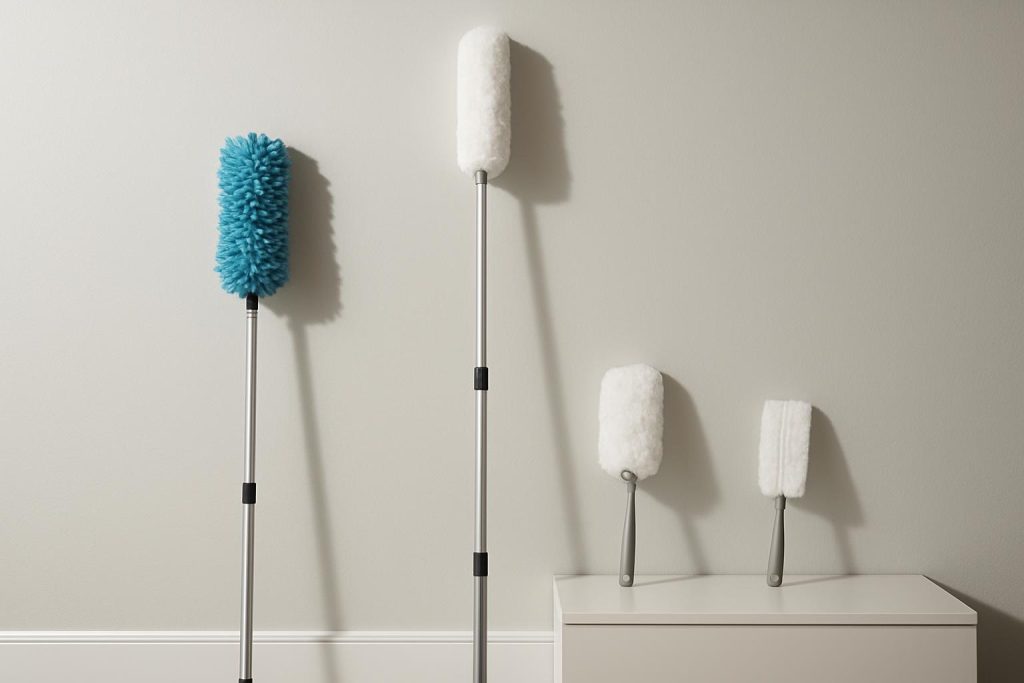
Walls collect dust faster than most people realize, and if you do not tackle it regularly, you will see dull paint, dirty corners, and worsening allergies. The right wall duster changes that with safer contact on finishes, better dust pickup, and less time on a ladder. I tested and compared popular choices in 2026 to find four that make wall cleaning simpler, faster, and safer.
What matters when dusting walls in 2026
Match the duster to your wall finish
Painted matte and eggshell walls need soft microfiber that will not abrade the surface. Semi-gloss and gloss tolerate a bit more contact, but you still want lint-free fibers to avoid streaks. Textured plaster and orange peel finishes need a deeper pile microfiber or chenille fingers to get into pits without snagging. Wallpaper requires gentle, dry dusting only.
Material and dust pickup
Microfiber beats feather or cotton for most walls because it traps and holds fine particles instead of pushing them around. Chenille microfiber, with its thick fingers, is ideal for texture and heavy buildup. Electrostatic disposable dusters excel at quick touch-ups and allergy-prone homes but create ongoing refill cost.
Pole length and control
Measure the tallest point you need to reach. For standard 8 to 10 foot ceilings, a pole that extends to 4 to 8 feet is usually enough. For vaulted spaces or stairwells, consider a 12 foot extension. A locking mechanism that does not slip and a comfortable grip matters more than raw length.
Head shape and flexibility
A flat, wide head clears broad wall sections quickly. A bendable spine helps on stair walls and around fixtures. A tapered head gets into upper corners and crown molding. Interchangeable heads add value if you want one pole for walls, cobwebs, and fans.
Maintenance and replacements
Removable, machine-washable covers reduce lifetime cost. If you prefer disposables, confirm refill availability and the cost per use. A washable head that air dries fast will keep you on schedule.
Weight, joints, and threading
Lighter poles cause less arm fatigue during long passes. Favor aluminum over steel for balance and corrosion resistance. Check that head connections are solid and do not wobble. Universal ACME threading adds flexibility across brands.
How I tested
Surfaces and scenarios
I used these dusters on matte painted hallway walls, a textured plaster stairwell, and semi-gloss kitchen walls. I focused on high corners, long uninterrupted walls, behind framed art, and around return vents and smoke detectors.
What I looked for
I tracked dust pickup in one pass, ease of reaching 10 to 12 feet without a ladder, how well fibers stayed loaded without dropping debris, whether the head snagged on texture, how quickly the head washed and dried, and if pole locks slipped under pressure.
The bottom line
Only four models felt truly dialed-in for walls: secure locks, safe fibers, useful lengths, and low maintenance. Those are below, with clear trade-offs, so you can match your home and habits.
The 4 best dusters for walls
Best overall: BOOMJOY Microfiber Duster with Extension Pole
This is the duster I reach for first. The chenille microfiber head is gentle on paint yet thick enough to lift dust from light texture. The bendable spine shapes to stair angles and behind frames. The aluminum pole is light and extends from roughly 30 inches to around 100 inches, which covers standard rooms without a ladder.
Why it helps: The chenille fingers grab fine dust and hair so it does not snow down the wall. The bendable head maintains contact on odd angles, making top-to-bottom sweeps smooth. The removable cover washes easily and dries fast.
Best for: Painted walls, lightly textured plaster, and routine weekly or biweekly passes in rooms with 8 to 10 foot ceilings.
Key details: Light aluminum pole, flexible head core, washable chenille microfiber sleeve, hanging loop for storage.
Potential downsides: The head connection can feel slightly loose if you torque it aggressively. The pole length is not ideal for very high or vaulted spaces.
I think the balance of reach and control is what sets this apart. It stays planted on the wall without scratching, the head glides instead of skipping, and the pole weight feels right for long sessions. One full sweep from baseboard to ceiling collects more than most dusters do in two passes.
Care tip: Shake debris outside, then cold-wash the cover in a laundry bag. Air dry only to preserve the fibers.
Best for very high walls and vaults: DocaPole Microfiber Duster 5–12 ft Extension Pole Kit
When height is the problem, this kit solves it. The DocaPole extends from about 5 to 12 feet with firm flip locks that do not creep. The microfiber head is large and slightly floppy by design, so it contacts the wall as you extend overhead. The pole uses standard ACME threading, so you can add other heads later.
Why it helps: Real reach with reliable locks. The long pole lets you clear 2-story corners, beams, and upper wall runs from the floor. Microfiber removes fine dust rather than push it airborne.
Best for: Vaulted living rooms, stairwells, tall foyers, and high cobweb corners.
Key details: 5–12 ft aluminum pole, universal ACME thread, washable microfiber head, padded grip for control.
Potential downsides: At full extension, any long pole will flex a bit and feel top heavy. Plan slower passes to keep the head flat on the wall. Storage length is longer than compact home dusters.
I think this is the safest way to handle tall spaces without climbing a ladder. The locks held through repeated height changes, and the microfiber head loaded evenly across long sweeps. If you want one pole you can grow into, the standard threading is a real win.
Technique tip: For high corners, angle the pole so the head meets the corner edge first, then drag outward along the wall in a shallow arc. That prevents dumping dust downward.
Best compact pick for everyday walls: OXO Good Grips Microfiber Extendable Duster
For most homes with 8 to 9 foot ceilings, this extendable OXO is ideal. The pole extends to about 53 to 54 inches, giving you just enough reach to clear top corners without dragging a giant pole around. The head pivots to several angles and the microfiber sleeve comes off for washing.
Why it helps: The pivoting head sets a repeatable angle that stays put while you work. The compact pole fits into tight hallways and between furniture without knocking frames.
Best for: Apartments and standard rooms where convenience matters as much as performance.
Key details: Extendable handle to roughly 4.5 feet, washable microfiber sleeve, slim head profile, firm angle detents.
Potential downsides: Not built for very tall spaces. The slim head covers less area per pass, so larger rooms take a few extra minutes.
I think this is the right starter duster for most people who want to stop using a random towel on a broom. The angle locks feel precise, the sleeve survives many washes, and it is easy to stash in a closet. I like it for weekly refreshes and for quick pre-guest sweeps.
Care tip: After washing, fluff the microfiber by hand to restore pile so it traps dust better next time.
Best disposable option for light dust: Swiffer Dusters Heavy Duty Extender Starter Kit
If you prefer fast, low-mess cleanups with no laundry, this extender handle and heavy duty refills work well on painted walls. The fluffy fibers create a static charge that traps fine dust and pollen. The handle extends for higher sections and the head flexes to reach into corners.
Why it helps: Disposable fibers trap allergens and do not redeposit debris as you move. The flexible head rides along trim and frames without scuffing.
Best for: Quick touch-ups, allergy season, and homes that need a grab-and-go wall duster for frequent use.
Key details: Extender handle for added reach, heavy duty refills with dense fibers, flexible head with lockable angles.
Potential downsides: Ongoing cost for refills. Not ideal for heavy or greasy buildup. On rough texture, the fibers can snag a bit.
I think disposables shine for maintenance between deeper cleanings. Use them weekly on light dust to prevent buildup, then bring in a washable microfiber when walls feel dull or when texture needs more contact.
Usage tip: Fluff the duster head before first use to activate the fibers and maximize pickup on flat paint.
How to dust walls the right way
Prep the room
Turn off fans and HVAC so dust does not circulate. Move light furniture a foot off the wall. Wear a dust mask if you are sensitive.
Start high and work down
Clear corners and crown first, then make long vertical passes from ceiling to baseboard. Overlap each pass slightly so you do not leave clean stripes.
Hit edges and fixtures
Run the duster along door frames, baseboards, and around switches, vents, and alarms. Pivot or bend the head so fibers lead the edge rather than the pole.
Adjust for texture
For textured walls, use chenille microfiber and lighter pressure. Let the pile do the work. If fibers snag, reduce angle and slow down.
When dusting is not enough
If walls look smudged after dusting, spot clean with a barely damp microfiber cloth and a gentle, paint-safe cleaner. Always test an inconspicuous area first.
Care and maintenance
Washable heads
Shake outside, then wash in cold water on a gentle cycle. Do not use fabric softener, which coats fibers and kills pickup. Air dry fully before storage.
Disposable refills
Use until the fibers look matted or dust releases during passes. Seal used refills in a bag if allergies are an issue.
Pole upkeep
Wipe pole sections with a dry cloth so locks do not grind. If flip locks slip, clean the tubes and lightly tighten the lock screws per the maker instructions.
Which one should you choose
Quick picks by scenario
I want one duster that fits most homes: Pick the BOOMJOY Microfiber Duster with Extension Pole.
I have high walls and vaulted ceilings: Go with the DocaPole 5–12 ft kit.
I need compact and easy to store: Choose the OXO Good Grips Microfiber Extendable Duster.
I prefer disposables for allergies: Use the Swiffer Dusters Heavy Duty Extender Starter Kit.
Conclusion
Walls stay cleaner and brighter when you match the tool to the job. Microfiber handles most paint safely, chenille reaches into texture, and an extender pole reduces risk by keeping you off ladders. I think the four picks above cover every common home scenario with clear trade-offs. Choose the reach you need, the maintenance style you prefer, and make wall dusting a 10 minute routine instead of a seasonal headache.
FAQ
Q: What is the best duster material for painted walls
A: Microfiber is best for painted walls because it traps and holds fine particles without scratching or smearing.
Q: How long should a pole be for vaulted ceilings
A: For vaulted spaces or stairwells, consider a 12 foot extension so you can clear upper walls and corners from the floor.
Q: How often should I wash a microfiber duster head
A: Wash when the head looks matted or when dust releases during passes, and always air dry without fabric softener.
Q: Which pick is best for apartments with standard ceilings
A: The OXO Good Grips Microfiber Extendable Duster is best for apartments and standard rooms where convenience matters.
Q: Are disposable dusters good for textured walls
A: Disposable dusters are not ideal for heavy or greasy buildup, and on rough texture the fibers can snag a bit.