
We are reader supported. When you purchase through links on our site, we may earn an affiliate commission. Also, as an Amazon affiliate, we earn from qualifying purchases.
Books hold dust fast. The wrong duster pushes it deeper into paper fibers and cloth spines. The right duster lifts and locks dust in a few light passes, without scattering particles back into the air. This guide focuses on four dusters that consistently protect bindings, jackets, and shelving while removing fine powder. You will learn why each pick works, who it suits best, and how to use it for long term care. Keep reading for clear criteria, simple routines, and mistakes to avoid.
How to choose a duster for books
Fiber type matters
Choose soft, fine fibers that trap dust on contact. Goat hair and lambswool are excellent for delicate surfaces. Split microfibers grab and hold fine dust better than generic polyester. Avoid stiff synthetics that can scuff dust jackets or raised lettering.
Size and control
Books demand precision. A small hand brush or compact head gives better control along spines and between rows. Long handles help for top shelves but should not be heavy or floppy. Control reduces accidental edge wear.
Static and dust locking
Some natural fibers and split microfiber build light static and natural oils that lock dust. This reduces airborne recirculation and second passes. Tools that flick dust off the shelf are less effective and can irritate allergies.
Washability and maintenance
Microfiber heads that detach and wash extend tool life. Lambswool and goat hair need gentle care but last many years if cleaned correctly. Disposable dusters are quick but cost more over time and produce waste.
Safety for book materials
Fragile cloth, leather, gilding, and uncoated paper need the softest touch. Avoid wet cleaning on paper edges. Do not use polishing sprays or silicone near books. Dry dusting with soft fibers is the safest default.
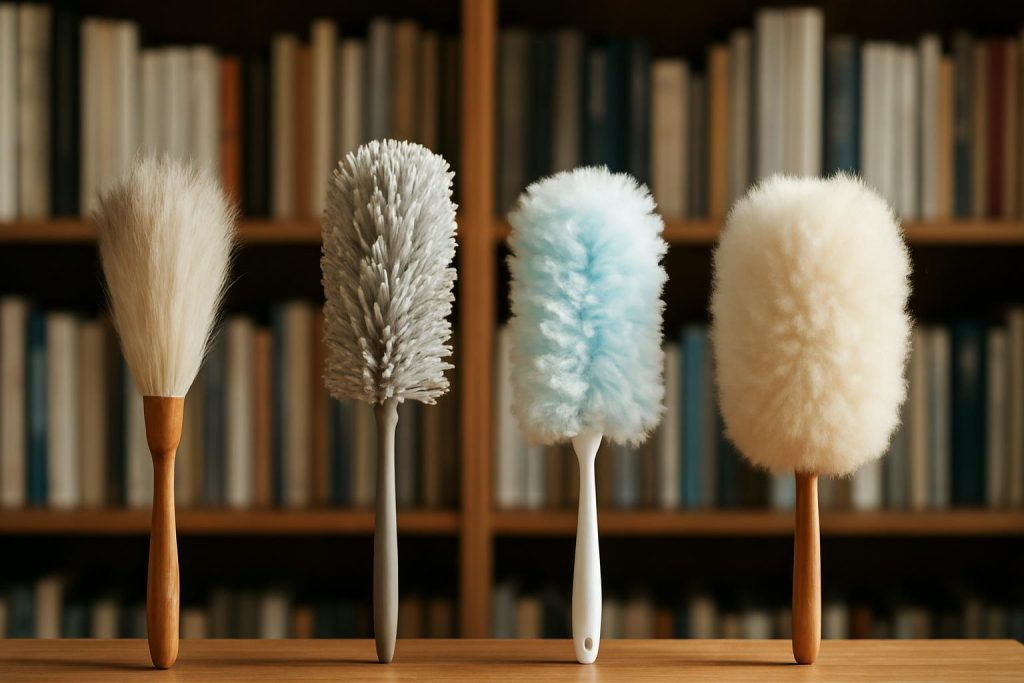
The 4 best dusters for books in 2026
Redecker Goat Hair Dust Brush
This is my top pick for rare books, art books, and photo albums. Goat hair is extremely soft and fine, so it glides over cloth and uncoated paper. The gentle bristles lift powder without scraping. The narrow profile reaches along spines and edges easily.
Why it helps: Ultra soft goat hair protects sensitive materials while removing fine dust that microfiber sometimes misses on textured cloth. The bristle density creates a smooth, even pass that does not flick debris.
Best for: Delicate bindings, rare editions, deckled edges, fabric jackets, and dusting page edges with gentle strokes.
How to use: Hold the book upright. Brush top edge front to back in short strokes. Work along the spine and boards with light pressure. On shelves, brush from back toward the front lip to collect dust in one direction. Do not jam the brush into tight gaps.
Care and maintenance: Tap out dust outside after each use. For a deeper clean, use a gentle comb or blow with cool air from a hand blower. If needed, wash quickly with cool water and a drop of mild soap, rinse well, reshape, and air dry bristles down. Avoid hot water and never machine dry.
Potential downsides: Does not hold as much dust as a plush microfiber head, so you need more frequent shake outs during heavy tasks. Not ideal for very dusty garage style shelves.
I think: For collections that matter, this is the safest everyday tool. It encourages a light hand and preserves surfaces that age poorly under abrasion.
OXO Good Grips Microfiber Delicate Duster
When you want a fast clean on general shelves and modern hardcovers, this microfiber hand duster is efficient and easy to maintain. The split fibers grab fine dust and the head is compact enough for control around decorative objects.
Why it helps: Split microfiber captures loose dust and light allergens without pushing them into crevices. The soft, flexible head reduces accidental bumps and the handle gives solid control.
Best for: Everyday bookcases, paperbacks, and mixed media shelves with frames and decor. Great for users who want washable convenience.
How to use: Glide along spines with minimal pressure. Sweep the top edges of books toward the shelf front to collect dust. For deeper shelves, angle the head and keep strokes short to avoid scattering.
Care and maintenance: Detach the head if removable, or hand wash. Machine wash cold in a delicates bag, mild detergent, no bleach, no fabric softener. Air dry only. Fabric softener coats fibers and kills dust grabbing performance.
Potential downsides: Very fragile book materials may still prefer goat hair. Microfiber can build static that attracts lint, so wash regularly to restore performance.
I think: For most households, this is the most practical default. It balances gentleness with speed and is simple to keep clean. I reach for it first on living room shelves.
Swiffer Dusters Heavy Duty Starter Kit
If you need a quick, low effort tool that traps a surprising amount of dust, this disposable system works well on shelves and accessible rows. The fluffy fibers and light static grab dust and hold it. Refills make upkeep easy, especially during allergy season.
Why it helps: The multi layer fibers lift dust off flat tops and spines and keep it locked. The handle adds reach without bulk. It is effective for fast maintenance in busy spaces.
Best for: High traffic bookcases, office shelves, shared spaces, and quick weekly passes when you have little time.
How to use: Assemble the duster fully to fluff the fibers. Lightly sweep the top edges of books and the shelf surfaces. Work front to back to trap particles, then fold the duster slightly to clean between rows. Replace when the head looks saturated.
Care and maintenance: Disposable heads need no washing. Store clean refills in a sealed bag to keep them dust free until use.
Potential downsides: Ongoing cost and waste from refills. Less precise than a goat hair brush for rare materials. Do not press hard or you will push dust into fabric instead of lifting it.
I think: For quick resets before guests or during spring pollen, this is the speed champion. I keep one in a hallway closet for fast touch ups.
Wool Shop Lambswool Duster 10 inch
Natural lambswool has lanolin that helps attract and hold dust. This compact model is ideal for shelves, tops of rows, and trim around built ins. The wool fibers are gentle yet plush, so you clear more dust per pass than a thin brush.
Why it helps: Lambswool balances softness with capacity. The natural fiber structure grips dust and reduces re release. It is a low static, low scatter option for general book care.
Best for: Mixed shelves, wood cases, and rooms where you want fewer throwaways. Works well on framed art near bookcases too.
How to use: Roll the wool gently along the top edges and spines. Use small, controlled motions. Shake out outdoors as the head fills. Do not twist against delicate dust jackets.
Care and maintenance: Shake and air out after each use. For deeper cleaning, a wool-safe rinse and air dry restores loft. Keep away from high heat and harsh detergents.
Potential downsides: Not as pinpoint precise as goat hair for tight rows. Needs periodic combing to prevent matting if used on heavy dust.
I think: A great middle ground. It feels gentle like a brush but covers more surface fast. I like it for weekly maintenance on big wall units.
How we tested and what to expect
I used common book surfaces: cloth bound hardcovers, glossy jackets, paperback matte covers, and uncoated paper edges. I measured how much dust lifted per pass, how much got pushed, control on tight shelves, and residue left behind. I also noted user fatigue and maintenance steps. Results favored soft natural fibers for delicate tasks and microfiber for routine speed. Disposable heads excelled at fast resets.
Expect any duster to work best with light pressure. The goal is to lift and lock, not scrub. Expect soft tools to need frequent shake outs during heavy cleaning. Expect washable heads to last longer if you avoid fabric softener.
Cleaning routine for books and shelves
Weekly quick pass
Use microfiber or lambswool. Work shelf by shelf. Light strokes from back to front on the top edges, then along spines. Finish by dusting the shelf surface. This keeps dust from compacting into the paper.
Monthly deeper dust
Pull books forward a few inches. Use goat hair on the top and bottom edges and along the fore edge. Wipe the bare shelf with a slightly damp microfiber cloth, then dry fully before sliding books back. This reduces long term buildup.
Seasonal maintenance
For large collections, rotate shelves. Use compressed cool air only on shelves, not directly on paper edges. Vacuum the room with a HEPA filter to reduce recirculation. Check for signs of mold or pests while you work.
Mistakes to avoid
Do not press hard. Pressure embeds dust into fibers and scuffs jackets. Do not use polishing sprays or silicone near books. Residues attract dust and can stain paper. Do not dust across the grain of cloth with force. This frays fabric over time. Do not use wet cleaning on page edges. Moisture warps paper and wicks into the block.
Care tips that extend duster life
Shake out natural fibers outdoors after each session. Comb gently if they mat. Store goat hair and lambswool heads away from heat and direct sun. Wash microfiber in cold water and air dry. Keep disposable head refills sealed until use to prevent pre loading with dust.
Which duster should you choose
Pick the tool that matches your books and your routine. If you have rare or delicate bindings, the Redecker Goat Hair Dust Brush is the safest first choice. If you want a fast, washable general tool, OXO Good Grips Microfiber Delicate Duster will handle most shelves well. If you favor speed with no washing, the Swiffer Dusters Heavy Duty Starter Kit is efficient for quick passes. If you want a natural fiber that covers more ground but stays gentle, the Wool Shop Lambswool Duster 10 inch is a strong balance.
Conclusion
A good book duster is soft, controlled, and holds dust instead of moving it around. With the right tool and a simple routine, you protect spines, cloth, jackets, and page edges for years. Choose by fiber, control, and care preferences. Keep pressure light. Clean the tool as directed. The payoff is visible and long lasting.
FAQ
Q: What type of duster is safest for rare or delicate books?
A: Goat hair is safest for rare or delicate books because it is extremely soft and fine, so it glides over cloth and uncoated paper with a light touch.
Q: How often should I dust my books?
A: Dust books with a weekly quick pass and add a monthly deeper dust where you pull books forward, clean edges, and wipe shelves before returning them dry.
Q: Can I spray polish or cleaner on a duster for books?
A: Do not use polishing sprays or silicone near books and avoid wet cleaning on page edges because moisture warps paper and residues attract dust.
Q: Are disposable dusters OK for books?
A: Disposable dusters are OK for books if you use light pressure and short strokes because the multi layer fibers lift dust and keep it locked without pushing it into fabric.
Q: How do I clean a microfiber duster?
A: Shake out after use, then machine wash cold in a delicates bag with mild detergent, no bleach, no fabric softener, and air dry only to restore performance.