
We are reader supported. When you purchase through links on our site, we may earn an affiliate commission. Also, as an Amazon affiliate, we earn from qualifying purchases.
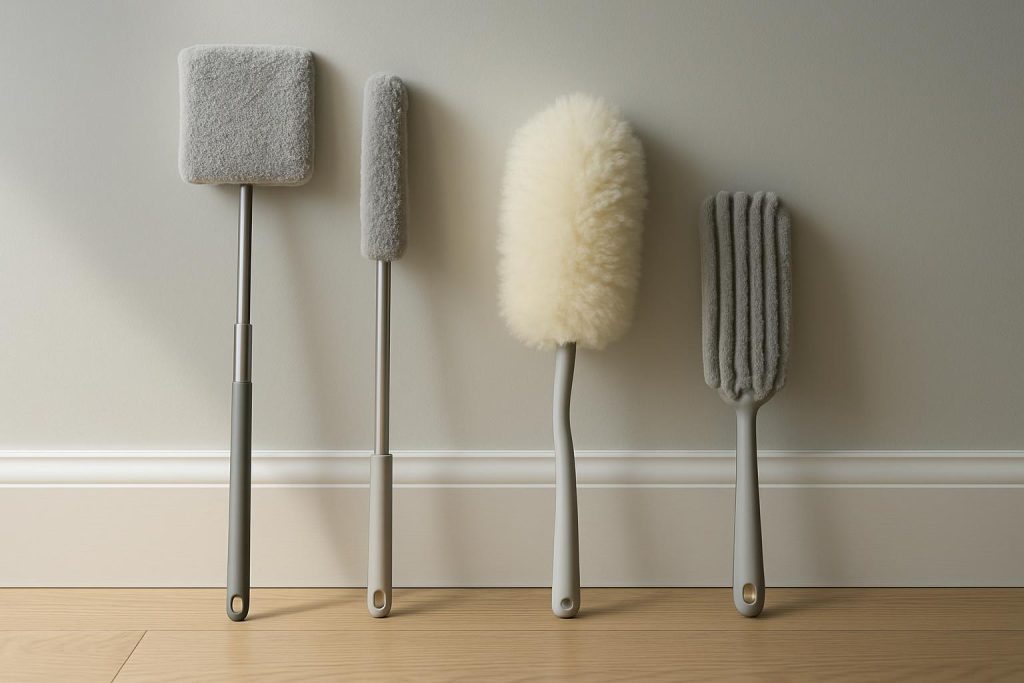
Baseboards collect dust, hair, and grit faster than most surfaces in the home. They sit at floor level, right where airflow, pet hair, and daily foot traffic push debris. The right duster saves your knees, speeds up cleaning, and prevents scuffs or paint wear from constant scrubbing. After testing and comparing multiple tools, I reduced the list to four options that cover every situation from quick weekly dusting to deep cleaning after a renovation. Each pick solves a different problem: reach, hair capture, edge detailing, or sticky buildup. Use this guide to pick the one that matches your home, flooring, and cleaning routine.
How I Chose These Dusters
I focused on four points that matter on baseboards:
Reach and angle to clean without crouching, including corners and furniture edges.
Dust and hair capture since baseboards trap pet hair and fine grit.
Control and contact so the head stays flat on the ledge without flipping or skipping.
Washability or refill access to keep long-term costs reasonable.
I also gave extra credit to tools that do more than baseboards, like walls and ceilings, because that keeps storage simple.
1) Baseboard Buddy Baseboard and Molding Cleaning Tool
The Baseboard Buddy is a dedicated baseboard tool with a pivoting head and reusable microfiber pads. It is shaped to hug the profile of trims and moldings, which reduces missed spots along the top lip.
Key features
– Shaped, pivoting head designed for baseboards and trim
– Reusable microfiber pads that can be used dry or lightly damp
– Telescoping pole to reach behind furniture and low corners
Why it helps
The head design keeps even pressure across the baseboard edge. It reduces the chance of scuffing paint because microfiber lifts dust without hard scrubbing. The pivot joint makes it easy to follow long runs of wall without wrist strain.
Best for
– Homes with lots of detailed molding or taller baseboards
– People who want a dedicated baseboard tool that does not flip or roll
Potential downsides
– Pads need regular washing to stay effective
– For very sticky grime, you may still need a short-handled detail brush along tight seams
How to use it for baseboards
Use dry for weekly or biweekly dusting. For sticky spots, mist the pad with water and a drop of mild dish soap. Run the head along the top edge first, then the face. Work in long strokes from corner to corner. Flip the pad when it looks loaded, then swap or wash.
Maintenance and lifespan
Wash pads in cold water with a gentle detergent, no fabric softener. Air-dry to maintain fiber grab. Replace pads when the microfiber looks matted flat or stops trapping fine dust.
My take
I think this is the easiest way to get straight, uniform results on long stretches of baseboard. The shape takes guesswork out of the angle. If you have pets or textured trim, it pays for itself in time saved.
2) OXO Good Grips Microfiber Extendable Duster
This is a simple, durable microfiber duster with a telescoping handle. It is not baseboard-shaped, but the slim head tracks along the top ledge well and gets under radiators and low furniture.
Key features
– Extendable handle for reach and ergonomic use
– Removable, washable microfiber head
– Soft, flexible head that conforms slightly to trim
Why it helps
Microfiber captures fine dust and hair instead of pushing it. The slim profile sits flat on the top lip of most standard baseboards. The reach is enough for 8 to 10 ft walls, so it doubles for crown molding and corners.
Best for
– Apartments or small homes where a multipurpose duster is smart
– People who want washable microfiber without buying refills
Potential downsides
– Not as fast as a sculpted baseboard head for very tall or ornate trim
– For stubborn buildup, you need to dampen the head and move more slowly
How to use it for baseboards
Extend the pole a little so you can stand upright. Hold the head parallel to the floor and skim the top ledge first, then angle down to catch the face. If you see clumps of hair, pause and pinch them off the fibers so they do not redeposit. For sticky marks, lightly dampen one corner of the head and spot clean, then follow with a dry pass.
Maintenance and lifespan
Remove the head and hand-wash or machine-wash on a delicate cycle. Avoid heat. Replace if the fibers look worn or lose static grab. The pole mechanism holds up well under normal use.
My take
I think this is the most versatile pick if you want one tool that covers baseboards, shelves, frames, vents, and light fixtures. It is not a specialist, but it is steady and reliable day to day.
3) Swiffer 360 Dusters Heavy Duty Extender Starter Kit
This kit uses disposable 360-degree fluffy dusters on a flexible, extendable handle. The fibers hold a static charge that grabs dust and hair quickly. The articulation allows you to set an angle and glide along baseboards without bending.
Key features
– Extendable pole with adjustable angle
– Heavy duty 360 duster refills that trap hair and fine dust
– Flexible fork to contour around obstacles and along trim
Why it helps
The heavy duty fibers excel at pet hair and light debris. The 360 design clears both the top edge and face in one pass with a slight hand tilt. This saves time in busy homes and handles pre-cleaning before mopping.
Best for
– Homes with pets that shed
– Quick weekly maintenance when you do not want to stop and wash a pad
Potential downsides
– Ongoing cost for refills
– Not ideal for damp cleaning or sticky spots
How to use it for baseboards
Fluff the duster fully before use. Set the head at a shallow angle and run along the length of the baseboard, letting the fibers skim both surfaces. For corners, fold the head slightly with your fingers to create a tip. Toss the refill when it looks loaded, especially with pet hair.
Maintenance and lifespan
The pole and angle joint are durable if you avoid heavy pressure. Store with the head removed to maintain shape in the next session.
My take
I think this is the fastest way to do a whole house when hair is the main issue. The refills make it a low-friction habit, which often means it actually gets done.
4) E-Cloth Flexi Edge Floor and Wall Duster
This is a wide, flexible duster with dense microfiber fingers and a low-profile head. It is designed for floors and walls, but it excels at baseboards because the edges flex and the fibers reach into the ledge and seams.
Key features
– Wide head with flexible edges that contour to trim
– Dense microfiber fingers that trap dust and hair
– Washable head with long lifespan
Why it helps
The flexible edge hugs baseboards even on uneven walls. The microfiber fingers reach the tiny gap between the trim and floor, where grit often hides. It covers long runs quickly while staying gentle on paint.
Best for
– Larger homes or long hallways where width speeds things up
– People who prefer washable, refill-free systems
Potential downsides
– The wide head can be awkward behind tight furniture
– Not sculpted to a profile like a dedicated baseboard head, so aim matters
How to use it for baseboards
Hold the head so one flexible edge rides on the trim ledge, and the microfiber fingers brush the face. Move in long, overlapping passes. For tight spots, choke up on the handle and use a corner of the head like a detail pad.
Maintenance and lifespan
Wash the head with mild detergent, no softeners. Air-dry. The fibers last through many cycles if you avoid high heat and fabric softener.
My take
I think this is an ideal pick if you want to do floors and baseboards in one routine. It shines in open areas and stays effective for years with proper care.
Quick Comparison and How to Choose
Speed vs cost
Swiffer 360 Heavy Duty is the fastest for weekly hair and dust, but you buy refills. E-Cloth and OXO are washable and cost less over time. Baseboard Buddy is in the middle with washable pads and a purpose-built head.
Detail vs versatility
Baseboard Buddy gives the most control on intricate profiles. OXO and E-Cloth cover more surfaces across the home. If you want one tool for baseboards, walls, and ceilings, pick OXO or E-Cloth.
Pet hair vs sticky grime
Swiffer 360 wins for hair capture. For sticky spots, use a damp pad with Baseboard Buddy or OXO. E-Cloth handles both well if you add a light mist from a spray bottle for residue.
Baseboard Cleaning Technique That Works
Set a simple routine
Do a fast dry dust weekly or biweekly depending on how fast you see hair. Add a damp clean monthly or as needed in kitchens or kid areas.
Sequence matters
– Dry dust top edge first, then face
– Use a vacuum crevice tool at floor gaps before mopping
– Do baseboards before floors so you do not kick dust back up
Light damp cleaning
For smudges, mist the microfiber pad with water and a drop of mild dish soap. Avoid soaking. Wipe, then do a dry pass to remove moisture. This protects paint and avoids dirt lines.
Corners and seams
Pinch the duster head to form a point or use the flexible edge to reach into the seam between baseboard and floor. Move slowly along caulk lines to prevent pushing debris into the gap.
Care and Storage Tips
Keep microfiber clean
Wash microfiber heads and pads with mild detergent, no fabric softener. Softener coats fibers and reduces dust grab. Air-dry to protect the split fibers.
Rotate heads
Have two pads or heads ready so you can swap mid-clean when one loads up. This keeps results even down long hallways.
Protect joints and poles
Do not force heavy pressure at full extension. Let the fibers do the work. Store with heads removed or fluffed to maintain shape.
Which One Should You Get
If you want a dedicated baseboard solution that stays flat and gives neat lines, pick Baseboard Buddy. If you want an all-rounder you will use every day on many surfaces, pick OXO. If pet hair is the main issue and you want speed, pick Swiffer 360 Heavy Duty. If you prefer washable and wide coverage that also handles floors and walls, pick E-Cloth Flexi Edge. Any of these four will cut your time and improve results if you match the tool to your space and habits.
Conclusion
Baseboards do not need to be a chore. With the right duster, you can stand tall, move fast, and get consistent results. Focus on reach, contact, and fiber quality. Use dry passes for maintenance and a light damp pass for marks. Wash or change heads before they overload. Build a routine that fits your schedule. Your baseboards will stay clean with less effort, and your floors and walls will look better because of it.
FAQ
Q: What type of duster is best for pet hair along baseboards?
A: Swiffer 360 Heavy Duty wins for hair capture, while E-Cloth also performs well if you prefer washable.
Q: Do I need a dedicated baseboard tool or can a floor duster work?
A: A dedicated head like Baseboard Buddy gives the most control, but versatile tools like OXO and E-Cloth handle baseboards along with walls and floors.
Q: How often should I dust baseboards?
A: Do a fast dry dust weekly or biweekly depending on how fast you see hair, and add a damp clean monthly or as needed.
Q: How do I clean microfiber duster heads and pads?
A: Wash microfiber with mild detergent, no fabric softener, and air-dry to protect fiber performance.