
We are reader supported. When you purchase through links on our site, we may earn an affiliate commission. Also, as an Amazon affiliate, we earn from qualifying purchases.
Indian cooking in a US kitchen is joyful but tough on dishwashers. Thick gravies, oil-heavy tadka, turmeric stains, rice bits, and large cookware like kadhai and pressure cookers test any machine. You need a dishwasher that cleans heavy soil, dries stainless steel well, and fits awkward utensils without drama. This guide gives clear picks that work, plus simple steps to get spotless results every day.
What Indian cooking demands from a dishwasher
Heavy grease and spice stains
Masala oils cling to steel and ceramic. Turmeric and paprika can mark plastics. You need strong spray coverage, long high-temp cycles, and reliable detergent dosing. Drying must be efficient, or oil film re-deposits.
Burnt-on cookware and deep vessels
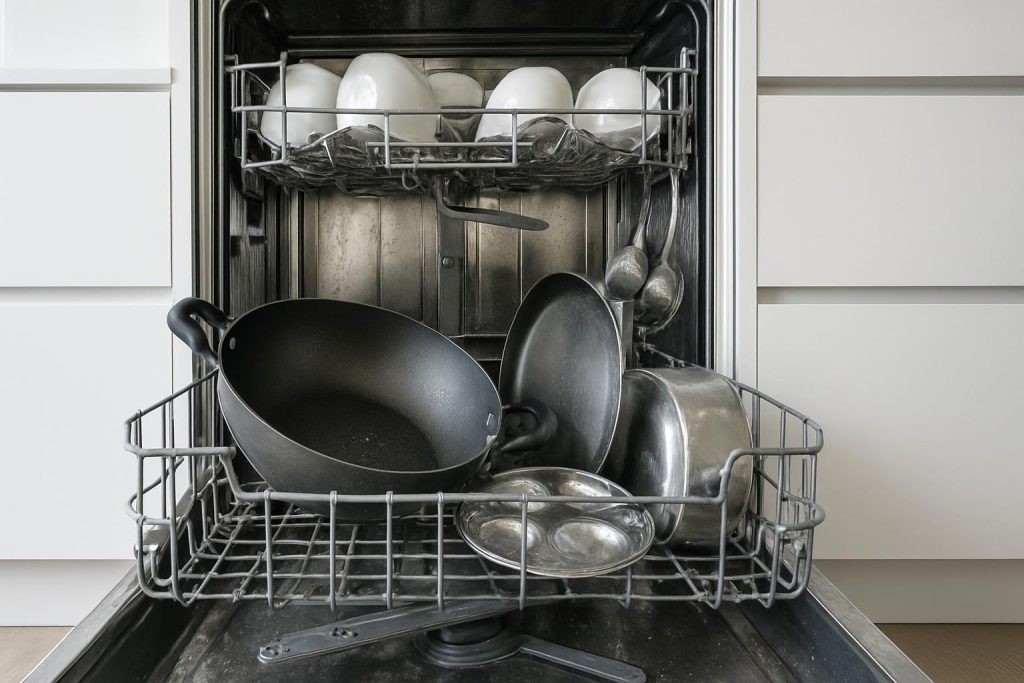
Kadhai, tawa, pressure cooker base, idli plates, and tadka pans need open space and stable tines. Rotating spray arms must reach deep curves and flat pans. A third rack and adjustable middle rack make loading easier.
Water hardness in US cities
Many regions have hard water. Without a softener or correct rinse aid, you get white film and poor drying. Miele often includes a built-in softener. Some Bosch models include it. Check the spec sheet for your area.
Drying steel and plastics
Steel plates and dabbas need higher drying performance than standard condensation-only systems. Features like Bosch CrystalDry or a heated fan system help. Auto-open door at the end improves results.
Noise and nighttime operation
If you run cycles after dinner, look for 44 dBA or quieter. Quiet machines keep your open-plan space comfortable.
Top picks and why they work with Indian meals
Bosch 800 Series SHPM78Z55N or SHXM78Z55N
Why it works. CrystalDry improves drying for steel and many plastics. 42 dBA is quiet. RackMatic gives three height levels on the middle rack. Foldable tines make room for kadhai and pressure cooker pots. Heavy and Auto cycles handle masala oil well when paired with a quality pod and rinse aid.
Use it this way. For biryani trays and oily plates, select Heavy with Sanitize and Extra Dry. Place kadhai on the lower rack at an angle so the spray hits the interior. Load tawa along the sides to avoid blocking the spray arm.
Good to know. Bosch uses a filter system. Clean the filter every 1 to 2 weeks to maintain pressure. Some US Bosch models include a water softener; confirm if you have hard water.
Bosch 500 Series SHPM65Z55N
Why it works. AutoAir opens the door at the end of the cycle to improve drying. Strong cleaning with flexible racks and quiet 44 dBA operation. A great balance of price and performance for Indian households that want reliable results without the premium of CrystalDry.
Use it this way. Choose Auto for daily loads. Select Heavy plus Extra Dry for oily pots and pans after deep-frying or rich gravies.
Miele G 7106 SCU or G 5006
Why it works. Many Miele models include a built-in water softener, a major advantage in hard-water regions. AutoOpen Dry vents steam at the end. The 3D MultiFlex third rack fits ladles, small bowls, and masala spoons. QuickIntenseWash cleans well in under an hour for lighter loads.
Use it this way. Set the correct water hardness in the control panel. Use Auto for mixed loads. HeavySoil for sticky rice, burnt daal edges, or kadai residue. Place idli stands and pressure cooker bodies on the lower rack and angle them to expose surfaces to water jets.
Good to know. Miele is premium on price but excellent for durability and consistent results. Follow the manual for salt refills if your model includes a softener.
KitchenAid KDTM604KPS
Why it works. The FreeFlex third rack is deep and holds cups, small bowls, and tiffin lids. The wash system has strong coverage that deals well with oil and starch. ProDry with a heating element and fan boosts drying for stainless and plastics. 44 dBA is quiet enough for open kitchens.
Use it this way. For greasy wok-like kadhai, choose ProWash or Heavy with Extended Dry. Keep light plastics on the upper racks away from the heating element. The adjustable middle rack lets you fit tall pressure cookers below.
Good to know. Clean the filter regularly. The heating element helps drying, but top-rack plastics are safer.
GE Profile PDT755 or Cafe CDT845
Why it works. The Piranha hard food disposer grinds food bits, helpful for rice, dal, and vegetable scraps if you do not pre-rinse. Bottle jets target deep vessels like copper bottles or tall spice jars. Dry Boost with fan improves drying for steel and plastic.
Use it this way. Use Auto or Heavy with Dry Boost for oily loads. If you often leave food on plates, this line is forgiving. Place tawa along the sides and lean deep vessels for spray access.
Good to know. Noise is around mid-40s dBA. The disposer is a plus for families that prefer no pre-rinse.
LG LDPH7972S or LDT7808SS
Why it works. TrueSteam helps loosen oil and starchy residue. QuadWash spray arms cover corners well. Auto door opening improves drying. The racks are flexible for odd shapes like kadhai and idli plates.
Use it this way. Choose Turbo or Heavy for oily utensils. Steam cycles help when turmeric and oil mix on steel plates. Pair with a strong pod and rinse aid.
Good to know. Check local service availability. Keep the filter clean to maintain wash pressure.
Samsung DW80B7070US or DW80R9950US
Why it works. Linear Wash or StormWash delivers strong coverage that reaches deep cookware. AutoRelease door opens for better drying. Sleek racks fit flat pans and tall pots.
Use it this way. Use Heavy with Sanitize and Extra Dry for festival cooking cleanup. Angle kadhai and trays. Leave space around the spray path.
Good to know. Reliability varies by model and region. Confirm service in your area and opt for a protection plan if possible.
Budget pick Whirlpool WDT750SAKZ
Why it works. Solid cleaning with Sensor cycle, a heating element for drying, and simple controls. Good value for renters or first homes. Extended Dry helps with steel plates and lunchbox containers.
Use it this way. For daily loads, Sensor plus Heated Dry works. For heavy masala, use Heavy plus Extended Dry. Keep large cookware on the bottom rack with clear spray access.
Compact kitchen option Bosch 18 inch SPE53B55UC
Why it works. Small kitchens need a slimmer unit. This 18 inch model still offers strong cleaning, quiet operation, and a filter-based system that handles daily Indian cooking for two to three people.
Use it this way. Wash daily to avoid overloading. Focus on proper loading method since space is tight.
How to choose the right one for your kitchen
Fit and installation check
Measure the opening. Standard width is 24 inches. Apartments may use 18 inches. Check door clearance with nearby cabinets. Confirm power supply, water line, and drain connections. If you plan a panel-ready front, match the cabinet style and weight limits.
Racks and loading flexibility
Look for a third rack for spoons, tadka ladles, and small dabbas. Ensure the middle rack adjusts up and down. Foldable tines help position kadhai, tawa, and cooker bodies securely. Bottle jets are useful for tall bottles and spice jars.
Cleaning power and cycles
Heavy or Pots and Pans cycles are essential. Sanitize or high-temp options improve grease cutting and hygiene. Soil sensors optimize run time when the load is not too dirty. Steam options are helpful for oily residue if available.
Drying technology
Condensation drying is gentle but can struggle with plastics. Heated fan systems or AutoOpen improve results. Bosch CrystalDry uses a mineral-assisted process that boosts drying. If you store stainless steel plates and dabbas right away, aim for the strongest drying system you can afford.
Hard food disposer vs filter
Disposer models like GE grind small food bits. They suit homes that skip pre-rinsing. Filter systems like Bosch and Miele are quiet and clean well but need periodic filter cleaning. Choose based on your routine.
Water softener and hard water
Hard water leaves spots and a chalky film. If your water is hard, prefer a model with a built-in softener or plan to use rinse aid and correct detergent dosing. Miele often includes a softener. Some Bosch units include it. Always confirm on the spec sheet.
Noise matters
42 to 44 dBA is comfortable for nighttime runs. Louder than 48 dBA is noticeable in open living spaces.
Setup for Indian cookware
What can go in, what stays out
Dishwasher safe. Stainless steel plates, dabbas, pressure cooker bodies, idli plates, tempered glass lids, silicone gaskets on the top rack, most ceramic and stoneware.
Avoid or use with caution. Cast iron and carbon steel lose seasoning. Hand wash nonstick to protect the coating. Hand wash anodized aluminum since it can discolor. Copper and brass can tarnish. Wooden handles can crack or warp. The pressure cooker whistle and rubber gasket last longer if hand washed.
Prepping heavy pots without pre-rinsing
Scrape food into the trash. Do not rinse everything under the tap. Soak burnt spots for 10 to 20 minutes in hot water with a drop of dish soap if needed. For stubborn turmeric on plastic, spot treat later with a baking soda paste or hydrogen peroxide and rinse well.
Loading guide for kadhai, tawa, pressure cooker
Lower rack. Place kadhai and cooker bodies at an angle facing down so spray hits inside surfaces. Do not nest bowls. Keep at least one inch clearance from the spray arm.
Sides and back. Slide tawa and flat pans along the sides to avoid blocking spin arms. Ensure the detergent dispenser can open freely.
Upper racks. Put light plastic containers up top. Lay spoons and small lids in the third rack. Remove pressure cooker gasket and whistle and place them on the top rack or wash by hand to prolong life.
Detergent, rinse aid, and boosters
Use a premium pod or powder with enzymes. Cascade Platinum and Finish Quantum work well in most US water conditions. Always use rinse aid. Adjust dose based on spotting. If you have very hard water, consider dishwasher salt only if your model supports a built-in softener. Do not add table salt to a machine without a softener system.
Daily routines that improve results
Before starting, run the hot water at the sink for 15 to 30 seconds so the dishwasher starts hot. Choose Sanitize weekly to keep the tub fresh. Clean the filter every 1 to 2 weeks. Wipe the door gasket monthly. Every 1 to 2 months, run a cleaner cycle with a dishwasher cleaner product. If you see white film, descale according to the manual.
Troubleshooting common issues with Indian cooking residues
Turmeric stains and yellow film
Plastics can hold turmeric color. Wash as usual, then spot clean with a baking soda paste or diluted hydrogen peroxide. Rinse well. For stainless steel utensils, Bar Keepers Friend or a non-scratch cleanser removes color safely. Do not mix vinegar with chlorine products.
Oily film left on steel
Use a hotter cycle with Sanitize and Extra Dry. Confirm you are using rinse aid. Try a different pod or increase detergent if using powder. Clean the filter and spray arms. Make sure large pans are not blocking the spray arms.
White haze or spots
If the haze wipes off with vinegar, it is limescale. Improve softening and use rinse aid. If it does not wipe off, it may be etching from too much detergent or heat on delicate glass. Reduce detergent and avoid the hottest cycles for glassware.
Food bits stuck after the cycle
Check that spray arms spin freely. Reposition pans that block flow. Clean the filter. Use Heavy or a longer cycle for dense loads.
Simple model-by-model use cases
If you want the best steel drying
Pick Bosch 800 with CrystalDry or KitchenAid with ProDry. Use Extra Dry and Sanitize. Open the door for a few minutes after the cycle to vent steam if your model does not auto-open.
If you have very hard water
Pick a Miele with a built-in softener or confirm a Bosch with softener. Set hardness correctly. Always use rinse aid. Clean the machine monthly to prevent scale buildup.
If you never pre-rinse
Pick GE Profile or Cafe with the Piranha hard food disposer. Use Auto or Heavy. Empty the filter as needed and check spray arms for clogs.
If you need a quiet machine for open spaces
Choose 44 dBA or lower. Bosch 500 or 800, Miele G 7000 or G 5000, KitchenAid KDTM604KPS all fit.
Maintenance tips that protect performance
Weekly
Wipe the door edge and the bottom lip to remove grease lines. Rinse the filter and check spray arm holes. Top up rinse aid.
Monthly
Run a dishwasher cleaner on a hot cycle. Inspect the racks and tines. Tighten any loose utensil holders. If you smell odors, run a Sanitize cycle empty.
Seasonal
Check your water hardness with test strips and adjust settings. If your model uses salt, refill it. Inspect the inlet screen for sediment if your area has older plumbing.
Final buying notes
Where to spend and where to save
Spend on wash performance and drying. CrystalDry, AutoOpen, and fan-assisted drying give real gains on steel plates and lunchboxes. Spend on racks that fit Indian cookware. Save on smart features if you will not use app control. Save on custom panels unless you need a seamless look.
Warranty and service
Check local service networks before you buy. For premium brands, consider an extended warranty if your area has limited technicians. Keep purchase and installation records for future claims.
Conclusion
Indian cooking needs a dishwasher that handles oil, spice, and heavy pots without fuss. Bosch 800 and 500 deliver strong cleaning and improved drying. Miele adds a built-in softening advantage and consistent results. KitchenAid is powerful with excellent rack flexibility. GE Profile and Cafe suit homes that skip pre-rinsing. LG and Samsung offer strong spray coverage with steam and auto-open features. Whirlpool gives solid value on a budget.
Match the machine to your habits. Choose strong drying for steel plates and dabbas. Choose a disposer if you never pre-rinse. Choose built-in softening for hard water. Load smart, use a quality pod and rinse aid, clean the filter, and run hot cycles when needed. Do this, and even the toughest masala cleanup becomes easy.