
We are reader supported. When you purchase through links on our site, we may earn an affiliate commission. Also, as an Amazon affiliate, we earn from qualifying purchases.
Orchids look delicate, but keeping them alive is simple when you follow a clear routine. This guide focuses on practical steps that work in normal homes without special equipment. Start with easy wins, learn the basics of light and watering, then add a few habits that prevent problems before they start.
Introduction
Most orchids fail because of two things: not enough light and too much water. Everything else is small adjustments. When you set the right spot, use the right potting mix, and water correctly, orchids grow new leaves, roots, and regular blooms. You do not need a greenhouse. A bright window, a breathable pot, and a steady routine are enough.
Choose the Right Orchid First
Start with beginner friendly types
Pick Phalaenopsis, often called moth orchids. They thrive in normal room temperatures, prefer bright indirect light, and handle indoor humidity better than many other types. They bloom for months and recover well from small mistakes.
Buy a healthy plant
Choose firm, green leaves without spots or wrinkles. Check roots through the pot if it is clear. Healthy roots are silver to green and firm. Avoid plants with mushy brown roots, yellowing leaves at the crown, or loose wobbly stems. Slight cosmetic damage is fine. Structural problems are not.
Light: The Number One Factor
Give bright, indirect light
Place orchids near an east or bright north window. A south or west window can also work with a sheer curtain. Aim for bright light that never burns the leaves. If the sun forms sharp shadows on your hand, it is too strong for most Phalaenopsis. Soften with a sheer curtain or move the plant slightly back from the glass.
Read the leaves
Medium green leaves mean the light is right. Dark green and slow growth mean not enough light. Yellowing or reddish leaves mean too much light. Adjust placement by small steps and give the plant a few weeks to respond.
Adjust with seasons
In winter, move the plant closer to the window or remove the sheer. In summer, add the sheer or move a bit back. Rotate the pot a quarter turn every two weeks so growth stays even and spikes grow straight.
Watering: Less Often, Done Thoroughly
Water by dryness level, not by calendar
Water when the potting mix is almost dry, not bone dry. In bark, that is usually every 5 to 10 days at home. In sphagnum moss, it can be every 7 to 14 days. Frequency changes with light, season, pot size, and humidity. Learn the weight of the pot when wet and when dry. Lift it before watering. Light pot means time to water.
How to water correctly
Move the plant to a sink. Use room temperature water. Soak the medium fully until water runs out of the bottom. Let it drain completely. Do not let the pot sit in water. Empty saucers after 10 minutes. This flushes salts and keeps roots healthy.
Keep water out of the crown
The crown is the center where leaves meet. Standing water here causes crown rot. If water gets in, wick it out with a corner of a paper towel. Tilt the plant to drain after watering.
Use better water when possible
Tap water is fine if it is not very hard. If leaves show white crust or tips burn, switch to filtered, rain, or distilled water for a few months. Once a month, flush the pot with plain water to remove fertilizer salts.
Pots, Medium, and Drainage
Choose the right pot
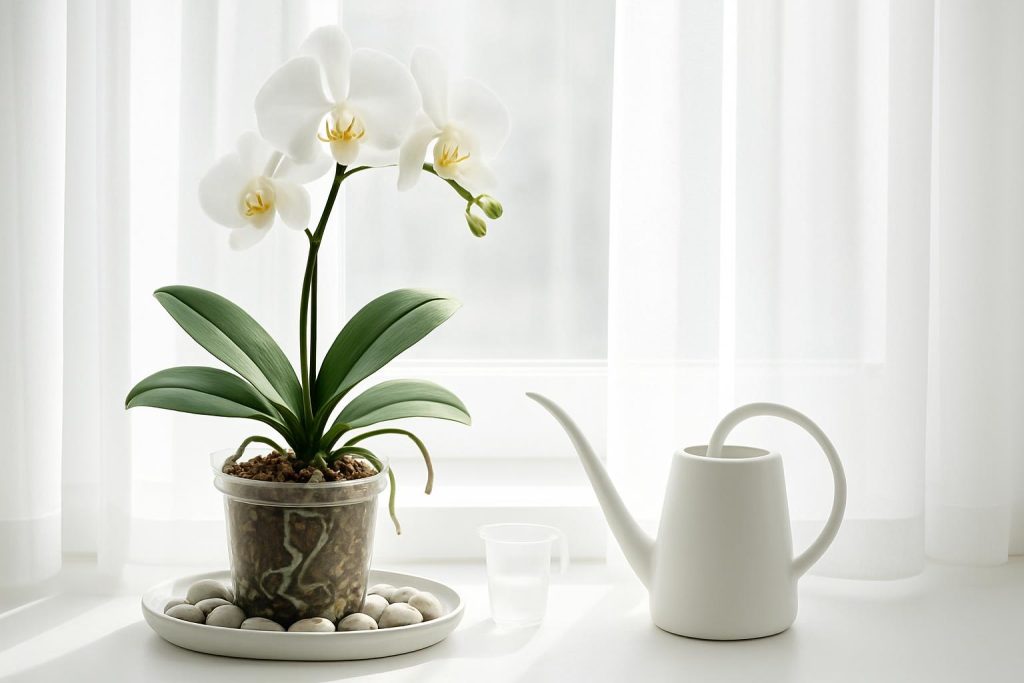
Use a pot with many drainage holes. Clear plastic pots help you see roots and monitor moisture. Double potting works well: the orchid sits in a clear pot inside a decorative cachepot. Remove the inner pot to water, drain fully, then return it.
Pick the right medium
For beginners, medium grade orchid bark is forgiving. It provides airflow and dries at a steady rate. Sphagnum moss holds more water and suits dryer homes, but it can stay wet too long if packed tight. A simple mix of bark with a little perlite or charcoal gives good drainage and reduces salt buildup.
Repot on a schedule
Repot every 12 to 18 months, or sooner if the medium breaks down or roots rot. Best time is right after blooming. Gently remove old medium, trim dead roots, and place the plant at the same height in fresh bark. Do not over pot. Choose a pot that fits the root mass with a little room to grow.
Humidity and Temperature
Target steady ranges
Most home friendly orchids prefer 40 to 60 percent humidity, daytime 21 to 27 C or 70 to 80 F, nighttime 16 to 20 C or 60 to 68 F. A small day to night temperature drop helps spike formation in Phalaenopsis.
Easy ways to raise humidity
Use a pebble tray under the pot. Fill with water below the top of the pebbles so the pot stays above the waterline. Group plants together to create a small humid zone. A small cool mist humidifier on a timer works well in dry climates. Avoid misting flowers. Water spots can stain and invite fungus.
Avoid drafts and hot blasts
Keep orchids away from heating vents, radiators, and direct AC drafts. Sudden temperature swings stress plants and cause bud drop. Stable placement is better than frequent moving.
Feeding Without Overdoing It
Use a balanced orchid fertilizer
Apply a balanced fertilizer at a weak dose. Aim for about one quarter to one half of the label rate every second or third watering during active growth. In low light winter months, cut back to monthly. Always water with plain water first if the mix is bone dry, then feed. This prevents root burn.
Flush salts monthly
Once a month, water heavily with plain water so it pours through the pot for 30 to 60 seconds. This reduces buildup that can burn root tips and cause leaf tip dieback.
Airflow and Plant Cleanliness
Give gentle air movement
Airflow prevents fungal problems and strengthens roots. Use a small fan on low, aimed to pass by, not at, the plant. Keep leaves dry overnight whenever possible.
Keep leaves clean
Dust blocks light. Wipe leaves every few weeks with a soft damp cloth. Support the leaf from below and wipe away from the crown. Skip leaf shine products. They can clog pores.
Sterilize tools
Before trimming roots or cutting spikes, wipe scissors with alcohol or flame sterilize metal tools and let them cool. Clean cuts reduce disease spread. Remove dead sheaths and dry leaves that trap moisture around the crown.
Bloom Cycle and Pruning
Staking and support
As a spike grows, loosely clip it to a stake for support. Do not bend hard. Adjust clips as the spike lengthens. Good support prevents breakage and keeps flowers facing outward.
After flowering
Phalaenopsis can rebloom from a healthy green spike. For a quicker small rebloom, cut the spike just above a node about two nodes below the last flower. For stronger future blooms, cut the spike near the base once it turns brown or if the plant looks tired. Rested plants put energy into roots and leaves and bloom better next season.
Triggering spikes
In early fall, provide brighter days and slightly cooler nights for a few weeks. A night drop of about 4 to 6 C can help. Keep watering steady and avoid major changes once a spike appears. Do not rotate the pot once buds form, or buds can twist or drop.
Pest and Disease Prevention
Quarantine new plants
Keep new orchids separate from others for two weeks. Inspect leaves, undersides, and crevices. Look for cottony clumps, sticky residue, webbing, or scale bumps.
Common pests and simple treatments
Mealybugs look like white cotton. Dab with alcohol on a cotton swab and wipe off. Repeat weekly until gone. Spider mites leave fine webbing and speckled leaves. Rinse leaves and increase humidity, then apply a gentle horticultural soap as directed. Scale looks like small brown discs. Gently scrape off and dab with alcohol. Severe cases may need repeated treatments and removal of infested parts.
Root rot and crown rot
Root rot shows as brown, mushy roots and a loose plant. Remove old medium, cut away rotten roots, sterilize tools, and repot in fresh bark. Reduce watering and increase airflow. Crown rot starts as a black soft spot in the leaf center. Remove water from the crown, trim affected tissue if advanced, and keep the crown dry. Prevention is best: never leave water standing in the crown.
Simple Weekly and Monthly Routines
Weekly 5 minute check
Lift the pot. If light, water. If medium is still cool and slightly damp, wait. Check leaves for dust, spots, or pests. Ensure no water is in the crown. Rotate the pot a quarter turn unless buds are forming.
Monthly maintenance
Flush with plain water to remove salts. Wipe leaves. Check stakes and clips. Inspect roots through the clear pot. If bark smells sour or looks spongy, plan a repot soon. Calibrate your care with the season by adjusting light and watering frequency.
Seasonal reset
Spring and fall are ideal for repotting after blooms. Replace old bark. Trim dead roots. Upgrade stakes if needed. Refresh your pebble tray and clean the humidifier to prevent mineral buildup and mold.
Troubleshooting: Quick Fixes That Work
Wrinkled leaves
Cause is usually underwatering or root damage. Check roots. If roots are healthy but dry, water more thoroughly and adjust frequency. If roots are rotten, repot, remove damaged roots, and rebuild a steady watering routine.
Yellow lower leaves
One leaf yellowing at the bottom is normal aging. Many leaves yellowing at once signals overwatering, low light, or sudden temperature stress. Improve light and review watering habits.
Bud drop
Common causes are temperature swings, dry air, or moving the plant after buds form. Stabilize temperature, raise humidity, and stop rotating until flowers open.
Black leaf tips or salt crust
Reduce fertilizer strength, increase monthly flushing, or switch to better water. Trim crisped tips with sterilized scissors.
Common Mistakes to Avoid
Overwatering and poor drainage
Most failures start here. Never let the pot sit in water. Use a coarse orchid mix, not regular potting soil. Water thoroughly, then let the medium approach dryness before watering again.
Too little light
A plant far from a window will not thrive. Move closer to bright windows with a sheer if needed. Leaves should be medium green and growth should be steady.
Oversized pots
Big pots hold water too long and suffocate roots. Pick a pot that fits the root ball with just a little extra room.
Cold watering and ice cubes
Very cold water shocks roots. Use room temperature water. Do not rely on ice methods. Consistent soaking and draining is safer and supports healthy roots.
Ignoring the crown
Water trapped in the crown invites rot. Always drain the crown after watering. Wipe out any water that collects in leaf bases.
Set Up a Low Effort Orchid Station
Make care easy and consistent
Place orchids together on a waterproof tray near the best window. Add a pebble tray for humidity. Keep a small watering can, a measuring cup, scissors, alcohol wipes, and paper towels in a drawer nearby. Store fertilizer and a calendar or notepad to track watering and feeding dates. Keeping tools in one place saves time and improves consistency.
Use simple tracking
Note the date you water, feed, and flush. Record bloom start and finish. When problems arise, your notes show patterns and help you correct quickly.
Travel and Busy Schedule Tips
Before you leave
Water thoroughly the day before. Top up the pebble tray. Move the plant a little farther from strong sun to slow drying. Do not seal the plant in plastic. Skip fertilizer until you return.
If you are often busy
Choose bark in a slightly deeper pot to hold moisture a bit longer without staying wet. Use a clear pot so you can see roots and moisture. Set reminders on your phone for weekly checks and monthly flushes.
Quick Species Notes for Beginners
Phalaenopsis
Best for home conditions. Bright indirect light, moderate humidity, and steady watering. Spikes can rebloom or be cut for stronger future blooms.
Dendrobium phalaenopsis type
Likes brighter light than Phalaenopsis. Water well during growth, a little drier after flowering. Do not cut canes; they store energy and may bloom again.
Cattleya
Needs brighter light and excellent drainage. Flowers are showy but the plant is tolerant if you give enough light.
Start with Phalaenopsis. Add other types once your routine is steady.
Repotting Step by Step
Simple process that protects roots
Water the plant the day before to soften roots. Gently remove from the pot and shake off old medium. Rinse roots to see clearly. Cut dead, mushy, or hollow roots with sterilized scissors. Place the plant in fresh bark, spreading roots evenly. Add medium in layers and tap the pot to settle it. Keep the crown above the medium. Stake loosely for stability if needed. Hold off on fertilizer for one to two weeks while new root tips start.
Safety and Home Care Notes
Protect your space and the plant
Use a tray to catch drips. Do not let water sit on wooden sills. Place felt pads under pots to prevent scratches. When using soaps or oils for pests, test on one leaf first and keep pets away until dry. Ventilate the room during treatments and read product labels.
Conclusion
Keeping orchids alive comes down to a few consistent habits. Give bright indirect light. Water thoroughly, then let the medium approach dryness. Use a breathable pot with fresh bark. Keep humidity moderate, air moving, and temperatures steady. Feed lightly and flush monthly. Clean leaves and tools. Watch for pests and act early. With this routine, orchids stay healthy and bloom on schedule. Start simple, track what you do, and adjust by small steps. Your orchids will reward you with strong roots, fresh leaves, and reliable blooms.