
We are reader supported. When you purchase through links on our site, we may earn an affiliate commission. Also, as an Amazon affiliate, we earn from qualifying purchases.
Mosquito blood on a wall looks small but can leave a stubborn brown-red smear. It is a protein stain, so the method matters. Use cold water. Start gentle. Test first. This guide gives you a clear, step-by-step plan for every wall type and stain stage so you can clean with confidence and avoid damage.
Understand Your Wall Before You Start
Painted Walls
Most homes have latex paint. Sheen matters. Flat and matte scuff easily and absorb water. Eggshell and satin clean better. Semi gloss and gloss tolerate stronger methods. Oil-based or enamel paints are tougher but can still dull under harsh scrubbing.
Wallpaper
Vinyl wallpaper is washable. Paper wallpaper is not. Fabric-backed or grasscloth needs very light touch. When in doubt, use minimal moisture and dab only.
Tile and Other Sealed Surfaces
Glazed tile, sealed stone, and laminate wipe clean easily. Grout may hold pigment and need oxygen bleach. Avoid acidic cleaners on natural stone unless you know it is sealed for acid contact.
Wood Paneling and Trim
Finished wood with polyurethane is fairly safe with mild soap. Oiled or waxed wood can haze if over-wet. Always wipe dry promptly.
Textured Walls
Texture traps residue. Use a soft-bristle brush or a lightly damp sponge pressed, not dragged, to avoid leaving lint or streaks on peaks.
What You Need
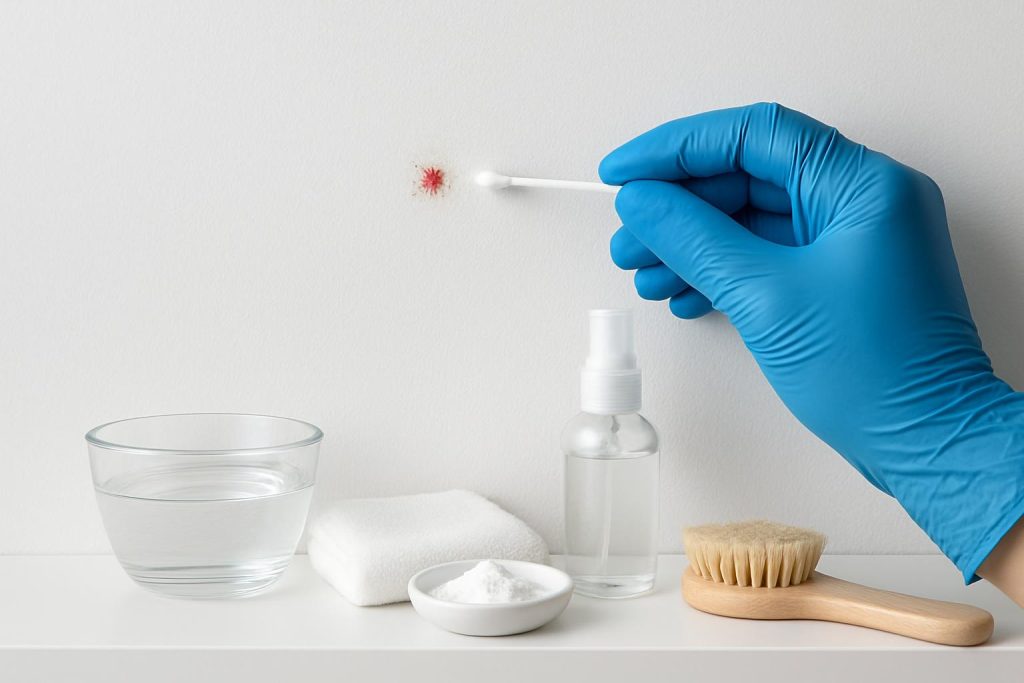
1. Microfiber cloths, soft sponges, and cotton swabs for controlled dabbing. 2. Cold water in a small bowl or spray bottle. 3. Mild dish soap. 4. Baking soda. 5. 3 percent hydrogen peroxide. 6. Enzyme cleaner for protein stains. 7. Isopropyl alcohol 70 percent for glossy paint. 8. Melamine foam eraser for last resort on washable paints. 9. Painter’s tape and a towel to protect baseboards or floors. 10. A small soft brush for textured walls or grout. 11. Stain-blocking primer and touch-up paint if cleaning fails.
Rules That Prevent Damage
1. Use cold water first. Hot water can set protein stains. 2. Test any cleaner on a hidden spot. Check for dulling, color lift, or texture change after it dries. 3. Work from least aggressive to more aggressive. Stop once the stain is gone. 4. Blot, do not rub hard. Work from the outside of the spot toward the center. 5. Avoid soaking walls, especially flat paint, paper wallpaper, and wood. 6. Never mix products. Do not combine peroxide, ammonia, bleach, or acids. 7. Ventilate the room and wear gloves if using chemicals. 8. Dry the area between passes to see progress and prevent tide marks.
Fresh Stain Method for Any Wall Type
Act fast. Fresh blood releases easier than dried blood.
1. Lift solids dry. Use a dry microfiber or a clean, dry cotton swab to pick up any raised residue without smearing. 2. Blot with cold water. Lightly dampen a microfiber with cold water and press on the spot. Lift and check the cloth. Repeat with clean sections. 3. Add a tiny drop of mild dish soap if needed. Touch only the stain with the soapy corner. Blot again with plain cold water to rinse. 4. Pat dry with a clean cloth. For textured walls, press a dry cloth into the surface to absorb moisture. 5. If a faint halo remains on washable paint, dab once with a cotton swab dipped in 3 percent peroxide, then rinse with cold water and dry.
Dried Stains on Painted Walls: Step-by-Step
Start gentle. Move up one step at a time. Stop as soon as the stain lifts.
Step 1 cold water only. Dampen a microfiber with cold water. Press, hold 5 seconds, lift. Repeat. Do not scrub. Dry.
Step 2 soap solution. Mix 1 teaspoon mild dish soap in 2 cups cold water. Dip a cloth, wring nearly dry. Dab the stain edges first, then center. Rinse with a new cloth dampened with cold water. Dry.
Step 3 baking soda paste. Mix 1 tablespoon baking soda with 1 tablespoon cold water to a spreadable paste. Tap paste onto the spot with a fingertip or cotton swab. Wait 2 minutes. Wipe gently with a barely damp cloth. Rinse and dry. This lifts residue without harsh solvents.
Step 4 hydrogen peroxide on a swab. Use 3 percent peroxide. Touch the stain lightly with a dampened cotton swab. You want contact, not drips. Wait 60 seconds. Blot with cold water. Dry. Check for lightening. Repeat once if needed. Test first on darker paint to avoid light spots.
Step 5 enzyme cleaner. Choose a laundry enzyme spray labeled for protein. Mist onto a cloth, not the wall. Dab the stain. Wait 3 to 5 minutes. Rinse with cold water. Dry. Enzymes break down proteins but can streak if over-applied, so go slow.
Step 6 isopropyl alcohol for glossy paint only. Lightly dampen a cotton swab with 70 percent alcohol. Touch the mark, then immediately wipe with a water-damp cloth. Do not use on flat or matte paint because it can burnish or remove pigment.
Step 7 melamine foam eraser for washable paint. Wet the eraser and squeeze out all excess water. Glide with feather-light strokes. Check after one or two passes. Rinse and dry. Overuse can dull paint, so use as a last resort.
Dried Stains on Wallpaper
Vinyl Wallpaper
1. Start with cold water blotting only. 2. Use a tiny amount of dish soap solution on a barely damp cloth. Work in short dabs. 3. For stubborn residue, try 3 percent peroxide on a cotton swab, touch and lift. Rinse with a damp cloth and dry. Test first to confirm no color change or seam lift.
Paper or Fabric Wallpaper
1. Avoid liquid if possible. Try a dry sponge or a wallpaper dry cleaning sponge. 2. If the stain is still visible, make a paste of baking soda and water that is very thick, almost dry. Tap gently on the stain, wait 1 minute, lift with a dry cloth. 3. If needed, use an enzyme cleaner applied to a cotton swab, barely damp, and dab only the stain. Stop if the paper darkens or ripples. Dry quickly with a fan.
Grasscloth or Specialty Wallcoverings
Stick to dry methods. Use a soft brush and a dry sponge. Liquids can discolor natural fibers. If the stain persists, consult a wallcovering specialist. Attempting wet cleaning can leave permanent water marks.
Dried Stains on Tile, Laminate, and Sealed Surfaces
1. Wipe with cold water and dish soap first. 2. Apply 3 percent hydrogen peroxide and let sit 3 minutes. Wipe and rinse. 3. For grout or textured areas, mix oxygen bleach solution using 1 teaspoon sodium percarbonate in 1 cup cold water. Apply with a small brush, wait 5 minutes, scrub gently, rinse well. 4. For white-only tile, chlorine bleach can remove stains, but ventilate well and never mix with any other cleaner. Rinse thoroughly and keep off adjacent painted areas.
Dried Stains on Wood Paneling and Trim
1. Use a cloth dampened with cold water and a drop of dish soap. Wipe with the grain. 2. Rinse with a barely damp cloth and dry immediately. 3. If a faint mark remains on finished wood, try a peroxide-damp cotton swab, touch and lift, then immediately wipe with water and dry. Test first on a hidden area. 4. For oiled or waxed wood, avoid water. Use a dry cleaning pad or a small amount of mineral spirits on a cloth, test first, then re-wax if needed.
Special Case: Textured and Popcorn Walls
1. Use a soft brush to loosen dried residue before any moisture. 2. Press a damp microfiber into the texture rather than wiping across peaks. 3. If using peroxide, apply with a cotton swab or artist brush to avoid drips that create streaks down the texture valleys. 4. Dry with a fan to prevent water lines.
Ceilings and Vertical Drip Control
Working overhead creates drips. Place a towel along the baseboard and tape a small plastic sheet under the stain. Use a barely damp cloth and squeeze out excess liquid before you touch the ceiling. Apply peroxide with a cotton swab, not a bottle. Keep a dry cloth in your other hand to catch any run. Work in short intervals and dry after each pass.
If a Halo Remains After Cleaning
Sometimes a faint shadow stays, especially on flat paint. You can repaint a small area if cleaning does not fully remove it.
1. Clean once more with cold water and mild soap to remove residues. Let dry completely. 2. Prime the spot with a stain-blocking primer. Shellac-based primers block tannin and protein shadows best. Oil-based primers also work. Water-based stain-blocking primers can be enough for light halos. 3. After primer dries, apply touch-up paint of the same brand, color, and sheen. Feather outward past the spot. On flat paint, touch-ups blend better. On satin or glossier paint, paint corner to corner or from natural break to natural break for best blending.
When Cleaning May Not Work
Old stains on chalky matte paint can be bonded into the surface. Aggressive scrubbing will burnish the finish and still leave a mark. In that case, spot prime and repaint. If the paint is very worn, consider repainting the entire wall for uniform sheen.
Quick Reference Cleaning Recipes
Soap solution for walls. Mix 1 teaspoon mild dish soap in 2 cups cold water. Apply to cloth, not directly to wall.
Baking soda paste. Mix 1 tablespoon baking soda with 1 tablespoon cold water. Thicken with more baking soda if needed. Apply, wait 1 to 2 minutes, wipe, rinse, dry.
Peroxide treatment. Use 3 percent hydrogen peroxide on a cotton swab. Touch stain, wait up to 60 seconds, rinse with cold water, dry.
Oxygen bleach for grout or white tile. Dissolve 1 teaspoon sodium percarbonate in 1 cup cold water. Apply with brush, wait 5 minutes, scrub lightly, rinse well.
Enzyme cleaner. Apply per label. For walls, spray onto a cloth and dab the stain, wait a few minutes, then rinse with cold water and dry.
Safety and Testing Checklist
1. Test any cleaner on a hidden area. Let it dry before judging. 2. Avoid hot water. 3. Do not mix chemicals. 4. Ventilate well. 5. Wear gloves if skin sensitive. 6. Keep peroxide away from fabrics you do not want lightened. 7. Protect floors and baseboards with towels. 8. Use stable footing when working on ceilings.
Common Mistakes to Avoid
Do not scrub a flat wall with a rough sponge. This leaves shiny spots. Do not soak wallpaper seams. They can lift. Do not spray cleaners directly on overhead surfaces where they can run. Do not skip rinsing. Product residues can leave rings. Do not keep scrubbing if color starts to transfer to your cloth. Stop and reassess.
Prevention Tips to Avoid Future Stains
Use window and door screens in good repair. Run a fan to reduce mosquito activity in rooms at dusk. Use indoor-safe traps or repellents. Do not smash insects against walls. Catch with a tissue or a lint roller and discard. Keep a small cleaning kit handy so fresh spots never have time to set.
Troubleshooting by Wall Finish
Flat or matte paint. Use minimal moisture. Prefer baking soda paste and gentle dabbing. Expect to touch up paint if the area was already scuffed.
Eggshell or satin. Start with soap solution and a soft cloth. Peroxide on a swab is usually safe after a test.
Semi gloss or gloss. These tolerate isopropyl alcohol and melamine erasers if needed, after a test.
Vinyl wallpaper. Keep moisture low and avoid seam edges. Peroxide can help but test first.
Paper wallpaper. Stick to dry methods. If needed, very light enzyme dabbing only.
Tile and grout. Peroxide and oxygen bleach work well. Rinse thoroughly.
Wood finishes. Use mild soap and quick drying. Avoid standing moisture.
Time and Effort Estimate
Fresh stain on paint. 5 minutes including drying. Dried stain on paint. 10 to 20 minutes depending on steps needed. Wallpaper. 10 to 15 minutes with careful dabbing and longer drying time. Tile and grout. 10 to 25 minutes including dwell time. Priming and touch-up paint. About 1 to 2 hours including dry times.
Introduction Recap in One Minute
Use cold water. Blot, do not rub. Start with water, then mild soap, then baking soda paste. If needed, use peroxide on a cotton swab, then rinse and dry. Test everything. If a halo remains, prime and touch up. This sequence protects your wall and removes the stain efficiently.
Conclusion
Mosquito blood is a protein stain that responds best to cold water and gentle, focused cleaning. Choose the method that matches your wall finish and the age of the spot. Work from mild to strong steps, keep moisture controlled, and test before you commit. Most stains lift with water, soap, baking soda, and a careful peroxide dab. When they do not, a small prime and touch-up restores a flawless surface. With the right approach and a little patience, your walls will look clean and undamaged again.