
We are reader supported. When you purchase through links on our site, we may earn an affiliate commission. Also, as an Amazon affiliate, we earn from qualifying purchases.
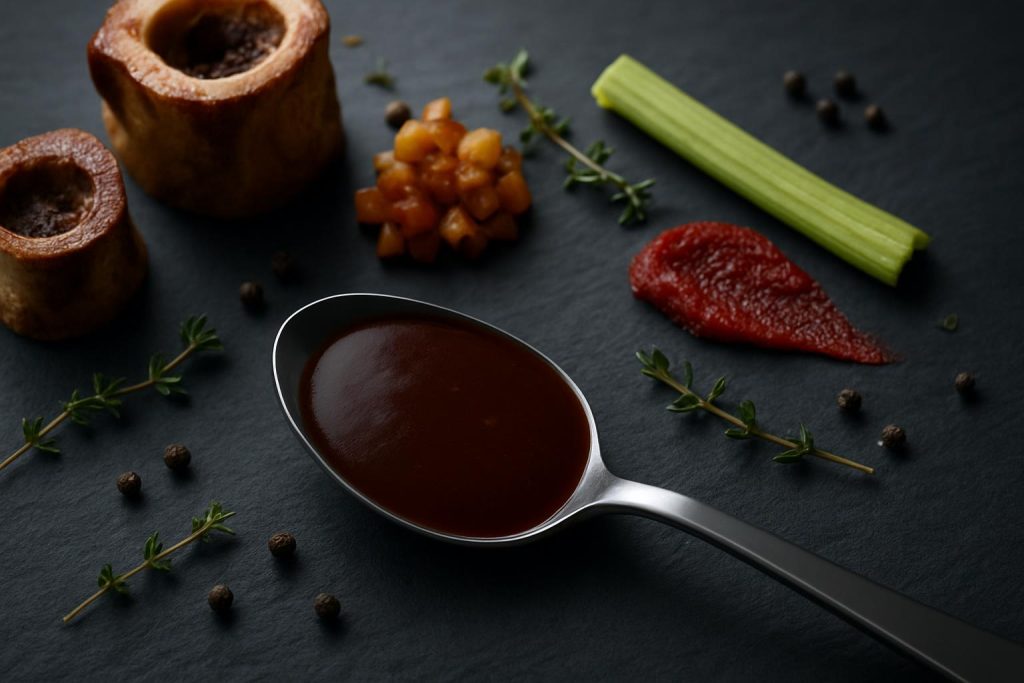
Demi-glace is a concentrated French sauce base made by reducing brown stock with aromatics until it turns glossy, deep brown, and thick enough to coat a spoon. It is not a gravy and not a simple broth. It is dense, savory, and complex. If you have never tasted it, expect a punch of umami with layered roasted notes, gentle sweetness from caramelized vegetables and tomato paste, balanced acidity, and a long, meaty finish. This guide explains that flavor in detail, shows how technique changes the taste, and gives simple ways to adjust and use demi-glace at home.
What Is Demi-Glace in One Minute
Demi-glace starts with roasted bones, usually veal or beef, simmered into a brown stock with onions, carrots, celery, and tomato paste. The stock is strained and reduced slowly. In classic versions, it is combined with espagnole, then reduced again. The goal is clear flavor, natural gelatin body, and a clean, glossy consistency.
Reduction changes taste in three ways. Concentration intensifies natural glutamates and nucleotides that drive umami. Maillard reactions from roasted bones and vegetables add depth and gentle bitterness. Gelatin extracted from bones gives a silky mouthfeel that makes flavors feel round and complete.
The Core Flavor Profile
Umami Baseline
Umami is the center of demi-glace. It tastes savory and complete, with a strong sense of cooked meat even when brunoise vegetables or herbs are present. This umami comes from long extraction of collagen and proteins, then concentration during reduction.
Savory Depth vs Beefiness
Expect a roasted, meaty character without the overt fattiness of a pan drippings gravy. Demi-glace tastes clean and focused. When made with veal bones, the meat note is gentler and neutral. Beef bones push a stronger, darker savoriness.
Gentle Sweetness
The sweetness is subtle and comes from caramelized onions, carrots, and the light browning of tomato paste. It softens the edges of acidity and bitterness but should never feel sugary.
Balanced Acidity
Acidity keeps the sauce lively. It often comes from wine or tomato paste. Good demi-glace tastes bright at the tip and sides of the tongue, then settles into savory depth.
Managed Bitterness
Bitterness appears in the roasted and browned notes. It should read as structure, not harshness. Over-roasting bones or burning tomato paste pushes bitterness too far and shortens the pleasant finish.
Salt and Seasoning
Well-made demi-glace is seasoned but not salty. Many chefs leave heavy salting for the final dish to prevent oversalting during reduction. When tasting, the salt should lift flavors without dominating.
Aroma and Aftertaste
The aroma is roasted and savory with hints of herbs. The aftertaste lingers with clean meat notes, a touch of sweetness, and a mild tannic edge if wine was used. The finish should be long, not sticky or cloying.
Mouthfeel and Body
Gelatin gives body that clings lightly to the tongue. It feels smooth and elastic, not greasy. When diluted into a sauce, it should coat food evenly and release flavor across each bite.
How Base and Technique Change the Taste
Beef or Veal Base
Veal-based demi-glace delivers a refined, neutral meat flavor with high gelatin and a clean finish. Beef-based versions taste darker and more assertive, with stronger browned notes and a slightly longer aftertaste.
Chicken Base
Chicken-based demi-glace tastes lighter and sweeter. It suits poultry and vegetables when you want depth without heavy beef character. It is less tannic and usually less bitter.
Game or Lamb Variations
Game bones add a stronger, earthy savoriness and a denser aroma. Lamb introduces a distinct, fatty richness. These versions pair best with robust meats, root vegetables, and red wine reductions.
Mushroom or Vegetarian Version
A vegetarian demi-glace relies on mushrooms, kombu, dried tomatoes, and long-cooked aromatics. The taste is umami-forward, slightly woodsy, and naturally sweet from vegetables. It will be less glossy unless thickened or built with high-gelatin vegetables like eggplant skins.
Roasting Level
Light roast yields a gentle, sweeter profile. Moderate roast creates balance and complexity. Dark roast intensifies bitterness and smokiness. Aim for deep brown, not black.
Mirepoix and Tomato Paste
Onion brings sweetness and sulfur notes. Carrot adds sweet top notes. Celery contributes fresh bitterness. Tomato paste concentrates acidity and a light fruitiness while boosting color. If these are under-browned, the sauce tastes flat. If burned, bitterness dominates.
Wine and Spirits
Red wine adds tannin, berry-like acidity, and depth. White wine brings crisp acidity and light fruit. Brandy adds warmth and a faint dried fruit tone. Always reduce alcohol fully to avoid sharpness.
Reduction Ratio and Thickness
More reduction raises intensity, sweetness, and bitterness together while increasing body. Under-reduced sauce tastes thin and vague. Over-reduced sauce can taste salty, sticky, and bitter with a short finish.
Herbs and Aromatics
Thyme, bay leaf, peppercorns, and parsley stems build fragrance. Too many herbs can push the sauce toward herbal bitterness. Aim for background support, not dominance.
Demi-Glace vs Stock, Jus, and Gravy
Stock
Stock is light, clean, and not heavily seasoned. It tastes like a picture of the ingredients. Demi-glace is a portrait with stronger lines. It is denser, richer, and longer on the palate.
Jus
Jus is usually a lighter reduction made from roasting juices. It tastes fresher and more immediate. Demi-glace is thicker, more polished, and more concentrated.
Gravy
Gravy often uses pan drippings and a flour or starch thickener. It tastes meaty and seasoned, with a softer mouthfeel. Demi-glace uses gelatin for body, not flour, so the taste is clearer and more intense.
Pan Sauce and Glace
Pan sauce is quick and bright, often made after searing meat. It is lighter and more acidic. Glace de viande is reduced even further than demi-glace into a syrupy glaze with maximum intensity. It tastes very strong and is best used in small amounts.
How to Taste Demi-Glace Like a Pro
Right Temperature
Taste warm, not boiling hot. Heat mutes acidity and amplifies salt and bitterness. Warm samples show balance accurately.
Smell First
Swirl a small spoonful and smell. You should get roasted notes, gentle sweetness, and herbs. Any sharp alcohol or scorched odor signals a problem.
Small Sip and Chew
Place a small amount on the tongue and move it around. Note the initial salt, the mid-palate umami, and the finish. Balance should improve as it warms in the mouth.
Check Balance
Look for a triangle of savory, sweet, and acid. None should dominate. Bitterness should be supporting, not leading.
Pairing Test
Taste it with a plain piece of cooked protein or a blanched vegetable. Good demi-glace improves food without masking it.
Common Flavor Problems and Fixes
Too Salty
Thin with unsalted stock and simmer gently. Add a knob of unsalted butter at the end to soften edges. Balance with a splash of low-acid wine or a tiny amount of sugar if needed. Never add water alone unless you plan to simmer to restore body.
Bitter or Burnt
Bitterness comes from over-roasting, scorched tomato paste, or burning during reduction. Soften with unsalted stock, then rebuild with a small amount of fresh mirepoix and re-strain. A tiny pinch of sugar can round the edge. Avoid baking soda, which dulls flavor.
Flat or Dull
Boost acidity with a teaspoon of reduced wine or a few drops of sherry vinegar. Add a small knob of cold butter and whisk to finish for aroma and sheen. A brief simmer with fresh thyme stems can lift aroma, then strain.
Too Sweet
Cut with more stock and increase acid carefully. Reduce again to desired body. Avoid large vinegar additions that create sharpness.
Greasy or Waxy
Chill and remove the fat cap. If in a hurry, blot the surface with a folded paper towel or use a fat separator. A greasy feel dulls flavor perception and shortens the finish.
Gel-Like or Bouncy
This means high gelatin. Warm gently to serving temperature and it will loosen. If still too dense, thin with stock. If body then feels weak, mount with butter to recover texture.
Easy Ways to Use Demi-Glace to Boost Flavor
Quick Pan Sauce
After searing steak or chicken, pour off excess fat. Deglaze with wine, reduce by half, add a spoon of demi-glace, and whisk. Finish with butter. The taste is savory, bright, and glossy with a long finish.
Glossy Vegetable Glaze
Warm blanched carrots, green beans, or mushrooms in a small pan with a splash of stock and a spoon of demi-glace. Reduce to coat. The vegetable flavor stays clear while gaining depth and sheen.
Soups and Stews
Stir a small amount into beef stew, onion soup, or mushroom soup. Expect richer body, deeper savoriness, and a more professional finish without extra salt.
Pasta and Grains
Add a spoonful to risotto, barley, or buttered noodles. The result is rounder and more satisfying, with minimal effort.
Eggs and Breakfast
Drizzle a small amount over soft-scrambled eggs, omelets, or hash. It adds savory depth and brings simple breakfasts into balance.
Sandwiches and Spreads
Whisk demi-glace into mayonnaise or soft butter for steak sandwiches or roast beef. You get a concentrated savory spread that stays clean and not watery.
Simple Add-Ins That Change the Taste
Mushroom Boost
Sweat chopped mushrooms, deglaze with sherry, reduce, then whisk in demi-glace. The taste becomes earthier and more umami-rich.
Peppercorn Heat
Crush peppercorns, toast lightly, then simmer with a splash of cream and demi-glace. You get warmth, spice, and a longer finish without harsh heat.
Mustard Edge
Whisk in a small spoon of Dijon at the end. Expect a clean acidic lift and sharper aroma that pairs well with pork and chicken.
Herb Freshness
Add minced chives, parsley, or tarragon off heat. Fresh herbs raise aroma and lighten the perception of richness.
Storage, Reheating, and Cleanup Tips
Portion and Freeze
Freeze demi-glace in ice cube trays or small containers. One cube usually flavors a pan sauce for two portions. Label with date to track freshness.
Shelf Life
In the refrigerator, use within one week if well covered. In the freezer, quality stays high for three months. Flavor slowly dulls after that but remains usable.
Reheating Without Scorching
Warm gently over low heat or in a small bowl set over simmering water. Stir often. High heat scorches sugar and protein, causing bitterness.
Cleanup and Handling
Demi-glace leaves a sticky film. Soak pans with warm water before washing. For containers, fill with warm water for ten minutes, then wash. Wipe spills quickly with a damp cloth to prevent residue from drying hard.
What Demi-Glace Tastes Like on Different Foods
Red Meat
On steak or short ribs, it amplifies roasted notes, adds shine, and stretches the finish without masking beef flavor.
Chicken and Pork
It provides backbone and savory depth while keeping the meat flavor clear. A small acidic addition helps maintain brightness.
Fish
Use sparingly and with white wine reduction. It should support, not overwhelm. Light, clean, and glossy is the target.
Vegetables
On mushrooms, eggplant, carrots, and potatoes, it adds umami and mild sweetness. Good for grilled or roasted vegetables where caramelization is already present.
Buying or Making: How That Affects Taste
Store-Bought Demi-Glace
Commercial products vary. Some are excellent and clean. Others taste too salty or have artificial notes. Read labels. Look for real stock, no artificial flavors, and controlled salt. Taste a small amount before using and adjust accordingly.
Homemade Demi-Glace
Homemade gives control. You decide the roast level, wine, and herbs. Expect a fresher aroma and less salt. The tradeoff is time and careful heat control to avoid scorching.
Concentrates and Pastes
These are convenient but often salt heavy. Use half the recommended amount first. Build flavor with fresh aromatics, then adjust salt at the end.
Quick Flavor Calibration Checklist
Before serving, run through five checks. Is the salt supportive. Is acidity present but not sharp. Are roasted notes deep but not burnt. Does the body coat without feeling greasy. Does the finish linger cleanly. If any answer is no, adjust with stock, acid, butter, or a brief simmer with fresh aromatics.
Conclusion
Demi-glace tastes savory, concentrated, and layered, with balanced sweetness and acidity, gentle roasted bitterness, and a long, clean finish. The base bones, roasting level, aromatics, wine, and reduction all shape its profile. When the balance is right, a spoonful transforms sauces, vegetables, and meats without heaviness or clutter. Keep salt restrained, control heat, and finish with small adjustments for brightness and sheen. With these points, you can taste, fix, and use demi-glace confidently and build restaurant-level flavor in a home kitchen.