
We are reader supported. When you purchase through links on our site, we may earn an affiliate commission. Also, as an Amazon affiliate, we earn from qualifying purchases.
Marinating adds flavor, but it does not always finish the job. Many home cooks wonder if they should still season meat after marinating. The short answer is often yes, but it depends on the marinade, the meat, and your cooking method. This guide shows you how to decide, how to season correctly, and how to avoid common mistakes that lead to bland or overly salty results. Keep reading if you want juicy meat with bold flavor and a crisp, well-browned crust.
Introduction
Marinades can boost taste, tenderize the surface, and add aroma. Still, marinades rarely season the interior fully and often leave the exterior wet, which can block browning. Smart post-marinade seasoning solves both problems. You will learn when to add salt, pepper, spices, acid, sugar, and umami boosters after marinating, and how to adjust for steak, chicken, pork, and seafood. You will also learn how to avoid burning, how to handle leftover marinade safely, and how to keep your kitchen clean and organized while you prep.
What Marinating Actually Does
Most marinades flavor only the surface. Even with hours of soaking, flavors do not move very far into dense meat. Salt moves deeper than other ingredients, but it still takes time. Oil carries fat-soluble aromas, but oil does not penetrate deeply either. Acid can soften the surface but can also make it mushy if overused. That is why seasoning after marinating often makes a clear difference at the moment you cook and when you finish.
Flavor Penetration Is Limited
Herbs, garlic, and spices in a marinade sit mostly on the outside. This tastes good at the surface but can fade after cooking, especially if you pat the meat dry. A quick layer of seasoning right before cooking restores flavor intensity where the tongue notices it first, at the crust.
Salt in Marinades vs Brines
Salt is unique. Given enough time, salt diffuses into meat and improves juiciness and tenderness. A true brine uses more salt and water and aims for even internal seasoning. Many marinades do not have enough salt or time to act like a brine. If your marinade is low in salt or short on time, you will likely need extra salt before or after cooking.
So, Do You Still Season After Marinating
Often yes. If the marinade is mild, low in salt, or very sweet or acidic, you should add seasoning to balance flavor and improve browning. If the marinade is already salty or soy-based, you may only need pepper or a spice dusting. If you are grilling at high heat and the marinade contains sugar or honey, skip sugar-based seasonings until after cooking to prevent burning.
When You Should Add Seasoning After Marinating
Add seasoning after marinating when the marinade is low in salt, when the meat tastes flat after a test piece, when cooking methods need a dry surface for browning, or when you want a crust with pepper or spices that would have lost aroma during the marinade.
When You Should Hold Back
Hold back extra salt if the marinade is already salty. Hold back sugar on high heat to avoid burning. Hold back herbs that scorch easily on direct flame. If you plan to glaze with a salty sauce, reduce pre-cook salt and add finishing salt only if needed.
How to Season After Marinating: Step by Step
Follow a simple workflow to control moisture, salt, and browning. This method suits most meats and most cooking methods.
Step 1: Remove and Pat Dry Thoroughly
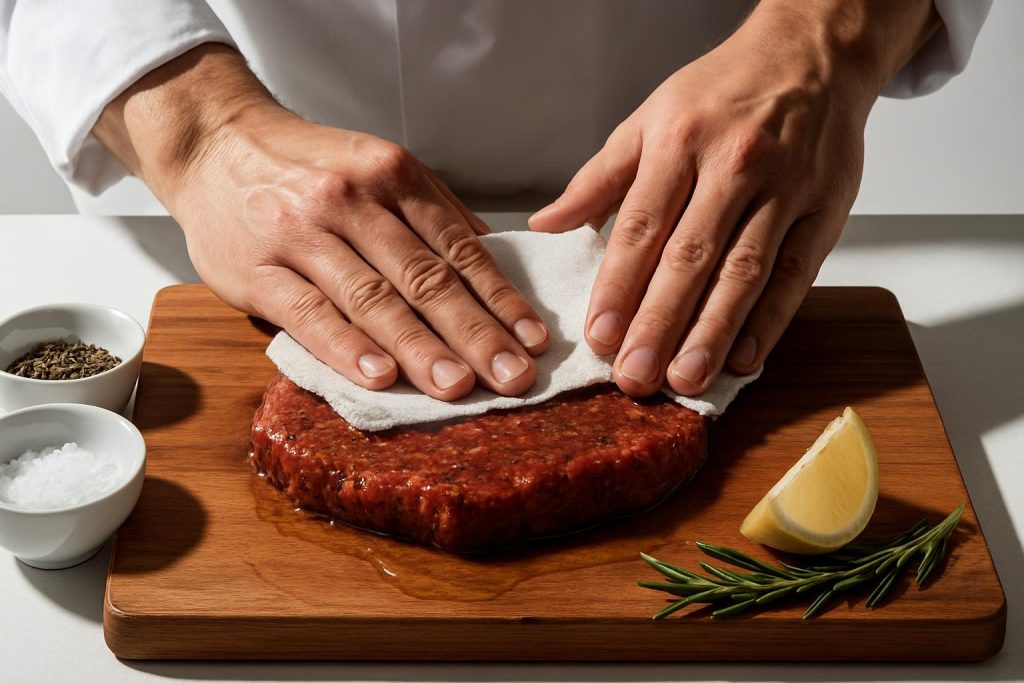
Take the meat out of the marinade and let excess drip off. Set on paper towels or a rack. Pat dry until the surface is barely tacky, not wet. A dry surface browns fast and helps seasoning stick. Do not rinse meat. Discard the used paper towels at once and wash hands and tools.
Step 2: Decide on Salt
Ask two quick questions. Was the marinade salty. How long did the meat sit. If the marinade was mild or the time was short, add a light, even layer of salt to the surface. If the marinade was soy-based or used fish sauce or miso, salt lightly or not at all. You can always finish with a pinch after cooking. Aim for even coverage, not piles of salt in spots.
Step 3: Add Pepper and Dry Spices
Freshly ground black pepper adds aroma fast. Add it after patting dry. For spices like paprika, cumin, chili, coriander, or garlic powder, dust a thin, even layer. Thin layers reduce burning and prevent clumps. If using smoked paprika or chili powders on high heat, use less to avoid bitterness.
Step 4: Manage Sugar and Glazes
If you want a sweet finish, add sugar-based elements late. Brush honey, barbecue sauce, or teriyaki near the end of cooking, or glaze off heat. This prevents scorching. If your marinade already had sugar or fruit juice, skip pre-cook sugar and rely on a finishing glaze instead.
Step 5: Use Oil the Right Way
If the meat looks dry after patting, rub a thin film of neutral oil before seasoning. This helps spices stick and promotes even browning. Do not soak. Excess oil causes flare-ups and steaming instead of searing.
Step 6: Add Brightness and Freshness
Add a splash of acid or fresh herbs after cooking for a clean finish. Squeeze lemon over grilled chicken. Add lime over fish. Stir in chopped parsley or scallions at the end. Acids and fresh herbs taste brighter when added off heat.
Step 7: Layer Umami for Depth
Use small amounts of umami boosters to round flavor. A dab of miso in a finishing butter, a sprinkle of nutritional yeast, or a pinch of MSG on thick cuts can lift savoriness. Keep amounts low and adjust to taste.
Meat-Specific Guidelines
Different meats and cuts react differently to marinades and post-seasoning. Adjust for thickness, fat, and cooking time.
Steak and Beef
For steaks, marinades mostly flavor the outside. Focus on salt and crust. After marinating, pat dry well. Salt lightly if needed. Pepper just before searing to keep aroma. For high heat, keep sugar off until after cooking. Finish with a small pat of compound butter or a pinch of flaky salt. For flank or skirt, use a citrus or soy marinade for surface flavor, then add a final sprinkle of salt after slicing since these are thin and lose juices fast.
Chicken
Chicken benefits from both marinade and finishing seasoning. For breasts, keep marinades short and not too acidic to avoid mushy texture. Pat dry and add light salt if the marinade was mild. Add pepper and a little garlic powder. For thighs, which are forgiving, use a savory marinade, pat dry, then season lightly and sear hard to render fat. For skin-on pieces, always pat the skin extra dry and season the skin surface right before cooking for crispness.
Pork
Pork pairs well with sweet glazes, which burn if added too early. Use savory or herbal marinades, then pat dry and season with salt, pepper, and a little paprika. Add sweet glaze in the last minutes. For chops, a short marinade plus a light surface salt and pepper right before sear works well. For tenderloin, avoid heavy acids, dry the surface, season, and roast. Finish with a pan sauce or a citrus-herb oil.
Seafood
Seafood marinates fast and can turn mushy with acid. Keep marinades short and mild. After marinating, pat very dry, then add salt and pepper to the surface. For delicate fish, brush with oil and season right before cooking. Add lemon and fresh herbs after cooking. For shrimp, a quick marinade, a pat dry, a light salt, and a fast sear gives the best snap and browning.
Adjusting to Cooking Methods
Heat and moisture control change your post-marinade plan. Match your seasoning to the method for better browning and balance.
Grill
Grills run hot and uneven. Dry the meat well. Use a thin coat of oil to prevent sticking. Salt if needed, then add pepper or a dry rub with minimal sugar. Add glazes at the end. Move meat to a cooler zone if the exterior darkens too fast. Let meat rest after grilling to keep juices in and then taste for a final pinch of salt.
Pan Sear
A heavy pan gives the best crust. Dry the surface well to prevent steaming. Add a neutral oil with a high smoke point. Season just before the pan to avoid moisture draw. Sear hard, then lower heat if needed. Add butter and aromatics at the end and baste. Taste and finish with a small sprinkle of salt or a squeeze of lemon.
Oven and Air Fryer
For roasting and air frying, a dry surface equals better browning. Pat dry, season as needed, and place on a rack for airflow. If using a sweet glaze, apply during the last part of cooking. Check salt after cooking and adjust lightly.
Slow Cooker and Sous Vide
Wet methods mute surface spices. After slow cooking or sous vide, finish with a hot sear in a pan or on a grill. Before searing, pat dry, add salt and pepper if the marinade was mild, and brown quickly. This gives texture and brings back aroma lost in the bath.
Food Safety and Clean Kitchen Habits
Flavor is important, but safety and cleanliness protect your home and your family. Keep raw juices under control and tools organized.
Never Reuse Marinade Without Boiling
Used marinade contains raw meat juices. If you want to use it as a sauce, boil it at a rolling boil for at least one minute to kill pathogens. Better yet, set aside a clean portion of marinade before adding raw meat and use the clean portion for glazing.
Cold Storage and Timing
Marinate in the fridge, not on the counter. Label bags or containers with time and date. Avoid metal bowls with acidic marinades. Use resealable bags or covered containers to prevent leaks. Do not exceed safe times, especially for seafood.
Prevent Cross-Contamination
Use separate boards for raw meat and vegetables. Discard used paper towels right away. Wash tongs, knives, and counters with hot soapy water. Wipe spills and sanitize handles and fridge door pulls. Keep a trash bin near the prep area so you can toss waste without drips across the kitchen.
Troubleshooting Common Problems
Most issues come from moisture control, salt balance, and heat management. Use these quick fixes.
The Meat Tastes Too Salty
Rinse the marinade off next time and pat very dry, then skip extra salt before cooking. Balance with unsalted sides, a fresh herb salad, or an acid splash. If the exterior is too salty now, slice and mix with unsalted grains or vegetables to dilute.
The Meat Tastes Bland Despite Marinating
You likely need surface salt and aromatics at cook time. Pat dry, add a light, even salt, then pepper and a small amount of spices. Use a finishing element like a squeeze of citrus, a drizzle of olive oil, or a sprinkle of flaky salt after resting. Next time, add more salt to the marinade or marinate longer, within safe limits.
The Exterior Burned
There was sugar on the surface or the heat was too high. Remove sugar from pre-cook seasoning. Use a glaze at the end. Lower heat or move to indirect heat once browning starts. Choose oils with higher smoke points for searing.
The Meat Steamed Instead of Browning
The surface was wet or the pan was crowded. Pat dry more thoroughly, preheat the pan or grill longer, and cook in batches. Use a rack for roasting so air can circulate and moisture can escape.
Simple, Reliable Seasoning Plans
Use these straightforward patterns. They work with or without marinades and keep flavor balanced.
Balanced Savory Finish
After marinating, pat dry. Add light salt if needed, then black pepper and a small pinch of garlic powder. Sear or grill. Finish with lemon or vinegar and fresh herbs. Taste and add a tiny pinch of salt only if needed.
Smoke-Friendly Grill Finish
After marinating, pat dry. Add a low-sugar dry seasoning with salt, black pepper, paprika, and chili powder in small amounts. Grill over medium heat. Brush a light glaze during the last minutes. Rest and finish with a bright acid.
Weeknight Pan Sear
Marinate briefly. Pat dry well. Add a thin oil film, light salt, and pepper. Sear in a hot pan. Add butter and an herb sprig near the end. Rest and add a pinch of finishing salt only if needed.
How to Taste and Adjust Like a Pro
Use a test piece. Cut off a small bit, cook it quickly, and taste. Ask if it needs salt, acidity, heat, or sweetness. Adjust before cooking the full batch. This prevents over or under seasoning and saves time.
Frequently Asked Checks Before You Cook
Is the surface dry. Is extra salt needed based on the marinade. Will sugar burn at your planned heat. Do you have a finishing element ready, like citrus, butter, or a clean sauce. Are tools, tongs, and plates set to avoid cross-contamination. A quick checklist keeps you organized and reduces stress.
Conclusion
Marinating is a good start, not the finish line. Most of the time, you should still season meat after marinating. Dry the surface well, add salt if the marinade was mild, add pepper and light spices, and save sweet or delicate elements for the end. Adjust by meat type and cooking method. Taste and finish with acid, herbs, or a pinch of salt. Keep your kitchen clean, store marinades safely, and handle tools with care. Follow these steps and every cooked piece will be juicy, well seasoned, and crisp where it counts.