
We are reader supported. When you purchase through links on our site, we may earn an affiliate commission. Also, as an Amazon affiliate, we earn from qualifying purchases.
Waking up with a dry mouth is more than annoying. It disrupts sleep, makes you drink water at 3 a.m., and can irritate your throat and gums. A well-chosen humidifier can fix that fast. The key is steady humidity at 40 to 50 percent near your pillow without noise, leaks, or high upkeep. I tested popular models against that goal and focused on units that are easy to live with every night.
What causes dry mouth at night and how a humidifier helps
Indoor air often drops below 30 percent relative humidity in fall and winter, and even in summer with air conditioning. Low humidity speeds up moisture loss through your mouth and nose. Mouth breathing, nasal congestion, or CPAP use can make it worse. The fix is stable bedroom humidity. A humidifier adds moisture so your mouth and throat do not dry out while you sleep.
Two main types work well:
- Ultrasonic: quiet, efficient, strong output, but can leave mineral dust if you use hard water.
- Evaporative: uses a wick and fan, no white dust, self-regulates, but needs filter changes and has fan noise.
Cool mist is safe for most homes. Warm mist can feel soothing in cold rooms and during congestion. For dry mouth relief, the priority is consistent 40 to 50 percent humidity, quiet operation, and simple cleaning.
How I picked these 4
I aimed for stable humidity at the bedside, minimal night noise, no-fuss refills, and cleaning that takes minutes, not an hour. I also looked at real costs over the year, from filters to descaling. I think the best humidifier is the one you can keep clean and running on autopilot. Each pick below solves dry mouth in a slightly different way to fit different homes and budgets.
Best humidifiers for dry mouth in 2026
Levoit LV600S Smart Warm and Cool Mist Humidifier — Best overall for steady bedside humidity
Why it helps: It can target a set humidity and keep it there all night. That avoids the common cycle of too dry at midnight and too damp by dawn. Cool or warm mist options let you match the season. Near-silent output on low keeps sleep undisturbed.
Best for: Bedrooms needing consistent 40 to 50 percent humidity, light sleepers, and anyone who wants set-and-forget control.
Standout details:
- Auto mode with a built-in humidistat that holds a humidity target near your pillow.
- App control to schedule and fine-tune output without bright screens at night.
- Large tank and gentle night mode for long, quiet runs.
- Aroma box if you want light scenting without putting oils in the tank.
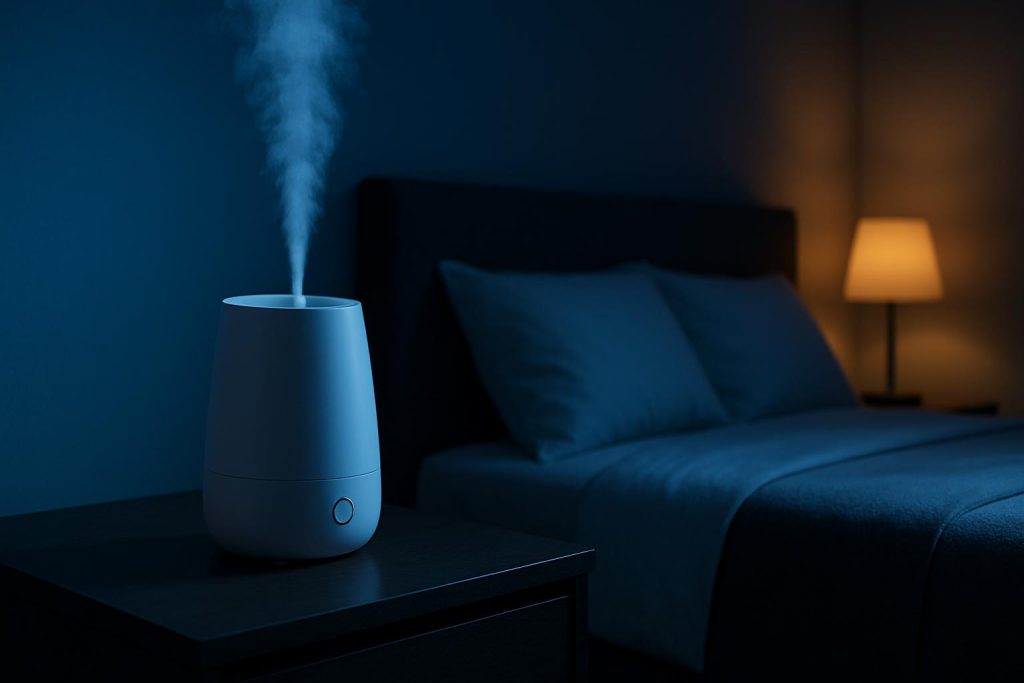
Setup and placement that work: Place it 2 to 4 feet from the bed, slightly above mattress height. Aim the nozzle away from walls and wood. Set 45 percent humidity, night mode on, and a low fan or low mist. Use a small hygrometer on your nightstand to confirm readings at head level.
Potential downsides:
- As an ultrasonic unit, it can leave mineral dust if you use hard water. Distilled water or a demineralization cartridge helps.
- More parts to rinse than basic models. A quick rinse routine prevents scale.
- App features add value, but not everyone wants app control.
Maintenance plan: Empty daily and air-dry the tank. Quick citric-acid or vinegar soak weekly for the base and mist outlets. Replace demineralization media as needed if you notice dust. This keeps performance stable and prevents odors.
My take: I think the LV600S is the most reliable way to hold 45 percent through the night without fuss. It is quiet, strong, and flexible. If dry mouth is nightly, this model makes the biggest difference with the least micromanaging.
Honeywell HCM-350 Germ-Free Cool Mist — Best evaporative pick with no white dust
Why it helps: Evaporative systems add moisture that naturally levels off near a comfortable range, so you are less likely to overshoot and wake up clammy. No mist plume and no mineral dust. That is ideal if you have hard water and do not want distilled water runs.
Best for: Hard-water areas, medium bedrooms, and users who want a low-maintenance, no-dust approach.
Standout details:
- Self-regulating output that aligns with room humidity demands.
- Wicking filter captures minerals to prevent white dust on furniture.
- Simple tank and base design, easy to fill and clean.
Setup and placement that work: Place it on a stable dresser a few feet from the bed. Keep a few inches clearance behind the unit for air intake. Start on medium. Confirm near-pillow humidity with a hygrometer and adjust to hold 40 to 50 percent.
Potential downsides:
- Filter replacements add ongoing cost. Budget to replace every 1 to 3 months depending on water quality and usage.
- Fan noise is audible on higher speeds. Many people find low and medium acceptable for sleep.
- Output can lag in very dry, large rooms. It shines in small to medium bedrooms.
Maintenance plan: Rinse the tank daily. Flip the wick every few days to extend life and let it dry out briefly. Descale the water tray weekly with vinegar or citric acid. Swap the wick when the output drops or the filter darkens and stiffens.
My take: I think this is the easiest path to clean humidity if you have hard water. It is steady and uncomplicated. For many homes, it balances comfort and upkeep better than ultrasonics.
Vicks Warm Mist Humidifier V745 — Best warm mist for winter and congestion
Why it helps: Warm steam feels soothing when the air is cold and your sinuses are tight. That comfort can reduce mouth breathing and help you stay asleep. With no filter to replace, upkeep is simple if you descale regularly.
Best for: Cold bedrooms, winter use, and users who prefer warm vapor when they feel congested and wake up parched.
Standout details:
- Warm mist output without a fan means gentle operating noise.
- Medicine cup for optional inhalants when congested.
- Straightforward design with a single tank and base to clean.
Setup and placement that work: Keep it on a hard, level surface 2 to 4 feet from the bed. Allow extra clearance above for steam to disperse. Use low at night. Always point away from walls and wood.
Potential downsides:
- Heating element scales up faster in hard water. Distilled water or frequent descaling keeps output steady.
- The steam outlet can be hot. Place it out of reach of children and pets.
- Energy use is higher than cool mist models due to heating.
Maintenance plan: Empty and rinse daily. Weekly, descale the heating chamber with vinegar or citric acid until deposits dissolve. Rinse thoroughly and air-dry.
My take: I think this is the most comfortable option on freezing nights. If you prefer warm vapor over cool mist, it is a strong dry-mouth fix with simple parts and predictable performance.
AquaOasis Cool Mist Humidifier 2.2L — Best budget bedside pick
Why it helps: A small, quiet ultrasonic pointed toward your pillow can raise local humidity fast without soaking the whole room. The simple knob and 360-degree nozzle make it easy to dial in a gentle overnight mist.
Best for: Small bedrooms, renters, and anyone who wants a low-cost, low-fuss solution focused on the bed area.
Standout details:
- Compact tank for quick refills and lightweight handling.
- Quiet motor and adjustable output for light sleepers.
- Directional nozzle to aim where you need relief most.
Setup and placement that work: Put it on a stable nightstand a few inches above mattress height. Aim the nozzle slightly upward and away from the wall. Start on low and check your hygrometer. If your room is very dry, step up in small increments.
Potential downsides:
- No built-in humidistat. You need a separate hygrometer to prevent over-humidifying.
- As an ultrasonic, it can leave mineral dust with hard water. Distilled water avoids that.
- Small tank means daily refills in dry seasons.
Maintenance plan: Empty and air-dry daily. Wipe the base and nozzle every two days. Weekly, soak scale with vinegar or citric acid, then rinse well. If you notice white dust, switch to distilled water.
My take: I think this is the best low-cost starter for dry mouth. It is quiet, compact, and effective within a few feet. Pair it with a cheap hygrometer and you can keep 45 percent at the pillow without guesswork.
Placement, settings, and habits that boost results
Target humidity and mode
- Set a target of 40 to 50 percent. Below 35 percent invites dry mouth. Above 55 percent risks condensation and musty smells.
- Use auto mode if available. Otherwise, start low and adjust until your nightstand hygrometer holds near 45 percent through the night.
- Warm mist can feel better in winter or if you get stuffy at night. Cool mist is fine year-round and uses less energy.
Placement and airflow
- Keep the humidifier 2 to 4 feet from your head and slightly above mattress height.
- Aim mist away from walls, windows, and wood. Leave at least 12 inches of clearance above the output.
- Close the bedroom door to hold humidity. Slightly open a closet door if you store leather or papers inside the room to reduce localized moisture buildup.
Water choice and dust prevention
- Use distilled water for ultrasonic units if you see white dust. It protects furniture and lungs.
- For evaporative units, tap water is usually fine. Replace the wick regularly.
Bedtime routine
- Start the humidifier 30 minutes before lights out so the room stabilizes near 45 percent.
- Keep a glass of water on the nightstand but rely on humidity first. Less gulping at 3 a.m. means more continuous sleep.
Cleaning and safety checklist
Daily
- Empty the tank each morning and let it air-dry open.
- Wipe the base rim and nozzle with a clean cloth.
Weekly
- Descale with vinegar or citric acid. Fill the base or heating chamber, soak 15 to 30 minutes, then rinse well.
- Disinfect with a 3 percent hydrogen peroxide rinse if needed. Rinse thoroughly after.
Monthly
- Check seals, caps, and gaskets for wear. Replace if drips appear.
- For evaporative units, replace the wick when output drops or the filter looks dark and stiff.
Safety
- Do not aim mist at outlets or power strips.
- Keep warm mist units out of reach of children and pets.
- If you see condensation on windows or walls, lower the output immediately.
Conclusion
Dry mouth at night needs stable, quiet humidity near your pillow. The Levoit LV600S holds a target level with minimal noise and effort. The Honeywell HCM-350 avoids white dust and suits hard-water homes. The Vicks V745 brings warm comfort on cold nights. The AquaOasis 2.2L is a simple, low-cost bedside fix. Pick the style that fits your room and your cleaning habits. Keep humidity at 40 to 50 percent, clean weekly, and give the unit space to breathe. The right setup turns dry, restless nights into steady sleep and a calmer morning throat.
FAQ
Q: What humidity level helps most with dry mouth at night
A: Aim for 40 to 50 percent. Below 35 percent often triggers dryness, and above 55 percent risks condensation.
Q: Ultrasonic or evaporative, which is better for dry mouth
A: Both work. Ultrasonic models are quiet and powerful but can leave mineral dust with hard water. Evaporative models self-regulate and avoid dust but need filter changes and have fan noise.
Q: Where should I place a humidifier in the bedroom
A: Keep it 2 to 4 feet from your head, slightly above mattress height, with at least 12 inches of clearance above the output and away from walls and wood.
Q: Do I need distilled water
A: Use distilled water if your ultrasonic unit leaves white dust. Evaporative units usually do fine on tap water with regular wick changes.
Q: How often should I clean my humidifier
A: Empty and air-dry daily, descale weekly with vinegar or citric acid, and replace filters as needed on evaporative units.