
We are reader supported. When you purchase through links on our site, we may earn an affiliate commission. Also, as an Amazon affiliate, we earn from qualifying purchases.
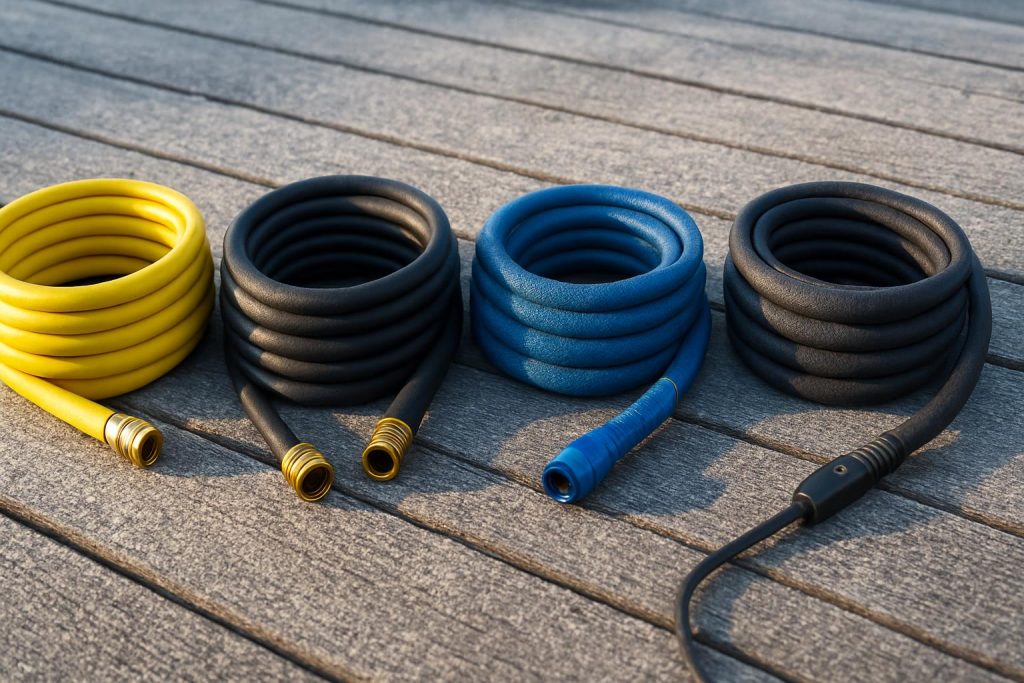
Cold weather is hard on garden hoses. Stiff walls, cracked fittings, and frozen lines turn simple jobs into extra work. The right hose solves most of that. It stays flexible when the temperature drops, it resists kinks, and it survives ice and abrasion. This guide keeps it simple. First, what to look for. Then, four proven hoses that handle winter better than the rest. Finally, setup and care tips to make your hose last longer through every freeze.
What matters most in a cold weather hose
Cold exposes weak materials and bad design. Focus on these points first, and you will avoid most problems.
- True all-weather material: Hybrid polymer, polyurethane, or rubber stays flexible below freezing. Standard vinyl gets stiff and brittle.
- Cold rating: Look for hoses that list performance at 0 to -40 F. Lower is better for flexibility and durability.
- Kink resistance without pressure: A good hose still uncoils and lays flat before you turn the water on.
- Quality fittings: Brass or anodized aluminum with solid grippers make winter glove use easier and prevent leaks.
- Burst and abrasion protection: Reinforced construction and thick outer jackets handle ice expansion and rough ground.
- Heated option when needed: If you must keep water flowing below freezing, a thermostatically controlled heated hose is the only reliable choice.
The 4 best garden hoses for cold weather use in 2026
Flexzilla Garden Hose, 5/8 in x 50 ft (HFZG550YW)
Flexzilla’s hybrid polymer is known for all-weather flexibility down to very low temperatures. In cold mornings, it still uncoils without a fight. It lays flat, resists memory, and the bright color is easy to spot in snow.
Key strengths
- Hybrid polymer stays flexible in deep cold
- Lays flat to reduce kinks and trip hazards
- Lightweight and easy to coil for storage
- Anodized aluminum fittings resist corrosion
What I noticed
I think this hose is the easiest to handle with gloves on. It has very little coil memory, so it behaves well even when the air is biting cold. Flow is strong through the 5/8 inch diameter. It is not the most abrasion resistant jacket, so avoid dragging it over rough concrete all winter.
Why it helps
Staying flexible at low temperatures keeps fittings from being torqued at strange angles. That prevents slow leaks and early failure.
Best for
Homeowners who want a general purpose, cold ready hose that is light and easy to manage.
Potential downsides
- Outer jacket can scuff on rough surfaces
- Can kink if you twist it sharply with no water pressure
Pro tip Use large loops when coiling and let it warm indoors for 10 minutes if it sat below zero overnight. It will handle best that way.
Continental ContiTech Premium All-Weather Rubber Hose, 5/8 in x 50 ft
This is the classic heavy duty black rubber hose that crews use year round. Rubber stays flexible in freezing weather, shrugs off abrasion, and tolerates rough yards. It is heavier than polymer hoses, but the tradeoff is durability.
Key strengths
- All-weather rubber stays flexible in freezing conditions
- Thick outer jacket resists cuts and abrasion
- Solid brass fittings survive drops and impacts
- High working pressure for nozzles and sprinklers
What I noticed
I think this is the toughest cold weather hose for daily use. It coils best with big loops and a bit of patience, but it resists kinks and does not scuff easily. The fittings feel rock solid and thread on cleanly with winter gloves.
Why it helps
Rubber walls tolerate micro expansion from ice crystals and resist cracking better than standard vinyl. That gives the hose a longer service life in freeze thaw cycles.
Best for
Frequent use around driveways, construction areas, and workshops where abrasion and impact are common.
Potential downsides
- Heavier than hybrid polymer hoses
- Rubber scent at first use
Good to know Store it on a wall-mounted hanger with a wide radius to keep loops smooth. Avoid narrow reels that force tight bends in the cold.
Gilmour Flexogen Super Duty Hose, 5/8 in x 50 ft
Flexogen is a long running all season favorite with reinforced layers for strength and kink control. It sits between ultra tough rubber and ultra flexible polymer. It is a reliable cold weather upgrade over basic vinyl.
Key strengths
- All season construction that stays usable below freezing
- Reinforced layers control kinks without making it too stiff
- Crush resistant metal couplings
- Good value for performance and longevity
What I noticed
I think this hose is a smart pick when you want durability and fair price. In a frosty yard it still coils with some care. It prefers larger loops, and once water flows it straightens well. The couplings grip well with gloves.
Why it helps
Reinforcement keeps the walls from buckling when the hose is cold and empty. That limits kinks during setup.
Best for
Budget minded buyers who want a cold capable hose that outlasts basic vinyl without the weight of full rubber.
Potential downsides
- More coil memory than premium hybrid polymer in deep cold
- Washers and O rings may need seasonal replacement
Good to know If you notice light coiling memory, reverse coil it once or lay it flat in a garage for 15 minutes. That resets the shape.
Camco TastePURE Heated Drinking Water Hose, 5/8 in x 50 ft
When water must flow below freezing, a heated hose is the dependable answer. This Camco model uses a built in thermostat that activates heat as needed. It is designed for safe water use and works well for RVs, livestock, and outdoor spigots that must run in freezing weather.
Key strengths
- Thermostatically controlled heating to prevent freeze up
- Safe water contact materials for drinking and washing
- Insulated jacket for better efficiency
- Includes adapters that simplify hookup
What I noticed
I think this is the right tool when you cannot drain after each use. It keeps lines open during cold snaps. It is heavier and stiffer than non heated hoses, so plan your routing. Use a GFCI protected outlet and keep connections off the ground.
Why it helps
Preventing ice formation inside the hose stops pressure spikes and blockages that damage fittings and nozzles.
Best for
Anyone who needs running water below freezing for chores like animal watering, RV hookups, or winter site work.
Potential downsides
- Needs power and proper outdoor electrical safety
- Heavier and pricier than non heated hoses
Safety note Always plug into a GFCI outlet. Do not bury the power connection. Inspect the jacket for abrasion each season.
How we tested and picked
Cold changes how hoses behave, so testing must reflect that.
- Cold coil test: Uncoiled and recoiled each hose in an unheated garage after an overnight chill. Scored flexibility and memory.
- Flow and kink test: Timed fill of a 5 gallon bucket and checked kink points with and without pressure.
- Glove usability: Threaded and unthreaded couplings while wearing winter gloves.
- Abrasion check: Dragged hoses across rough concrete to evaluate jacket wear.
- Storage behavior: Hung on wide radius hooks to see if loops flatten or develop creases over a week.
The picks above reflect strong performance across flexibility, kink resistance, durability, and overall user experience in the cold.
Buying guide for cold weather hoses
Material
- Rubber: Excellent cold flexibility and abrasion resistance. Heavier but long lasting.
- Hybrid polymer: Very flexible, light, easy to handle. Moderate abrasion resistance.
- Polyurethane: Light, tough, often drinking water safe. Good cold behavior.
- Vinyl: Stiff and brittle in cold. Not recommended for winter.
- Expandable or fabric hoses: Not suited to freezing weather.
- Stainless steel jacket hoses: Can get stiff and are not ideal for freeze thaw cycles.
Diameter and length
- 5/8 inch: Best balance of flow and weight for most yards.
- 1/2 inch: Lighter, lower flow for small patios and planters.
- 3/4 inch: High flow, heavy, better for long runs or pressure hungry tools.
- Length: Use the shortest length that reaches your tasks. Longer hoses drop pressure in cold, dense water.
Fittings and washers
- Brass or anodized aluminum: Durable and thread smoothly in the cold.
- Grip features: Hex or knurled collars help with gloves.
- Washers: Keep spare rubber or silicone washers. Swap if you see drips.
Burst pressure and reinforcement
Choose hoses with strong reinforcement and a high working pressure rating. Cold increases the risk of brittle failure if ice forms. Strong walls reduce that risk.
Cold rating and flexibility
Manufacturers list all weather or specific cold ratings. Prefer hoses tested to 0 F or lower. The lower the listed rating, the more manageable the hose will feel on freezing mornings.
Heated hoses
- When to use: If water must stay flowing below freezing.
- Thermostat: Saves power by heating only when needed.
- Safety: Always use a GFCI outlet and keep electrical connections off wet ground.
Storage and care
- Drain after use: Open the far end and walk the hose from faucet to nozzle to push water out.
- Coil in large loops: Tight coils create sharp bends that crack in cold.
- Elevate storage: Use a wide hook or caddy. Keep off frozen ground.
- Avoid pressure in freezing weather: Do not leave a closed nozzle on a live hose overnight.
Setup tips for freezing climates
- Use a Y splitter at the spigot with individual shutoffs. You can disconnect the hose quickly and leave one port free to drain.
- Insulate the outdoor faucet and exposed pipe. A simple cover helps.
- Add quick connect fittings rated for cold and metal construction. That saves threads and time when your hands are cold.
- To thaw a stiff hose, bring it indoors or into a garage and let it warm. Do not use open flame or high heat.
- Plan hose routes away from plow paths and door thresholds.
Common mistakes to avoid
- Leaving water pressurized in the hose during a freeze
- Coiling too tightly and creating permanent kinks
- Dragging across sharp edges that cut the jacket
- Using long runs of 1/2 inch hose that starve flow
- Mixing potable water tasks with chemical spraying
Conclusion
Cold weather exposes weak hoses fast. Pick materials that stay flexible, fittings that survive gloves and ice, and construction that resists kinks without pressure. For most homes, Flexzilla delivers the easiest handling in the cold. If you want maximum toughness, the Continental rubber hose is hard to beat. If you want strong value with solid winter behavior, Gilmour Flexogen is a smart middle ground. If water must keep flowing in hard freezes, the Camco heated hose solves the problem safely. Treat your hose well, drain after use, store it on a wide hanger, and it will work reliably through winter after winter.
FAQ
Q: What hose material stays flexible in freezing temperatures?
A: Hybrid polymer and rubber hoses stay flexible in cold, while standard vinyl stiffens and kinks.
Q: Do I need a heated hose?
A: Choose a heated hose if water must stay flowing below freezing for tasks like livestock or RV use; otherwise an all weather hose that drains after use is enough.
Q: What diameter is best for cold weather yard work?
A: 5/8 inch balances flow and weight in cold conditions; 1/2 inch is lighter for small tasks, and 3/4 inch is for high flow but is heavier.
Q: How should I store a hose after use in winter?
A: Drain it fully, coil it in large loops, keep it off the ground, and avoid tight bends to prevent cracks.
Q: What are the most common cold weather hose mistakes?
A: Leaving water pressurized in freezing weather, coiling too tightly, dragging over sharp edges, using long runs of 1/2 inch hose, and mixing potable and chemical use.