
We are reader supported. When you purchase through links on our site, we may earn an affiliate commission. Also, as an Amazon affiliate, we earn from qualifying purchases.
Board games deserve shelves that fit boxes well, keep lids tight, and make setup easy. The right unit prevents crushed corners, tilting stacks, and last-minute scavenger hunts for expansions. This guide walks through what matters in 2026, then reviews four proven shelves that hold a lot, look good, and are simple to manage. I focus on stability, depth, and day-to-day usability, with clear reasons for each pick and practical organizing tips you can apply immediately.
How to choose shelves for board games in 2026
Measure your boxes and your wall
Most modern board game boxes land in two camps. Standard square boxes around twelve inches wide and deep. Long rectangular boxes like many strategy and Euro titles that need at least twelve inches of shelf depth to avoid overhang. Measure your biggest boxes and aim for shelving depth of at least twelve inches when possible. Also confirm wall width and ceiling height so taller units fit with some breathing room for anti-tip brackets.
Shelf depth and clearance
Depth drives fit. Less than eleven and a half inches often leads to boxes sticking out. Twelve to thirteen inches gives clean lines and better lid compression when stacked upright. If you prefer storing boxes vertically like books, confirm shelf height between tiers allows a thirteen-inch tall box to stand without rubbing, or plan to rotate a few boxes flat.
Weight capacity and rigidity
Cardboard, boards, and minis add up. A shelf that flexes will pinch lids and distort boxes over time. Look for strong frames, cross bracing, and either thick wood shelves or steel wire with tight spacing. For heavy collections, adjustable steel racks offer best-in-class strength.
Adjustability and modular growth
Adjustable shelves save you later rework. You can open more vertical room for oversized titles or tighten spacing to prevent tipping. If your collection grows, modular systems that can be extended or paired side by side let you scale without replacing what you already have.
Open sides vs enclosed
Open sides allow airflow and an easy grab. Closed sides look tidy and stop thin expansions from sliding off. For families with pets or kids, partial back panels and side frames add security without hiding everything. Pick based on your audience and traffic patterns in the room.
Safety and tip-over prevention
Tall units need anti-tip straps or brackets. Keep heaviest games on the lowest shelves, leave top tiers for light party games, and use leveling feet to prevent wobble on uneven floors. If you live in a seismic area, stable steel with wall anchors is worth prioritizing.
The 4 best shelves for board games
Seville Classics 5-Tier Steel Wire Shelving, 48 by 18 by 72 inches

This is the muscle pick. Deep shelves, strong posts, and adjustable tiers make it a powerhouse for large collections and heavy deluxe boxes. The eighteen-inch depth swallows long rectangular titles without edge overhang, and the steel wire minimizes sag. It is not the most decorative option, but for pure function and layout control, it is hard to beat.
- Key specs: five adjustable steel shelves, approximately forty eight inches wide by eighteen inches deep by seventy two inches tall, leveling feet, sturdy post connections
- Why it helps: depth fits nearly all board game formats flat or upright, and steel strength keeps stacks square and lids tight
- Best for: large or growing libraries, heavy deluxe editions, collectors who need flexible shelf spacing
- Potential downsides: industrial look, open sides allow smaller boxes to shift if packed loosely
Setup tips. Start with the lowest shelf about two inches off the floor for airflow and cleaning. Set the next two tiers with about thirteen inches of clearance for upright storage of standard boxes. Reserve the top two tiers for lighter party games or storage bins with card expansions. Add clear shelf liners if you want perfectly flat support under small box edges.
I think this unit shines where function comes first. It handles weight without drama and adjusts quickly when a new oversized title arrives. If your collection evolves every few months, this flexibility pays for itself.
Sauder 5-Shelf Split Bookcase/ Book shelf, Oiled Oak finish
This is the classic bookcase approach that blends into living rooms and offices. The depth sits around eleven and a half inches, which suits most standard board game boxes. Adjustable shelves let you fine tune clearances, and the finish looks clean. It is not built for extreme weight, so plan smart distribution, but the aesthetic value is high.
- Key specs: full-height bookcase, about seventy one inches tall, three adjustable shelves plus fixed positions, around eleven and a half inches deep
- Why it helps: looks like furniture, fits standard board game boxes, and keeps the room cohesive
- Best for: living rooms, home offices, collections with mostly standard box sizes
- Potential downsides: less depth for long rectangular titles, lower overall weight capacity than steel
Setup tips. Anchor the case to the wall with the included strap or a sturdier bracket. Put your heaviest boxes on the bottom shelf. Adjust one middle tier for about thirteen inches of internal height to store games vertically like books. Leave a top tier for small-box fillers and card game storage trays so they do not get lost between large titles.
I think this bookcase is a safe, tidy pick when you want game storage that reads as decor. With mindful weight placement and a wall anchor, it holds more than expected and keeps the space looking intentional.
ClosetMaid 6-Cube Organizer
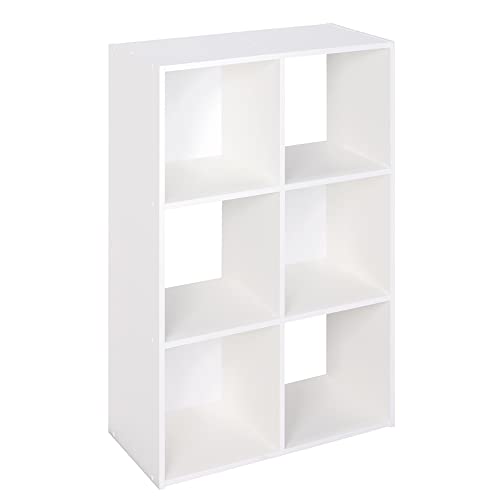
Cube organizers make sorting simple. You get defined lanes for families of games, easy color coding with bins, and fast access without toppling a tower. The cubes are about eleven and a half inches deep, so standard titles slide in cleanly, but oversized boxes may need to face outward or rest flat. For many households, the tidy grid is the big win.
- Key specs: six cube compartments in a two by three grid, each cube roughly eleven and a half inches deep
- Why it helps: compartments enforce order, reduce shifting, and stop small expansions from drifting out of sight
- Best for: families, kids rooms, small to mid-size collections, themed groupings like co-ops, party, or two player
- Potential downsides: depth can be tight for long rectangular titles, less flexible than fully adjustable shelves
Setup tips. Use the bottom row for the heaviest boxes. Assign each cube to a category. Add fabric bins to corral small box card games or map packs. If a long box does not sit fully inside, let it face outward for clean retrieval and to avoid lid pressure. Add felt pads under the unit and anchor it to the wall for safety.
I think the cube layout reduces decision fatigue. You always know where party games or quick fillers belong, and family members can put things back without instructions. For starter to mid-size libraries, this layout keeps everything calm.
Tribesigns 7-Tier Industrial Bookshelf with Metal Frame
This option blends sturdy construction with a warmer, rustic style. The shelves are usually twelve to about thirteen inches deep depending on the model, which means better accommodation for big box titles. Metal frame and cross bracing provide stability, while the wood-look shelves present clean lines. It is a middle ground between heavy-duty wire racks and a classic bookcase.
- Key specs: 7 fixed shelves, metal frame with side and rear support, depth around twelve to thirteen inches
- Why it helps: deeper shelves fit a wider range of games, and cross bracing resists racking when you pull heavy boxes
- Best for: mixed collections with some oversized boxes, living spaces that need warmth plus strength
- Potential downsides: fixed tiers reduce adjustability, assembly takes patience
Setup tips. Anchor to the wall. Balance weight by loading the lower two tiers first. Store extra-tall campaign boxes flat if the fixed shelf height is tight. Add a slim bookend on the sides to prevent thin expansions from drifting and to keep vertical stacks aligned.
I think this shelf earns points for depth and style. It looks intentional in a lounge or den while still handling bulky titles. If you do not need frequent shelf height changes, it is a strong all-rounder.
How I tested and what I prioritized
I look for depth near twelve inches or more, firm shelves that do not bow under load, clean access for vertical or flat storage, and layouts that help families and hobby groups put things back quickly. I also value fast assembly, stable frames with wall anchors, and finishes that hide scuffs. Each pick reflects a different priority set so you can match your space and collection style.
Quick buying snapshots
- Best overall capacity and flexibility: Seville Classics 5-Tier Steel Wire Shelving
- Best furniture style: Sauder 5-Shelf Bookcase
- Best for sorting and families: ClosetMaid 6-Cube Organizer
- Best balance of depth and decor: Tribesigns 5-Tier Industrial Bookshelf
Set up your shelf to hold more games with less mess
Store vertically when possible
Storing like books prevents bottom box lids from crushing and makes mid-stack titles easy to reach. Aim for shelf height that allows about thirteen inches of clearance for standard boxes standing up. Use simple bookends to keep rows tight.
Keep heavy boxes low
Put the densest games on the bottom tier to stabilize the unit and protect lighter boxes from compression. This also reduces strain when lifting heavy boxes off upper shelves.
Use bins for small games and expansions
Group card games, promos, and map packs in labeled bins. This stops tiny boxes from slipping behind larger ones and speeds up setup. Place these bins at eye or shoulder height for quick grabs.
Label shelves by category
Simple category labels guide quick returns. Use tags like Co-op, Party, Euro, Two Player, or Kids. Family members and guests follow the system without reminders.
Leave breathing room
Do not overpack. A small finger gap helps avoid scraping box art and gives you space to slide titles out smoothly.
Care and longevity
- Keep humidity moderate to prevent box warping
- Dust shelves regularly and wipe any spills immediately
- Check anti-tip straps twice a year
- Rebalance loads if shelves start to lean or flex
Which shelf is right for you
If you prioritize maximum capacity and adjustable spacing, go with the Seville Classics steel rack. If you want your game library to blend into a living room, the Sauder bookcase fits well. For family-friendly sorting and clean lanes, the ClosetMaid 6-Cube is straightforward. If you need a bit more depth with a warm look, the Tribesigns industrial unit strikes a good balance. Match depth to your largest boxes, anchor the unit, and commit to a simple labeling system. The rest becomes easy.
Conclusion
Board game shelves should help you play more and tidy less. Depth around twelve inches, good rigidity, anti-tip safety, and smart layout choices matter more than brand names or trending styles. I think the four shelves above cover the core needs of most collections in 2026. Pick the one that aligns with your space and habits, set it up with vertical storage and clear categories, and your library will stay ready for game night.
FAQ
Q: What shelf depth is best for most board games
A: Aim for about twelve inches of depth so both standard square boxes and longer rectangular titles fit without overhang.
Q: Should I store board games vertically or flat
A: Store vertically when possible to avoid lid compression and to make mid-row titles easier to pull without unstacking.
Q: How do I prevent a tall shelf from tipping
A: Anchor the unit to the wall, place the heaviest boxes on the bottom tier, and use leveling feet to remove wobble.
Q: Which shelf is best for a growing, heavy collection
A: The Seville Classics 5-Tier Steel Wire Shelving offers the most flexibility and strength for expanding libraries and heavy deluxe games.
Q: How can I keep small-box games from getting lost
A: Use labeled bins for small games and expansions, and place them at eye level for quick access.