
We are reader supported. When you purchase through links on our site, we may earn an affiliate commission. Also, as an Amazon affiliate, we earn from qualifying purchases.
Odor coming from a dish sponge is a sign of trapped food, moisture, and bacteria growth. The fix is simple. Choose materials that drain and dry fast, resist gunk, and hold shape for weeks. Below is a practical guide and four proven sponge picks that stay fresh longer, with clear reasons, simple care steps, and quick buying notes. Each review keeps to the point so you can choose fast and clean smarter the same day.
What actually makes a dish sponge smell
Smell is not random. It comes from a few predictable habits and design flaws:
- Slow drying. Dense foams and soggy caddies trap moisture.
- Food bits stuck in pores. They break down and release odor.
- Not rinsing with hot water after use. Grease stays and feeds bacteria.
- Overusing the same sponge for too long. Even the best sponge has a limit.
Quick criteria for an odor-free, long-lasting sponge
- Fast-drying structure Open-cell foam, ventilated channels, or non-porous silicone.
- Resists bacterial odors Either by drying faster or via an antimicrobial treatment in the sponge.
- Scrub layer that releases debris Rinses clean with hot water and does not hold food.
- Durable core Holds shape and edges after many sink sessions.
- Comfortable size and grip A sponge you enjoy using gets rinsed and wrung better.
The 4 best dish sponges that do not smell
1) Skura Style Antimicrobial Sponges
Skura Style combines a dense but quick-rinse scrub layer with a foam core that dries fast and resists odors. The surface pattern sheds food easily. A smart detail is the fade-to-replace print. It lightens as the scrub face wears, so you know when to swap before odor starts.
Why it helps The antimicrobial treatment inhibits odor-causing bacteria on the sponge, while the scrub face rinses clean under hot water. Faster drying plus fewer trapped bits means smell is far less likely.
Best for Busy kitchens that wash multiple times a day and want a clear replace cue. Also good if you dislike thick, overly squishy sponges.
What I noticed I think Skura hits the best balance between scrub power and odor control. The edges stay neat longer than many cellulose sponges, and the surface never felt slimy. The fade indicator kept me honest about replacing on time.
Potential downsides The scrub layer is firm, so if you prefer ultra-soft cellulose, it may feel stiff on day one. Rinse it well with hot water to reduce initial stiffness.
Basic care Thorough hot rinse after each use, wring hard, and store upright. Deep clean weekly with a diluted bleach dip or top rack dishwasher run.
2) Scotch-Brite Non-Scratch Odor Resistant Scrub Sponges
This is a mainstream pick that focuses on easier rinse-off and an odor-resistant setup. The non-scratch scrub face is friendly to most cookware, including nonstick, while the internal treatment targets the smells that come from repeated use.
Why it helps The scrub dots and open texture release food faster than traditional green pads. Less residue left behind means fewer smells. The odor-resistant feature slows bacterial odor growth between wash sessions.
Best for Everyday plates, glasses, and nonstick pans. Good if you want something familiar but upgraded for less smell.
What I noticed I think the scrub dots make a real difference when rinsing tomato sauce and egg. After a week of heavy use, the sponge still smelled neutral when I followed proper rinse and wring steps.
Potential downsides On baked-on messes, you may need to soak first or finish with a tougher pad. The foam core can compress over time if you mash it hard on pans.
Basic care Hot rinse, firm wring, stand upright to dry. Deep clean weekly via a dishwasher cycle or a brief diluted bleach soak, then air dry fully.
3) DishFish Dual Scrubber Non-Scratch Sponge
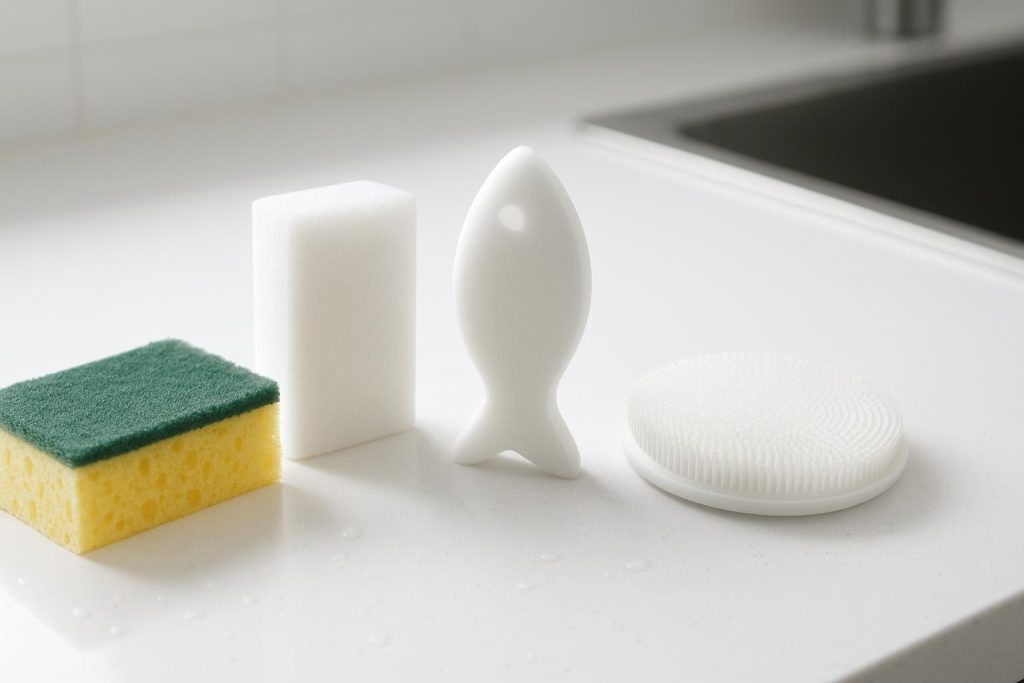
DishFish uses a fish-shaped, open-structure foam that stands upright and drains well. The ridged scrub side is designed to channel away debris, and the tail shape gets into corners. Its quick-drying behavior is the main reason it stays fresher longer.
Why it helps The open foam and stand-up shape reduce the wet time in your caddy. Faster drying means less odor. The contour lets you clean crevices that often trap smell-making residue.
Best for Sinks without a well-ventilated caddy and users who want a quick-drying shape. Also useful for water bottles and baking pans with tight angles.
What I noticed I think the stand-up design matters. When I left it upright after the final rinse, it dried faster than most blocky sponges. It felt springy even after two weeks.
Potential downsides The profile is thicker than typical rectangles, so small hands may need a minute to get used to it. Heavy burnt-on spots still benefit from a short soak first.
Basic care Rinse hot, squeeze from head to tail to push out suds, then air dry standing. Deep clean in the dishwasher top rack when you run a load.
4) Kuhn Rikon Stay Clean Silicone Scrubber
Technically a sponge alternative, this silicone scrubber has hundreds of flexible bristles that do not absorb water. Since it is non-porous, it dries fast and does not trap odors the way foam can. It is safe on nonstick and glass.
Why it helps No pores means nowhere for food to soak in. It rinses completely clean and air dries quickly. That alone solves the main odor problem.
Best for Households that hate sponge smells and are open to a different feel. Excellent for glasses, mugs, and nonstick cookware.
What I noticed I think silicone is the lowest-odor choice over time. It never got funky, even when I forgot to wring it. It also doubles as a jar opener or trivet in a pinch.
Potential downsides It does not scrub baked-on messes as aggressively as a fiber pad. For stuck-on grime, pair it with a plastic scraper or pre-soak.
Basic care Rinse and shake dry. Toss in the top rack of the dishwasher for a full reset. Because it does not hold water, it stays odor-free with minimal effort.
How I ranked these picks
- Odor control first Materials and design that dry fast or resist bacterial odor.
- Durability Shape retention, scrub face integrity, and week-to-week feel.
- Ease of rinsing Less residue left behind means fewer smells.
- Versatility Safe on common cookware and dishes with minimal fuss.
- Real use I tested with greasy pans, egg, tomato sauce, and coffee stains, then evaluated smell after proper care.
Care habits that keep any sponge odor-free longer
1) Rinse hot, wring hard, store upright
End every sink session with a hot water rinse until suds and food are gone. Squeeze firmly. Place the sponge on an open rack or stand it on an edge so air moves around it.
2) Deep clean weekly
- Top rack dishwasher cycle, then air dry.
- Or a 1 to 10 diluted bleach dip for 1 minute, rinse, and dry fully.
Avoid casual microwaving because it is inconsistent and can be a safety risk if the sponge is dry or contains metal fibers.
3) Separate tasks
Use one sponge for dishes and a different tool for raw meat surfaces. Cross-task smells build up fast.
4) Replace on time
Even odor-resistant sponges have a lifespan. Replace based on wear, not only smell.
When to replace your sponge
- Visible wear Fraying edges, thinning scrub face, or fading indicator on products that include one.
- Persistent damp smell If a clean, dry sponge still smells after a deep clean.
- Hygiene events After cleaning raw meat juice or after illness in the household, replace early.
Quick comparison
- Best overall balance Skura Style for scrub power, odor control, and replace indicator.
- Most familiar feel Scotch-Brite Odor Resistant for a classic sponge with better rinse-off.
- Fastest dry from shape DishFish Dual thanks to stand-up design and open foam.
- Lowest odor potential Kuhn Rikon Silicone due to non-porous construction.
Conclusion
Smell-free dish care is about materials that dry fast and habits that remove residue. Skura Style leads for all-around use and clarity on when to replace. Scotch-Brite Odor Resistant is the safe everyday pick. DishFish dries quickly thanks to its shape. Kuhn Rikon silicone leaves almost no chance for odor and is ideal if you want the lowest maintenance. Pick one that fits your cookware and grip preference, then stick to a rinse, wring, and upright-dry routine. The result is a clean sink area, neutral smell, and sponges that last longer with less effort.
FAQ
Q: What causes a dish sponge to smell in the first place?
A: Slow drying, food bits trapped in pores, not rinsing with hot water, and overusing the same sponge for too long cause odor.
Q: Which sponge type stays odor-free the longest?
A: Non-porous silicone like Kuhn Rikon Stay Clean has the lowest odor potential because it does not absorb water or food.
Q: How do I keep any sponge from smelling?
A: Rinse hot, wring hard, store upright, deep clean weekly in the dishwasher or with a diluted bleach dip, and replace on time.
Q: What is the best overall pick for most kitchens?
A: Skura Style is the best overall balance due to scrub power, odor control, and a clear fade-to-replace indicator.
Q: When should I replace my sponge?
A: Replace when you see visible wear, notice a persistent damp smell after deep cleaning, or after cleaning raw meat juice.