
We are reader supported. When you purchase through links on our site, we may earn an affiliate commission. Also, as an Amazon affiliate, we earn from qualifying purchases.
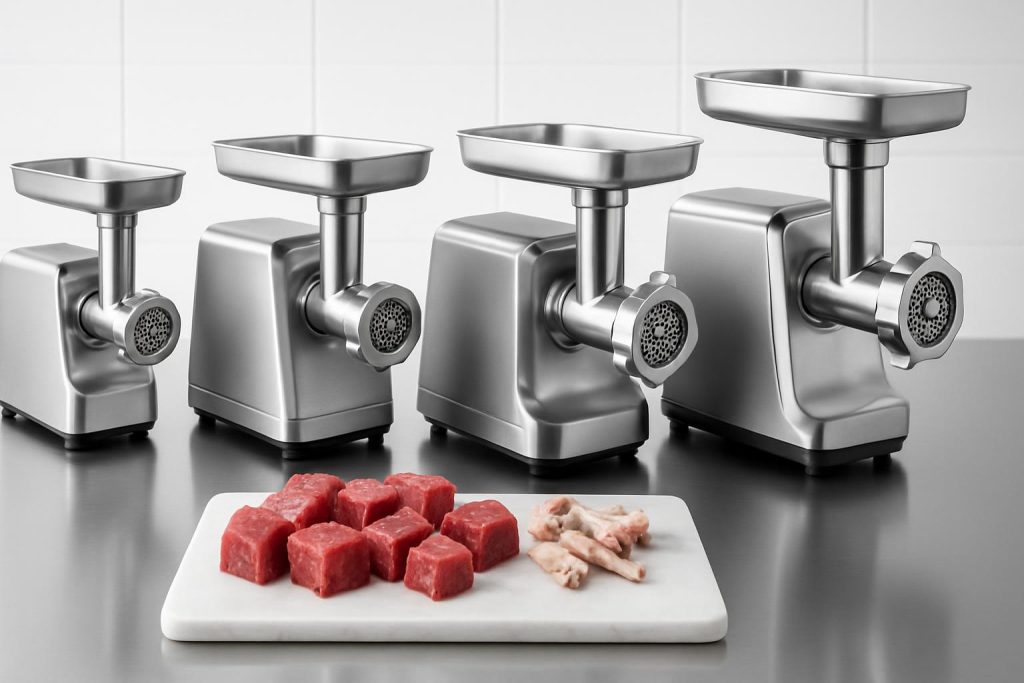
Raw feeding works best when you control texture, fat, connective tissue, and add-ins. A solid meat grinder saves prep time, handles sinew without clogging, and lets you portion meals that match your dog’s needs. This guide walks you through what matters, then reviews four grinders that balance power, durability, and ease of use. I test with chilled meat, connective tissue, and soft poultry parts to reflect real raw-diet prep at home. Keep reading to see which option fits your household, dog size, and workflow.
How to choose a meat grinder for raw dog food
Power and torque matter more than big watt numbers
Wattage can be marketing. What you want is steady torque, a strong gearbox, and a proper cutting set. A good grinder should pull meat through without stalling or smearing. In practice, budget units handle boneless mixes and light sinew well. Mid-grade and pro machines keep chewing through connective tissue and larger batches with fewer stops.
Bone handling reality check
Many home grinders are not rated for bones. Some heavy-duty models tolerate soft, non-weight-bearing poultry bones if you prep carefully. The safe path for most households is boneless grinds plus a calcium source like finely ground eggshell powder. If you try soft bones, keep pieces small, everything very cold, and feed slowly. Never force weight-bearing bones.
Build, parts, and cleaning
Stainless steel augers, plates, and trays last longer and clean easier. Aluminum housings are fine when paired with steel cutting sets. Look for reverse function, good throat size, and solid auger engagement. After grinding raw meat, disassemble promptly, hand-wash in hot soapy water, dry fully, and oil steel plates lightly with food-grade mineral oil. Avoid dishwashers for aluminum. Stainless assemblies on higher-end models can handle dishwashers, but hand-washing preserves sharpness.
Throughput and duty cycle
Real throughput depends on prep and technique. As a reference, budget units typically push 0.5 to 1 pound per minute. Mid-grade machines run 1 to 3 pounds per minute. Pro picks reach 3 to 6 or more. Short duty cycles mean you should pause to cool the motor during long sessions; continuous-duty motors can run longer with fewer breaks.
Grind size and texture for dogs
For most dogs, a single pass through a 6 to 8 mm plate gives a balanced texture. If you want chunks plus finer bits, do a coarse first pass at 10 to 12 mm, then a second pass at 4.5 to 6 mm. Small dogs often do well with a single 4.5 to 6 mm pass. Mix organs evenly during the second pass to avoid dense pockets.
Prep tips that prevent jams
Partially freeze meat for 30 to 60 minutes so it is firm but not solid. Trim long silverskin strands if your grinder is smaller. Cut pieces to fit the throat. Alternate lean meat with fattier pieces to keep the auger lubricated. Keep plates and knives sharp, and use reverse if you feel drag.
The 4 best meat grinders for raw dog food
STX Turboforce 3000 Classic
The STX Turboforce 3000 Classic is a popular starter choice with better-than-budget torque and a complete accessory kit. It comes with multiple plates, a sausage setup, and a large meat tray. The build is a mix of cast aluminum and stainless steel cutting parts, with a practical reverse switch and a decent-sized feed throat.
Why it helps: It balances price and power well for boneless raw mixes. Connective tissue and skin go through without constant stops when your prep is on point. The included plates cover most dog-friendly textures from 4.5 mm to 8 mm, and the reverse function clears minor clogs fast.
Best for: New raw feeders grinding boneless meat, organs, and fat for one to two dogs. Weekend batch sessions of small to medium size.
What I think: I think the Turboforce 3000 Classic hits a sweet spot for its class. With chilled meat and steady feeding, I get consistent grinds that are not smeared. It is straightforward to set up and clean, and spare parts are easy to find. For beginners who want a forgiving machine, this is an easy win.
Potential downsides: Not a bone-focused machine. Some users try soft poultry bones, but I avoid that here and stick to boneless plus eggshell powder for calcium. The housing shows wear if dishwashed, so hand-wash only. Noise is moderate.
Speed expectations: Plan on about 1 to 2 pounds per minute with good prep. Take short breaks on long runs to keep the motor cool.
Setup tips:
- Chill plate and knife in the freezer 15 minutes before grinding to keep edges crisp.
- Alternate lean cubes and fatty pieces so the auger stays lubricated.
- Use the 6 mm plate for general dog meals; save 4.5 mm for small-breed portions.
LEM Big Bite Meat Grinder #12
The LEM Big Bite #12 steps up to a more robust, stainless steel build with a stronger, quieter motor and the well-known Big Bite auger that grabs meat efficiently. The stainless steel head, auger, and tray clean up easily and resist corrosion. The gearbox and bearings feel notably solid, which you notice when pushing through sinew.
Why it helps: Power and torque reduce smearing and give smooth, fast feeding. The auger design pulls without constant pusher use, which keeps the workflow easy when you are portioning multiple meals. Stainless parts are durable and sanitary, helpful for frequent raw prep.
Best for: Households with medium to large dogs, weekly batch grinding, and a need for consistent texture.
What I think: I think the #12 is the first real jump where grinding becomes nearly effortless. With firm, chilled meat, it just eats. The knife-to-plate fit is tight, and the motor does not sound strained under normal loads. It is overkill for a toy breed household, but perfect if you prep several pounds at a time.
Potential downsides: It is heavier and takes counter space. Upfront cost is higher than entry units. Like most home grinders, the manual is cautious about bones. If you choose to process soft, non-weight-bearing poultry bones, do it in small, cold pieces and watch for strain. Many will prefer boneless plus a calcium source.
Speed expectations: Real-world throughput lands around 3 pounds per minute with good prep. It can run longer sessions with fewer breaks than smaller units.
Setup tips:
- Use the 10 to 12 mm plate for a first pass on chunkier meals, then a 4.5 to 6 mm plate to finish.
- Keep a light coat of food-grade mineral oil on the plate and knife between sessions to prevent surface rust.
- Feed organs mixed with muscle to avoid sticky clogs.
Weston Pro Series #12 Electric Meat Grinder, 1 HP
The Weston Pro Series #12 is a commercial-leaning machine for home use. It has a 1 HP motor, all-metal gears, and stainless steel grinding components. The oversized tray and throat speed up feeding, and the air-cooled motor is built for longer duty cycles. It arrives with coarse and fine plates and a sturdy stomper.
Why it helps: Throughput is high, and torque stays steady. You can run larger batches with fewer pauses, which matters if you raw-feed multiple big dogs. The stainless cutting set holds an edge well, so textures remain clean over time.
Best for: Big-batch prep, large-breed households, and users who want near-commercial reliability at home.
What I think: I think this is the grinder you buy once if you are serious about raw feeding. It handles dense beef and sinew without drama when properly chilled. The reverse is responsive, and the feed throat size reduces pre-trimming. It is not a small appliance; it is a workstation tool.
Potential downsides: Price and size. It is heavy and needs storage space. Manuals are conservative on bones. If you attempt soft poultry bones, keep pieces small, use partial freeze, and watch motor load closely. For many, boneless grinds plus eggshell powder are simpler and safer long term.
Speed expectations: Expect 4 to 6 or more pounds per minute with firm, well-prepped meat. The motor handles longer continuous runs than typical home units.
Setup tips:
- Chill the entire head assembly before grinding for the cleanest cut and fastest feed.
- Run a slice of bread at the end to push out residual meat for easier cleaning.
- Dishwasher is fine for stainless assemblies, but hand-washing protects sharpness.
Sunmile SM-G50 Electric Meat Grinder
The Sunmile SM-G50 is a budget-friendly grinder that still brings enough power for everyday boneless raw mixes. It includes multiple stainless steel plates, a reverse function, and a compact frame that stores easily. For smaller households, it offers strong value and simple operation.
Why it helps: It handles boneless meat, moderate sinew, and organs without frequent jams when you keep ingredients cold and cut to size. The accessory set covers common grind sizes for dogs without extra purchases.
Best for: Beginners and small to medium dogs. Occasional batch prep with an eye on value.
What I think: I think the SM-G50 is the easiest low-cost on-ramp. It is not as fast or as quiet as premium models, but it does consistent boneless grinds and packs away fast. If you are testing raw feeding or have a small dog, this is enough machine to start confidently.
Potential downsides: Shorter duty cycle. Expect to pause during long sessions. Noise is higher than heavier grinders. Not suited for bones. Stick to boneless and add a calcium source separately.
Speed expectations: Around 0.5 to 1 pound per minute with good prep. Plan your batches accordingly.
Setup tips:
- Firm-chill meat to avoid smearing.
- Use the 6 to 8 mm plate as your default; go 4.5 mm for smaller dogs.
- Do not overload the tray; feed steadily to prevent stalls.
Plate sizes, textures, and add-ins
Dogs benefit from a mix of textures. For most, a single 6 to 8 mm pass gives chew while keeping meals uniform. If your dog eats too fast, a chunkier first pass at 10 to 12 mm can slow them down, then finish with 4.5 to 6 mm for consistency. For calcium, I like finely ground eggshell powder measured to your vet’s guidance when using boneless mixes. Mix organs evenly during the second pass to avoid rich pockets that can upset stomachs.
Workflow for clean, safe raw prep
- Chill bowls, plates, and grinder parts to keep temperatures low.
- Cut meat to fit the feed throat and remove long, tough silverskin if your grinder is smaller.
- Grind lean and fatty cuts together for a balanced texture.
- Portion into meal containers and label by date.
- Disassemble immediately, hand-wash with hot soapy water, dry thoroughly, and oil plates and knife lightly.
Which grinder should you choose
- On a tight budget for boneless: Sunmile SM-G50.
- Best starter with fewer compromises: STX Turboforce 3000 Classic.
- Step-up power and stainless build: LEM Big Bite #12.
- Pro-level throughput at home: Weston Pro Series #12.
Match your choice to dog size, batch frequency, and storage space. If you rarely grind more than a few pounds, a compact unit is enough. If you prep big weekend batches, the time saved by a heavier grinder is worth it.
Conclusion
Raw feeding gets easier with the right grinder. Start from your real workload and pick the smallest machine that still runs smoothly without constant stops. For most homes, a mid-grade unit with stainless cutting parts is the practical balance of speed, durability, and cost. Keep everything cold, sharpen or replace plates and knives as needed, and follow cautious bone practices or keep it boneless with a reliable calcium source. With steady prep and a solid grinder, you can produce consistent, clean meals your dog thrives on.
FAQ
Q: Do these grinders handle bones for raw dog food?
A: For raw dog food, only the heavy-duty picks here can tolerate soft, non-weight-bearing poultry bones, and even then with care. I prep small pieces, keep everything very cold, feed slowly, and stop at the first sign of strain. When in doubt, go boneless and add calcium from finely ground eggshell powder. Always follow the manual for each model.
Q: What plate size should I use for raw dog food?
A: For most dogs, a single pass through a 6 to 8 mm plate gives a good texture. If you want a chunkier grind, start with 10 to 12 mm, then finish with 4.5 to 6 mm for a mix of textures. Small dogs often do fine with a single 4.5 to 6 mm pass.
Q: How should I clean and maintain a meat grinder after raw dog food?
A: Disassemble right away, hand-wash parts in hot soapy water, dry completely, and wipe steel plates and knives with a thin coat of food-grade mineral oil. Do not dishwash aluminum parts. Stainless steel assemblies on the LEM and Weston can handle the dishwasher, but hand-washing keeps edges sharp longer.
Q: Which grinder is best for beginners on a budget?
A: The Sunmile SM-G50 is the easiest budget pick to start with. It is compact, simple to use, and strong enough for boneless raw mixes with connective tissue.
Q: How much can I grind in one session?
A: Budget units typically do about 0.5 to 1 pound per minute, mid-grade machines around 1 to 3, and the pro picks 3 to 6 or more, assuming chilled meat, sharp blades, and a steady feed.